

 プレビュー
プレビュー
 プリントを購入
 シェアする
シェアする シェアする
シェアする
 詳細を見る
詳細を見る

 ダウンロード
 似ている作品
 X線調査
X線調査 スライドショー
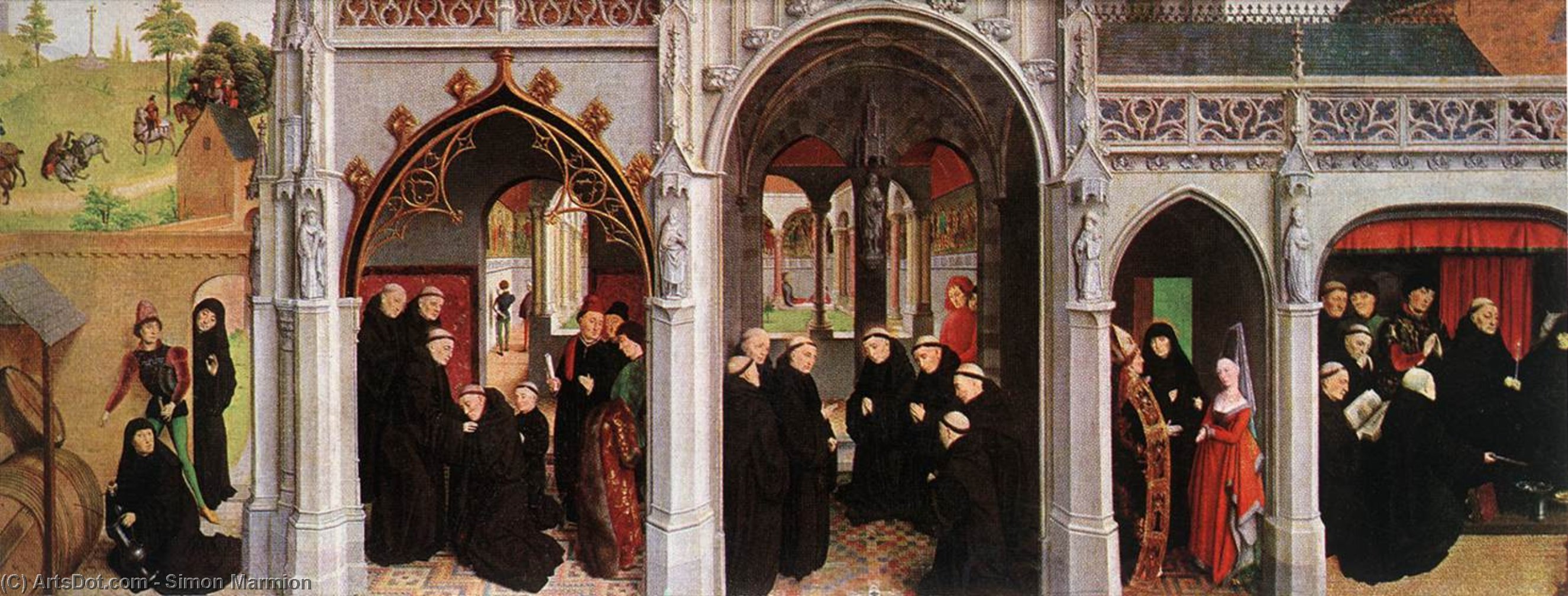
Scenes from the Life of St Bertin
 Oil On Panel
- Early Netherlandish
 1459
1459- Renaissance
 56.0 x 147.0 cm
 国立博物館群
 詳細を見る
詳細を見る




P118B $10

P118H $10

P118W $10

P438Z $10

P508JH $12

P508YH $12

P805H $10

P805Z $10

P919BZ $10

P919G $10

P919XJ $10

P959ZH $10

P968JZ $12

W106C $8

W218G $10

W218JH $8

W218Y $10

W307PJ $10

W316G $10

W316PJ $8

W316Y $10

W398PJ $8

W4111J $10

W500HY $15

W500JH $15

W692G $12

W849H $8

W940BG $15

W953PJ $8




作品のオリジナル比率に合わせた、当店の規定サイズからお選びください。

特定のフレームやスペースに合わせて、ご希望のサイズをご入力いただけます。選択されたサイズが元の画像の比率と異なる場合、アートワークをトリミングするか、手描きで要素を追加して絵画を拡張いたします。デジタルモックアップ を制作し、制作開始前にご確認(承認)をいただきます。
画面上のプレビューは、実際のトリミングや拡張を正確に反映しているものではありません。最終的な構図は、モックアップによってのみ正確にご確認いただけます。
カスタムサイズもご利用いただけますが、元の比率を維持するためには、あらかじめ用意されたリストからサイズを選択することをお勧めいたします。
ご注文後、ArtsDot.com チームより詳細な指示をお送りするとともに、仕上がりイメージ(モックアップ)をご提供いたします。


 ガラスオプションは、110cm未満のサイズでのみご利用いただけます。

Scenes from the Life of St Bertin
複製技法
複製画のサイズ
-


合計金額
$ 263
作品解説
A Window into the Devotion of the Middle Ages
In the delicate brushstrokes of Simon Marmion’s "Scenes from the Life of St. Bertin," we are transported back to the year 1459, a period where the spiritual and the terrestrial were inextricably woven together. This masterpiece serves as more than just a religious narrative; it is a profound window into the soul of the late Middle Ages. As one gazes upon the composition, the viewer is immediately drawn into a world of monastic piety and communal devotion. The painting captures a pivotal moment in the hagiography of St. and Bertin, presenting a tapestry of human interaction where monks and followers gather with a sense of shared purpose. Marmion, often celebrated as the "Prince of Illuminators," utilizes his mastery of detail to create a scene that feels both intimate and monumental, inviting the observer to witness the quiet strength found in religious unity.
The artistry of this piece is deeply rooted in the Early Netherlandish tradition, characterized by an exquisite attention to texture and light. Marmion’s technique allows for a remarkable clarity, where the heavy folds of medieval garments, the cold solidity of stone pillars, and the soaring arches of the background architecture all coexist in a harmonious balance. The artist employs a palette that, while grounded in the earthy tones of the 15th century, is punctuated by vibrant highlights that guide the eye through the complex narrative. Each figure, from the central group of men engaged in solemn discussion to the solitary figures drifting in the periphery, is rendered with a psychological depth that suggests a life lived in constant contemplation of the divine.
Architectural Grandeur and Symbolic Narrative
Beyond the human drama, the architectural elements within the work play a crucial role in establishing its historical and symbolic weight. The presence of grand arches and imposing structures does not merely provide a setting; it symbolizes the enduring strength of the Church and the stability of the monastic order. These stone sentinels frame the characters, creating a sense of sacred space that separates the holy narrative from the mundane world. For the collector or interior designer, this interplay between the structural and the organic offers a sophisticated aesthetic balance, making it an ideal centerpiece for spaces that value historical depth and classical elegance.
The emotional impact of "Scenes from the Life of St. Bertin" lies in its ability to evoke a sense of timelessness. There is a palpable stillness within the movement—a moment frozen in time that speaks to the eternal nature of faith. The way the light falls upon the gathered figures creates a soft, ethereal glow, reminiscent of the illuminated manuscripts for which Marmion was so renowned. This luminosity lends the painting an atmospheric quality that can transform a room, providing a sense of tranquility and intellectual stimulation. To possess a reproduction of this work is to bring a piece of history into the modern home, offering a continuous dialogue between the artistry of the Burgundian era and the contemporary appreciation for fine, narrative-driven art.
関連作品
![Legend Of St Francis - [23] - St Francis Mourned By St Clare — ジョット, Gothic](/media/artworks/images-thumb/17/1c/171c284c41dc3ef8bca83e51c1e1e531.jpg)

アーティストの略歴
The Prince of Illuminators: The Radiant Legacy of Simon Marmion
In the golden twilight of the Middle Ages, a period where the flickering candlelight of monastic scriptoriums met the burgeoning splendor of the Burgundian court, there emerged an artist of unparalleled delicacy and prestige. Simon Marmion, a master whose brush breathed life into the parchment of history, earned the reverent title of "the prince of illuminators." Born in Amiens around 1425, Marmion was a product of a rich artistic lineage, raised in an environment where the craft of painting was woven into the very fabric of family life. With his father, Jean, and his brother, Mille, also practicing the arts, Marmion’s early development was steeped in the technical rigors of the French and Netherlandish traditions.
His career was inextricably linked to the heights of political power and the opulent tastes of the Duchy of Burgundy. As the Burgundian territories expanded in influence, so too did Marmion's reputation. His presence at the legendary Feast of the Pheasant in Lille, under the patronage of Philip the Good, signaled his ascent into the inner circles of European nobility. This was an era of profound cultural synthesis, and Marmion stood at the crossroads of two worlds. While his roots lay in the French tradition, his work increasingly embraced the innovative Flemish spirit, characterized by a burgeoning interest in atmospheric landscapes and complex compositions that would define the Early Netherlandish style.
A Master of Light and Miniature
Marmion’s true genius resided in the intimate scale of the illuminated manuscript. To look upon his miniatures is to witness a world captured in jewel-like precision. He possessed an extraordinary ability to manipulate color and light, creating scenes that felt both spiritually transcendent and tangibly real. His work on the Grandes Chroniques de France remains a pinnacle of his achievement; within its pages, one finds a breathtaking array of miniatures ranging from vibrant, sweeping battle scenes to experimental works executed in a subtle, near-grisaille technique. This versatility allowed him to navigate between the grandiosity required for royal chronicles and the quiet, contemplative stillness needed for devotional texts.
Beyond the borders of manuscripts, Marmion’s hand extended to larger altarpieces and portraits, showcasing a stylistic evolution that bridged the gap between medieval symbolism and Renaissance naturalism. While some critics have noted a certain stiffness in his figures or occasional awkwardness in proportion, these elements often contribute to the unique, rhythmic grace of his compositions. His technical command of perspective was remarkably sound for his era, providing a structural depth that allowed his landscapes to breathe, even within the confines of a small panel. This mastery of space and atmosphere helped pave the way for the more robust realism seen in later Netherlandish masters.
Enduring Influence and Historical Significance
The historical footprint of Simon Marmion is visible across the great museums of the world, from the Gemäldegalerie in Berlin to the Metropolitan Museum of Art in New York. His ability to serve the most powerful patrons of his time—including Charles the Bold and Margaret of York—ensured that his aesthetic would influence the visual language of the Burgundian court for generations. Even after his death in 1489, his legacy continued through his pupils, such as Jan Provoost, who carried forward the traditions Marmion had refined.
Marmion’s significance lies not merely in the beauty of his creations, but in his role as a cultural bridge. He captured a moment of profound transition in European art:
- The Synthesis of Styles: He successfully merged the decorative elegance of French illumination with the observational realism of the Flemish school.
- Patronage and Prestige: His work served as the visual propaganda for the most influential ducal houses in Europe, elevating the status of the artist from craftsman to courtly essentialist.
- Technical Innovation: Through his use of varied media—from brilliant pigments to delicate grisaille—he expanded the expressive potential of the miniature format.
simon marmion
1425 - 1489 , France
基本情報
- Artistic Movement Or Style: Early Netherlandish
- Date Of Birth: 1425
- Date Of Death: 1489
- Full Name: Simon Marmion
- Nationality: French/Burgundian
- Notable Artworks:
- Grandes Chroniques de France
- Altarpiece of St Bertin
- Mass of Saint Gregory
- Lamentation of Christ
- Place Of Birth: Amiens, France
関連記事
High Medieval Art: 10 Masterpieces That Shaped an Era | ArtsDot
Journey through High Medieval Art! Explore 10 iconic masterpieces – from Giotto's frescoes to stunning Gothic cathedrals. Discover the stories behind these timeless paintings, sculptures & illuminated manuscripts. Find museum-quality art reproductions at ArtsDot.com.
Late Medieval Masterpieces: 10 Artworks That Defined an Era | ArtsDot
Journey through 10 defining Late Medieval masterpieces – from Giotto's frescoes to Jan van Eyck’s realism. Explore the stories, techniques & vibrant colors of Gothic art. Find museum-quality reproductions and elevate your home decor with ArtsDot.com! Discover all masterpieces on ArtsDot.com
エル・グレコの傑作25選:魂を揺さぶる宗教画と芸術の深淵 | ArtsDot
エル・グレコの傑作25選:魂を揺さぶる宗教画の世界へ。スペイン絵画の巨匠、マニエリスム様式と Toledo の光彩を紐解きます。ArtsDot.com で名画のアートプリントや複製画をお楽しみください。コレクションはこちら →
Early Medieval Art: 10 Masterpieces That Shaped a New World | ArtsDot
Journey through 10 stunning Early Medieval masterpieces – from the Book of Kells to Carolingian mosaics. Explore art history, symbolism & find museum-quality reproductions for your home at ArtsDot.com. Discover all masterpieces online!
Early Netherlandish Masters: 10 Paintings That Revolutionized Art & Decor
Journey into the Early Netherlandish Renaissance! Explore 10 iconic paintings by Jan van Eyck, Rogier van der Weyden & more. Discover stunning detail, symbolism, and oil painting techniques. Find museum-quality art reproductions for your home at ArtsDot.com.

