メニュー
無料アート相談
プレビュープレビュー ARで試着ARで試着 手描きの絵画を購入 手描きの絵画を購入画像を購入 画像を購入 シェアするシェアする
詳細を見る詳細を見る お気に入りに追加 お気に入りに追加 ダウンロードダウンロード 似ている作品似ている作品 X線調査X線調査 スライドショースライドショー

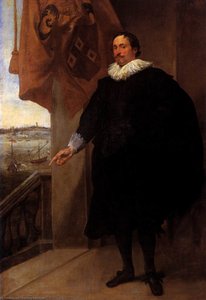
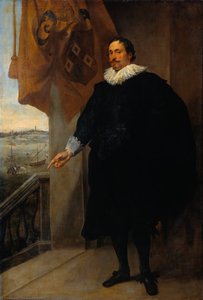
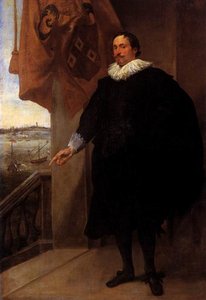
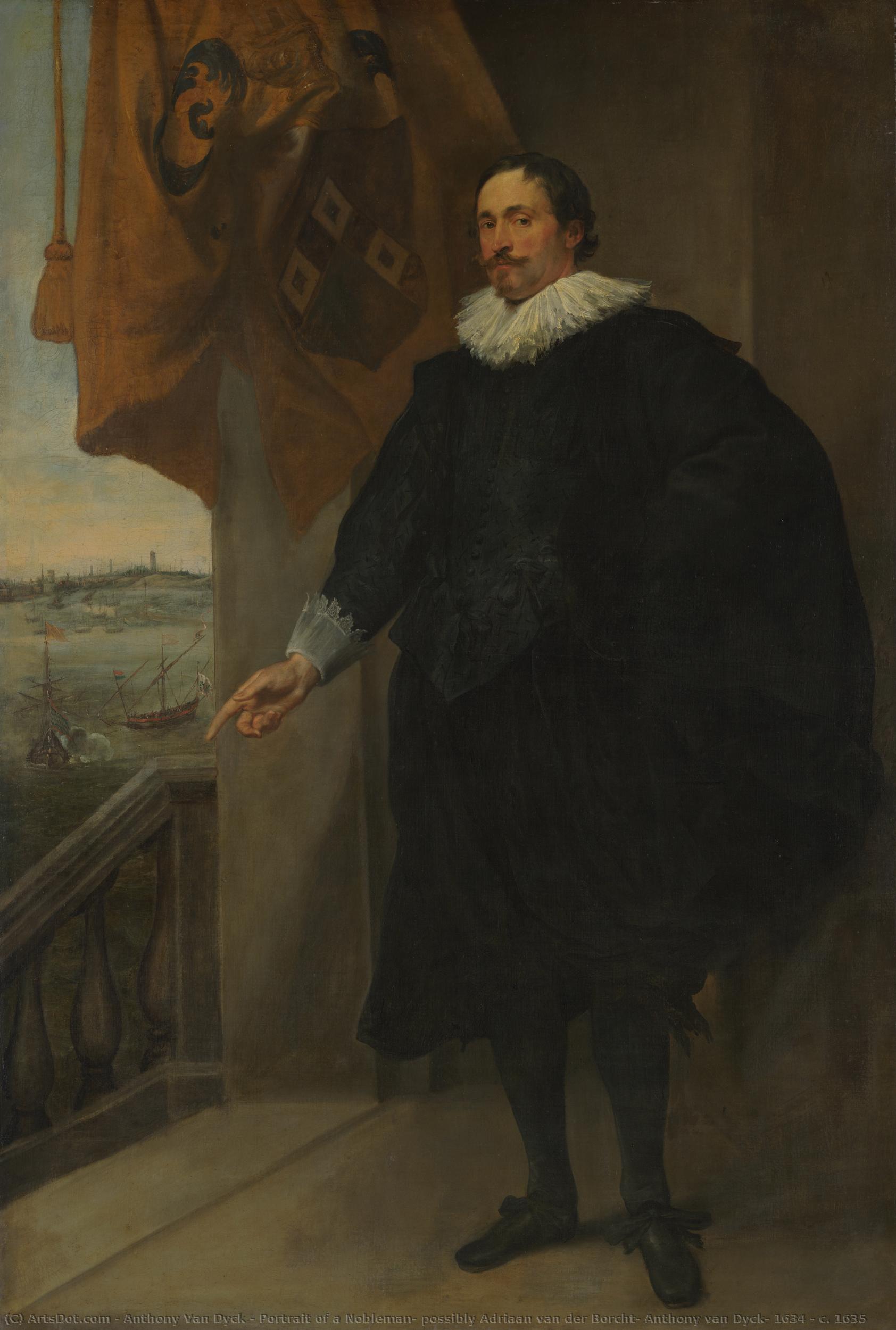
Portrait of a Nobleman, possibly Adriaan van der Borcht, Anthony van Dyck, 1634 - c. 1635

A distinguished portrait by Sir Anthony van Dyck, circa 1635, captures a nobleman with intricate details and a sense of depth, showcasing the Baroque era's elegance. Discover this remarkable artwork and add it to your collection.

「アントニオ・ファン・ダイク」は、ルーベンスの影響を受けながら独自の洗練されたスタイルでヨーロッパ貴族の肖像画を制作したフランドルのバロック画家。特にチャールズ1世の宮廷画家として活躍し、英語美術に大きな影響を与えました。彼の作品は優雅さと繊細さで知られ、現代でも多くの人々を魅了しています。

ジークレー/アートプリント

迅速な制作と多彩な仕上げオプションを備えた、ミュージアムクオリティのジークレーまたはキャンバスプリント。 (手描きの絵画を購入 手描きの絵画を購入画像を購入 画像を購入)

P118B $10
P118H $10
P118W $10

P438Z $10

P508JH $12

P508YH $12

P805H $10

P805Z $10

P919BZ $10

P919G $10

P919XJ $10

P959ZH $10

P968JZ $12

W106C $8

W218G $10

W218JH $8

W218Y $10

W307PJ $10

W316G $10

W316PJ $8

W316Y $10

W398PJ $8

W4111J $10

W500HY $15

W500JH $15

W692G $12

W849H $8

W940BG $15

W953PJ $8

標準サイズ
オーダーメイド
CM
INCH

作品のオリジナル比率に合わせた、当店の規定サイズからお選びください。

高さ

特定のフレームやスペースに合わせて、ご自身でサイズを指定することも可能です。選択されたサイズが元の画像の比率と一致しない場合、作品をトリミングするか、鏡面反射または単色での塗りつぶしによって画像を拡張いたします。制作を開始する前に、ご確認用のデジタルモックアップをお送りいたします。
画面上のプレビューには、実際のトリミングや拡張は反映されませんのでご注意ください。最終的な構図を正確に確認できるのは、モックアップのみとなります。
カスタムサイズも承っておりますが、元の比率を維持するためには、あらかじめ用意されたリストからサイズを選択することをお勧めいたします。

世界中への配送()は、標準の4〜5週間ではなく、2週間でお届けいたします。(27 8月)

why_choose_icon
世界中へ無料エクスプレス配送
why_choose_icon
高品質なリネンキャンバス
why_choose_icon
配送時完全保険付
why_choose_icon
関税・輸入税の払い戻し保証
why_choose_icon
忠実な色彩再現保証
why_choose_icon
60日間返品保証(製造上の欠陥のみ)
why_choose_icon
100% 全額返金保証
why_choose_icon
まとめ買い割引のご案内

合計金額

$ 62

reproduction

Portrait of a Nobleman, possibly Adriaan van der Borcht, Anthony van Dyck, 1634 - c. 1635

ジークレー/アートプリント

複製画のサイズ

-

合計金額

$ 62

The coat of arms in the present portrait was first transcribed in the 1872 museum catalogue, and identified as that of Nicolaes van der Borcht in the catalogue of 1893. As was recognized in the 1904 catalogue, the same coat of arms appears in another portrait (SK-A-725) which has also long been attributed to Anthony van Dyck. Although the sitter is identified in Cornelis Vermeulen’s (c. 1654-1708/1709) engraving (in reverse, of 1703) as Dominus Nicolaas vander Borcht,15 he was named as François in the museum catalogue of 1827 and then as Jacob, before Nicolaes was adopted. Stols16 and Baetens17 record a Nicolaes van der Borcht, the son of Hendrik, whom Stols listed as a shipper and forwarding agent in Dunkirk circa 1607. According to Stols, the son’s similar business activity was based first in Calais and then circa 1626 in Lisbon, where he was declared bankrupt in 1631. Baetens states that by the 1640s he was (once again) a rich merchant trading in silk and broking insurance. In 1656 he was recorded as seventy years old. However, Nicolaes is unlikely to be the sitter in this portrait, for the arms are those granted to his brother Adriaan in a letter patent of 2 March 1633 from Philip IV of Spain (1605-1665), in which Adriaan is described as Lord of Elverdinghe, Waesten and Spière and as resident in Cassel,18 all properties in West Flanders, Spière being less than twenty kilometres south of Dunkirk. Stols records that Adriaan had been a shipper and forwarding agent first in Malaga in 1615, then at Seville circa 1616-19, and in 1627 at Calais. Adriaan, who was born in Antwerp, was still alive in 1650 when he was created a knight. It remains a matter of conjecture as to why with the (incorrect) evidence of Vermeulen’s engraving, in the next recorded identification of the sitter – the 1817 sale catalogue – the sitter’s name was given as François. There are intermittent records of a François van der Borcht, and indeed a François van der Borcht married a niece of the second Michiel Peeters, through whose family the portrait descended (see Provenance). It was perhaps information provided from this source that led to the mistaken identification in the 1817 sale catalogue. Vey’s scepticism notwithstanding, Glück’s identification of the town in the background as Dunkirk seems likely to be correct.19 The silhouetted profile agrees, though not exactly, with the view in Sanderus’s Flandria Illustrata of 1644.20 The tallest tower would be that of the Sint-Eloikerk; the Stadhuys tower is to the left, though improbably and inaccurately tall and thin; further to the left is the Jesuit Church and then the castle. The shore is correctly shown as made up of dunes and the channel, the harbour can be made out to the left. Until 11 October 1646, when it was captured by the French, Dunkirk was the home port of the naval army of Flanders (Armada de Flandes) in the war against the United Provinces, and also of many privateers similarly engaged against Dutch shipping.21 The 1960 museum catalogue first recognized that the view of Dunkirk was by a different hand from that of the portrait, perhaps that of Andries van Ertvelt (1590-1652). Such outside collaboration would have been unusual but not unique in Van Dyck’s practice (see SK-A-725). But as Van Ertvelt’s extant oeuvre is not extensive and his manner is not well defined, it seems best, granted the no more than workmanlike level of the handling, to describe the view as by an anonymous painter. As far as the rest of the painting is concerned, Van Dyck’s authorship was doubted in the Rijksmuseum’s 1885 catalogue.22 But apart from criticizing the balustrade, Vey accepted the painting. However, judgement of the handling is not made easy by the discoloured varnish. The brushwork is best discernible in the face, and that indeed seems worthy of the artist. For the rest, the formulaic treatment of the hand,23 the only partially rendered collar, the feebly executed black costume (where legible), the dull folds of the drapery and the poorly executed coat of arms lack the vigour to be expected of a great artist or perhaps even of his studio working under his direct supervision. A possible explanation for the differences in handling could be that Van Dyck had painted the head but left the rest unfinished when he departed for England in 1632 or in 1635 – and rather the latter year, if the date of the sitter’s patent of nobility is taken as a terminus post quem. An anonymous artist, cognizant of Van Dyck’s style, perhaps a former member of his Flemish studio, would then have completed the work, leaving the background to a specialist view painter. The balustrade would then have been introduced later by an incompetent artist with little understanding of perspective. Glück24 recognized that the merchantman at anchor in the roads is flying a flag bearing the same coat of arms at her stern as is inscribed on the hanging above the sitter; the heraldic colours are correctly rendered. The ship flies a ../..

アーティストの略歴

アントニ・ヴァン・ダイク:ヨーロッパ宮廷を彩るフランドルの巨匠

アントニ・ヴァン・ダイクは、1599年にアントワープで生まれ、夭折の天才としてバロック美術史にその名を刻んだフランドル出身の画家です。彼の短い生涯は、故郷であるフラマン地方からイタリア、そしてイングランド宮廷へと続く芸術探求と華麗な依頼の連続でした。幼い頃から並外れた才能を発揮し、ヘンドリック・ヴァン・バーレンの工房に入門して主流の様式を吸収すると同時に、すぐにピーター・パウル・ルーベンスとの共同作業を通して、その芸術的基盤を築き上げました。ルーベンスからダイナミックな構図、豊かな色彩、光と影の巧みな扱い方を学びましたが、ヴァン・ダイクは独自の道を切り開き、優雅さと洗練さを特徴とする独自のスタイルを確立しました。

イタリアでの研鑽と様式の誕生

1621年頃から始まるイタリアへの滞在は、ヴァン・ダイクの芸術的成長にとって決定的な時期となりました。特にジェノヴァに長く滞在し、その地の貴族たちの庇護を受けながら、彼を特徴づける洗練されたスタイルを磨き上げました。優美なポーズ、豪華な衣装、そして高貴な気品が漂う彼のイタリア絵画は、単なる肖像画を超え、被写体の内面的な性格や社会的地位までも捉えています。ルーベンスの作品に見られるような力強いエネルギーとは対照的に、ヴァン・ダイクの肖像画からは抑制された落ち着きと優雅さがにじみ出ています。この時期には、著名な芸術家、学者、君主たちをモデルにした精緻な肖像版画群『Iconography』にも取り組み、その卓越した技術力を世界に示すとともに、版画家としての地位も確立しました。これらの版画は単なる記録ではなく、被写体の名声と知性を伝えるために細心の注意を払って制作された芸術作品でした。

イングランド宮廷の画家:チャールズ1世の肖像

1632年、ヴァン・ダイクはチャールズ1世からの招聘を受け、イングランド宮廷の画家となります。この任命は、彼自身のキャリアだけでなく、イギリスの肖像画にも大きな変革をもたらしました。すでに名声が高まっていた彼は、王室に不可欠な存在となり、権力、威厳、そして神授による正統性を投影するイメージを制作するという重要な任務を担いました。特にチャールズ1世の肖像は特筆すべきものであり、それまでの硬直した形式的な表現から脱却し、ダイナミックでカリスマ的な指導者としての王の姿を描き出しました。ドラマチックな光の使い方、流れるようなジェスチャー、そして慎重に選び抜かれた背景を用いることで、視覚的に魅力的であると同時に政治的にも力強いイメージを作り上げました。彼の影響は王室にとどまらず、イギリス貴族の美的感覚を何世代にもわたって形作りました。ヴァン・ダイクは肖像画を描くだけでなく、王位のイメージを構築し、その後の1世紀以上にわたり王室に対する人々の認識に影響を与えました。

遺産と不朽の影響

1641年の若き日の死によって、芸術界は才能あふれる巨匠を失いましたが、彼の遺産は今日に至るまで生き続けています。イギリスの肖像画への影響は計り知れず、後進の画家たちが模倣しようとした優雅さと洗練さの基準を確立しました。
  • 技術革新: 油絵と版画の両方に精通し、常に新しい技法を実験していました。
  • 様式の洗練: 彼の肖像画は、優美なポーズ、豪華な衣装、そして微妙な心理描写によって特徴づけられています。
  • 宮廷への影響: イギリスの王室のイメージを変革し、権力と威厳の視覚的言語を創造しました。
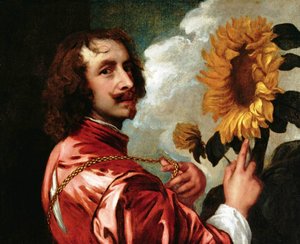
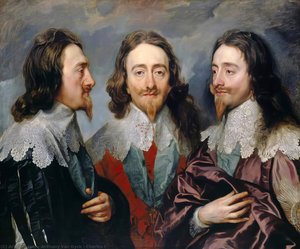
技術的な才能に加え、ヴァン・ダイクは被写体の本質 – その個性、社会的地位、そして願望 – を捉えるという並外れた能力を持っていました。彼の作品は今なお観る人々を魅了し続け、その美しさ、優雅さ、そして不朽の心理的深みによって、バロック時代の最も称賛される芸術家の一人としての地位を確固たるものにしています。『バルビ家の子供たち』や『三つのポーズのチャールズ1世』など、数多くの傑作は彼の才能の証であり、アントニ・ヴァン・ダイクが時代を超えて愛される芸術家であり続けることを保証しています。彼の影響は今日でもファッション、写真、そして現代の肖像画に見られ、彼の芸術の不朽の魅力を物語っています。
アントニ・ヴァン・ダイク

アントニ・ヴァン・ダイク

1599 - 1641 , ベルギー

基本情報

  • フルネーム: アンソニー・ヴァン・ダイク
  • 主な作品:
    • バルビ家の子供たち
    • チャールズ1世の肖像
    • ジョン・ウォートン卿
    • 慈善
    • 三位一体
    • リナルドとアルミダ
  • 出生地: アントワープ(ベルギー)
  • 国籍: フランドル人
  • 影響を与えたアーティストまたは運動: ['イギリスの肖像画']
  • 影響を受けたアーティスト: ['ピーター・パウル・ルーベンス']
  • 死亡年月日: 1641年12月9日
  • 生年月日: 1599年3月22日
  • 芸術運動またはスタイル: バロック美術
テーマ、スタイル、特徴別に分類された作品を探索しましょう。