メニュー
無料アート相談
プレビュープレビュー ARで試着ARで試着 プリントを購入 プリントを購入手描きの絵画を購入 手描きの絵画を購入 シェアするシェアする
詳細を見る詳細を見る お気に入りに追加 お気に入りに追加 ダウンロードダウンロード 似ている作品似ている作品 X線調査X線調査 スライドショースライドショー

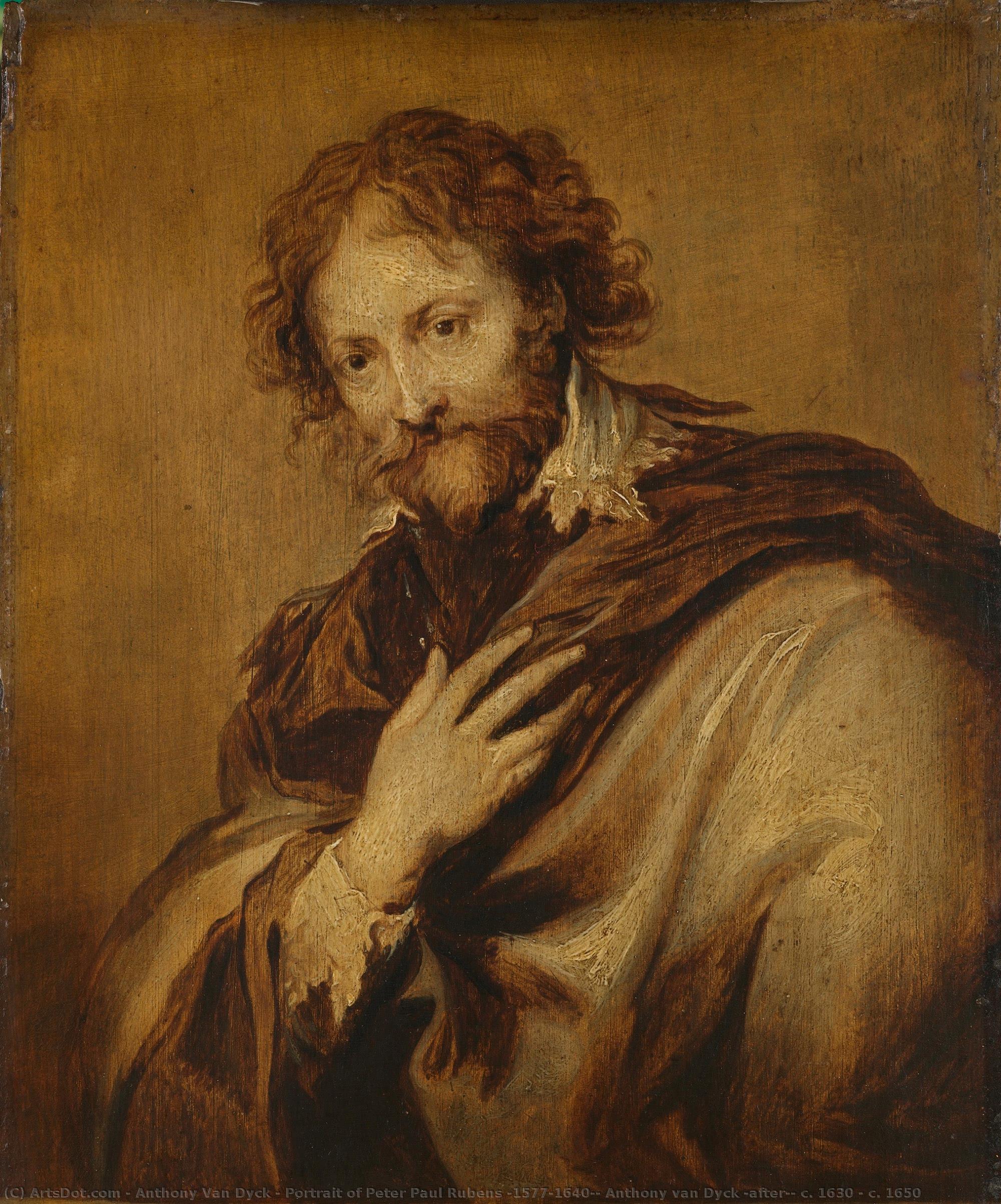
Portrait of Peter Paul Rubens (1577-1640), Anthony van Dyck (after), c. 1630 - c. 1650

A stunning grisaille copy by Sir Anthony van Dyck captures Rubens' likeness in meticulous detail, reflecting the artist’s innovative approach to portraiture during the Baroque period – explore this captivating masterpiece.

「アントニオ・ファン・ダイク」は、ルーベンスの影響を受けながら独自の洗練されたスタイルでヨーロッパ貴族の肖像画を制作したフランドルのバロック画家。特にチャールズ1世の宮廷画家として活躍し、英語美術に大きな影響を与えました。彼の作品は優雅さと繊細さで知られ、現代でも多くの人々を魅了しています。

オンラインプレビューをはるかに凌ぐ、高解像度で鮮明なデジタル画像をご購入いただけます。

各ファイルは、社内の専門家が高度なツールと熟練した手作業によるレタッチを用いて、細心の注意を払って準備されています。すべての画像において、卓越した鮮明度、正確な色彩再現性、そして繊細なディテールを保証いたします。

最終ファイルは、プロフェッショナルな編集・印刷環境ですぐにご利用いただけるよう最適化された状態で、72時間以内にメールにてお届けいたします。これは、一流のデザインスタジオ、出版社、ギャラリーから信頼されているものと同等の品質です。

デジタルアート

個人での鑑賞、印刷、クリエイティブなプロジェクト用に、高解像度ファイルをダウンロードできます。 (プリントを購入 プリントを購入手描きの絵画を購入 手描きの絵画を購入)

最終合計金額

$ 24.00

デジタル画像のご注文に付随する特典

高品質なデジタル画像配信を、確かな品質で。

ArtsDot.com を選ぶことは、単に画像を手に入れることではありません。それは、プロの手によって精密に仕上げられ、満足保証が付いた高品質なデジタルアートワークを受け取ることを意味します。ご注文いただいた際に自動的に付随する内容は、以下の通りです:

shipping_icon
メールですぐにお届け

ご注文から72時間以内に、高解像度のデジタル画像ファイルがメールでお手元に届きます。すぐにそのままご利用いただけます。

canvas_icon
AI技術で最適化されたデジタルファイル

お客様の作品は、高度なAIツールと専門家による手作業の編集を組み合わせてプロフェッショナルに最適化されており、細部のディテール、鮮明さ、そして正確な色再現性を最大限に引き出しています。

insurance_icon
一生涯無料の再送サービス

ファイルを誤って削除したり、紛失してしまったりしましたか?ご安心ください。いつでも無料で再送いたします。

tax_icon
輸入手数料は一切かかりません

関税や手数料、配送料を気にすることなく、お気に入りのアートワークをすぐにお楽しみいただけます。デジタルダウンロードは常に免税です。

color_icon
色彩再現の保証

プロ仕様のツールとカラーマネジメント技術を用いることで、デジタル画像が元の色を最大限に忠実に再現することを保証いたします。

return_icon
60日間満足保証

ご購入いただいたデジタル画像にご満足いただけない場合は、60日以内であれば、修正または100%の返金(理由を問う必要はありません)をさせていただきます。

guarantee_icon
100% 返金保証

ご満足いただけない場合は、デジタルファイルを受け取ってから60日以内であれば、理由を問わず全額返金いたします。

discount_icon
まとめ買い割引

3枚購入で10%OFF - 5枚購入で15%OFF - 10枚以上購入で20%OFF。クリエイティブなプロジェクト、ギャラリー、エージェンシーに最適です。

作品詳細

  • Medium: Oil on canvas
  • Year: 1650
  • Subject or theme: Portrait
  • Artistic style: Elegant portraiture
  • Dimensions: 26 x 20 cm
  • Location: Private Collection
  • Movement: Baroque

アート・クイズ

各質問の正解は1つだけです。

問題 1:
What is the primary attribution debate surrounding this painting?
問題 2:
The painting’s provenance includes Sir Peter Lely, highlighting which artistic lineage?
問題 3:
What was the purpose of Van Dyck’s grisaille oil sketches in relation to the printmaking process?
問題 4:
The painting’s background color contributes to its aesthetic effect by:
問題 5:
Why was SK-A-2319 initially omitted from the museum’s catalogue?
This portrait of Peter Paul Rubens (1577-1640; for a biography of whom see e.g. SK-A-346) was acquired with a portrait of the jurist and historian Jan Caspar Gevaerts (1593-1666; SK-A-2319) for the prestigious Van Winter collection as the work of Anthony van Dyck. Later both were sold as such to the Dutch government in 1907, and catalogued by the museum as autograph until 1926, and in the case of SK-A-2319 until 1934, when the present painting was omitted from the catalogue. Evers in 1944 attributed the present work to Van Dyck,5 but Burchard rejected the attribution nine years later,6 and recently Vey has followed other authorities by describing it as a copy.7 The work is to be associated with the grisaille oil sketches executed by Van Dyck in preparation for his Iconography, a series of etched and engraved portraits of famous personages, mostly contemporary. The earliest reference to such a set of prints occurs in March 1632.8 The prints were preceded by, at the least, ad vivum drawings (or drawn copies of likenesses) and oil-sketches in grisaille, the latter on a scale similar to the eventual print. The purpose of the oil sketches in the process is not certain – on the rare occasion when Van Dyck etched a portrait himself none seems to have been executed – but they must have been intended to act as a guide for the engraver. The great majority of the extant grisailles – most of which are thought to be autograph – is in the collection of the duke of Buccleuch and Queensberry at Boughton House, Northamptonshire. This group has a provenance that goes back to the artist Sir Peter Lely (1618-1680), but contains some replicas, or near replicas, and is uneven in quality.9 The museum picture closely connects with (but is larger than) the design for the portrait of Rubens at Boughton, which has been claimed to be the working grisaille10 executed in the process of creating the print.11 But differences between these two and some clumsy passages – especially in the ruff – suggest that the Buccleuch sketch may itself be a copy and not a prototype from which the print was made. It is generally agreed that the museum picture is a copy of the Buccleuch sketch; the 1976 museum catalogue suggested it was made in Van Dyck’s studio, and Luijten has more recently claimed that the original grisailles were kept by Van Dyck and that he ‘had his pupils copy them’.12 Such a circumstance would be a repetition of what was recollected as having happened with the Apostle series13 during Van Dyck’s first Antwerp period (c. 1613-1620) and would explain the large number of extant copies of the grisaille sketches. Vey has implicitly rejected this theory by referring to ‘a number of able painters [in Antwerp and Brussels] who could translate a Van Dyck drawing or painting into a grisaille … It goes pretty much without saying that their grisailles would have subsequently found their way into Van Dyck’s workshop stock.’14 The museum picture is not a grisaille, but rather is executed in shades of brown, and although Vey has described all the Boughton sketches as grisailles, Luijten has stated that some sketches – perhaps not those that were connected with the process of making the prints – were ‘composed in brown or greenish hues’.15 This work was executed with no underdrawing in brunaille. The weak handling of the Rijksmuseum painting suggests quite a distance from Van Dyck or his studio, if the latter did indeed make such copies. It is quite possible that this brunaille was painted after, but not long after, Van Dyck’s death, but precisely when is impossible to estimate. The hand seems not the same as that which executed the Gevaerts portrait (SK-A-2319). Klein has estimated that the oak support (from the German/Netherlandish region) would have been ready for use ‘possibly from 1630’, while ‘more plausible’ would be a date from 1640.16 The prototype from which Paul Pontius (1603-1658) made his engraving for the Iconography would have been executed during Van Dyck’s ‘second’ Antwerp period (c. 1627-1632/1634), around 1630. Van Dyck must have known Rubens’s appearance well from early in his career and we know that they had encountered one another17 in the early summer of 1628, so it is curious that (as has been remarked) Van Dyck endowed his sitter with a thinning head of hair, for Rubens was already bald by the middle of the second decade.18 Is it possible that Van Dyck was unaware of this, because Rubens may have remained covered (i.e. did not remove his hat) when they met? Vey elaborated Liedtke’s19 proposal by suggesting that the sitter’s ‘forward leaning pose’ was inspired by Rubens’s own Self-Portrait in the Rubenshuis.20 Gregory Martin, 2022

作家の略歴

アントニ・ヴァン・ダイク:ヨーロッパ宮廷を彩るフランドルの巨匠

アントニ・ヴァン・ダイクは、1599年にアントワープで生まれ、夭折の天才としてバロック美術史にその名を刻んだフランドル出身の画家です。彼の短い生涯は、故郷であるフラマン地方からイタリア、そしてイングランド宮廷へと続く芸術探求と華麗な依頼の連続でした。幼い頃から並外れた才能を発揮し、ヘンドリック・ヴァン・バーレンの工房に入門して主流の様式を吸収すると同時に、すぐにピーター・パウル・ルーベンスとの共同作業を通して、その芸術的基盤を築き上げました。ルーベンスからダイナミックな構図、豊かな色彩、光と影の巧みな扱い方を学びましたが、ヴァン・ダイクは独自の道を切り開き、優雅さと洗練さを特徴とする独自のスタイルを確立しました。

イタリアでの研鑽と様式の誕生

1621年頃から始まるイタリアへの滞在は、ヴァン・ダイクの芸術的成長にとって決定的な時期となりました。特にジェノヴァに長く滞在し、その地の貴族たちの庇護を受けながら、彼を特徴づける洗練されたスタイルを磨き上げました。優美なポーズ、豪華な衣装、そして高貴な気品が漂う彼のイタリア絵画は、単なる肖像画を超え、被写体の内面的な性格や社会的地位までも捉えています。ルーベンスの作品に見られるような力強いエネルギーとは対照的に、ヴァン・ダイクの肖像画からは抑制された落ち着きと優雅さがにじみ出ています。この時期には、著名な芸術家、学者、君主たちをモデルにした精緻な肖像版画群『Iconography』にも取り組み、その卓越した技術力を世界に示すとともに、版画家としての地位も確立しました。これらの版画は単なる記録ではなく、被写体の名声と知性を伝えるために細心の注意を払って制作された芸術作品でした。

イングランド宮廷の画家:チャールズ1世の肖像

1632年、ヴァン・ダイクはチャールズ1世からの招聘を受け、イングランド宮廷の画家となります。この任命は、彼自身のキャリアだけでなく、イギリスの肖像画にも大きな変革をもたらしました。すでに名声が高まっていた彼は、王室に不可欠な存在となり、権力、威厳、そして神授による正統性を投影するイメージを制作するという重要な任務を担いました。特にチャールズ1世の肖像は特筆すべきものであり、それまでの硬直した形式的な表現から脱却し、ダイナミックでカリスマ的な指導者としての王の姿を描き出しました。ドラマチックな光の使い方、流れるようなジェスチャー、そして慎重に選び抜かれた背景を用いることで、視覚的に魅力的であると同時に政治的にも力強いイメージを作り上げました。彼の影響は王室にとどまらず、イギリス貴族の美的感覚を何世代にもわたって形作りました。ヴァン・ダイクは肖像画を描くだけでなく、王位のイメージを構築し、その後の1世紀以上にわたり王室に対する人々の認識に影響を与えました。

遺産と不朽の影響

1641年の若き日の死によって、芸術界は才能あふれる巨匠を失いましたが、彼の遺産は今日に至るまで生き続けています。イギリスの肖像画への影響は計り知れず、後進の画家たちが模倣しようとした優雅さと洗練さの基準を確立しました。
  • 技術革新: 油絵と版画の両方に精通し、常に新しい技法を実験していました。
  • 様式の洗練: 彼の肖像画は、優美なポーズ、豪華な衣装、そして微妙な心理描写によって特徴づけられています。
  • 宮廷への影響: イギリスの王室のイメージを変革し、権力と威厳の視覚的言語を創造しました。
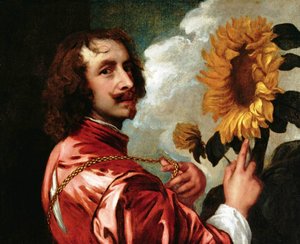
技術的な才能に加え、ヴァン・ダイクは被写体の本質 – その個性、社会的地位、そして願望 – を捉えるという並外れた能力を持っていました。彼の作品は今なお観る人々を魅了し続け、その美しさ、優雅さ、そして不朽の心理的深みによって、バロック時代の最も称賛される芸術家の一人としての地位を確固たるものにしています。『バルビ家の子供たち』や『三つのポーズのチャールズ1世』など、数多くの傑作は彼の才能の証であり、アントニ・ヴァン・ダイクが時代を超えて愛される芸術家であり続けることを保証しています。彼の影響は今日でもファッション、写真、そして現代の肖像画に見られ、彼の芸術の不朽の魅力を物語っています。
アントニ・ヴァン・ダイク

アントニ・ヴァン・ダイク

1599 - 1641 , ベルギー

プロフィール概要

  • フルネーム: アンソニー・ヴァン・ダイク
  • 主な作品:
    • バルビ家の子供たち
    • チャールズ1世の肖像
    • ジョン・ウォートン卿
    • 慈善
    • 三位一体
    • リナルドとアルミダ
  • 出生地: アントワープ(ベルギー)
  • 国籍: フランドル人
  • 影響を与えたアーティストまたは運動: ['イギリスの肖像画']
  • 影響を受けたアーティスト: ['ピーター・パウル・ルーベンス']
  • 死亡年月日: 1641年12月9日
  • 生年月日: 1599年3月22日
  • 芸術運動またはスタイル: バロック美術