

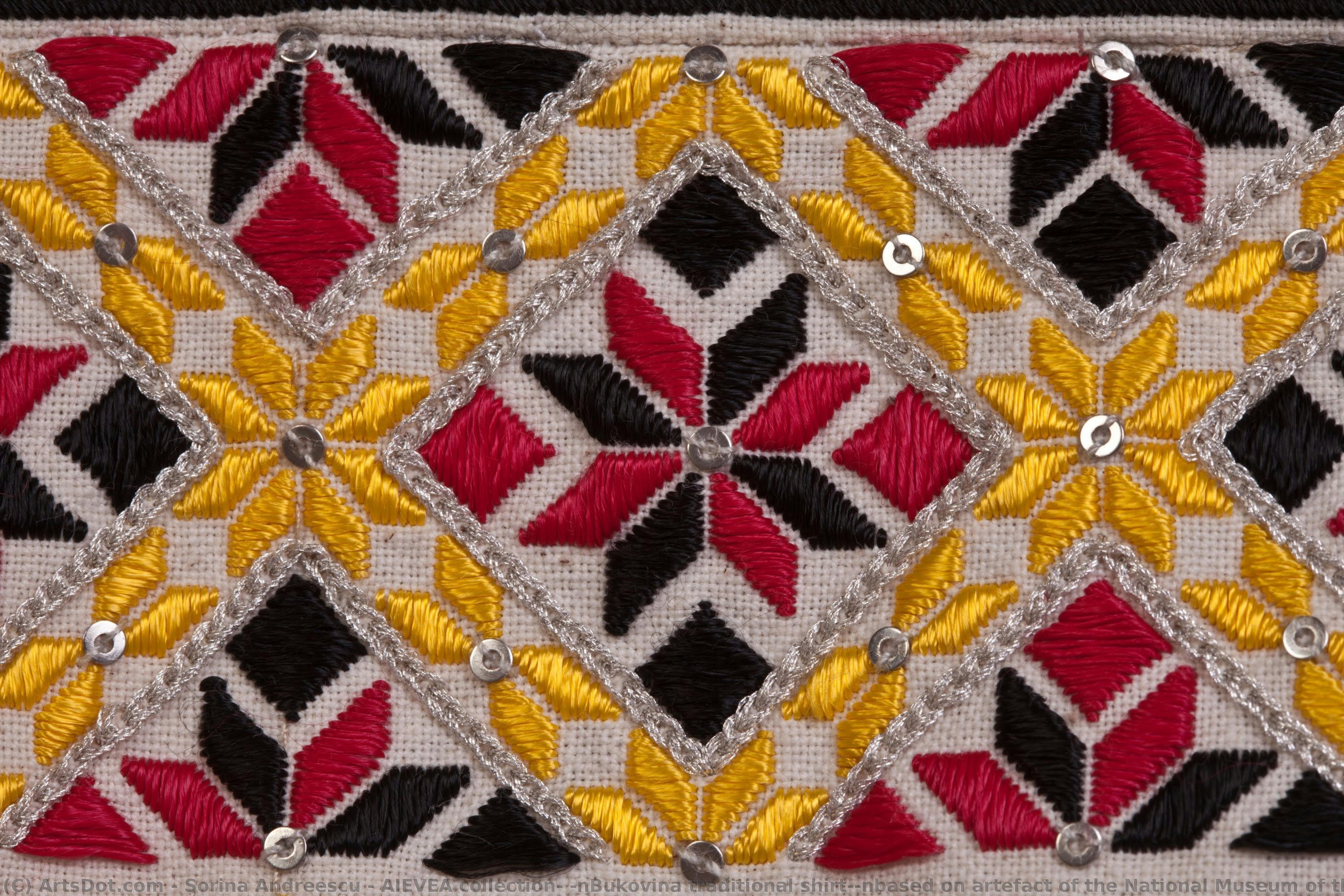
 プレビュー
プレビュー
 シェアする
シェアする シェアする
シェアする
 詳細を見る
詳細を見る

 ダウンロード
 似ている作品
 X線調査
X線調査 スライドショー
AIEVEA collection; \nBukovina traditional shirt;\nbased on artefact of the National Museum of the Romanian Peasant


 詳細を見る
詳細を見る
ジークレー/アートプリント
迅速な制作と多彩な仕上げオプションを備えた、ミュージアムクオリティのジークレーまたはキャンバスプリント。 ( 手描きの絵画を購入 画像を購入)




































作品のオリジナル比率に合わせた、当店の規定サイズからお選びください。

特定のフレームやスペースに合わせて、ご自身でサイズを指定することも可能です。選択されたサイズが元の画像の比率と一致しない場合、作品をトリミングするか、鏡面反射または単色での塗りつぶしによって画像を拡張いたします。制作を開始する前に、ご確認用のデジタルモックアップをお送りいたします。
画面上のプレビューには、実際のトリミングや拡張は反映されませんのでご注意ください。最終的な構図を正確に確認できるのは、モックアップのみとなります。
カスタムサイズも承っておりますが、元の比率を維持するためには、あらかじめ用意されたリストからサイズを選択することをお勧めいたします。


 ガラスオプションは、110cm未満のサイズでのみご利用いただけます。

AIEVEA collection; \nBukovina traditional shirt;\nbased on artefact of the National Museum of the Romanian Peasant
ジークレー/アートプリント
複製画のサイズ
-


合計金額
$ 62
関連作品









アーティストの略歴
Leonard Hilton McGurr: The Genesis of Futura 2000 – A Street Art Icon
The story of Futura 2000 isn’t one of formal artistic training or gallery openings; it's a narrative etched in the vibrant, rebellious energy of New York City’s late 1960s and early 70s street art scene. Born Leonard Hilton McGurr in 1955, he emerged from the crucible of that era as Futura 2000 – a name reflecting his ambition to be a “future” artist, a bold declaration against the established norms. His origins are deeply rooted in the Bronx, a borough teeming with creativity and social unrest, providing fertile ground for an artistic voice demanding to be heard.
Early influences were diverse and immediate: the raw energy of graffiti art emerging from subway cars, the burgeoning hip-hop culture, and the political activism that permeated the city. He began his career as a member of the “Soul Artists of Zoo York,” collaborating with figures like ALI (Al Diaz) and Jean-Michel Basquiat – a collective pushing boundaries and challenging perceptions of art and urban space. This period was crucial in shaping his visual language, characterized by sharp geometric forms, bold colors, and an almost machine-like precision that would become his signature.
The Rise of Geometric Futurism
Futura’s style evolved rapidly during the early to mid-1980s. He moved beyond simple tagging, developing a highly stylized approach centered around geometric abstraction. His work became increasingly recognizable – a series of interlocking circles, squares, and triangles that seemed to pulse with energy. This aesthetic wasn't merely decorative; it was a deliberate attempt to capture the dynamism of urban life, the relentless flow of movement, and the underlying structure of the city itself.
Crucially, Futura’s work began appearing on stage backdrops for iconic bands like The Clash in 1981. This marked a significant shift – moving from the anonymity of the subway to the bright lights of concert venues. It demonstrated his ability to translate his visual language into a dynamic and engaging experience for a wider audience, solidifying his position as a key figure in the burgeoning New York art scene.
Collaborations and Expanding Horizons
The 1980s witnessed a period of intense collaboration for Futura. He worked with Keith Haring, Jean-Michel Basquiat, Richard Hambleton, and Kenny Scharf at Patti Astor’s Fun Gallery – a pivotal space that showcased emerging street artists and challenged the traditional art market. These collaborations weren't simply about sharing space; they were about exchanging ideas and pushing each other creatively.
Beyond his work with The Clash, Futura expanded into graphic design, creating striking record sleeves for bands like Blondie and designing logos for various brands. This demonstrated a versatility that extended beyond the purely visual – he was adapting his style to different mediums and industries while maintaining his core aesthetic principles. His designs were instantly recognizable, characterized by their bold typography and geometric forms.
Legacy and Continued Relevance
While Futura’s early career was largely defined by street art, his influence has extended far beyond the subculture. His geometric style has been adopted by designers, architects, and artists worldwide, demonstrating the enduring appeal of his visual language. He remains a significant figure in the history of street art, a pioneer who helped to elevate it from a form of vandalism to a recognized art movement.
Today, Futura continues to create work, both large-scale murals and smaller paintings and prints. His legacy is not just about the images he created but also about his role in shaping the cultural landscape of New York City – a testament to the power of street art to challenge conventions, express dissent, and inspire creativity.
sorina andreescu
2000 - , Romania
基本情報
- Artistic Movement Or Style: Graffiti art, graphic design
- Artists Or Movements Influenced By This Artist:
- Keith Haring
- Jean-Michel Basquiat
- Artists Who Influenced This Artist:
- ALI
- The Clash
- Date Of Birth: November 17, 1955
- Full Name: Leonard Hilton McGurr”, AKA Futura 2000
- Nationality: American
- Notable Artworks:
- Various graffiti murals
- Record sleeve designs
- Place Of Birth: New York City

