

 シェアする
シェアする シェアする
シェアする
 詳細を見る
詳細を見る

 ダウンロード
 似ている作品
 スライドショー
 Stats
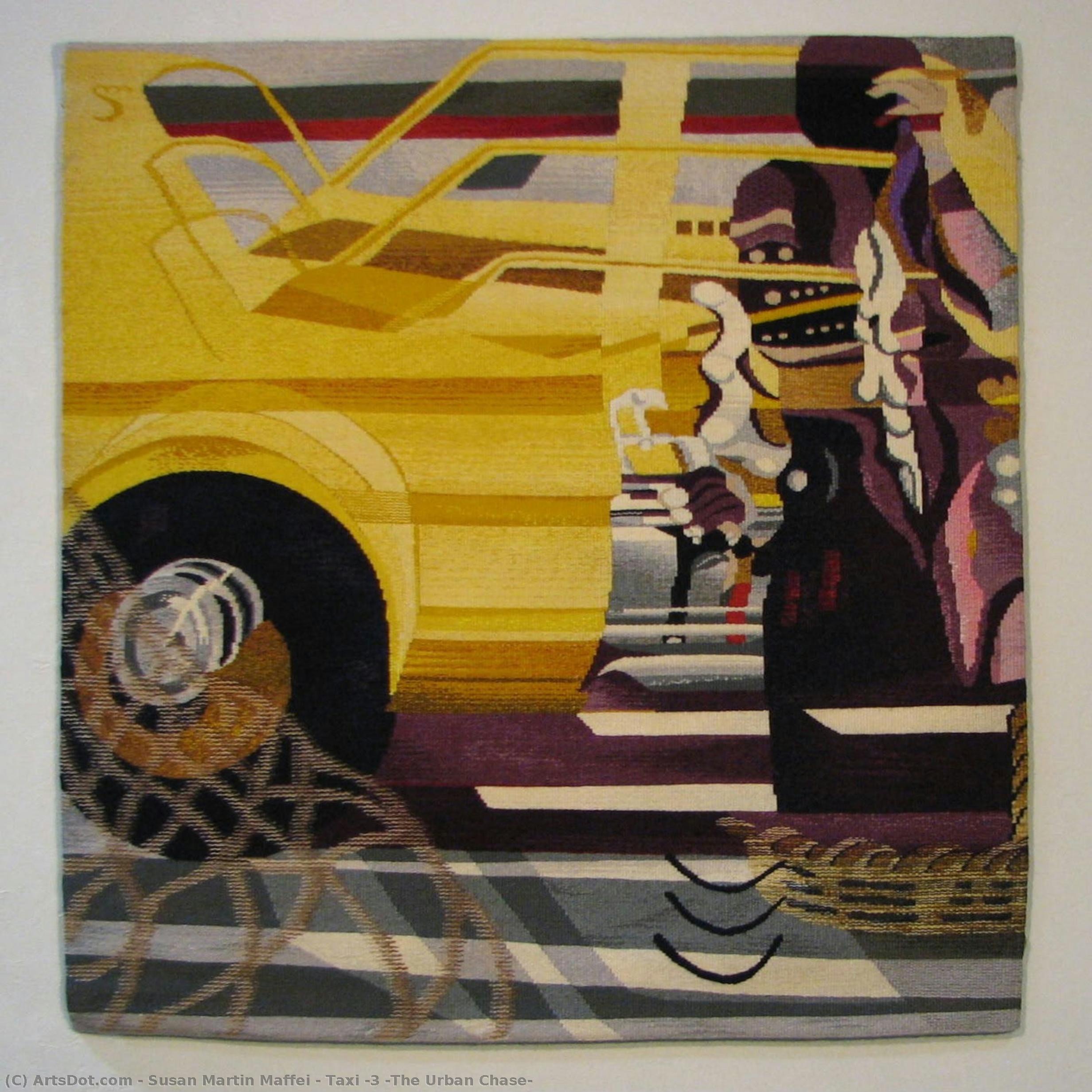
StatsTaxi #3 (The Urban Chase)


 詳細を見る
詳細を見る
ジークレー/アートプリント
迅速な制作と多彩な仕上げオプションを備えた、ミュージアムクオリティのジークレーまたはキャンバスプリント。 ( 手描きの絵画を購入 Switch to Digital Image)




































作品のオリジナル比率に合わせた、当店の規定サイズからお選びください。

特定のフレームやスペースに合わせて、ご自身でサイズを指定することも可能です。選択されたサイズが元の画像の比率と一致しない場合、作品をトリミングするか、鏡面反射または単色での塗りつぶしによって画像を拡張いたします。制作を開始する前に、ご確認用のデジタルモックアップをお送りいたします。
画面上のプレビューには、実際のトリミングや拡張は反映されませんのでご注意ください。最終的な構図を正確に確認できるのは、モックアップのみとなります。
カスタムサイズも承っておりますが、元の比率を維持するためには、あらかじめ用意されたリストからサイズを選択することをお勧めいたします。


 ガラスオプションは、110cm未満のサイズでのみご利用いただけます。

Taxi #3 (The Urban Chase)
ジークレー/アートプリント
複製画のサイズ
-


合計金額
$ 62
Taxi #3 (The Urban Chase): A Fractured Reflection of Modern Life
Susan Martin Maffei’s “Taxi #3 (The Urban Chase)” is more than just a depiction of a yellow cab speeding through the streets of New York City; it's a profound meditation on perception, identity, and the fragmented nature of modern experience. Created in 1986 as part of a collaborative tapestry series initiated by Ruth Dundas, this artwork embodies the Scheuer Tapestry Studio’s pioneering approach to textile art – a bold experiment in translating a single photographic image into four distinct artistic visions.
The original photograph, a triple-paned reflection of Balducci's Delicatessen, was deliberately fractured by the window glass. This initial disruption served as the catalyst for the weavers’ individual interpretations. Maffei, along with three other artists – Beverly Godfrey, Deborah Hildreth, and Joyce Hulbert – were given exclusive control over their compositions, tasked with capturing not just what they saw, but how they *felt* about it. The resulting tapestries represent a powerful statement on the subjective nature of reality; each weaver’s unique perspective transforms the same scene into something entirely new.
Technique and Craftsmanship: A Legacy of Skilled Hands
“Taxi #3” is a testament to the enduring power of traditional textile techniques. Hand-pieced, hand-stitched, and machine-stitched, each thread contributes to a rich tapestry of texture and color. The meticulous craftsmanship reflects the dedication of the Scheuer Tapestry Studio’s apprentices – notably, Beverly Godfrey, who was one of the studio's first apprentices, Susan Maffei’s wife Archie Brennan, founder of the Dovecot Tapestry Workshop in Scotland, and Deborah Hildreth. This collaborative environment fostered innovation and a deep respect for the art form, resulting in a piece that is both visually arresting and technically masterful.
Symbolism and Emotional Resonance
The image itself – a speeding yellow taxi – immediately evokes a sense of urgency and dynamism. The harried nature of city life is palpable, mirroring the anxieties and frenetic energy of urban existence. The reflection in the window adds another layer of complexity, suggesting multiple realities coexisting simultaneously. Maffei’s interpretation captures this feeling perfectly, portraying not just a vehicle but a symbol of relentless movement and the constant pursuit of something – perhaps simply a ride home.
Historical Context and Significance
"Taxi #3 (The Urban Chase)" stands as one of the first truly collaborative projects undertaken at the Scheuer Tapestry Studio. Its subsequent exhibition travels and inclusion in numerous publications solidified its place within the history of contemporary textile art, demonstrating a shift towards conceptual exploration alongside traditional weaving techniques. The artwork’s enduring appeal lies in its ability to resonate with viewers on multiple levels – as a striking visual composition, a technical achievement, and a poignant reflection on the human condition.
関連作品

アーティストの略歴
Henri Matisse: A Life Painted in Color
Born Henri Émile Benoît Matisse on December 31, 1869, in Cateau-Cambrésis, France, Matisse’s journey to becoming one of the most influential artists of the 20th century was marked by a relentless pursuit of color and form. His life spanned nearly nine decades, witnessing and profoundly shaping the evolution of modern art. From his early struggles with artistic recognition to his later mastery of decorative abstraction, Matisse's career is a testament to the power of observation, experimentation, and an unwavering belief in the expressive potential of visual language.
Matisse’s formative years were spent studying law at the École Supérieure des Beaux-Arts in Paris, but it was his encounter with Impressionism and Post-Impressionism that truly ignited his artistic passion. Initially drawn to the vibrant palettes of artists like Gauguin and Van Gogh, he quickly developed a distinctive style characterized by bold colors, simplified forms, and a focus on capturing the essence of subjects rather than meticulous detail. This early experimentation laid the groundwork for his later innovations in Fauvism, a movement he co-founded alongside André Derain and Maurice de Vlaminck.
The Fauvist Revolution and Beyond
Around 1905, Matisse began to radically depart from traditional artistic conventions. His paintings of this period, often referred to as Fauvist works, are instantly recognizable for their intense, non-naturalistic colors – shocking reds, vibrant blues, and luminous yellows – applied with a deliberate disregard for realistic representation. Works like *Woman with a Hat* (1905) and *The Dessert* (1906) exemplify this bold approach, prioritizing emotional impact over photographic accuracy. This period was not simply about color; it represented a rejection of academic constraints and an embrace of pure expression.
Following the Fauvist phase, Matisse’s style evolved gradually. He explored various techniques, including collage – incorporating real-world materials like paper and fabric into his compositions – and experimented with different subjects, from portraits and landscapes to still lifes and decorative panels. The influence of Japanese prints became increasingly apparent during this time, particularly in the flattened perspectives and simplified shapes that characterized his work. The 1917 move to Nice provided a new environment and inspiration, leading to a more relaxed and lyrical style.
Mature Style: Harmony, Rhythm, and Decorative Abstraction
By the 1920s, Matisse had established his mature artistic vision. His paintings were characterized by a remarkable sense of harmony, rhythm, and decorative abstraction. He meticulously arranged elements within each composition to create visually pleasing patterns and balanced arrangements. Works like *Blue Nude* (1908) and *The Red Studio* (1911) demonstrate this masterful control over color, line, and form. These pieces are not merely depictions of subjects; they are carefully constructed visual experiences designed to evoke specific emotions and sensations.
Despite his growing fame, Matisse remained committed to exploring new avenues in his art. He continued to experiment with different media, including sculpture and paper cutouts, often seeking to distill the essence of a subject down to its most essential elements. His later works, particularly those created during World War II while he was sheltering in Vence, France, are characterized by a remarkable simplicity and clarity – a testament to his resilience and artistic integrity.
Legacy and Historical Significance
Henri Matisse’s impact on the course of modern art is undeniable. He liberated color from its descriptive function, demonstrating its power as an independent expressive force. His influence can be seen in the work of countless artists who followed, including those associated with Cubism, Surrealism, and Abstract Expressionism. Matisse's emphasis on decorative design and his exploration of formal elements—line, shape, and color—helped to pave the way for a new generation of artists who sought to redefine the boundaries of artistic expression.
Beyond his technical innovations, Matisse’s work offers a profound meditation on beauty, joy, and the human experience. His paintings are not simply aesthetically pleasing; they invite us to contemplate the world around us with fresh eyes and to appreciate the simple pleasures of life. Henri Matisse died on November 3, 1954, leaving behind a rich and enduring legacy as one of the most beloved and influential artists of all time.

susan martin maffei
1954 - , United States of America
基本情報
- Artistic Movement Or Style: Fauvism, Modernism, Post-Impressionism
- Artists Or Movements Influenced By This Artist:
- André Derain
- Maurice de Vlaminck
- Fauvism
- Artists Who Influenced This Artist:
- Paul Gauguin
- Vincent van Gogh
- Edgar Degas
- Date Of Birth: December 31, 1869
- Date Of Death: November 3, 1954
- Full Name: Henri Matisse
- Nationality: French
- Notable Artworks:
- Woman with a Hat
- The Joy of Life
- Blue Nude (Souvenir de Biskra)
- Dance
- Red Studio
- The Snail
- Place Of Birth: Le Cateau-Cambrésis, France
関連記事
Concrete Narratives: Exploring Urban Life in Modern & Contemporary Art
Explore the evolution of cityscape painting with ArtsDot. Discover key artists from Realism to contemporary movements & invest in timeless urban visions. Expert guidance, museum-quality reproductions.
Concrete Visions: Exploring the Urban Landscape in Painting – From Realism to Contemporary Art
Explore the evolution of cityscape painting from Realism to contemporary art with ArtsDot. Discover key artists & invest in timeless urban visions. Expert guidance, museum-quality reproductions.
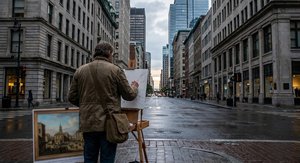
Urban Visions: A Historical & Artistic Exploration of the Cityscape in Painting
Explore the evolution of cityscape painting from historical maps to Impressionist masterpieces. Discover artists like Caillebotte & Utrillo. Find museum-quality reproductions at ArtsDot.
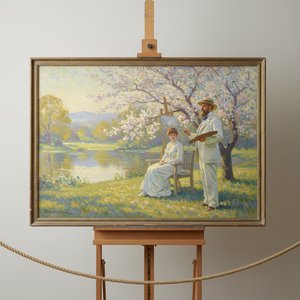
William Merritt Chase: A Study in American Impressionism & Artistic Luminosity
Explore the life & work of William Merritt Chase, a leading American Impressionist painter and influential art educator. Discover his vibrant portraits, landscapes, and lasting legacy with ArtsDot.
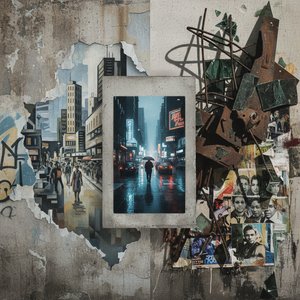
Concrete Visions: Exploring Representations of Urban Life in Modern & Contemporary Art
Explore the evolution of cityscape painting from Realism to contemporary art. Discover key artists & invest in timeless urban visions with ArtsDot's expert guidance and museum-quality reproductions.