

 プレビュー
プレビュー
 シェアする
シェアする シェアする
シェアする
 詳細を見る
詳細を見る

 ダウンロード
 似ている作品
 X線調査
X線調査 スライドショー
 統計情報
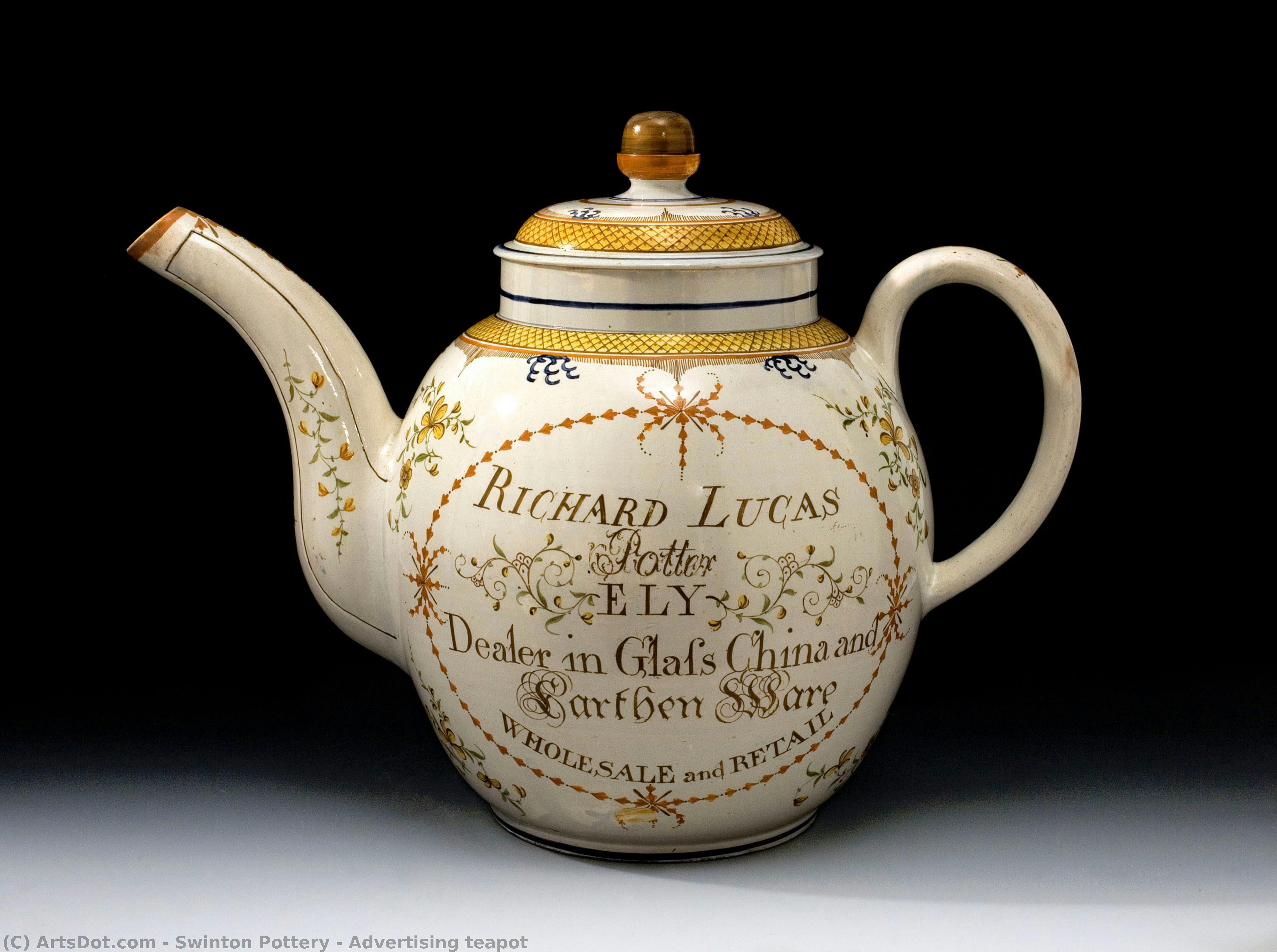
統計情報Advertising teapot

 詳細を見る
詳細を見る
手描き油彩複製画
当社のアーティストが、お客様のご希望のサイズと額縁に合わせて、キャンバスに手描きで制作する油彩画です。 ( プリント版に切り替え デジタル画像販売へ切り替え)




































作品のオリジナル比率に合わせた、当店の規定サイズからお選びください。

特定のフレームやスペースに合わせて、ご希望のサイズをご入力いただけます。選択されたサイズが元の画像の比率と異なる場合、アートワークをトリミングするか、手描きで要素を追加して絵画を拡張いたします。デジタルモックアップ を制作し、制作開始前にご確認(承認)をいただきます。
画面上のプレビューは、実際のトリミングや拡張を正確に反映しているものではありません。最終的な構図は、モックアップによってのみ正確にご確認いただけます。
カスタムサイズもご利用いただけますが、元の比率を維持するためには、あらかじめ用意されたリストからサイズを選択することをお勧めいたします。
ご注文後、ArtsDot.com チームより詳細な指示をお送りするとともに、仕上がりイメージ(モックアップ)をご提供いたします。


 ガラスオプションは、110cm未満のサイズでのみご利用いただけます。

Advertising teapot
複製技法
複製画のサイズ
-


合計金額
$ 263
関連作品










アーティストの略歴
A Legacy of Yorkshire Clay: The Story of Swinton Pottery
Nestled within the industrial heart of the Dearne Valley in South Yorkshire, the story of Swinton Pottery is more than a mere chronicle of manufacturing; it is a sweeping narrative of regional craftsmanship and Victorian artistic ambition. Established in 1745 by Edward Butler on land graciously bequeathed by the Charles, Marquis of Rockingham, this pottery emerged from the very earth it sought to transform. The genesis of this storied institution lay in Butler’s keen eye for the local landscape, specifically his recognition that the clay deposits surrounding Swinton Common possessed a rare and exceptional quality. While initially destined for the rugged utility of brickmaking and tiling, these minerals held the potential for much finer decorative arts, setting the stage for a century of ceramic evolution.
The early years of the pottery were defined by a spirit of collaborative innovation. By partnering with skilled artisans like William Malpass, the foundation was laid for a tradition that would bridge the gap between functional earthenware and delicate porcelain. As the decades progressed, Swinton became synonymous with its distinctive “Brown China,” a creamy-toned earthenware celebrated for its smooth texture and adorned with intricate, lifelike floral motifs. This era of development was deeply influenced by the broader ceramic movements in the West Riding of Yorkshire, particularly through connections with figures like John Green, whose work at Leeds Pottery helped cement Swinton’s reputation as a center of excellence where technical precision met aesthetic grace.
The Zenith of Artistry and Royal Recognition
As the 19th century unfolded, Swinton Pottery underwent a profound metamorphosis, transitioning from a producer of sturdy wares to a beacon of high-art porcelain. Under the visionary stewardship of William Brameld, the pottery reached its artistic zenith. Brameld possessed an extraordinary ability to navigate the complex intersection of Victorian commerce and fine art, pushing the boundaries of what local clay could achieve. It was during this period that the works produced at the Rockingham Works began to capture the imagination of the British elite, eventually earning the prestigious distinction of royal patronage from Queen Victoria herself.
The mastery displayed in their porcelain services for Buckingham Palace remains a testament to the unparalleled skill of the Swinton artisans. Their work was characterized by:
- Exquisite Gilding: The application of fine gold leaf that caught the light with a regal brilliance.
- Intricate Enameling: A technique used to create vibrant, multi-layered colors that brought floral and classical scenes to life.
- Rococo Elegance: An embrace of the ornate, flowing styles that defined the era's taste for luxury and grandeur.
This era of flourishing production saw the pottery move beyond simple utility into the realm of the ornamental, creating pieces that were as much sculptures as they were vessels. The ability to produce such high-quality porcelain in a regional setting challenged the dominance of southern English potteries and placed South Yorkshire firmly on the international map of ceramic excellence.
Historical Significance and the End of an Era
Despite its period of unparalleled glory, the story of Swinton Pottery is also one of the inevitable economic shifts that reshaped the British landscape. The very industry that fueled its rise—the heavy manufacturing and coal-driven economy of the Dearne Valley—eventually brought pressures that even the most skilled artisans could not overcome. By 1842, the pottery succumbed to mounting economic challenges, leaving behind a legacy that would be preserved through the artifacts themselves rather than a continuous factory line. Though the fires of the original kilns eventually cooled, the historical significance of Swinton Pottery remains etched in the annals of British art history.
Today, the memory of Swinton Pottery survives through museum collections and the enduring fascination of ceramic historians. It stands as a symbol of a time when local resources were transformed into objects of international renown, representing a perfect harmony between the raw, industrial strength of Yorkshire and the delicate, refined beauty of fine porcelain. The remnants of its history, including the preserved Rockingham Kiln, serve as poignant reminders of a period when the clay of Swinton was used to craft the very essence of Victorian elegance.
swinton pottery
United Kingdom
基本情報
- Artistic Movement Or Style: Traditional Pottery Style
- Full Name: swinton pottery
- Nationality: British
- Notable Artworks: ['Advertising teapot']
- Place Of Birth: United Kingdom