

 プレビュー
プレビュー
 シェアする
シェアする シェアする
シェアする
 詳細を見る
詳細を見る

 ダウンロード
 似ている作品
 X線調査
X線調査 スライドショー
 Stats
StatsLiving Fire


 詳細を見る
詳細を見る
オンラインプレビューをはるかに凌ぐ、高解像度で鮮明なデジタル画像をご購入いただけます。
各ファイルは、社内の専門家が高度なツールと熟練した手作業によるレタッチを用いて、細心の注意を払って準備されています。すべての画像において、卓越した鮮明度、正確な色彩再現性、そして繊細なディテールを保証いたします。
最終ファイルは、プロフェッショナルな編集・印刷環境ですぐにご利用いただけるよう最適化された状態で、72時間以内にメールにてお届けいたします。これは、一流のデザインスタジオ、出版社、ギャラリーから信頼されているものと同等の品質です。
デジタルアート
個人での鑑賞、印刷、クリエイティブなプロジェクト用に、高解像度ファイルをダウンロードできます。 ( Switch to Print 手描きの絵画を購入)
デジタル画像のご注文に付随する特典
高品質なデジタル画像配信を、確かな品質で。
ArtsDot.com を選ぶことは、単に画像を手に入れることではありません。それは、プロの手によって精密に仕上げられ、満足保証が付いた高品質なデジタルアートワークを受け取ることを意味します。ご注文いただいた際に自動的に付随する内容は、以下の通りです:

メールですぐにお届け
ご注文から72時間以内に、高解像度のデジタル画像ファイルがメールでお手元に届きます。すぐにそのままご利用いただけます。

AI技術で最適化されたデジタルファイル
お客様の作品は、高度なAIツールと専門家による手作業の編集を組み合わせてプロフェッショナルに最適化されており、細部のディテール、鮮明さ、そして正確な色再現性を最大限に引き出しています。

一生涯無料の再送サービス
ファイルを誤って削除したり、紛失してしまったりしましたか?ご安心ください。いつでも無料で再送いたします。

輸入手数料は一切かかりません
関税や手数料、配送料を気にすることなく、お気に入りのアートワークをすぐにお楽しみいただけます。デジタルダウンロードは常に免税です。

色彩再現の保証
プロ仕様のツールとカラーマネジメント技術を用いることで、デジタル画像が元の色を最大限に忠実に再現することを保証いたします。

100日間満足保証
ご購入いただいたデジタル画像にご満足いただけない場合は、100日以内であれば、理由を問わず修正または100%の返金対応をさせていただきます。

100% 返金保証
ご満足いただけない場合は、デジタルファイルを受け取ってから100日以内であれば、理由を問わず全額返金いたします。

まとめ買い割引
3枚購入で10%OFF - 5枚購入で15%OFF - 10枚以上購入で20%OFF。クリエイティブなプロジェクト、ギャラリー、エージェンシーに最適です。
A Visionary Descent into the Mystical
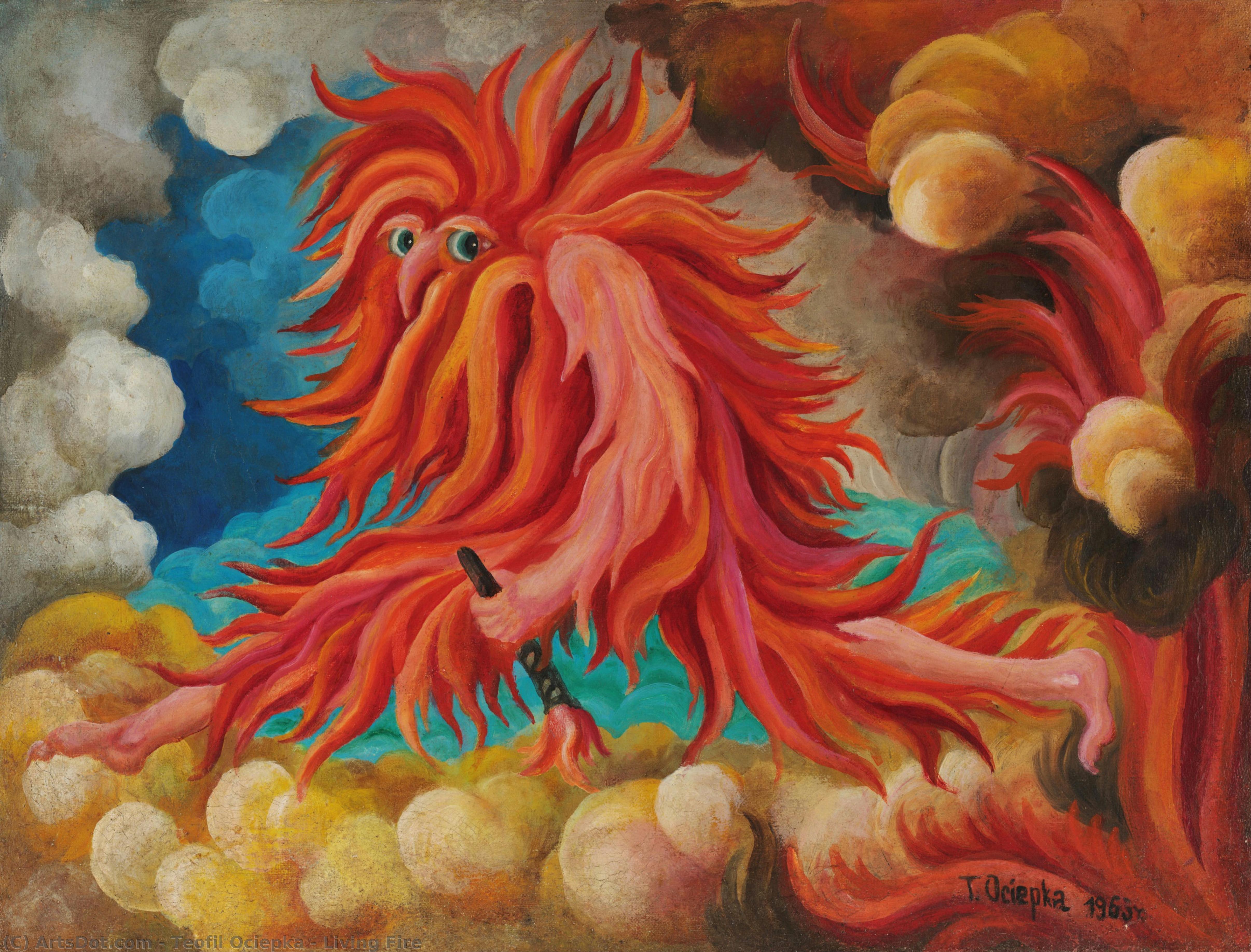
In the hauntingly beautiful Living Fire, created in 1963, we encounter the profound and enigmatic world of Teofil Ociepka, a master of Polish Primitivism. This large-scale oil on canvas serves as a window into a realm where the boundaries between the physical and the spiritual dissolve. At the heart of this composition sits a formidable red creature, a being of mythic proportions that commands the viewer's immediate attention. With its long, flowing hair and imposing horns, the figure evokes the primal energy of a dragon or a demonic entity, yet there is an unexpected, humanizing touch in the pipe held within its mouth. This singular detail introduces a surreal, almost whimsical tension to an otherwise fearsome subject, inviting us to contemplate the duality of nature—the coexistence of the wild and the domestic, the terrifying and the mundane.
The painting’s atmosphere is thick with the esoteric energy that defined Ociepka’s life and work. As a self-taught artist, occultist, and theosophist, Ociepka did not merely paint scenes; he channeled visions. The composition is far from static; it is a dynamic tapestry where smaller, indistinct figures drift through the background like echoes of a forgotten dream. These secondary figures, disconnected from the central beast, create a sense of vast, populated mythos, suggesting that the main creature is but one inhabitant of a much larger, unseen spiritual landscape. For the collector or interior designer, this piece offers more than just visual interest; it provides a profound narrative depth that can serve as a powerful focal point in any curated space.
Technique and the Language of Symbolism
Ociepka’s technique is a masterful study in the power of Primitivism. Eschewing the complex anatomical precision of academic realism, he utilizes bold colors and strikingly flat forms to achieve a heightened emotional resonance. The use of vibrant reds and deep, saturated tones in Living Fire creates a sense of heat and movement, making the canvas feel as though it is pulsing with life. His brushwork, while seemingly simple, possesses a rhythmic quality that guides the eye through the swirling textures of the creature's mane and the mysterious depths of the background. This stylistic choice allows the symbolic weight of the imagery to take precedence over literal representation, forcing the viewer to engage with the painting on an intuitive, rather than purely intellectual, level.
The symbolism within the work is deeply rooted in Ociepka’s fascination with the occult and theosophical doctrines. Every element—from the fiery hue of the central figure to the enigmatic presence of the smaller spirits—functions as a sigil or a symbol within a larger cosmic drama. The painting acts as a bridge between folk art traditions and high mysticism, making it an extraordinary piece for those who appreciate art that explores the hidden layers of reality. To possess a reproduction of Living Fire is to bring a fragment of this spiritual exploration into one's own environment, offering a constant source of introspection and a striking aesthetic statement that transcends the fleeting trends of modern decor.
関連作品

作家の略歴
The Mystical Vision of Teofil Ociepka
In the quiet corners of Polish art history, few figures possess the enigmatic allure of Teofil Ociepka. Born on April 22, 1891, in Janów Śląski, Poland, Ociepka was far more than a mere painter; he was a seeker, an occultist, and a dedicated theosophist whose brush served as a conduit for the unseen realms. As a self-taught primitivist, his work emerged not from formal academic training, but from a profound, internal necessity to translate spiritual truths onto canvas. His life, which spanned until 1978 in Bydgoszcz, was a continuous journey through the layers of the subconscious and the esoteric, leaving behind a body of work that vibrates with a dreamlike, otherworldly energy.
Ociepka’s artistic development was deeply intertwined with his spiritual pursuits. His fascination with the occult and theosophy provided him with a unique visual vocabulary, one where the boundaries between the physical landscape and the metaphysical plane are perpetually blurred. Unlike many of his contemporaries who sought to capture the external reality of the Polish countryside, Ociepka looked inward. His early life in Poland, marked by a deep immersion in folk traditions and mystical philosophies, allowed him to cultivate a style that felt both ancient and deeply personal. This fusion of folk art simplicity and complex esoteric symbolism created a tension in his work that continues to captivate modern viewers.
A Language of Symbols and Color
The aesthetic power of Ociepka’s paintings lies in their striking, unadorned clarity. His technique was characterized by the use of bold, saturated colors and remarkably flat, simplified forms—a hallmark of the Primitivist movement. However, beneath this deceptive simplicity lies a dense web of meaning. Every stroke and every shape often carries a weight of symbolic significance, reflecting his preoccupation with the hidden forces of the universe. His landscapes and still-life compositions are rarely just depictions of nature; they are sacred spaces populated by motifs that whisper of cosmic order and spiritual mystery.
When observing his most celebrated works, such as "The Garden" or "The Mountain," one is struck by the following elements:
- Bold Color Palettes: The use of vibrant, often non-naturalistic hues to evoke emotional and spiritual states.
- Symbolic Motifs: The integration of esoteric symbols that bridge the gap between the earthly and the divine.
- Flatness of Form: A rejection of traditional perspective in favor of a more direct, iconographic presentation.
- Dreamlike Atmosphere: A sense of stillness and transcendence that invites the viewer into a meditative state.
Legacy and Historical Significance
Teofil Ociepka stands alongside legendary figures like Nikifor and Henri Rousseau as a master of the Primitivist tradition. While his work shares the raw, intuitive quality found in Rousseau’s jungles, Ociepka’s focus on theosophy gives his oeuvre a distinctively spiritual gravity. He did not merely paint what he saw; he painted what he felt to be true in the higher vibrations of existence. His ability to weave the humble aesthetics of Polish folk art into a grander narrative of universal mysticism has secured his place as one of Poland's most fascinating and enduring artistic voices.
Today, the legacy of Ociepka is preserved through collections in prestigious institutions, including the National Museum in Wrocław and the Museum of Folk Architecture in Sanok. His work remains a vital touchstone for anyone interested in the intersection of art, spirituality, and the human psyche. To encounter an Ociepka painting is to step into a realm where the veil between worlds is thin, offering a glimpse into the profound mysteries that the artist spent his entire life attempting to illuminate.
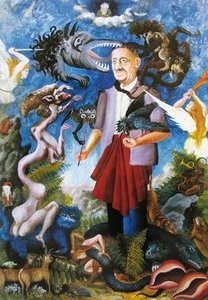
Teofil Ociepka
1891 - 1978 , Poland
プロフィール概要
- Artistic Movement Or Style: Primitivism
- Artists Or Movements Influenced By This Artist:
- Nikifor
- Henri Rousseau
- Artists Who Influenced This Artist:
- Nikifor
- Henri Rousseau
- Date Of Birth: April 22, 1891
- Date Of Death: January 15, 1978
- Full Name: Teofil Ociepka
- Nationality: Polish
- Notable Artworks:
- The Garden
- The Mountain
- Place Of Birth: Janów Śląski, Poland