

 プレビュー
プレビュー
 シェアする
シェアする シェアする
シェアする
 詳細を見る
詳細を見る

 ダウンロード
 似ている作品
 X線調査
X線調査 スライドショー
 統計情報
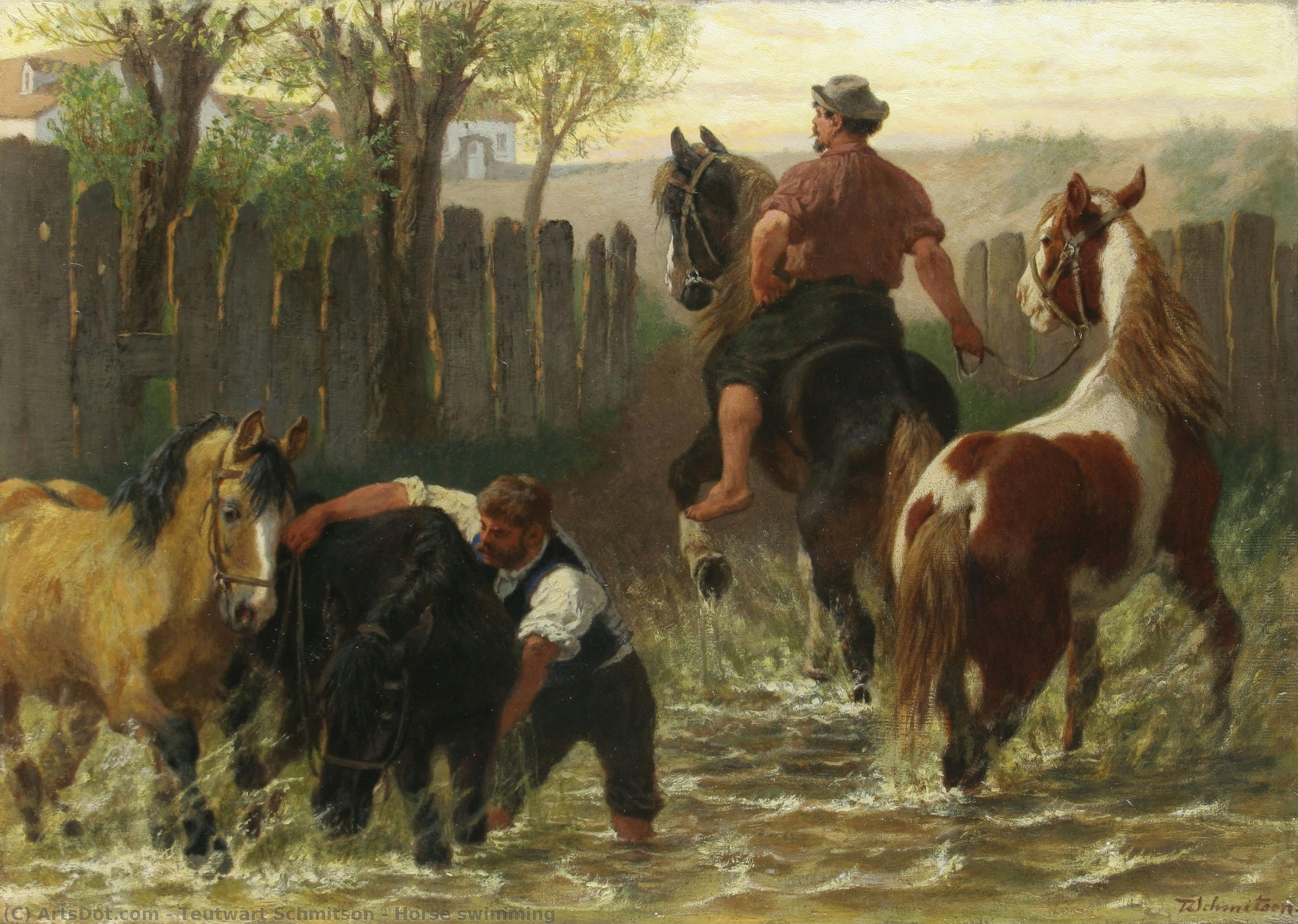
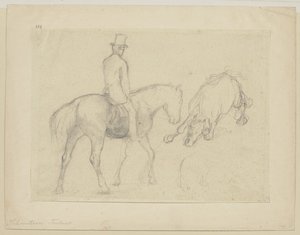
統計情報Horse swimming


 詳細を見る
詳細を見る
手描き油彩複製画
当社のアーティストが、お客様のご希望のサイズと額縁に合わせて、キャンバスに手描きで制作する油彩画です。 ( プリント版に切り替え デジタル画像販売へ切り替え)




































作品のオリジナル比率に合わせた、当店の規定サイズからお選びください。

特定のフレームやスペースに合わせて、ご希望のサイズをご入力いただけます。選択されたサイズが元の画像の比率と異なる場合、アートワークをトリミングするか、手描きで要素を追加して絵画を拡張いたします。デジタルモックアップ を制作し、制作開始前にご確認(承認)をいただきます。
画面上のプレビューは、実際のトリミングや拡張を正確に反映しているものではありません。最終的な構図は、モックアップによってのみ正確にご確認いただけます。
カスタムサイズもご利用いただけますが、元の比率を維持するためには、あらかじめ用意されたリストからサイズを選択することをお勧めいたします。
ご注文後、ArtsDot.com チームより詳細な指示をお送りするとともに、仕上がりイメージ(モックアップ)をご提供いたします。


 ガラスオプションは、110cm未満のサイズでのみご利用いただけます。

Horse swimming
複製技法
複製画のサイズ
-


合計金額
$ 263
関連作品







アーティストの略歴
The Soul of the Equine: The Life and Legacy of Teutwart Schmitson
In the annals of nineteenth-century German realism, few names evoke such a profound sense of vitality and anatomical precision as Teutwart Schmitson. Born in Frankfurt am Main in 1830, Schmitson was a man whose artistic destiny seemed to diverge sharply from his family's structured, intellectual lineage. While his father served as an Oberstleutnant and a diplomatic representative to the German Confederation, and his maternal heritage was rooted in the theological traditions of Johann Heinrich Bernhard Dräseke, the younger Schmitson found his true calling not in military theory or scripture, but in the raw, muscular grace of the animal kingdom. Though he initially pursued the disciplined study of architecture, his heart belonged to the spontaneous movement of life, leading him to develop a self-taught mastery that would eventually place him at the forefront of the Düsseldorf school's animalier tradition.
Schmitson’s approach to the canvas was marked by a unique, almost scientific devotion to texture and substance. He famously developed a personal technique to manipulate the very medium of his craft, applying oil paint to plasterboard for several hours to reduce its oil content before it ever touched his palette. This meticulous preparation allowed him to achieve a specialized impasto that breathed life into the coats of horses and the heavy flanks of cattle. When he made his public debut at the Städelsches Kunstinstitut in 1854, the art world was introduced to a talent capable of capturing not just the likeness of a subject, but its very essence. His early works, such as scenes of farmers plowing or riders navigating rugged terrain, showcased a bold, tactile realism that bridged the gap between mere observation and emotional storytelling.
A Journey Through the Düsseldorf Circle
The trajectory of Schmitson’s career was inextricably linked to the vibrant artistic pulse of Düsseldorf. Following his marriage to Wilhelmine Beckel, he relocated to this burgeoning cultural hub, where he became an integral part of the Malkasten Artists' Association. It was within this progressive circle that Schmitson found his true artistic kin. He moved among a cohort of painters who shared his obsession with the expressive potential of nature, forming deep professional and personal bonds with figures such as Adolf Schreyer and Eugen Krüger. This period of collaboration was transformative, as the collective focus on equestrian and rural themes allowed Schmitson to refine a style that was both ruggedly naturalistic and exquisitely detailed.
His influences were a tapestry of established masters and contemporary peers. The stylistic sensibilities of Otto Weber and Paul Friedrich Meyerheim provided a foundation of realism upon which he built his own idiosyncratic vision. Schmitson’s work was never content with static portraiture; he sought to capture the kinetic energy of a horse swimming through water or the heavy, rhythmic breathing of cattle in a pastoral setting. His paintings often functioned as windows into a vanishing way of life, documenting the dignity of labor and the untamed spirit of the animal subjects that defined the European landscape of his era.
A Brief but Brilliant Flame
Tragically, the brilliance of Schmitson’s career was cut short by an untimely death in Vienna in 1863, leaving behind a legacy far more expansive than his thirty-three years of life would suggest. Despite the brevity of his active years, his impact on the genre of animal painting remains indelible. His ability to transcend the boundaries of mere biological accuracy—to imbue a creature with temperament, weight, and even a sense of individual history—marked him as a pioneer of the realistic movement.
Today, the enduring significance of his work is preserved in some of Europe's most prestigious institutions. His contributions to art history can be summarized through several key pillars of his achievement:
- Technical Innovation: The development of specialized paint preparation methods that allowed for a unique, textured impasto.
- Genre Mastery: A profound ability to elevate animal subjects from mere background elements to the central protagonists of narrative art.
- Institutional Legacy: His works continue to be celebrated in esteemed collections such as the Städel Museum in Frankfurt and the Österreichische Galerie Belvedere in Vienna.
- Artistic Connection: His role in fostering the collaborative spirit of the Düsseldorf school through his involvement with the Malkasten association.
Teutwart Schmitson remains a singular figure—a self-taught visionary who looked at the world not as an architect of stone and mortar, but as an architect of light, muscle, and motion. His canvases serve as a lasting testament to the beauty of the natural world, captured with a precision that continues to captivate the modern eye.
Teutwart Schmitson
1830 - 1863 , Germany
基本情報
- Artistic Movement Or Style: Realism
- Artists Who Influenced This Artist:
- Otto Weber
- Paul Friedrich Meyerheim
- Date Of Birth: April 18, 1830
- Date Of Death: 1863
- Full Name: Teutwart Schmitson
- Nationality: German-Austrian
- Notable Artworks:
- Romagnoli riding the horses
- Horse swimming
- Romagnols on horses II.
- Place Of Birth: Frankfurt am Main, Germany