

 プレビュー
プレビュー
 シェアする
シェアする シェアする
シェアする
 詳細を見る
詳細を見る

 ダウンロード
 似ている作品
 X線調査
X線調査 スライドショー
 統計情報
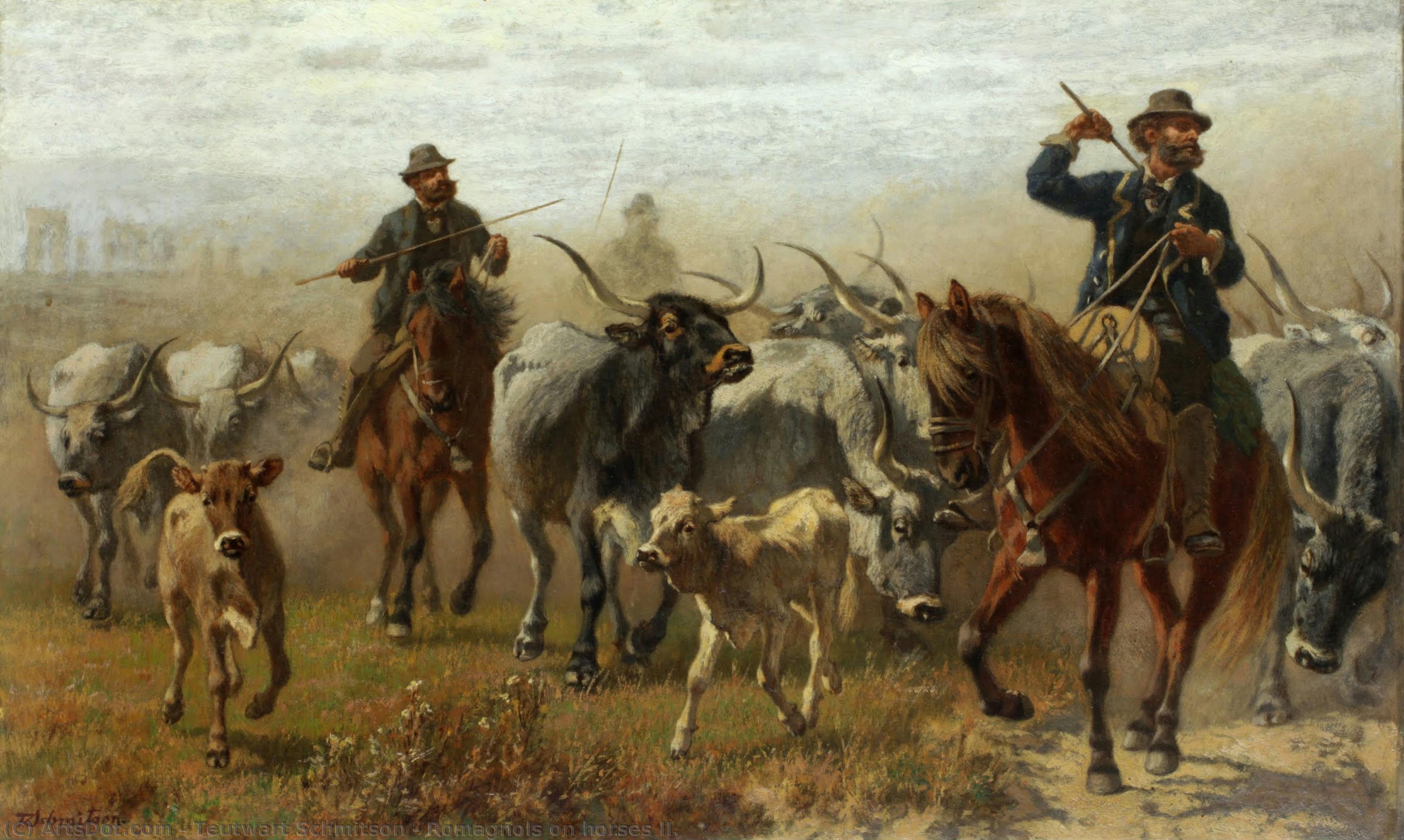
統計情報Romagnols on horses II.


 詳細を見る
詳細を見る
オンラインプレビューをはるかに凌ぐ、高解像度で鮮明なデジタル画像をご購入いただけます。
各ファイルは、社内の専門家が高度なツールと熟練した手作業によるレタッチを用いて、細心の注意を払って準備されています。すべての画像において、卓越した鮮明度、正確な色彩再現性、そして繊細なディテールを保証いたします。
最終ファイルは、プロフェッショナルな編集・印刷環境ですぐにご利用いただけるよう最適化された状態で、72時間以内にメールにてお届けいたします。これは、一流のデザインスタジオ、出版社、ギャラリーから信頼されているものと同等の品質です。
デジタルアート
個人での鑑賞、印刷、クリエイティブなプロジェクト用に、高解像度ファイルをダウンロードできます。 ( プリント版に切り替え 手描きの絵画を購入)
デジタル画像のご注文に付随する特典
高品質なデジタル画像配信を、確かな品質で。
ArtsDot.com を選ぶことは、単に画像を手に入れることではありません。それは、プロの手によって精密に仕上げられ、満足保証が付いた高品質なデジタルアートワークを受け取ることを意味します。ご注文いただいた際に自動的に付随する内容は、以下の通りです:

メールですぐにお届け
ご注文から72時間以内に、高解像度のデジタル画像ファイルがメールでお手元に届きます。すぐにそのままご利用いただけます。

AI技術で最適化されたデジタルファイル
お客様の作品は、高度なAIツールと専門家による手作業の編集を組み合わせてプロフェッショナルに最適化されており、細部のディテール、鮮明さ、そして正確な色再現性を最大限に引き出しています。

一生涯無料の再送サービス
ファイルを誤って削除したり、紛失してしまったりしましたか?ご安心ください。いつでも無料で再送いたします。

輸入手数料は一切かかりません
関税や手数料、配送料を気にすることなく、お気に入りのアートワークをすぐにお楽しみいただけます。デジタルダウンロードは常に免税です。

色彩再現の保証
プロ仕様のツールとカラーマネジメント技術を用いることで、デジタル画像が元の色を最大限に忠実に再現することを保証いたします。

100日間満足保証
ご購入いただいたデジタル画像にご満足いただけない場合は、100日以内であれば、理由を問わず修正または100%の返金対応をさせていただきます。

100% 返金保証
ご満足いただけない場合は、デジタルファイルを受け取ってから100日以内であれば、理由を問わず全額返金いたします。

まとめ買い割引
3枚購入で10%OFF - 5枚購入で15%OFF - 10枚以上購入で20%OFF。クリエイティブなプロジェクト、ギャラリー、エージェンシーに最適です。
関連作品








作家の略歴
The Soul of the Equine: The Life and Legacy of Teutwart Schmitson
In the annals of nineteenth-century German realism, few names evoke such a profound sense of vitality and anatomical precision as Teutwart Schmitson. Born in Frankfurt am Main in 1830, Schmitson was a man whose artistic destiny seemed to diverge sharply from his family's structured, intellectual lineage. While his father served as an Oberstleutnant and a diplomatic representative to the German Confederation, and his maternal heritage was rooted in the theological traditions of Johann Heinrich Bernhard Dräseke, the younger Schmitson found his true calling not in military theory or scripture, but in the raw, muscular grace of the animal kingdom. Though he initially pursued the disciplined study of architecture, his heart belonged to the spontaneous movement of life, leading him to develop a self-taught mastery that would eventually place him at the forefront of the Düsseldorf school's animalier tradition.
Schmitson’s approach to the canvas was marked by a unique, almost scientific devotion to texture and substance. He famously developed a personal technique to manipulate the very medium of his craft, applying oil paint to plasterboard for several hours to reduce its oil content before it ever touched his palette. This meticulous preparation allowed him to achieve a specialized impasto that breathed life into the coats of horses and the heavy flanks of cattle. When he made his public debut at the Städelsches Kunstinstitut in 1854, the art world was introduced to a talent capable of capturing not just the likeness of a subject, but its very essence. His early works, such as scenes of farmers plowing or riders navigating rugged terrain, showcased a bold, tactile realism that bridged the gap between mere observation and emotional storytelling.
A Journey Through the Düsseldorf Circle
The trajectory of Schmitson’s career was inextricably linked to the vibrant artistic pulse of Düsseldorf. Following his marriage to Wilhelmine Beckel, he relocated to this burgeoning cultural hub, where he became an integral part of the Malkasten Artists' Association. It was within this progressive circle that Schmitson found his true artistic kin. He moved among a cohort of painters who shared his obsession with the expressive potential of nature, forming deep professional and personal bonds with figures such as Adolf Schreyer and Eugen Krüger. This period of collaboration was transformative, as the collective focus on equestrian and rural themes allowed Schmitson to refine a style that was both ruggedly naturalistic and exquisitely detailed.
His influences were a tapestry of established masters and contemporary peers. The stylistic sensibilities of Otto Weber and Paul Friedrich Meyerheim provided a foundation of realism upon which he built his own idiosyncratic vision. Schmitson’s work was never content with static portraiture; he sought to capture the kinetic energy of a horse swimming through water or the heavy, rhythmic breathing of cattle in a pastoral setting. His paintings often functioned as windows into a vanishing way of life, documenting the dignity of labor and the untamed spirit of the animal subjects that defined the European landscape of his era.
A Brief but Brilliant Flame
Tragically, the brilliance of Schmitson’s career was cut short by an untimely death in Vienna in 1863, leaving behind a legacy far more expansive than his thirty-three years of life would suggest. Despite the brevity of his active years, his impact on the genre of animal painting remains indelible. His ability to transcend the boundaries of mere biological accuracy—to imbue a creature with temperament, weight, and even a sense of individual history—marked him as a pioneer of the realistic movement.
Today, the enduring significance of his work is preserved in some of Europe's most prestigious institutions. His contributions to art history can be summarized through several key pillars of his achievement:
- Technical Innovation: The development of specialized paint preparation methods that allowed for a unique, textured impasto.
- Genre Mastery: A profound ability to elevate animal subjects from mere background elements to the central protagonists of narrative art.
- Institutional Legacy: His works continue to be celebrated in esteemed collections such as the Städel Museum in Frankfurt and the Österreichische Galerie Belvedere in Vienna.
- Artistic Connection: His role in fostering the collaborative spirit of the Düsseldorf school through his involvement with the Malkasten association.
Teutwart Schmitson remains a singular figure—a self-taught visionary who looked at the world not as an architect of stone and mortar, but as an architect of light, muscle, and motion. His canvases serve as a lasting testament to the beauty of the natural world, captured with a precision that continues to captivate the modern eye.
Teutwart Schmitson
1830 - 1863 , Germany
プロフィール概要
- Artistic Movement Or Style: Realism
- Artists Who Influenced This Artist:
- Otto Weber
- Paul Friedrich Meyerheim
- Date Of Birth: April 18, 1830
- Date Of Death: 1863
- Full Name: Teutwart Schmitson
- Nationality: German-Austrian
- Notable Artworks:
- Romagnoli riding the horses
- Horse swimming
- Romagnols on horses II.
- Place Of Birth: Frankfurt am Main, Germany