

 プレビュー
プレビュー
 プリントを購入
 シェアする
シェアする シェアする
シェアする
 詳細を見る
詳細を見る

 ダウンロード
 似ている作品
 X線調査
X線調査 スライドショー
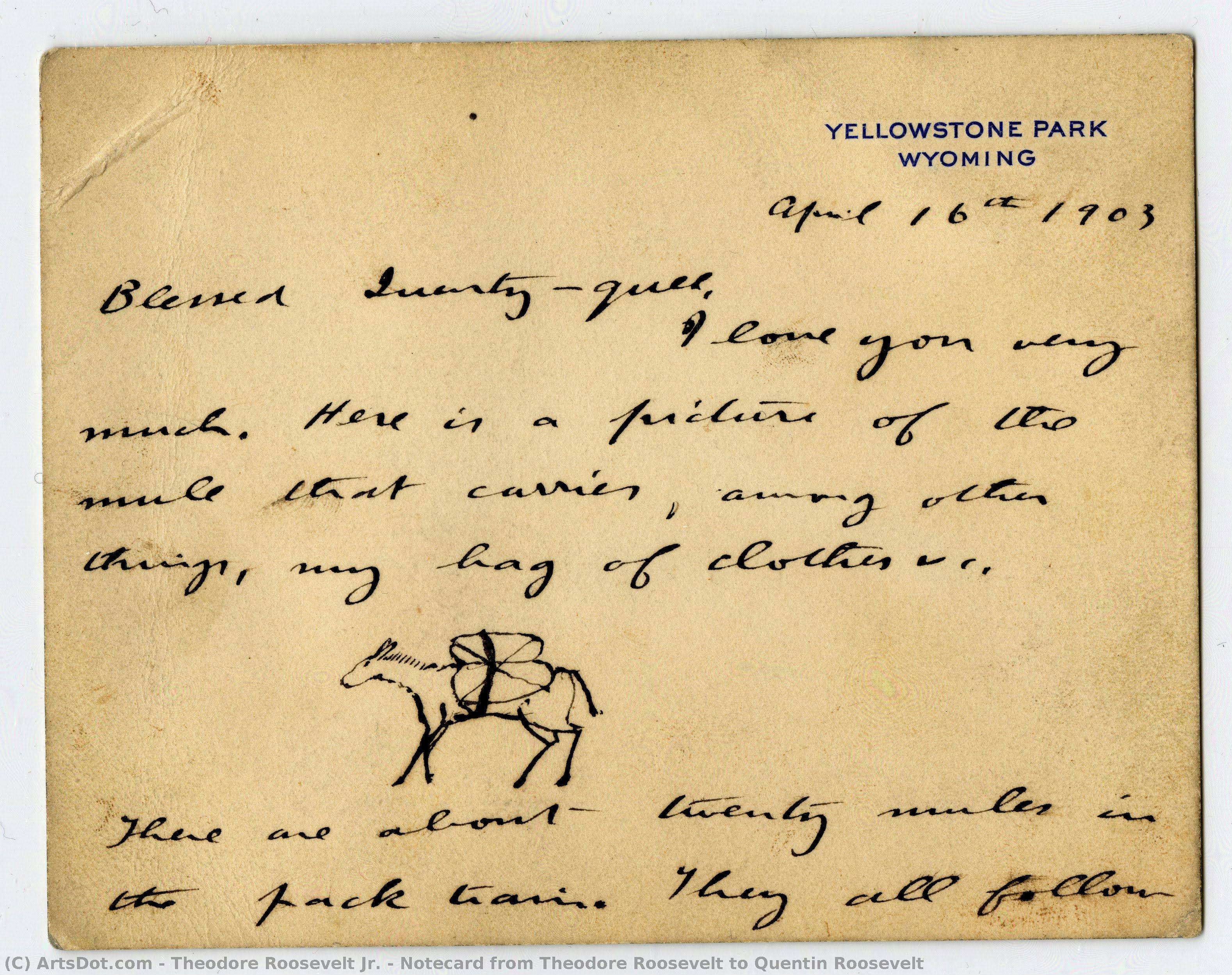
Notecard from Theodore Roosevelt to Quentin Roosevelt


 詳細を見る
詳細を見る
オンラインプレビューをはるかに凌ぐ、高解像度で鮮明なデジタル画像をご購入いただけます。
各ファイルは、社内の専門家が高度なツールと熟練した手作業によるレタッチを用いて、細心の注意を払って準備されています。すべての画像において、卓越した鮮明度、正確な色彩再現性、そして繊細なディテールを保証いたします。
最終ファイルは、プロフェッショナルな編集・印刷環境ですぐにご利用いただけるよう最適化された状態で、72時間以内にメールにてお届けいたします。これは、一流のデザインスタジオ、出版社、ギャラリーから信頼されているものと同等の品質です。
デジタル画像のご注文に付随する特典
高品質なデジタル画像配信を、確かな品質で。
ArtsDot.com を選ぶことは、単に画像を手に入れることではありません。それは、プロの手によって精密に仕上げられ、満足保証が付いた高品質なデジタルアートワークを受け取ることを意味します。ご注文いただいた際に自動的に付随する内容は、以下の通りです:

メールですぐにお届け
ご注文から72時間以内に、高解像度のデジタル画像ファイルがメールでお手元に届きます。すぐにそのままご利用いただけます。

AI技術で最適化されたデジタルファイル
お客様の作品は、高度なAIツールと専門家による手作業の編集を組み合わせてプロフェッショナルに最適化されており、細部のディテール、鮮明さ、そして正確な色再現性を最大限に引き出しています。

一生涯無料の再送サービス
ファイルを誤って削除したり、紛失してしまったりしましたか?ご安心ください。いつでも無料で再送いたします。

輸入手数料は一切かかりません
関税や手数料、配送料を気にすることなく、お気に入りのアートワークをすぐにお楽しみいただけます。デジタルダウンロードは常に免税です。

色彩再現の保証
プロ仕様のツールとカラーマネジメント技術を用いることで、デジタル画像が元の色を最大限に忠実に再現することを保証いたします。

60日間満足保証
ご購入いただいたデジタル画像にご満足いただけない場合は、60日以内であれば、修正または100%の返金(理由を問う必要はありません)をさせていただきます。

100% 返金保証
ご満足いただけない場合は、デジタルファイルを受け取ってから60日以内であれば、理由を問わず全額返金いたします。

まとめ買い割引
3枚購入で10%OFF - 5枚購入で15%OFF - 10枚以上購入で20%OFF。クリエイティブなプロジェクト、ギャラリー、エージェンシーに最適です。
作品の詳細
A Tender Echo from the Past
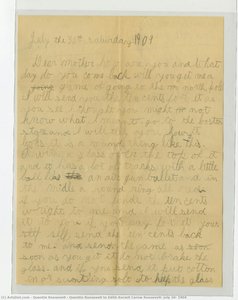
In the quiet intimacy of a handwritten note, we find a window into a moment of profound human connection that transcends the boundaries of time. This evocative piece, a 1903 correspondence from Theodore Roosevelt to his son Quentin, serves as much more than a mere historical artifact; it is a delicate fragment of a private emotional landscape. The cursive script, flowing with an old-fashioned elegance, carries the weight of paternal affection, anchored by the poignant declaration, "I love you very much." To gaze upon this document is to witness the vulnerability of one of history's most formidable figures, stripped of his political mantle and revealed simply as a devoted father. The aged, sepia-toned paper, framed by a weathered brown border, evokes the nostalgic warmth of a bygone era, inviting the viewer to step into the early twentieth century.
The visual composition of this piece is steeped in historical atmosphere, where every imperfection tells a story of survival and significance. The presence of a horse-drawn carriage within the frame adds a layer of rich, period-specific texture, grounding the personal sentiment in the physical reality of 1903 America. This era, marked by the transition from the rustic traditions of the nineteenth century to the burgeoning energy of the new millennium, is captured here in its most graceful form. The subtle wear and tear on the card act as a testament to its journey through the decades, lending an authentic, antique patina that appeals to those who find beauty in the traces of time. For the collector, this piece offers a rare opportunity to possess a tangible connection to the Roosevelt legacy, blending historical gravity with a deeply personal touch.
For interior designers and lovers of fine art, this work serves as an exquisite focal point for spaces that celebrate heritage, storytelling, and classical elegance. The muted, earthy tones and the organic texture of the vintage paper make it a versatile addition to a curated gallery wall or a sophisticated study. It possesses a unique ability to anchor a room with a sense of permanence and intellectual depth. When integrated into a decor scheme—perhaps alongside botanical prints or landscape reproductions—it provides a soulful counterpoint to modern minimalism, injecting a layer of warmth and narrative complexity. This is not merely a reproduction of a note; it is an invitation to contemplate the enduring power of love and the beautiful, fleeting nature of human history.
関連作品
作家の略歴
The Naturalist’s Vision: The Life and Legacy of Theodore Roosevelt Jr.
To understand the art of Theodore Roosevelt Jr., one must first understand the soul of a man caught between the rigors of public duty and the profound stillness of the American wilderness. Born on October 27, 1858, in New York, Roosevelt’s life was never merely a sequence of political milestones; it was a continuous dialogue with the natural world. His early years were shaped by the quiet struggle against debilitating asthma, a condition that paradoxically became his greatest creative catalyst. Forced to seek solace in the outdoors, he developed an intimate, almost scientific familiarity with botany and zoology. This childhood immersion did more than foster a hobby; it forged a visual language characterized by meticulous detail and an emotional resonance that sought to capture the very breath of the landscape.
His intellectual journey took him through the halls of Harvard College, where he refined his ability to weave narrative into reality. While history remembers him as a formidable historian and writer—notably through works like “The Naval War of 1812”—his literary prowess served as the foundation for his visual storytelling. He did not merely paint scenery; he documented histories. His approach to art was deeply informed by his ability to observe the minute details of a specimen or the sweeping grandeur of a horizon, treating every brushstroke as an act of preservation. This duality of the historian and the naturalist allowed him to imbue his works with a sense of permanence, as if each piece were a vital record of a vanishing frontier.
A Symbiosis of Art and Conservation
The essence of Roosevelt’s artistic development lies in its inextricable link to the burgeoning American conservation movement. Influenced heavily by his father's dedication to preserving the nation's wild spaces, Theodore Jr.’s work became a visual manifesto for the protection of the American West. His paintings often functioned as windows into an era of untouched splendor, capturing the sublime beauty of landscapes that were simultaneously being explored and threatened by industrial expansion. There is a palpable tension in his work—a delicate balance between the scientific accuracy of a naturalist and the romanticism of an artist moved by the majesty of the wild.
His artistic output is characterized by several defining elements:
- Meticulous Observation: A technique rooted in his early studies of wildlife, ensuring that every leaf, feather, and geological formation possesses a lifelike authenticity.
- Narrative Depth: Utilizing his background as a historian to infuse landscapes with a sense of time and historical weight.
- Emotional Landscape: Moving beyond mere documentation to evoke the profound, often spiritual connection between humanity and the untamed earth.
Historical Significance and the Documented Past
Beyond the canvas, Roosevelt’s legacy is preserved through the artifacts of his correspondence and communication, which serve as unique pieces of documentary art. His writings, such as the poignant letters to his son Quentin or his historic telegrams regarding pivotal moments in Cuban history, reflect a man whose life was etched into the very fabric of American progress. These documents, much like his paintings, offer a glimpse into a transformative era, capturing the intersection of personal emotion and global historical shifts.
Ultimately, Theodore Roosevelt Jr. stands as a bridge between the analytical and the aesthetic. He remains a vital figure for those studying 19th-century American art, representing a period where the act of painting was an essential component of the naturalist’s mission to witness, record, and ultimately defend the natural world. His work continues to resonate as a testament to the enduring beauty of the wild and the profound responsibility of those who seek to capture it.
theodore roosevelt jr.
1858 - 1919 , United States of America
プロフィール概要
- Artistic Movement Or Style: Naturalist Painting
- Artists Or Movements Influenced By This Artist: American Impressionism
- Artists Who Influenced This Artist: John James Audubon
- Date Of Birth: October 27, 1858
- Full Name: Theodore Roosevelt Jr.
- Nationality: American
- Notable Artworks:
- The Naval War of 1812
- The Adirondack Mountains
- Place Of Birth: New York City, United States

