

 プレビュー
プレビュー
 プリントを購入
 シェアする
シェアする シェアする
シェアする
 詳細を見る
詳細を見る

 ダウンロード
 似ている作品
 X線調査
X線調査 スライドショー
Castles of the Mind


 詳細を見る
詳細を見る




P118B $10

P118H $10

P118W $10

P438Z $10

P508JH $12

P508YH $12

P805H $10

P805Z $10

P919BZ $10

P919G $10

P919XJ $10

P959ZH $10

P968JZ $12

W106C $8

W218G $10

W218JH $8

W218Y $10

W307PJ $10

W316G $10

W316PJ $8

W316Y $10

W398PJ $8

W4111J $10

W500HY $15

W500JH $15

W692G $12

W849H $8

W940BG $15

W953PJ $8




作品のオリジナル比率に合わせた、当店の規定サイズからお選びください。

特定のフレームやスペースに合わせて、ご希望のサイズをご入力いただけます。選択されたサイズが元の画像の比率と異なる場合、アートワークをトリミングするか、手描きで要素を追加して絵画を拡張いたします。デジタルモックアップ を制作し、制作開始前にご確認(承認)をいただきます。
画面上のプレビューは、実際のトリミングや拡張を正確に反映しているものではありません。最終的な構図は、モックアップによってのみ正確にご確認いただけます。
カスタムサイズもご利用いただけますが、元の比率を維持するためには、あらかじめ用意されたリストからサイズを選択することをお勧めいたします。
ご注文後、ArtsDot.com チームより詳細な指示をお送りするとともに、仕上がりイメージ(モックアップ)をご提供いたします。


 ガラスオプションは、110cm未満のサイズでのみご利用いただけます。

Castles of the Mind
複製技法
複製画のサイズ
-


合計金額
$ 263
作品解説
A Dreamscape Captured in Oil: The Vision of Thomas Chambers
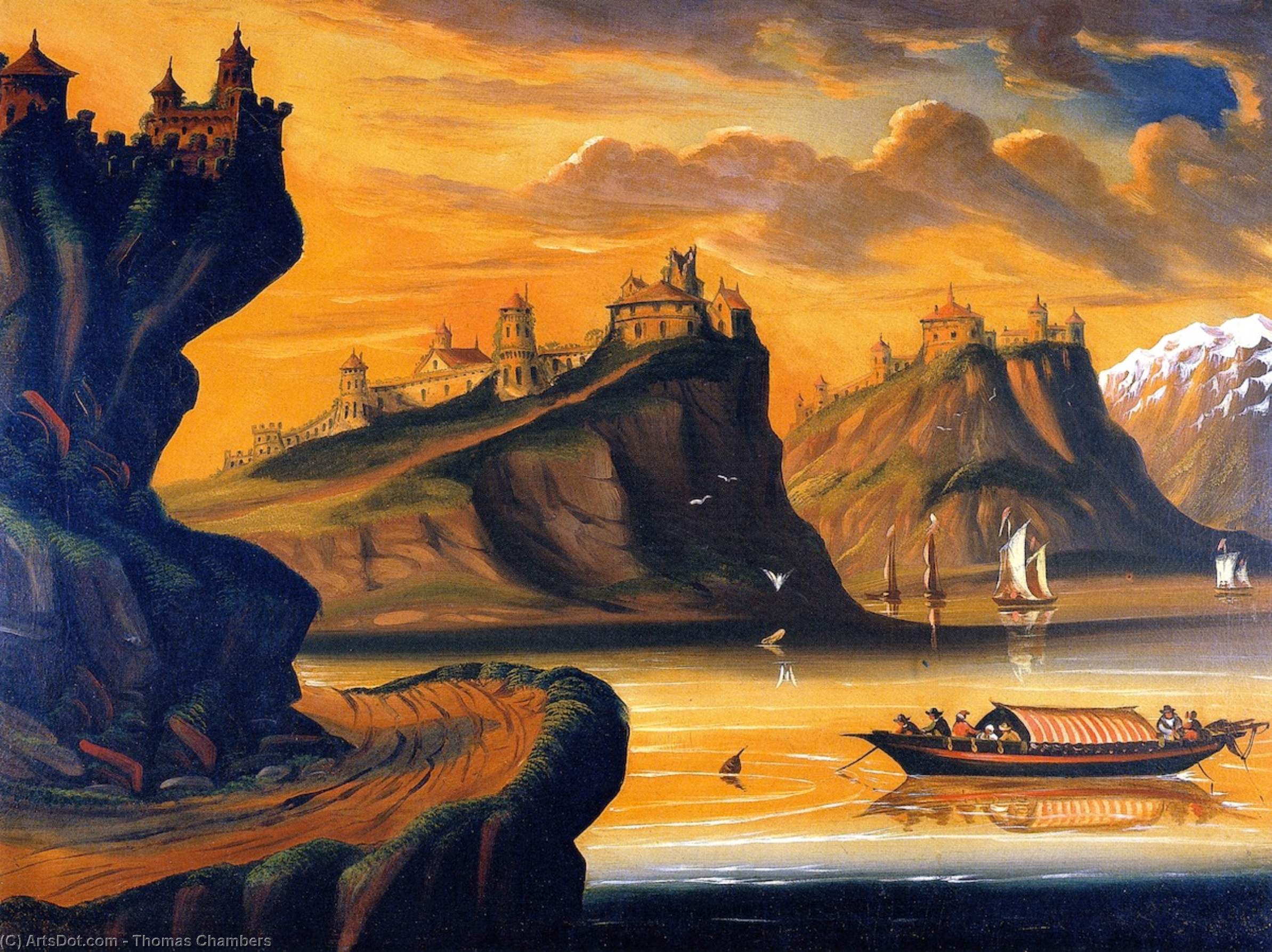
In the vast tapestry of nineteenth-century American art, few works possess the ethereal, haunting beauty found in Thomas Chambers’ 1845 masterpiece, Castles of the Mind. This captivating oil on canvas serves as a window into a world where the boundaries between reality and fantasy dissolve into a warm, amber glow. The painting presents a breathtakingly serene landscape, dominated by a majestic castle perched precariously atop a verdant hill. As the eye wanders through the composition, additional fortresses emerge from the hazy distance, creating a sense of infinite architectural wonder. Set against a sky saturated with deep oranges and soft golds, the scene evokes the quiet magic of a perpetual sunset, inviting the viewer to lose themselves in a moment of profound tranquility.
The technical brilliance of Chambers lies in his ability to marry meticulous detail with a dreamlike atmosphere. His brushwork, though rooted in the traditions of his era, possesses a modern sensibility that anticipates the emotive power of later movements. The artist employs a sophisticated use of perspective to guide the viewer from the lively foreground—where small figures and scattered boats navigate the shimmering waters—to the distant, misty peaks of the background castles. This layering of depth creates a panoramic experience, making the canvas feel less like a flat surface and more like an expansive, breathing world. The warmth of the orange sky does more than just illuminate the scene; it wraps the entire landscape in a sense of coziness and nostalgia, grounding the fantastical elements in a palpable, emotional warmth.
Symbolism and the Human Connection
Beyond its visual splendor, Castles of the Mind invites deep contemplation regarding the nature of imagination and memory. The title itself suggests that these structures are not merely stone and mortar, but manifestations of the human psyche—monuments to our aspirations, dreams, and the internal fortresses we build to protect our most precious thoughts. The presence of people and vessels within the painting provides a vital touch of realism; they act as anchors to the everyday, suggesting that even amidst the most fantastical landscapes, the rhythms of life, labor, and leisure continue unabated. This juxtaposition between the monumental and the mundane creates a poignant tension, reminding us that our greatest fantasies are often built upon the foundations of our lived experiences.
For the discerning collector or interior designer, this painting offers much more than mere decoration. It is a conversation piece that brings a sense of narrative depth and historical weight to any space. Whether placed in a sun-drenched study or a sophisticated living area, a high-quality oil reproduction of this work serves as a focal point of inspiration. The vibrant palette and intricate composition are designed to captivate the eye and stir the soul, making it an ideal selection for those looking to infuse their environment with a sense of wonder, peace, and timeless elegance.
関連作品
アーティストの略歴
A Rediscovered Visionary: The Life and Art of Thomas Chambers
The name Thomas Chambers remained largely obscured for over a century, his vibrant canvases attributed simply as “American Folk Art” or “unsigned marine paintings.” Only in 1942 did the art world begin to recognize the distinct hand – and remarkably modern sensibility – behind these captivating works. Born in Whitby, Yorkshire, England, in 1808, Chambers’s journey was one of transatlantic migration, quiet dedication, and ultimately, posthumous acclaim. His father, a merchant sailor, instilled a deep connection to the sea, while his mother worked as a laundress; this humble upbringing likely shaped his keen observation of everyday life and a pragmatic approach to artistic creation. While formal training remains undocumented, it’s believed he collaborated with his brother George, a successful marine artist, laying the foundation for his own burgeoning talent.
From New Orleans to the Hudson: A Developing Style
Chambers emigrated to the United States in 1832, shortly after his brother received royal patronage. He initially settled in New Orleans, declaring his intent to become a naturalized citizen, before relocating to New York City around 1834. For nearly a decade, he worked as both a painter and restorer, honing his skills while navigating the bustling art scene of the burgeoning metropolis. His style began to coalesce during this period – a unique blend of realism and expressive color that set him apart from contemporaries steeped in academic tradition. He then moved to Boston (1843-1851) followed by Albany before returning to New York around 1857, painting scenes primarily along the Hudson River Valley. However, unlike artists associated with the Hudson River School, Chambers’s work wasn't driven by a romanticized vision of nature but rather a direct and often strikingly bold depiction of it.
The “First American Modern”
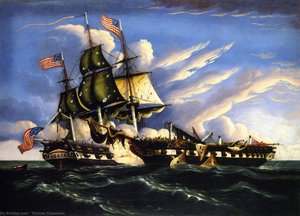
Chambers’s paintings are characterized by their dynamic compositions, vivid palettes, and an almost naive perspective that belies a sophisticated understanding of light and form. He rarely exhibited his work, preferring to sell directly through auctions – a practice that contributed to the anonymity surrounding his oeuvre for so long. His subjects ranged from dramatic naval battles, like “The Constitution & Guirriere”, capturing the energy and chaos of maritime conflict, to serene coastal scenes and idyllic landscapes such as “Cottages in a Landscape (also known as The Birthplace of Burns)”. What truly distinguishes his work is a sense of immediacy and an unconventional approach to perspective. He often worked *en plein air*, directly from nature, resulting in paintings that feel remarkably fresh and alive.
Unsigned Legacy & Rediscovery
The lack of signatures on nearly all of Chambers’s works proved a significant obstacle to his recognition during his lifetime. He faced hardship in his later years, eventually returning to England penniless and disabled around 1866, where he died in a Whitby workhouse in 1869. It wasn't until the groundbreaking exhibition at the Macbeth Gallery in New York City in 1942 that his paintings were definitively attributed to him. The discovery of a single signed work unlocked a wealth of previously unknown canvases, revealing a prolific and remarkably consistent body of work. Art historians like Kathleen A. Foster have championed his legacy, recognizing Chambers as a pivotal figure in American art history – a “First American Modern” whose bold style anticipated many of the developments of 20th-century painting.
Historical Significance & Enduring Appeal
Thomas Chambers occupies a unique position within the landscape of 19th-century American art. He stands apart from both the refined elegance of academic painting and the romantic idealism of the Hudson River School, forging his own path with an independent spirit and unwavering dedication to direct observation. His paintings offer a glimpse into a rapidly changing America – a nation grappling with industrialization, expansion, and evolving notions of identity. Today, Chambers’s work is celebrated for its raw energy, vibrant color, and enduring appeal. He represents a vital link between folk art traditions and the burgeoning modernism that would define the next century, reminding us that artistic innovation often flourishes outside the established boundaries of convention.
thomas chambers
1808 - 1869
基本情報
- Artistic Movement Or Style: Primitivist, Marine Landscape
- Artists Or Movements Influenced By This Artist: ['Hudson River School']
- Artists Who Influenced This Artist: ['George Chambers']
- Date Of Birth: 1808
- Date Of Death: 1869
- Full Name: Thomas Chambers
- Nationality: American
- Notable Artworks:
- Castles of the Mind
- Constitution & Guirriere
- Cottages in a Landscape
関連記事
Romantic Realism's Finest: 10 Masterpieces for Your Home | ArtsDot
Explore 10 defining masterpieces of Romantic Realism! Discover Courbet, Millet & Daumier's powerful paintings—capturing emotion and social realities. Find museum-quality reproductions for your home at ArtsDot.com.

ロマン派ランドスケープ:時代を彩る巨匠の10選|アートとインテリアの世界
ロマン派絵画の時代を彩る10選。巨匠たちの風景が織りなす感動の世界へ。ターナー、ルーベンスなど、名作の裏話と高精細複製でアートをお部屋に。ArtsDot.comで至福のアート体験を。
Thomas Edwin Mostyn: A Victorian Genre Painter's Journey from Realism to Romantic Enchantment
Discover the captivating world of Thomas Edwin Mostyn (1864-1930), a Victorian artist renowned for his romantic garden scenes and evocative portraits. Explore his artistic journey, legacy & find high-quality reproductions at ArtsDot.
Thomas Girtin: Pioneering Atmospheric Landscapes & the Rise of Romantic Watercolour
Explore the captivating world of Thomas Girtin, a pioneer of Romantic watercolour painting. Discover his innovative techniques, key masterpieces & lasting influence on British art history. Learn about collecting Girtin's work today.
Thomas Barker of Bath: Landscape Painting & Societal Reflection in Early 19th-Century England
Explore the life & work of Thomas Barker of Bath, a key figure in 19th-century English Romanticism. Discover his Parisian success, iconic paintings like 'The Bride of Death', and lasting artistic legacy. Learn more at ArtsDot.

