 プレビュー
プレビュー
 プリントを購入
 シェアする
シェアする シェアする
シェアする
 詳細を見る
詳細を見る

 ダウンロード
 似ている作品
 X線調査
X線調査 スライドショー
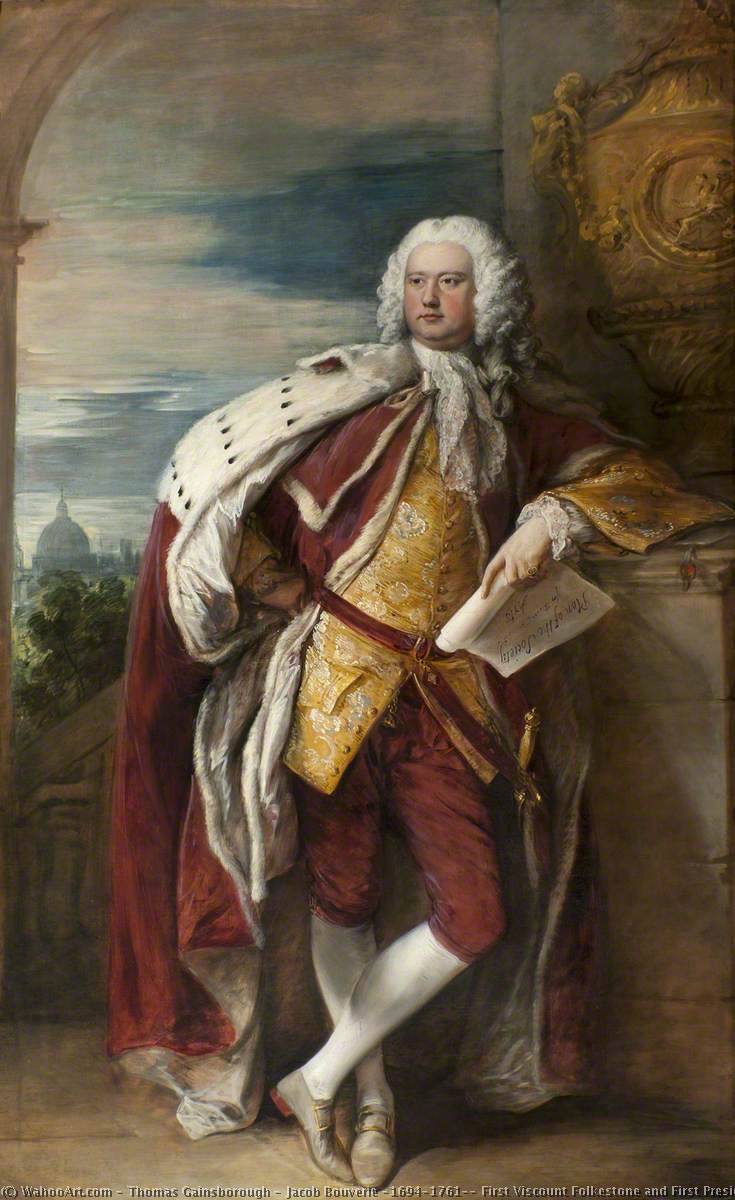
Jacob Bouverie (1694–1761), First Viscount Folkestone and First President of the Society of Arts (after Thomas Hudson)
 Oil On Canvas
- WallArt
- Neoclassicism
 1776
1776 217.0 x 117.0 cm
 Royal Society of Arts
 詳細を見る
詳細を見る




P118B $10

P118H $10

P118W $10

P438Z $10

P508JH $12

P508YH $12

P805H $10

P805Z $10

P919BZ $10

P919G $10

P919XJ $10

P959ZH $10

P968JZ $12

W106C $8

W218G $10

W218JH $8

W218Y $10

W307PJ $10

W316G $10

W316PJ $8

W316Y $10

W398PJ $8

W4111J $10

W500HY $15

W500JH $15

W692G $12

W849H $8

W940BG $15

W953PJ $8




作品のオリジナル比率に合わせた、当店の規定サイズからお選びください。

特定のフレームやスペースに合わせて、ご希望のサイズをご入力いただけます。選択されたサイズが元の画像の比率と異なる場合、アートワークをトリミングするか、手描きで要素を追加して絵画を拡張いたします。デジタルモックアップ を制作し、制作開始前にご確認(承認)をいただきます。
画面上のプレビューは、実際のトリミングや拡張を正確に反映しているものではありません。最終的な構図は、モックアップによってのみ正確にご確認いただけます。
カスタムサイズもご利用いただけますが、元の比率を維持するためには、あらかじめ用意されたリストからサイズを選択することをお勧めいたします。
ご注文後、ArtsDot.com チームより詳細な指示をお送りするとともに、仕上がりイメージ(モックアップ)をご提供いたします。


 ガラスオプションは、110cm未満のサイズでのみご利用いただけます。

Jacob Bouverie (1694–1761), First Viscount Folkestone and First President of the Society of Arts (after Thomas Hudson)
複製技法
複製画のサイズ
-


合計金額
$ 263
Jacob Bouverie, First Viscount Folkestone – A Portrait of Power and Patronage
Thomas Gainsborough’s “Jacob Bouverie, First Viscount Folkestone and First President of the Society of Arts” is more than a mere likeness; it's a meticulously crafted tableau of 18th-century power, social standing, and the burgeoning influence of the arts. Painted in 1776, this impressive portrait captures Jacob Bouverie, a prominent figure in British politics and a key advocate for artistic innovation, offering a rare glimpse into the world of aristocratic patronage and the era’s evolving aesthetic sensibilities.
Gainsborough masterfully employs his signature loose brushwork and subtle color palette to create an atmosphere of dignified composure. The composition is carefully balanced – Bouverie dominates the foreground, his posture radiating authority while simultaneously conveying a sense of quiet contemplation. Note the rich crimson velvet of his coat, meticulously rendered to highlight his status, contrasted against the darker tones of the background, drawing the eye directly to the subject. Gainsborough’s use of light and shadow is particularly effective, sculpting Bouverie's features with delicate precision and imbuing the scene with a sense of depth and realism.
A Window into the Society of Arts
The portrait’s significance extends beyond its aesthetic qualities; it’s inextricably linked to the rise of the Society of Arts, an organization founded in 1751 by Bouverie himself. This society, later renamed the Royal Academy, aimed to promote and encourage various arts and sciences – from painting and sculpture to architecture and engineering. As First President, Bouverie was instrumental in shaping its direction and fostering a climate of intellectual exchange. The portrait thus serves as both a personal commemoration and a symbolic representation of his commitment to artistic advancement within British society.
The inclusion of the book held by Bouverie is a deliberate detail. It signifies his engagement with learning, scholarship, and the intellectual pursuits that were increasingly valued during this period. The open pages suggest an active mind, eager to absorb knowledge and contribute to the cultural discourse of the time. Furthermore, the presence of two figures in the background – likely members of Bouverie’s household or associates – subtly reinforces his position as a central figure within a network of influence.
Technique and Style: Gainsborough's Signature Approach
Gainsborough’s technique is characterized by its remarkable spontaneity and naturalism. He eschewed the rigid formality of earlier portraiture, favoring a more relaxed and approachable style that captured not just physical likeness but also personality and mood. His brushstrokes are loose and expressive, creating a sense of movement and vitality within the composition. This approach was revolutionary for his time, challenging the conventions of traditional portrait painting and paving the way for future generations of artists.
The painting’s color scheme is restrained yet sophisticated, dominated by earthy tones – browns, greens, and ochres – punctuated by flashes of crimson and gold. Gainsborough skillfully employs chiaroscuro—the dramatic contrast between light and shadow—to create a sense of depth and volume, emphasizing the textures of Bouverie's clothing and the subtle nuances of his expression. The background is deliberately muted, directing attention to the central figure and reinforcing his importance within the scene.
Symbolism and Emotional Impact
Beyond its factual representation, “Jacob Bouverie” resonates with a wealth of symbolic meaning. The Viscount’s dignified posture, the carefully chosen attire, and the book in his hand all contribute to an image of authority, wisdom, and intellectual engagement. The overall effect is one of quiet confidence and understated power – a testament to Bouverie's influence as both a politician and a patron of the arts.
This portrait invites viewers to contemplate not only the life of Jacob Bouverie but also the broader cultural context in which he lived. It’s a captivating window into the world of 18th-century England, offering a glimpse into the values, aspirations, and artistic sensibilities of a pivotal era.
関連作品

アーティストの略歴
トマス・ゲーンズボロ:英国美術を彩る肖像と風景の巨匠
1727年、サフォーク州の小さな町、サドベリーで生まれたトマス・ゲーンズボロは、英国美術史における最も重要な画家の一人として、肖像画と風景画の両分野において傑出した才能を発揮しました。彼の幼少期は、織物商を父のもとに過ごしましたが、絵を描くことへの並外れた情熱が、彼を平凡な生活から芸術の世界へと導きました。サフォークの田園風景は、ゲーンズボロの心に深く刻まれ、その後の作品における自然描写の源泉となりました。幼い頃から才能を発揮した彼は、13歳でロンドンへ渡り、彫刻家であったヒューバート・グラヴェロットのもとで訓練を受けました。しかし、ウィリアム・ホガースとの交流を通じて、物語性豊かな絵画への関心を深めながらも、独自の芸術的アイデンティティを確立していくことになります。ロンドンでの鍛錬と芸術的進化
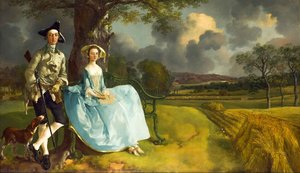
ロンドンでの経験は、ゲーンズボロの芸術的成長に不可欠な役割を果たしました。グラヴェロットのもとでフランス的な技巧を習得し、ホガースの影響を受けながらも、彼は次第に自身のスタイルを確立していきます。肖像画においては、当時の流行であったイタリア・ルネサンス様式や古典主義的な要素を取り入れず、被写体の個性や感情を生き生きと捉えることに重点を置きました。特に、1749年頃に描かれた『ミスター・アンド・ミセス・アンドリュース』は、ゲーンズボロの初期の傑作として知られ、風景の中に人物を配置することで、絵画に奥行きと物語性を与えています。この作品は、彼の自然に対する深い愛情と、肖像画における革新的な試みの両方を示唆しています。バースでの成功と王室の庇護
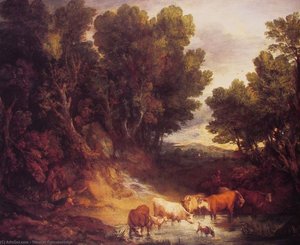
1759年、ゲーンズボロは社交界の中心地であったバースへと移り住み、貴族や富裕層を顧客とする肖像画家として成功を収めました。この時期に描かれた『ハウ伯爵夫人』は、彼の肖像画の代表作の一つであり、優雅な装いを身につけた被写体の表情から、その内面的な魅力を巧みに引き出しています。バースでの生活は、ゲーンズボロにとって芸術的にも経済的にも大きな転換点となり、彼はより洗練された技巧と表現力を磨き上げました。また、この時期には風景画への情熱もさらに高まり、『水辺の風景』などの作品において、自然の美しさを力強く表現しています。1774年にはロンドンに戻り、王立アカデミーの創設メンバーとなるなど、英国美術界における地位を確立しました。ジョージ3世とその家族からの厚い庇護も得て、その名声を確固たるものにしました。革新的な技法と後世への影響
ゲーンズボロの画風は、従来の肖像画の形式にとらわれず、自由で流麗な筆致と繊細な色彩感覚が特徴です。彼は、被写体の外見だけでなく、その個性や感情を捉えようと努め、肖像画に新たな生命を吹き込みました。また、風景画においては、自然の光と影の表現にこだわり、大気感を巧みに再現することで、見る者に深い感動を与えました。彼の革新的な技法は、後の世代の画家たちに大きな影響を与え、特にジョン・コンスタブルのような風景画家は、ゲーンズボロの自然描写から多大なインスピレーションを受けました。印象派の画家たちもまた、ゲーンズボロの自由な筆致と色彩感覚に魅せられ、その芸術的革新性を高く評価しました。遺産と現代への響き
1788年、51歳という若さで亡くなったトマス・ゲーンズボロは、英国美術史における不朽の足跡を残しました。彼の作品は、現在も世界中の美術館に所蔵されており、多くの人々を魅了し続けています。サドベリーには、彼が生まれた家であるゲーンズボロー・ハウスがあり、その生涯と作品を紹介する博物館として公開されています。ゲーンズボロの肖像画は、当時の社会や文化を映し出す鏡のような存在であり、彼の風景画は、英国の田園風景の美しさを永遠に伝える芸術作品として、今もなお多くの人々に愛されています。彼の作品は、単なる絵画を超え、時代を超えて心に響く普遍的な価値を持つ芸術的遺産と言えるでしょう。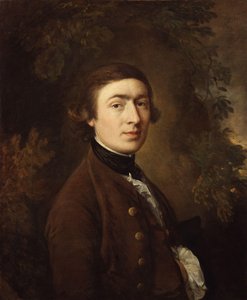
トーマス・ゲインズバラ
1727 - 1788 , イギリス
基本情報
- フルネーム: トーマス・ゲインズバラ
- 主な作品:
- ミセス・トーマス・ゲインズバラ
- Mr and Mrs Andrews
- 出生地: サドベリー、イギリス
- 国籍: 英国
- 影響を与えたアーティスト:
- ジョン・コンスタブル
- 印象派
- 影響を受けたアーティスト:
- ヒューバート・グラベロット
- ウィリアム・ホガース
- 没年月日: 1788年8月2日
- 生年月日: 1727年5月14日(洗礼)
- 芸術運動またはスタイル: ロココ、肖像画、風景画
関連記事
Thomas Hudson: A Study in 18th-Century Portraiture & British Artistic Identity
Explore the life & work of Thomas Hudson, a leading 18th-century British portraitist. Discover his mastery of the 'Grand Manner,' influential style, and lasting impact on British art. Learn about his notable portraits like Judge William Noel & Alexander Van Aken.
18th Century Masters: 10 Artworks That Define an Era | ArtsDot
Journey through 18th century art! Explore 10 iconic paintings – from Rococo elegance to Neoclassical grandeur. Discover Fragonard, David & more. Find museum-quality reproductions and elevate your home decor on ArtsDot.com.
Thomas Barker of Bath: Landscape Painting & Societal Reflection in Early 19th-Century England
Explore the life & work of Thomas Barker of Bath, a key figure in 19th-century English Romanticism. Discover his Parisian success, iconic paintings like 'The Bride of Death', and lasting artistic legacy. Learn more at ArtsDot.
Gainsboro's Palette: 10 Masterpieces of Subtle Tone & Timeless Art | ArtsDot
Explore 10 iconic paintings defined by Gainsboro's subtle grey tones & masterful portraiture. Discover the stories behind Thomas Gainsborough and Rococo art’s elegance. Find museum-quality reproductions for your home at ArtsDot.com.
Thomas Sandby: Pioneering Watercolourist & Topographer of Georgian England
Explore the life & art of Thomas Sandby (1721-1798), a pioneering English watercolourist and architect. Discover his innovations, role in founding the Royal Academy, and lasting legacy at ArtsDot.