 プレビュー
プレビュー
 プリントを購入
 シェアする
シェアする シェアする
シェアする
 詳細を見る
詳細を見る

 ダウンロード
 似ている作品
 X線調査
X線調査 スライドショー
Arrival of the English Ambassadors (detail) (12)


 詳細を見る
詳細を見る




P118B $10

P118H $10

P118W $10

P438Z $10

P508JH $12

P508YH $12

P805H $10

P805Z $10

P919BZ $10

P919G $10

P919XJ $10

P959ZH $10

P968JZ $12

W106C $8

W218G $10

W218JH $8

W218Y $10

W307PJ $10

W316G $10

W316PJ $8

W316Y $10

W398PJ $8

W4111J $10

W500HY $15

W500JH $15

W692G $12

W849H $8

W940BG $15

W953PJ $8




作品のオリジナル比率に合わせた、当店の規定サイズからお選びください。

特定のフレームやスペースに合わせて、ご希望のサイズをご入力いただけます。選択されたサイズが元の画像の比率と異なる場合、アートワークをトリミングするか、手描きで要素を追加して絵画を拡張いたします。デジタルモックアップ を制作し、制作開始前にご確認(承認)をいただきます。
画面上のプレビューは、実際のトリミングや拡張を正確に反映しているものではありません。最終的な構図は、モックアップによってのみ正確にご確認いただけます。
カスタムサイズもご利用いただけますが、元の比率を維持するためには、あらかじめ用意されたリストからサイズを選択することをお勧めいたします。
ご注文後、ArtsDot.com チームより詳細な指示をお送りするとともに、仕上がりイメージ(モックアップ)をご提供いたします。


 ガラスオプションは、110cm未満のサイズでのみご利用いただけます。

Arrival of the English Ambassadors (detail) (12)
複製技法
複製画のサイズ
-


合計金額
$ 263
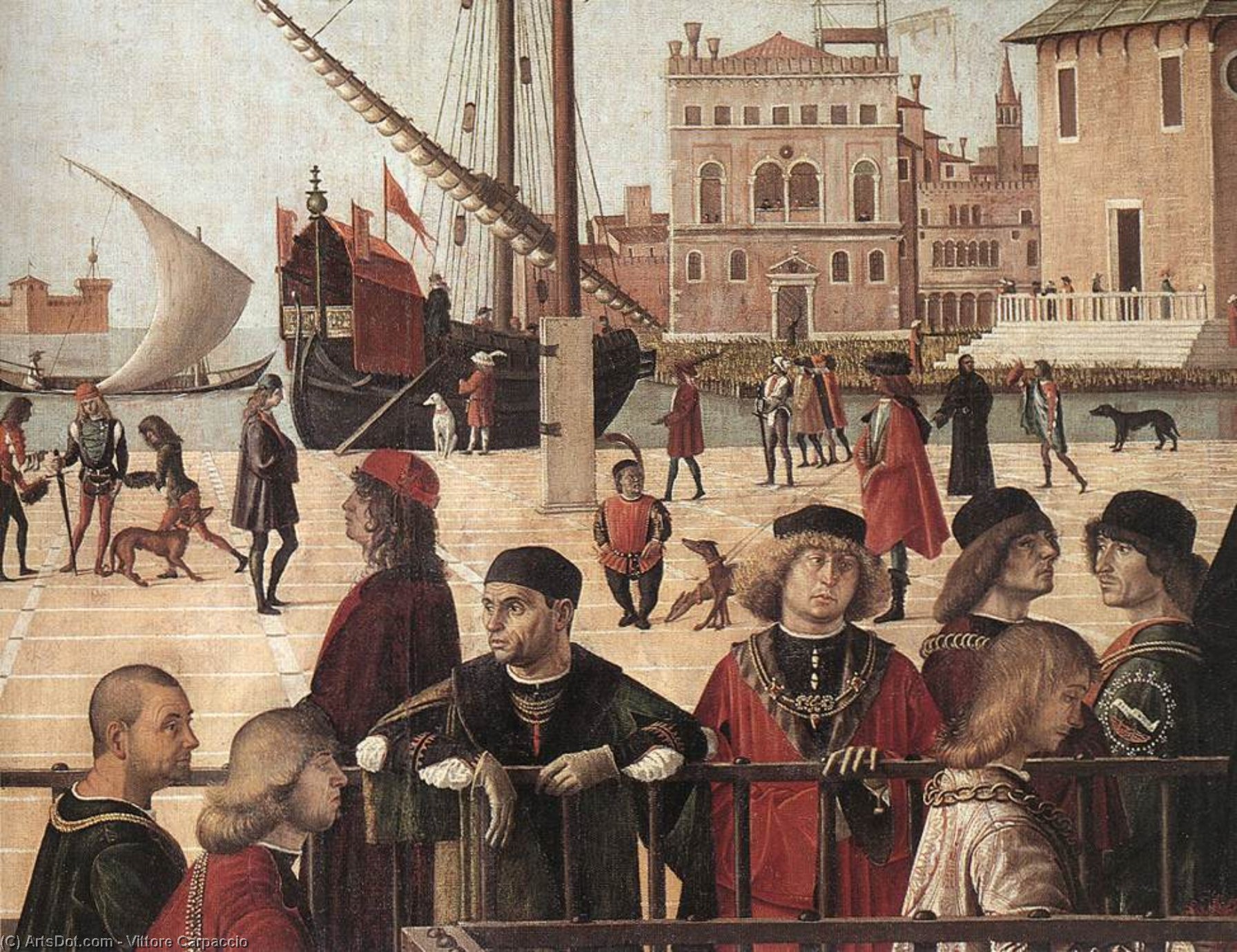
Arrival of the English Ambassadors (Detail): A Venetian Tableau of Diplomacy
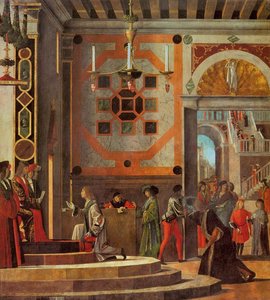
Vittore Carpaccio’s “Arrival of the English Ambassadors (detail)” – specifically this exquisite panel from his monumental cycle depicting the life of Saint Ursula – isn't merely a painting; it’s a meticulously crafted stage set, a vibrant snapshot of 15th-century Venetian diplomacy and courtly ritual. Completed around 1495-1500, during a period of intense political maneuvering between Venice and its European neighbors, the work offers a rare glimpse into the elaborate protocols governing diplomatic exchanges. The panel, now housed within the Gallerie dell’Accademia in Venice, captures a pivotal moment – the arrival of ambassadors bearing important news to King Maurus of Brittany, a key ally for the Venetian Republic. Carpaccio's genius lies not just in his technical skill but in his ability to infuse narrative with palpable atmosphere and psychological depth. He eschews the idealized formality often associated with Renaissance portraiture, instead presenting a scene brimming with life, movement, and subtle gestures. The composition is brilliantly divided: on one side, the imposing figures of the English ambassadors and King Maurus engage in formal discourse, their postures conveying deference and respect. On the other, Ursula herself, radiating wisdom and authority, listens intently to the unfolding events. Notice how Carpaccio masterfully uses light – streaming from a window on the left – to illuminate key elements within the scene, drawing our eye to the intricate details of the clothing, the expressions on the faces, and the opulent setting. The use of perspective, though not entirely linear as would later develop in Renaissance art, creates a convincing sense of depth and space, anchoring the viewer within this bustling Venetian square. The painting’s technical brilliance is further enhanced by Carpaccio's masterful handling of color and texture. He employs a rich palette – deep reds, vibrant blues, and shimmering golds – to create a visually arresting effect. The fabrics are rendered with astonishing realism, each fold and drape meticulously depicted. Observe the subtle variations in tone that suggest the sheen of silk and velvet, or the rough texture of woolen garments. This attention to detail extends to the architectural setting, which is not simply a backdrop but an integral part of the narrative. The Venetian buildings, though somewhat idealized, are instantly recognizable, reflecting the city’s status as a major trading center and a hub of artistic innovation. The inclusion of elements like the domed temple-like structure in the background hints at the influence of Perugino and foreshadows later developments in Venetian architecture. Beyond its historical and artistic significance, “Arrival of the English Ambassadors” resonates with profound symbolic meaning. The painting speaks to themes of power, diplomacy, and the delicate balance between tradition and innovation. The ambassadors represent not just political authority but also the exchange of ideas and cultural influences. Ursula’s role as a wise counselor underscores the importance of female leadership and intellectual engagement. Even the seemingly minor details – the young boy with the feather, the nurse listening attentively – contribute to the painting's layered narrative complexity. It is a scene brimming with human interaction, reflecting the intricate web of relationships that shaped 15th-century Venice.- Historical Context: The painting was created during a period of significant political and economic change in Europe. Venice was a powerful maritime republic, engaged in extensive trade relations with countries across the Mediterranean and beyond. Diplomatic exchanges were crucial for maintaining these alliances and securing Venetian interests.
- Carpaccio’s Style: Carpaccio's style is characterized by its conservative nature, influenced by early Netherlandish art and the works of Antonello da Messina. He favored narrative cycles over individual portraits, meticulously depicting scenes from biblical stories and historical events.
- Symbolism & Details: The painting’s details – the elaborate clothing, the architectural setting, the gestures of the figures – are laden with symbolic meaning, reflecting the complex social and political dynamics of the time.
Resources for Further Exploration
For a deeper dive into this captivating artwork, we recommend exploring these valuable resources:- Arrival of the English Ambassadors (detail) (9): Explore Vittore Carpaccio’s masterpiece ‘Arrival of the English Ambassadors,’ a detailed Venetian painting from 1495 depicting diplomats and their attendants within a grand palace setting.
- Arrival of the English Ambassadors (detail) (12):A detailed image and information about this panel from the Gallerie dell’Accademia.
- Vittore Carpaccio: Discover the captivating Venetian Renaissance paintings of Vittore Carpaccio (1465-1526). Known for narrative cycles like ‘The Legend of St. Ursula,’ his work blends early Netherlandish & Italian styles with a unique orientalist flair.
- Web Gallery of Art:A comprehensive online resource for exploring Carpaccio’s work, including high-resolution images and scholarly essays.
- 1st Art Gallery:Explore high quality reproductions of this masterpiece.
関連作品

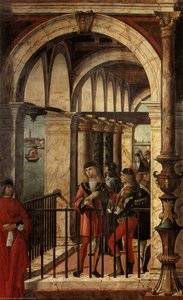
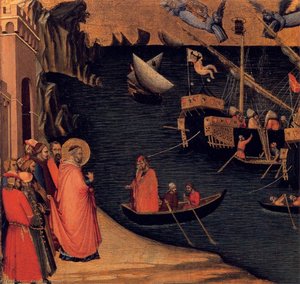
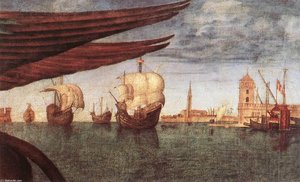
アーティストの略歴
初期の生涯と修行
ヴィットーレ・カルパッチョは、1465年頃にヴェネツィアで生まれた著名なイタリアの画家です。彼は、ヴェネツィア派の名匠であるジェンティレ・ベリーニのもとで学びました。この徒弟制度が、カルパッチョの将来の成功の礎を築いたのです。芸術様式と影響
カルパッチョの様式は、その保守的な性質によって特徴づけられ、彼が生きた時代にイタリア・ルネサンス絵画を変貌させた人文主義的な潮流の影響を最小限に留めていました。彼の作品には、アントネロ・ダ・メシーナの様式と初期フランドル絵画の影響が見られます。この独自の様式の融合が、ヴェネツィア絵画に特有のアプローチを生み出したのです。代表作
- 9枚からなる連作『聖ウルズラの伝説』は、カルパッチョの最も有名な作品です。このシリーズは現在アカデミア美術館に所蔵されており、物語絵画における彼の熟練の技を見せています。
- 『聖ウルズラの栄光の祭壇画』(1491年)は、ジョヴァンニ・ベリーニの様式を彷彿とさせる光と色彩を捉えるカルパッチョの技術を示しています。
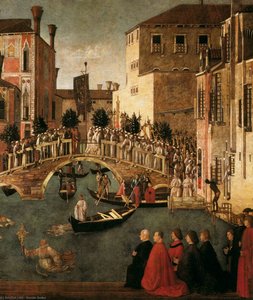
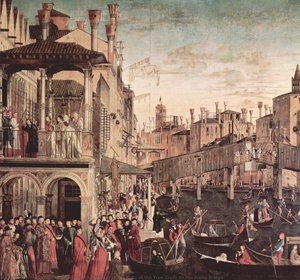
- 『リアルト橋の十字架の遺物の奇跡』(1494年)は、構図と物語性を調和させるカルパッチョの能力を際立たせています。
キャリアのハイライトと遺産
- カルパッチョの主要な作品群は1490年から1519年の間に制作され、彼をヴェネツィア・ルネサンス初期の巨匠の一人に位置づけています。
- 『セレニテスを洗礼する聖ゲオルギウス』に見られるように、彼のオリエンタリズム的な様式は、レバント地方への新たな魅了を反映しています。
- カルパッチョの作品は、同時代のジョヴァンニ・ベリーニやジョルジョネといった画家と比較すると、やや見過ごされがちです。
参考文献とさらなる読書
ヴィットーレ・カルパッチョとヴェネツィア派のさらなる詳細をArtsDotで発見してください。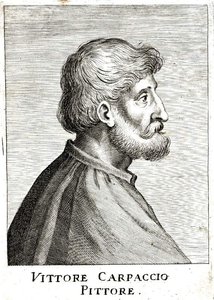
ヴィットーレ・カルパッチオ
1465 - 1526 , イタリア
基本情報
- Artistic Movement Or Style: 初期ヴェネツィア・ルネサンス
- Artists Or Movements Influenced By This Artist: ['初期ネーデルラント絵画']
- Artists Who Influenced This Artist:
- アントネロ・ダ・メッシーナ
- ジェンティレ・ベリーニ
- Date Of Birth: イタリア、ヴェネツィア(1465年頃)
- Date Of Death: 1526年
- Full Name: ヴィットーレ・カルパッチョ
- Nationality: イタリア人
- Notable Artworks:
- 聖ウルズラ伝説
- 聖ウルズラの栄光祭壇画
- リアルト橋の十字架の遺物の奇跡
- Place Of Birth: ヴェネツィア
関連記事
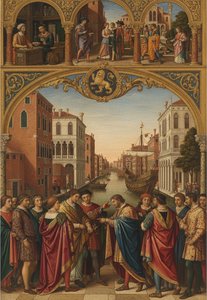
Vittore Carpaccio: Venetian Renaissance Narrative & the Poetics of Detail
Explore the captivating world of Vittore Carpaccio, a master storyteller of the Venetian Renaissance. Discover his intricate details, narrative cycles like 'The Legend of St. Ursula,' and unique artistic style.
Civic Virtue and Artistic Rivalry: Patronage and Innovation in the Italian Renaissance Republics, 1400–1600
Explore the Italian Renaissance! Discover how competitive patronage & humanist ideals fueled artistic innovation in republics like Florence & Venice. Expert insights for art lovers and collectors.
Mario Sironi: A Poetic of Modern Italian Identity Through Symbolism & Social Commentary
Explore the profound works of Mario Sironi, a key figure in Italian Modernism. Discover his evolution from Futurism to Metaphysical painting and his powerful social commentary. Learn about his legacy at ArtsDot.
Giovanni Fattori: Realism, Identity & the Tuscan Landscape – A Macchiaioli Master
Explore the life & art of Giovanni Fattori, a leading figure of the Macchiaioli movement. Discover his revolutionary realism, captivating Tuscan landscapes, and lasting impact on Italian painting. Learn more at ArtsDot.
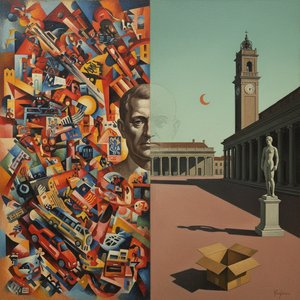
Carlo Carrà: Futurist Visions & Metaphysical Transformations in Early 20th-Century Italian Painting
Explore the artistic journey of Carlo Carrà, a pivotal figure in Italian Futurism & Metaphysical painting. Discover his dynamic compositions, collaborations with de Chirico, and lasting influence on modern art history.