

 プレビュー
プレビュー
 シェアする
シェアする シェアする
シェアする
 詳細を見る
詳細を見る

 ダウンロード
 似ている作品
 X線調査
X線調査 スライドショー
 Stats
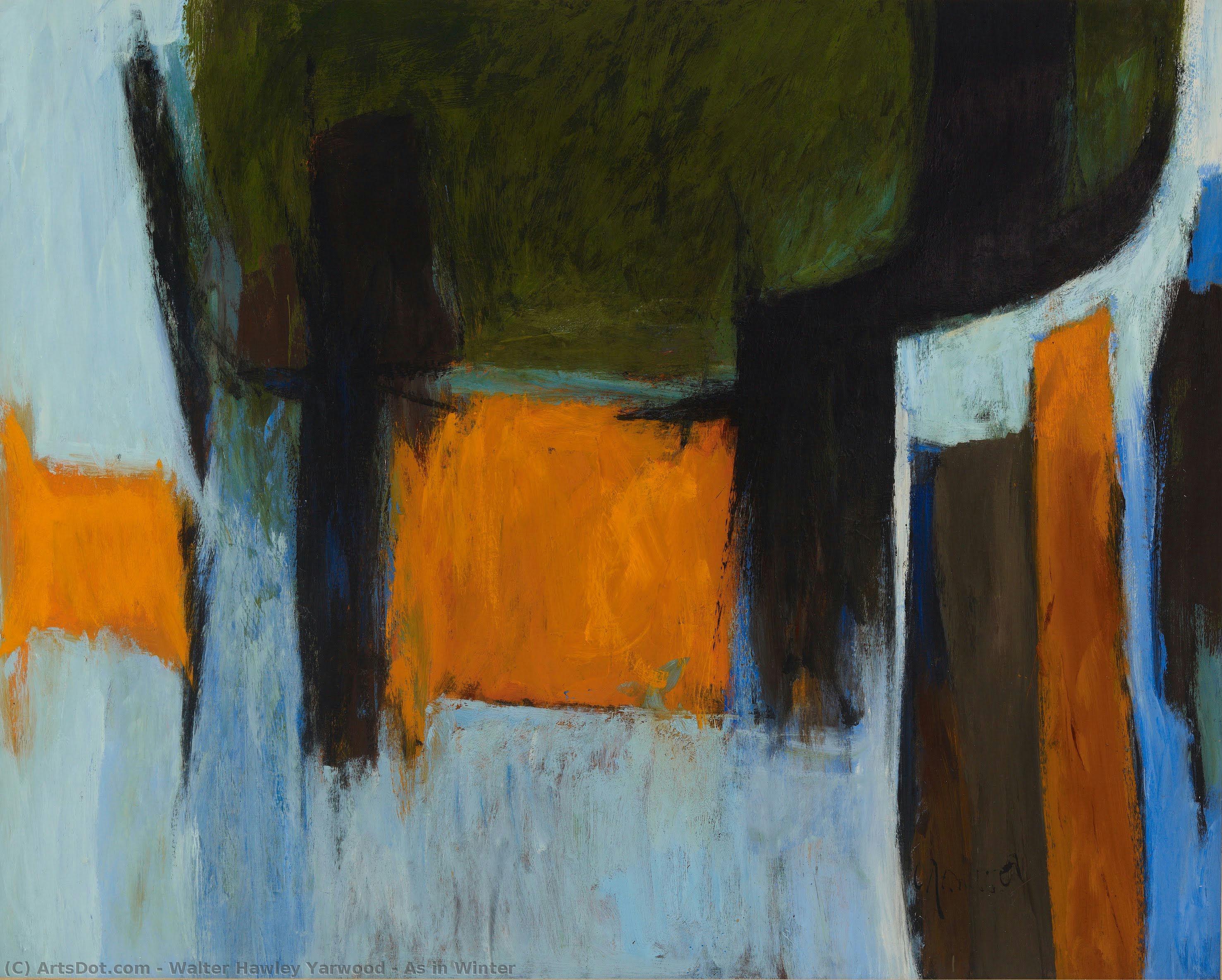
StatsAs in Winter
 Painting
- Abstract Expressionism
 1960
1960- Modern
 152.0 x 190.0 cm
 The Robert McLaughlin Gallery
 詳細を見る
詳細を見る
手描き油彩複製画
当社のアーティストが、お客様のご希望のサイズと額縁に合わせて、キャンバスに手描きで制作する油彩画です。 ( Switch to Print Switch to Digital Image)




































作品のオリジナル比率に合わせた、当店の規定サイズからお選びください。

特定のフレームやスペースに合わせて、ご希望のサイズをご入力いただけます。選択されたサイズが元の画像の比率と異なる場合、アートワークをトリミングするか、手描きで要素を追加して絵画を拡張いたします。デジタルモックアップ を制作し、制作開始前にご確認(承認)をいただきます。
画面上のプレビューは、実際のトリミングや拡張を正確に反映しているものではありません。最終的な構図は、モックアップによってのみ正確にご確認いただけます。
カスタムサイズもご利用いただけますが、元の比率を維持するためには、あらかじめ用意されたリストからサイズを選択することをお勧めいたします。
ご注文後、ArtsDot.com チームより詳細な指示をお送りするとともに、仕上がりイメージ(モックアップ)をご提供いたします。


 ガラスオプションは、110cm未満のサイズでのみご利用いただけます。

As in Winter
複製技法
複製画のサイズ
-


合計金額
$ 263
A Symphony of Solitude: The Luminous World of As in Winter
In the quietude of 1960, Walter Hawley Yarwood captured a moment that transcends the mere depiction of nature, inviting the viewer into a contemplative realm where color and form dance in a delicate balance. As in Winter is not simply a landscape; it is an emotional resonance rendered through the lens of Canadian Abstract Expressionism. At first glance, the eye is drawn to the central arboreal figure, a tree that stands as a vibrant sentinel against a crisp, cerulean sky. Painted in striking hues of burnt orange and deep ochre, this central subject defies the traditional desaturation associated with winter, suggesting instead the warmth of memory or the fiery glow of a setting sun that refuses to yield to the frost.
The composition breathes with a rhythmic vitality, achieved through Yarwood’s masterful use of depth and spatial arrangement. While the primary tree commands attention, the subtle presence of secondary trees in the background creates a layered, atmospheric perspective that pulls the observer deeper into the canvas. The inclusion of man-made elements—a solitary chair to the left and a quiet bench nestled toward the center-right—introduces a poignant narrative of human presence within the vastness of the natural world. These objects serve as silent invitations for reflection, suggesting a space designed for stillness, where one might sit to witness the slow transition of seasons.
Technique and the Legacy of Painters Eleven
As a founding member of the legendary Painters Eleven, Yarwood brought a unique architectural sensibility to the fluid language of abstraction. In As in Winter, we see this mastery on full display through his controlled yet expressive brushwork. The texture of the painting suggests a deliberate layering process, where the interplay between the warm, earthy tones of the foliage and the cool, expansive blue of the sky creates a chromatic tension that is both soothing and stimulating. His technique avoids the chaotic sprawl often found in pure abstraction, opting instead for a structured dynamism that honors the organic silhouettes of the landscape.
For the discerning collector or interior designer, this piece offers an unparalleled opportunity to introduce a sense of sophisticated tranquility into a space. The large-scale dimensions of 152 x 190 cm allow the artwork to function as a commanding focal point, capable of anchoring a room with its bold color palette and profound emotional weight. Whether placed in a contemporary gallery setting or a classic study, the painting acts as a window into a mid-century modern masterpiece, bridging the gap between the historical significance of Canadian modernism and the timeless allure of fine art decoration.
To possess a reproduction of this caliber is to hold a fragment of art history. It is an investment in atmosphere, bringing the pioneering spirit of Yarwood’s abstract expressionism into the modern home. The painting does more than decorate a wall; it transforms an environment, offering a perennial sense of peace and a vibrant reminder of the enduring beauty found in the quietest moments of the natural cycle.
関連作品
アーティストの略歴
The Architect of Color: The Life and Legacy of Walter Hawley Yarwood
In the vibrant tapestry of mid-twentieth-century Canadian art, few threads are as structurally profound or coloristically rich as those woven by Walter Hawley Yarwood. Born in Toronto in 1917, Yarwood’s journey was one of disciplined duality. While many perceive the artist through the lens of pure abstraction, his foundation was built upon the pragmatic rigors of a commercial illustrator. This early career, pursued alongside his weekend explorations into painting, instilled in him a unique precision—a way of seeing that balanced the spontaneous energy of modernism with a deep, underlying sense of order. His formative years at Western Technical School provided the technical scaffolding upon which he would later build much more complex, emotive worlds.
As the mid-century approached, the art world was undergoing a seismic shift, moving away from the representational landscapes that had long defined the Canadian identity toward the visceral, uninhibited language of Abstract Expressionism. Yarwood did not merely witness this change; he became one of its primary architects in Canada. By joining the Ontario Society of Artists and the Canadian Group of Painters, he positioned himself at the heart of a burgeoning movement. However, it was his role as a founding member of the legendary Painters Eleven in 1948 that would forever cement his place in history. This collective was more than just a group of contemporaries; it was a revolutionary force dedicated to establishing a distinctly Canadian voice within the global avant-garde.
A Symphony of Form and Motion
Yarwood’s artistic evolution is a fascinating study in controlled metamorphosis. In the late 1940s, his canvases were often rooted in the familiar, capturing the quiet essence of landscapes. Yet, as he delved deeper into the experimental spirit of the 1950s—a period enriched by his studies in Mexico—his work underwent a radical transformation. He began to move away from the loose, spontaneous splashes characteristic of some of his peers, opting instead for what critics often described as an architectonic approach to abstraction. His paintings became landscapes of the mind, where heavy, blocky shapes and geometric energies suggested movement and structural permanence rather than mere fleeting impressions.
This mastery of form was matched only by his prowess as a colorist. To look at a work like Sky Fire or As in Winter is to witness a masterclass in chromatic tension. He utilized intense, vibrant palettes to breathe life into his shapes, creating a sense of internal heat and rhythmic pulse. His canvases were not static; they possessed a kinetic quality, where the interplay of light and saturated hues suggested the dynamism of modern urban architecture or the raw power of natural forces. This ability to marry the heavy weight of form with the ethereal lightness of color allowed him to achieve a rare equilibrium in his mature works.
Sculptural Presence and Lasting Impact
The reach of Yarwood’s vision extended far beyond the two-dimensional plane. During the 1960s, he translated his fascination with structural energy into the physical realm through public sculpture. His works in Ontario, Quebec, and Manitoba brought his abstract language to the streets and plazas, allowing the public to interact with his concepts of weight, balance, and motion in three dimensions. This expansion into sculpture demonstrated his profound understanding of how space is occupied and how form can command an environment.
Though he was often a more reserved figure than the more boisterous members of Painters Eleven, Yarwood’s influence was undeniable. He earned the deep respect of critics and peers alike for his technical skill and his refusal to succumb to easy, purely decorative abstraction. His legacy remains a cornerstone of Canadian modernism, characterized by:
- The Integration of Form and Color: A unique ability to use geometric structure to anchor intense emotional palettes.
- Architectural Abstraction: Moving the needle of Canadian art toward a more structured, powerful, and monumental aesthetic.
- Foundational Leadership: His pivotal role in the Painters Eleven, which helped launch Canada into the international conversation of abstract expressionism.
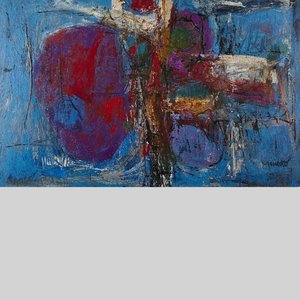
walter hawley yarwood
1917 - 1996 , Canada
基本情報
- Artistic Movement Or Style: Abstract Expressionism
- Artists Or Movements Influenced By This Artist: ['Painters Eleven']
- Artists Who Influenced This Artist:
- Tom Hodgson
- Oscar Cahén
- Date Of Birth: September 19, 1917
- Date Of Death: December 22, 1996
- Full Name: Walter Hawley Yarwood
- Nationality: Canadian
- Notable Artworks:
- Dark Bird
- As in Winter
- Sky Fire
- Place Of Birth: Toronto, Canada
関連記事

幾何学的抽象絵画を定義した傑作10選|アート、アーティスト、インテリア装飾
モンドリアン、マレーヴィチ…幾何学的抽象絵画を代表する傑作10選。各作品の背景や色彩構成、アーティストの情熱に迫ります。美術館品質の複製画はArtsDot.comで。オンラインでアートコレクションをご覧ください。
Slate Blue Masterpieces: 10 Iconic Paintings & Timeless Home Decor Ideas
Immerse yourself in the captivating world of slate blue! Explore 10 iconic paintings by Monet, Van Gogh & Renoir. Discover their stories, techniques & find museum-quality art reproductions for your home at .
抽象表現主義を定義する十大傑作:芸術と装飾の深遠な旅
抽象表現主義を定義する10の傑作。ポロック、ロスコら巨匠たちの情熱と色彩の世界へ。各作品に込められた物語と技法を紐解き、至高のアート体験を。ArtsDot.comで、ミュージアムクオリティの複製画や洗練されたインテリアアイデアを発見してください。
The Allure of Azure: Exploring the Symbolic & Aesthetic Depths of Blue in Art History
Explore the rich history of blue in art! Discover its symbolism, from ancient pigments to modern masterpieces by Kandinsky & Seurat. Uncover the psychological impact and cultural meanings behind this captivating hue.
Kandinsky's Masterpieces: 25 Paintings That Define Abstract Art | ArtsDot
Journey through Wassily Kandinsky's 25 most iconic abstract paintings. Explore his revolutionary use of color, form & spiritual expressionism. Find museum-quality Kandinsky reproductions and elevate your home decor with ArtsDot.com. Discover all masterpieces on ArtsDot.com!