

 プレビュー
プレビュー
 シェアする
シェアする シェアする
シェアする
 詳細を見る
詳細を見る

 ダウンロード
 似ている作品
 X線調査
X線調査 スライドショー
 Stats
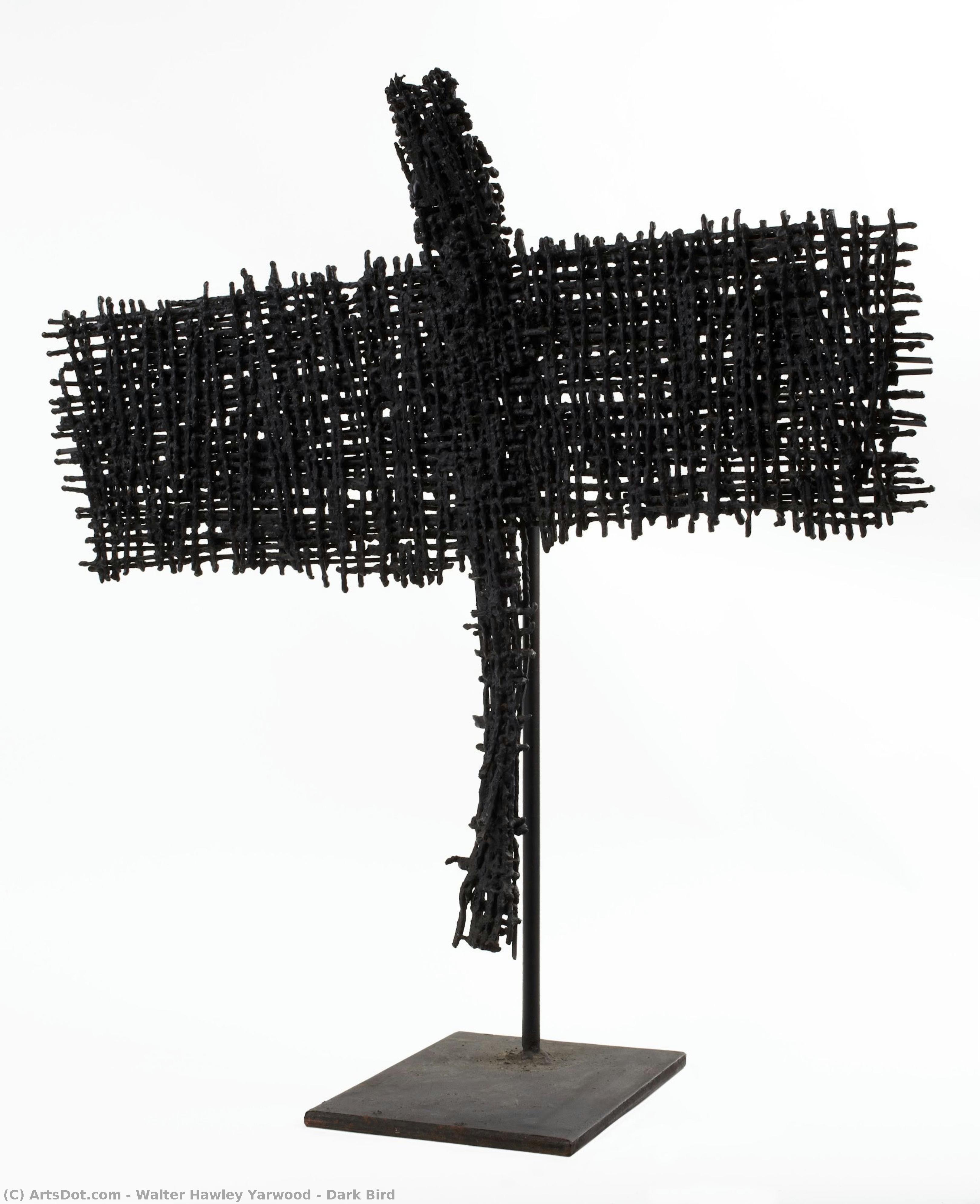
StatsDark Bird
 1962
1962 101.0 x 93.0 cm
 The Robert McLaughlin Gallery
 詳細を見る
詳細を見る
ジークレー/アートプリント
迅速な制作と多彩な仕上げオプションを備えた、ミュージアムクオリティのジークレーまたはキャンバスプリント。 ( 手描きの絵画を購入 Switch to Digital Image)




































作品のオリジナル比率に合わせた、当店の規定サイズからお選びください。

特定のフレームやスペースに合わせて、ご自身でサイズを指定することも可能です。選択されたサイズが元の画像の比率と一致しない場合、作品をトリミングするか、鏡面反射または単色での塗りつぶしによって画像を拡張いたします。制作を開始する前に、ご確認用のデジタルモックアップをお送りいたします。
画面上のプレビューには、実際のトリミングや拡張は反映されませんのでご注意ください。最終的な構図を正確に確認できるのは、モックアップのみとなります。
カスタムサイズも承っておりますが、元の比率を維持するためには、あらかじめ用意されたリストからサイズを選択することをお勧めいたします。


 ガラスオプションは、110cm未満のサイズでのみご利用いただけます。

Dark Bird
ジークレー/アートプリント
複製画のサイズ
-


合計金額
$ 62
関連作品

アーティストの略歴
The Architect of Color: The Life and Legacy of Walter Hawley Yarwood
In the vibrant tapestry of mid-twentieth-century Canadian art, few threads are as structurally profound or coloristically rich as those woven by Walter Hawley Yarwood. Born in Toronto in 1917, Yarwood’s journey was one of disciplined duality. While many perceive the artist through the lens of pure abstraction, his foundation was built upon the pragmatic rigors of a commercial illustrator. This early career, pursued alongside his weekend explorations into painting, instilled in him a unique precision—a way of seeing that balanced the spontaneous energy of modernism with a deep, underlying sense of order. His formative years at Western Technical School provided the technical scaffolding upon which he would later build much more complex, emotive worlds.
As the mid-century approached, the art world was undergoing a seismic shift, moving away from the representational landscapes that had long defined the Canadian identity toward the visceral, uninhibited language of Abstract Expressionism. Yarwood did not merely witness this change; he became one of its primary architects in Canada. By joining the Ontario Society of Artists and the Canadian Group of Painters, he positioned himself at the heart of a burgeoning movement. However, it was his role as a founding member of the legendary Painters Eleven in 1948 that would forever cement his place in history. This collective was more than just a group of contemporaries; it was a revolutionary force dedicated to establishing a distinctly Canadian voice within the global avant-garde.
A Symphony of Form and Motion
Yarwood’s artistic evolution is a fascinating study in controlled metamorphosis. In the late 1940s, his canvases were often rooted in the familiar, capturing the quiet essence of landscapes. Yet, as he delved deeper into the experimental spirit of the 1950s—a period enriched by his studies in Mexico—his work underwent a radical transformation. He began to move away from the loose, spontaneous splashes characteristic of some of his peers, opting instead for what critics often described as an architectonic approach to abstraction. His paintings became landscapes of the mind, where heavy, blocky shapes and geometric energies suggested movement and structural permanence rather than mere fleeting impressions.
This mastery of form was matched only by his prowess as a colorist. To look at a work like Sky Fire or As in Winter is to witness a masterclass in chromatic tension. He utilized intense, vibrant palettes to breathe life into his shapes, creating a sense of internal heat and rhythmic pulse. His canvases were not static; they possessed a kinetic quality, where the interplay of light and saturated hues suggested the dynamism of modern urban architecture or the raw power of natural forces. This ability to marry the heavy weight of form with the ethereal lightness of color allowed him to achieve a rare equilibrium in his mature works.
Sculptural Presence and Lasting Impact
The reach of Yarwood’s vision extended far beyond the two-dimensional plane. During the 1960s, he translated his fascination with structural energy into the physical realm through public sculpture. His works in Ontario, Quebec, and Manitoba brought his abstract language to the streets and plazas, allowing the public to interact with his concepts of weight, balance, and motion in three dimensions. This expansion into sculpture demonstrated his profound understanding of how space is occupied and how form can command an environment.
Though he was often a more reserved figure than the more boisterous members of Painters Eleven, Yarwood’s influence was undeniable. He earned the deep respect of critics and peers alike for his technical skill and his refusal to succumb to easy, purely decorative abstraction. His legacy remains a cornerstone of Canadian modernism, characterized by:
- The Integration of Form and Color: A unique ability to use geometric structure to anchor intense emotional palettes.
- Architectural Abstraction: Moving the needle of Canadian art toward a more structured, powerful, and monumental aesthetic.
- Foundational Leadership: His pivotal role in the Painters Eleven, which helped launch Canada into the international conversation of abstract expressionism.
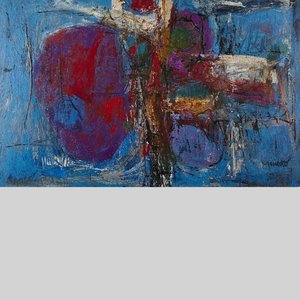
walter hawley yarwood
1917 - 1996 , Canada
基本情報
- Artistic Movement Or Style: Abstract Expressionism
- Artists Or Movements Influenced By This Artist: ['Painters Eleven']
- Artists Who Influenced This Artist:
- Tom Hodgson
- Oscar Cahén
- Date Of Birth: September 19, 1917
- Date Of Death: December 22, 1996
- Full Name: Walter Hawley Yarwood
- Nationality: Canadian
- Notable Artworks:
- Dark Bird
- As in Winter
- Sky Fire
- Place Of Birth: Toronto, Canada