

 プレビュー
プレビュー
 シェアする
シェアする シェアする
シェアする
 詳細を見る
詳細を見る

 ダウンロード
 似ている作品
 X線調査
X線調査 スライドショー
 統計情報
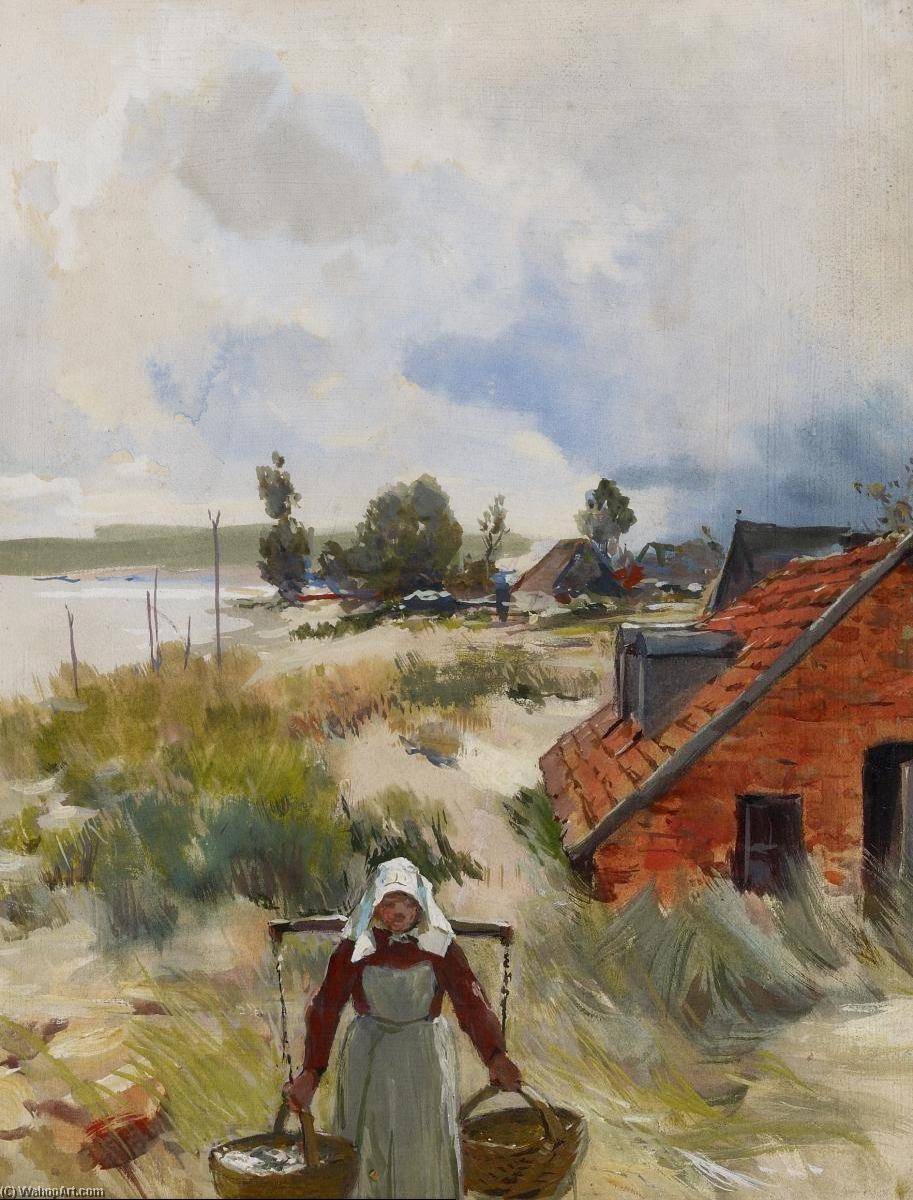
統計情報Fishing village on the Baltic Sea
 詳細を見る
詳細を見る
ジークレー/アートプリント
迅速な制作と多彩な仕上げオプションを備えた、ミュージアムクオリティのジークレーまたはキャンバスプリント。 ( 手描きの絵画を購入 デジタル画像販売へ切り替え)




































作品のオリジナル比率に合わせた、当店の規定サイズからお選びください。

特定のフレームやスペースに合わせて、ご自身でサイズを指定することも可能です。選択されたサイズが元の画像の比率と一致しない場合、作品をトリミングするか、鏡面反射または単色での塗りつぶしによって画像を拡張いたします。制作を開始する前に、ご確認用のデジタルモックアップをお送りいたします。
画面上のプレビューには、実際のトリミングや拡張は反映されませんのでご注意ください。最終的な構図を正確に確認できるのは、モックアップのみとなります。
カスタムサイズも承っておりますが、元の比率を維持するためには、あらかじめ用意されたリストからサイズを選択することをお勧めいたします。


 ガラスオプションは、110cm未満のサイズでのみご利用いただけます。

Fishing village on the Baltic Sea
ジークレー/アートプリント
複製画のサイズ
-


合計金額
$ 62
関連作品









アーティストの略歴
The Luminous Legacy of Walter Moras
Born in Berlin on January 20, 1856, Walter Moras emerged as a master of the landscape, a painter whose brush possessed the rare ability to translate the quietest whispers of nature into enduring visual poetry. While often associated with the vibrant art scenes of Germany, his spirit wandered far beyond the city limits, finding its true home in the serene vistas of the Baltic coast and the frost-kissed reaches of winter landscapes. His artistic journey began under the watchful eye of the esteemed marine and landscape painter Hermann Eschke, whose mentorship provided Moras with a foundational mastery of light and atmosphere. This early training in Berlin’s prestigious studios allowed him to stage his debut at the Prussian Academy of Arts in 1876, marking the arrival of a talent that would soon captivate audiences from Munich to Bremen.
The evolution of Moras’s style is a testament to his deep connection with the changing seasons and the subtle shifts in natural light. Though his roots were firmly planted in the German tradition, his work breathed with an Impressionistic vitality that sought to capture more than just a static scene; he sought to capture a feeling. In his early years, his focus often rested on the meticulous detail of the world around him, yet as his career matured, he became renowned for large-format autumnal scenes that glowed with warm, radiant hues. These canvases, bathed in the golden light of falling leaves, showcased a sophisticated use of color theory that brought a palpable warmth to the viewer. Conversely, his winter landscapes offered a different kind of magic—a delicate balance of cool, crisp tones punctuated by unexpected warmth, reflecting a soul deeply attuned to the melancholic beauty of the natural cycle.
A Wanderer Through Light and Landscape
Moras was never a painter confined to a single studio or a singular view. His wanderlust served as his greatest inspiration, leading him through the craggy, breathtaking landscapes of the German island of Rügen and into the lush, watery corridors of the Spreewald. He sought out the quietude of rural Brandenburg, finding beauty in the simplicity of village life and the stillness of lakes at dusk. His travels even took him beyond German borders to the rugged terrains of Norway, the lowlands of the Netherlands, and the sun-drenched landscapes of Italy. Each location left an indelible mark on his palette, contributing to a body of work that feels both intimately personal and universally evocative.
The technical brilliance of Moras lies in his ability to blend Realism with a touch of poetic abstraction. While his compositions are grounded in a precise observation of the physical world—the way light hits a frozen stream or how shadows stretch across a meadow—there is an underlying sense of emotion that transcends mere documentation. His work often carries a gentle, refined melancholia, a quality that invites the viewer to linger within the frame and contemplate the fleeting nature of time. Through his deliberate use of tone and luminosity, he transformed ordinary landscapes into extraordinary experiences of light and atmosphere.
Historical Significance and Artistic Enduring Spirit
Though Walter Moras passed away on March 6, 1925, his contribution to the landscape genre remains a vital chapter in the history of European art. He stood at a pivotal intersection of movements, bridging the gap between the disciplined realism of his mentors and the emotive, light-driven explorations of the Impressionists. His ability to find grandeur in the small, quiet moments of nature—a moonrise over a tranquil lake or the first snow settling on a woodland path—ensured his place as a significant voice in 19th and early 20th-century painting.
Today, the works of Moras continue to resonate with those who find solace in the natural world. His legacy is found in:
- The mastery of seasonal atmosphere: His unique ability to evoke the specific warmth of autumn and the biting clarity of winter.
- The expansion of landscape boundaries: Moving beyond the urban confines of Berlin to celebrate the rural and coastal beauty of Northern Europe.
- A refined emotional depth: Infusing realistic landscapes with a sense of peace, nostalgia, and quiet wonder.
基本情報
- Artistic Movement Or Style: Impressionism
- Artists Or Movements Influenced By This Artist: ['Post-Impressionism']
- Artists Who Influenced This Artist: ['Claude Monet']
- Full Name: Walter Moras
- Nationality: Latvian
- Notable Artworks:
- Moonrise
- Landscape with a Lake
- Place Of Birth: Riga, Latvia