

 プレビュー
プレビュー
 プリントを購入
 シェアする
シェアする シェアする
シェアする
 詳細を見る
詳細を見る

 ダウンロード
 似ている作品
 X線調査
X線調査 スライドショー
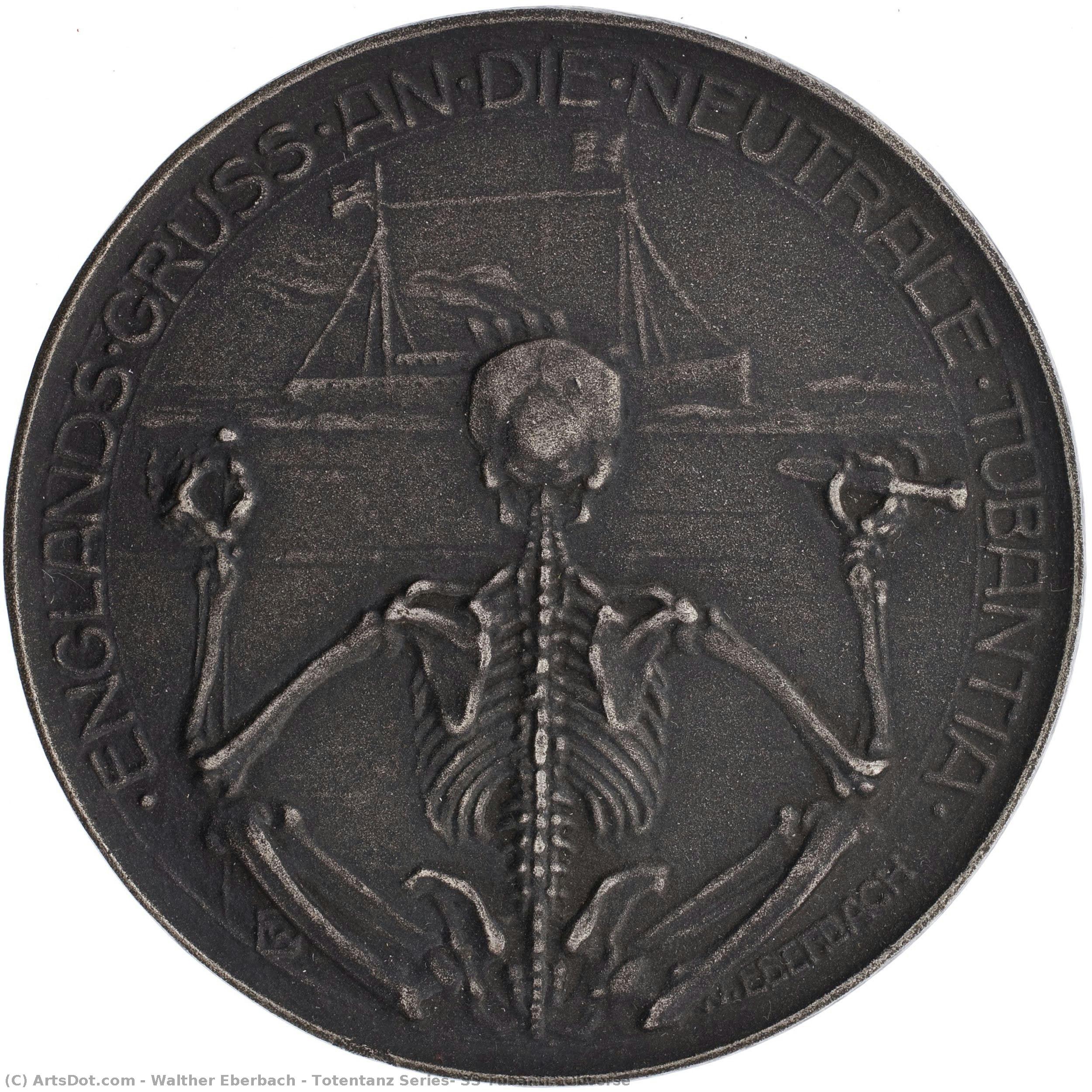
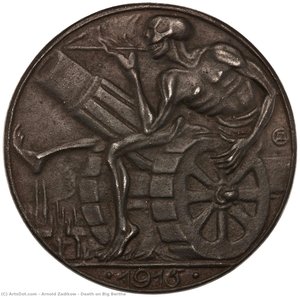
Totentanz Series: SS Tubantia Obverse


 詳細を見る
詳細を見る




































作品のオリジナル比率に合わせた、当店の規定サイズからお選びください。

特定のフレームやスペースに合わせて、ご希望のサイズをご入力いただけます。選択されたサイズが元の画像の比率と異なる場合、アートワークをトリミングするか、手描きで要素を追加して絵画を拡張いたします。デジタルモックアップ を制作し、制作開始前にご確認(承認)をいただきます。
画面上のプレビューは、実際のトリミングや拡張を正確に反映しているものではありません。最終的な構図は、モックアップによってのみ正確にご確認いただけます。
カスタムサイズもご利用いただけますが、元の比率を維持するためには、あらかじめ用意されたリストからサイズを選択することをお勧めいたします。
ご注文後、ArtsDot.com チームより詳細な指示をお送りするとともに、仕上がりイメージ(モックアップ)をご提供いたします。


 ガラスオプションは、110cm未満のサイズでのみご利用いただけます。

Totentanz Series: SS Tubantia Obverse
複製技法
複製画のサイズ
-


合計金額
$ 263
作品解説
関連作品






アーティストの略歴
The Master of Metal and Memory: The Life of Walther Eberbach
In the annals of German art history, few names evoke the somber elegance and technical precision of Walther Eberbach. Born in 1866 in Besigheim, Eberbach emerged from a lineage of craftsmanship that would define his entire creative existence. His journey began not merely with a brush or a chisel, but with the disciplined hands of a draftsman and metal sculptor. Through his formative studies in Schwäbisch Gmünd and later at the Kunstgewerbeschule Stuttgart, he mastered the intricate language of metalwork, a skill that would allow him to breathe life into bronze, silver, and steel. His career was a nomadic tapestry of European culture, spanning the industrial energy of Cologne, the historical weight of Strasbourg, and the cosmopolitan atmosphere of London and Berlin.
Eberbach was far more than a mere craftsman; he was a storyteller of the profound. As an educator in Strasbourg and later in Heilbronn, he passed on the delicate arts of ziselieren (chasing) and goldsmithing to new generations, ensuring that the meticulous traditions of the past survived into a modernizing world. His work often sat at the intersection of Victorian allegory and a hauntingly realistic portrayal of human mortality. This duality allowed him to capture the zeitgeist of an era caught between the grandeur of imperial pride and the devastating reality of industrial warfare.
Symbolism in Bronze: The Totentanz Series
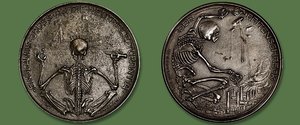
The true emotional depth of Eberbach’s legacy is perhaps most poignantly realized in his Totentanz (Dance of Death) series. In these works, the artist moved beyond simple ornamentation to engage with the most harrowing themes of his time. His medallions and reliefs serve as historical witnesses, utilizing skeletal figures and symbolic landscapes to process the collective trauma of the early 20th century. Each piece is a masterclass in embossed metalwork, where every line serves a narrative purpose.
His explorations of historical tragedy are both beautiful and unsettling:
- The Sinking of the RMS Lusitania: In this somber embossed medallion, Eberbach depicts a skeletal figure rowing through turbulent waves, a hauntingly beautiful commemoration of one of the era's most tragic maritime disasters.
- Death Pumping Blood over Verdun: A powerful and visceral relief print from 1916, this work captures the sheer devastation of the Battle of Verdun, using symbolic imagery to reflect the horrors of World War I.
- Britannia Rules the Waves?: Through this bronze relief, Eberbach poses a provocative question regarding naval supremacy and mortality, blending maritime history with a chilling Victorian allegory.
A Legacy of Craftsmanship and Historical Reflection
The significance of Walther Eberbach lies in his ability to transform cold, hard materials into vessels of deep historical reflection. While many artists of his era focused on the purely aesthetic or the purely political, Eberbach found a middle ground where meticulous realism met symbolic depth. His membership in organizations such as the Künstlerbunds Heilbronn and his frequent exhibitions with the Kunstverein Heilbronn solidified his role as a pillar of the German artistic community.
As we look back on his life, which concluded in 1944, we see an artist who refused to look away from the shadows of history. Whether through the delicate precision of an engraving or the heavy, textured presence of a bronze relief, Eberbach’s work remains a vital connection to a period of immense transition. He remains a master of the permanent—an artist who used the most enduring mediums to capture the most fleeting and tragic moments of human existence.
walther eberbach
1866 - 1944 , Germany
基本情報
- Artistic Movement Or Style: Realist Art Style
- Date Of Birth: 1866 Heidelberg Germany
- Date Of Death: 1944 Weinsberg Germany
- Full Name: walther eberbach
- Nationality: German
- Notable Artworks:
- Totentanz Series: Britannia Rules the Waves?
- Totentanz Series: Death Pumping Blood over Verdun
- Totentanz Series: SS Tubantia
- Place Of Birth: Heidelberg Germany

