


 プレビュー
プレビュー
 シェアする
シェアする シェアする
シェアする
 詳細を見る
詳細を見る

 ダウンロード
 似ている作品
 X線調査
X線調査 スライドショー
 統計情報
統計情報Friedrich der Große
 Acrylic On Canvas
- WallArt
- Romantic Realism
 1870
1870- 19th Century
 87.0 x 75.0 cm
 Sanssouci Palace
 詳細を見る
詳細を見る
ジークレー/アートプリント
迅速な制作と多彩な仕上げオプションを備えた、ミュージアムクオリティのジークレーまたはキャンバスプリント。 ( 手描きの絵画を購入 デジタル画像販売へ切り替え)




P118B $10

P118H $10

P118W $10

P438Z $10

P508JH $12

P508YH $12

P805H $10

P805Z $10

P919BZ $10

P919G $10

P919XJ $10

P959ZH $10

P968JZ $12

W106C $8

W218G $10

W218JH $8

W218Y $10

W307PJ $10

W316G $10

W316PJ $8

W316Y $10

W398PJ $8

W4111J $10

W500HY $15

W500JH $15

W692G $12

W849H $8

W940BG $15

W953PJ $8




作品のオリジナル比率に合わせた、当店の規定サイズからお選びください。

特定のフレームやスペースに合わせて、ご自身でサイズを指定することも可能です。選択されたサイズが元の画像の比率と一致しない場合、作品をトリミングするか、鏡面反射または単色での塗りつぶしによって画像を拡張いたします。制作を開始する前に、ご確認用のデジタルモックアップをお送りいたします。
画面上のプレビューには、実際のトリミングや拡張は反映されませんのでご注意ください。最終的な構図を正確に確認できるのは、モックアップのみとなります。
カスタムサイズも承っておりますが、元の比率を維持するためには、あらかじめ用意されたリストからサイズを選択することをお勧めいたします。


 ガラスオプションは、110cm未満のサイズでのみご利用いただけます。

Friedrich der Große
ジークレー/アートプリント
複製画のサイズ
-


合計金額
$ 62
Wilhelm Camphausen's "Friedrich der Große": A Portrait of Power and Majesty
This compelling portrait by Wilhelm Camphausen, completed in 1870, offers a captivating glimpse into the persona of Frederick III, also known as “The Great,” one of Prussia’s most significant rulers. The painting immediately draws the eye to the subject's commanding presence – a man adorned with a distinctive feathered hat, reminiscent of a pirate’s emblem, yet undeniably regal in its execution. Camphausen masterfully captures Frederick’s gaze, directing it directly at the viewer, fostering an intimate and almost confrontational connection.
Artistic Style and Technique
- Realism with a Dramatic Flair: Camphausen's style is characterized by a meticulous realism blended with a deliberate theatricality. The attention to detail in the rendering of Frederick’s clothing – the rich fabrics, intricate embroidery, and precise folds – speaks to his commitment to historical accuracy.
- Color Palette & Light: The subdued color palette, dominated by browns, grays, and blues, creates an atmosphere of solemnity and gravitas, reflecting the weight of responsibility borne by the Prussian monarch. The strategic use of light emphasizes Frederick’s face and upper body, drawing attention to his expression and reinforcing his authority.
- Brushwork: Camphausen employs a smooth, controlled brushstroke, contributing to the painting's polished appearance and conveying a sense of stability and power.
Historical Context and Symbolism
Painted during a period of significant political and military upheaval in Europe, “Friedrich der Große” reflects the anxieties and ambitions of the era. Frederick III’s reign was marked by attempts to maintain Prussia's position amidst rising European powers. The inclusion of the feathered hat, a symbol often associated with piracy and rebellion, introduces an element of complexity – perhaps suggesting a willingness to challenge established norms or a subtle critique of aristocratic excess. The cane held in his hand is not merely a prop; it represents authority, experience, and strategic deliberation.
Connections to Camphausen’s Larger Oeuvre
This portrait shares stylistic similarities with Camphausen's other celebrated works, such as “Flight of Tilly” and “Prince Eugene of Savoy.” It echoes the artist’s fascination with historical battle scenes and his ability to imbue them with a sense of human drama. Notably, it is a reimagining of the larger "Friedrichs II." equestrian statue, suggesting a desire to capture the essence of the ruler beyond mere physical representation – embodying his character and legacy.
A Statement Piece for Your Collection
ArtsDot.com presents a meticulously crafted hand-painted reproduction of Wilhelm Camphausen’s “Friedrich der Große,” offering an exceptional opportunity to own a piece of art history. This artwork is perfect for collectors seeking a powerful and historically resonant addition to their collections, or for interior designers aiming to create a space that exudes confidence and sophistication. The detailed execution and evocative subject matter ensure this reproduction will be a focal point in any setting.
関連作品

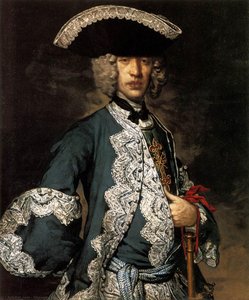
アーティストの略歴
The Master of Historical Drama: The Life and Legacy of Wilhelm Camphausen
In the grand tapestry of nineteenth-century European art, few threads are as intricately woven with the drama of conflict and the precision of history as those spun by Wilhelm Camphausen. Born in Düsseldorf, Germany, in 1818, Camphausen emerged from a period of profound political and social transformation, a time when the echoes of Napoleonic struggles still resonated through the German states. His journey into the heart of the canvas began under the esteemed guidance of masters such as Alfred Rethel and Friedrich Wilhelm Schadow, luminaries of the renowned Düsseldorf School. This rigorous academic foundation provided him with more than just technical proficiency; it instilled in him a profound respect for narrative clarity and a meticulous eye for the historical detail that would become his hallmark.
Camphausen’s early career was marked by an extraordinary ability to breathe life into the past, transforming static historical records into visceral, cinematic experiences. His ascent to prominence was swift, fueled by works that captured the imagination of both critics and the public alike. In 1841, he presented Flight of Tilly, a masterpiece that signaled his arrival as a formidable talent capable of capturing the chaotic essence of retreat and the psychological weight of battle. This talent for balancing historical accuracy with an unmistakable artistic flair allowed him to navigate the complexities of the genre, ensuring that his scenes were not merely chronicles of events, but emotional explorations of human endurance and the whims of fate.
A Witness to History through the Brush
As his reputation grew, so did the scale and significance of his subject matter. Camphausen possessed a rare gift for portraying the intersection of individual heroism and large-scale political upheaval. One of his most celebrated achievements, Prince Eugene of Savoy at the Battle of Belgrade (1843), now held in the prestigious Cologne Museum, serves as a testament to his ability to command the canvas with both grandeur and intimacy. Through his brush, the viewer is not merely an observer of history but a participant in its most pivotal moments. His later work, such as Flight of Charles II after the Battle of Worcester, further solidified his standing within the Berlin National Gallery’s esteemed collection, proving his mastery over the nuances of movement and historical atmosphere.
Beyond the studio, Camphausen’s life was deeply intertwined with the very conflicts he depicted. His commitment to the truth of the era led him to serve as an official war artist during the Franco-Prussian War of 1870, a role that demanded immense courage and a keen observational skill. Having previously been involved in the Schleswig-Holstein campaign of 1864, his work became a vital visual record of the Prussian military experience. This dual identity—as both an academic painter and a frontline chronicler—lent an unparalleled authenticity to his compositions, as he understood the grit, the dust, and the profound gravity of the battlefield firsthand.
Academic Eminence and Lasting Influence
The zenith of Camphausen’s professional life arrived in 1859 when he was appointed a professor of painting at the Düsseldorf Academy. This appointment was not merely a personal triumph but a recognition of his role as a pillar of German art education. As a teacher, he influenced a new generation of artists, passing down the traditions of the Düsseldorf School while encouraging the technical rigor necessary to tackle the demanding genre of historical painting. His legacy is characterized by several key contributions:
- The Synthesis of Accuracy and Emotion: He bridged the gap between dry historical documentation and the expressive potential of Romanticism.
- Academic Leadership: Through his professorship, he helped maintain the high standards of German academic art during a period of rapid stylistic change.
- Visual Historiography: His works serve as essential visual archives of 19th-century European military and political history.
Though he passed away in 1885, the impact of Wilhelm Camphausen remains etched in the annals of art history. He remains a pivotal figure whose work continues to invite us to look backward, not just to see what happened, but to feel the pulse of the eras that shaped the modern world. His ability to capture the fleeting moment of a soldier's flight or the heavy silence following a victory ensures that his name remains synonymous with the epic scale of human history.
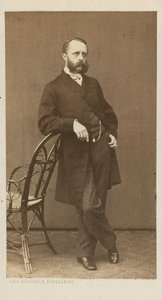
Wilhelm Camphausen
1818 - 1885 , Germany
基本情報
- Artistic Movement Or Style: Düsseldorf School
- Artists Or Movements Influenced By This Artist: ['Düsseldorf School']
- Artists Who Influenced This Artist:
- Alfred Rethel
- Friedrich Wilhelm Schadow
- Date Of Birth: 1818-02-08
- Date Of Death: 1885-06-16
- Full Name: Wilhelm Camphausen
- Nationality: German
- Notable Artworks:
- Flight of Tilly (1841)
- Prince Eugene Belgrade (1843)
- Charles II Worcester (1846)
- Place Of Birth: Düsseldorf, Germany
関連記事
Anton von Werner: Imperial Painter, Historical Witness & Shifting German Identity
Explore the life & work of Anton von Werner, Imperial Germany's leading painter. Discover his dramatic depictions of war, unification, and court life – a fascinating insight into 19th-century German history & art.
The Northern Awakening: Artistic Innovation & Cultural Transformation in the German Renaissance
Explore the artistic innovation of the German Renaissance! Discover Dürer, the Danube School & Reformation art. Learn about techniques, materials & lasting influence. Find museum-quality reproductions at ArtsDot.

Frederick Morgan: A Study in Aestheticism & Victorian Beauty
Explore the captivating world of Frederick Morgan, a key figure in Victorian Aestheticism. Discover his beautiful paintings, recurring themes, and lasting legacy with our expert analysis. Learn more today!
German Expressionism's 10 Defining Masterpieces | Art for Your Home
Explore 10 defining German Expressionism masterpieces – from Munch's 'The Scream' to Kandinsky’s abstracts. Discover the artists, stories & bold colors behind this powerful art movement. Find museum-quality reproductions at ArtsDot.com.

葛飾北斎:25の傑作が語る浮世絵の世界 - ArtsDot
葛飾北斎の25選:『神奈川沖浪裏』や『富嶽三十六景』など、浮世絵の世界を深く探求。木版画の技法と日本美術の美をArtsDotで。高品質なアートプリントで空間に感動を。コレクションはこちら。