 プレビュー
プレビュー
 プリントを購入
 シェアする
シェアする シェアする
シェアする
 詳細を見る
詳細を見る

 ダウンロード
 似ている作品
 X線調査
X線調査 スライドショー
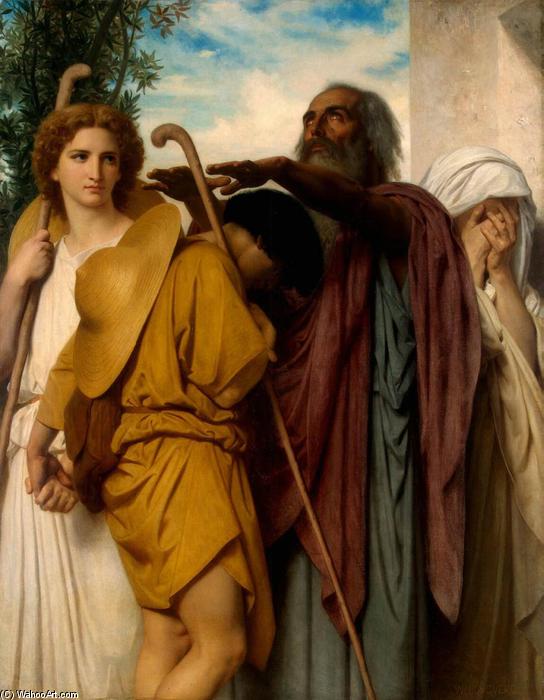
Tobias Saying Farewell to his Father
 Acrylic On Canvas
- WallArt
- Classical Realism
 1860
1860 153.0 x 119.0 cm
 エルミタージュ美術館
 詳細を見る
詳細を見る




P118B $10

P118H $10

P118W $10

P438Z $10

P508JH $12

P508YH $12

P805H $10

P805Z $10

P919BZ $10

P919G $10

P919XJ $10

P959ZH $10

P968JZ $12

W106C $8

W218G $10

W218JH $8

W218Y $10

W307PJ $10

W316G $10

W316PJ $8

W316Y $10

W398PJ $8

W4111J $10

W500HY $15

W500JH $15

W692G $12

W849H $8

W940BG $15

W953PJ $8




作品のオリジナル比率に合わせた、当店の規定サイズからお選びください。

特定のフレームやスペースに合わせて、ご希望のサイズをご入力いただけます。選択されたサイズが元の画像の比率と異なる場合、アートワークをトリミングするか、手描きで要素を追加して絵画を拡張いたします。デジタルモックアップ を制作し、制作開始前にご確認(承認)をいただきます。
画面上のプレビューは、実際のトリミングや拡張を正確に反映しているものではありません。最終的な構図は、モックアップによってのみ正確にご確認いただけます。
カスタムサイズもご利用いただけますが、元の比率を維持するためには、あらかじめ用意されたリストからサイズを選択することをお勧めいたします。
ご注文後、ArtsDot.com チームより詳細な指示をお送りするとともに、仕上がりイメージ(モックアップ)をご提供いたします。


 ガラスオプションは、110cm未満のサイズでのみご利用いただけます。

Tobias Saying Farewell to his Father
複製技法
複製画のサイズ
-


合計金額
$ 263
A Moment Frozen in Time: Exploring Bouguereau’s ‘Tobias Saying Farewell to his Father’
‘Tobias Saying Farewell to his Father,’ painted by William-Adolphe Bouguereau in 1860, transcends mere depiction; it embodies a profound exploration of familial love and sorrow. Housed within the hallowed halls of The Hermitage Museum in St. Petersburg, Russia—a repository of artistic treasures spanning centuries—this monumental canvas (measuring 153 x 119 cm) remains an enduring emblem of Romantic idealism blended with meticulous realism. Bouguereau’s masterful hand captures a tender tableau that speaks volumes about the complexities of human connection.Composition and Symbolism: A Dialogue Between Generations
The painting's visual narrative centers around three figures—a woman cradling her son, a man standing beside her, and several supporting individuals—creating a carefully orchestrated scene designed to elicit empathy. Dominating the upper left corner is a bird, symbolizing hope and remembrance amidst parting; its presence subtly underscores the melancholic beauty of farewell. Notably, skis positioned at the top-left contribute an element of everyday life, juxtaposed against the emotional core of the piece, highlighting the universality of human experience. Bouguereau’s deliberate framing emphasizes the intimacy between father and son, conveying a palpable sense of vulnerability and devotion. The woman's embrace embodies protective love, while the man’s posture reflects quiet resignation—a poignant portrayal of grief tempered by steadfast resolve.Technical Brilliance: Bouguereau’s Painterly Virtuosity
Bouguereau’s technique is characterized by an unwavering dedication to capturing light and texture with unparalleled precision. Executed in oil on canvas, the painting showcases his signature style—a harmonious blend of realism and idealized beauty. He achieves this through painstaking layering of glazes, meticulously blending colors to create luminous surfaces that radiate warmth and depth. Bouguereau’s attention to detail extends beyond mere representation; he strives for a sculptural quality, subtly shaping forms with light and shadow to imbue them with palpable presence. This masterful manipulation of pigment contributes significantly to the artwork's emotional resonance, transporting viewers into the heart of this poignant scene.Historical Context: The Hermitage’s Legacy and Romantic Sentiment
The Hermitage Museum’s establishment in 1764 by Catherine the Great reflects Russia’s burgeoning commitment to artistic patronage and cultural advancement—a tradition that continues to inspire awe and admiration today. Bouguereau's work aligns perfectly with the prevailing aesthetic sensibilities of the mid-nineteenth century, a period marked by Romantic idealism and an obsession with portraying idealized beauty. Artists like Bouguereau sought to elevate art beyond mere imitation of nature, aiming instead for expressions of emotion and moral virtue—values deeply rooted in Western European culture at the time. ‘Tobias Saying Farewell to his Father’ exemplifies this artistic ethos, securing its place as a cornerstone of Romantic painting.Emotional Resonance: A Timeless Portrait of Sorrowful Love
Ultimately, Bouguereau's masterpiece succeeds in conveying an overwhelming sense of sorrowful tenderness. The painting doesn’t simply depict a farewell; it encapsulates the profound grief associated with letting go—a universal experience rendered with breathtaking artistry and sensitivity. Its enduring appeal lies in its ability to evoke empathy and contemplation, prompting viewers to reflect on the significance of familial bonds and the bittersweet beauty inherent in accepting inevitable change. Reproductions of ‘Tobias Saying Farewell to his Father’ offer a captivating glimpse into Bouguereau's artistic vision—a testament to his skill in capturing the essence of human emotion within the framework of classical ideals.関連作品
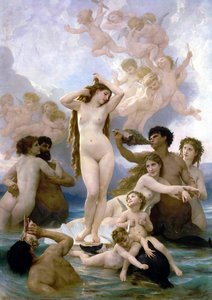
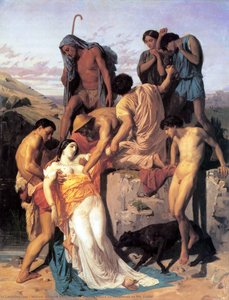
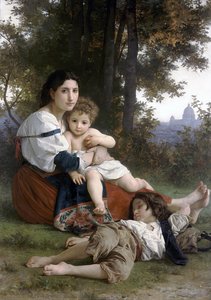
アーティストの略歴
William-Adolphe Bouguereau (1825-1905): The Guardian of Classical Beauty
William-Adolphe Bouguereau, born in La Rochelle on November 30, 1825, stands as a monumental figure within the annals of French academic painting. From his formative years amidst the pastoral landscapes of Nouvelle-Aquitaine, he embarked upon an artistic journey that would solidify his reputation as one of the most influential artists of his era—a champion of classical ideals and unparalleled realism. His early exposure to art instilled in him a profound appreciation for the masterpieces bequeathed by Raphael and Titian, shaping his stylistic trajectory and establishing him firmly within the tradition of the Old Masters. This unwavering devotion to artistic excellence would define not only his oeuvre but also his enduring legacy as an educator and advocate for artistic integrity.Early Influences and Artistic Training
Bouguereau’s formative years were marked by a fervent engagement with artistic pursuits, nurtured by familial encouragement and fueled by an innate talent for draughtsmanship. Recognizing his prodigious abilities, his father secured him admission to the École des Beaux-Arts in Paris in 1846—a pivotal moment that propelled him toward mastering the techniques of academic realism. Under the tutelage of François-Edouard Picquenot, he honed his skills, absorbing the lessons imparted by luminaries like Ingres and Millet. These mentors instilled in him a meticulous attention to detail, emphasizing anatomical accuracy and compositional balance—principles that would permeate his entire artistic practice. The École des Beaux-Arts provided Bouguereau with an unparalleled environment for cultivating his talent and immersing himself in the stylistic currents of his time, preparing him for the challenges and triumphs that lay ahead.The Triumph at Rome: Shaping His Artistic Vision
Bouguereau’s ascent to artistic prominence commenced in 1850 when he secured the Prix de Rome—a prestigious scholarship awarded annually by the Académie Royale des Beaux-Arts—granting him four years of uninterrupted study in Italy. This formative experience profoundly impacted his artistic vision, exposing him to the grandeur of Roman sculpture and fostering a fascination with classical mythology. During his time in Florence, Bouguereau meticulously studied Michelangelo’s frescoes in the Sistine Chapel, absorbing the lessons of monumental art and refining his understanding of spatial illusion. He embraced the challenge of portraying human figures with breathtaking realism—a pursuit that demanded unwavering dedication to anatomical precision and masterful draughtsmanship. The Prix de Rome served as a catalyst for Bouguereau's artistic development, shaping his stylistic preferences and cementing his commitment to capturing beauty in its most idealized form.A Master of Genre Painting and Mythological Narrative
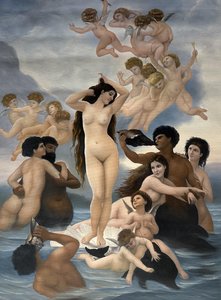
Bouguereau’s artistic output spanned across diverse genres—from serene pastoral scenes to dramatic mythological narratives—demonstrating his versatility as an artist and his ability to evoke profound emotional responses. He excelled at depicting everyday life with exquisite sensitivity, capturing the subtle nuances of human emotion and atmosphere—a hallmark of his distinctive style. Paintings like *Bergère 1886* exemplify this approach, portraying a young shepherdess in tranquil repose amidst a picturesque landscape with remarkable detail and nuance. Bouguereau’s fascination with mythology fueled numerous ambitious projects—including *The Birth of Venus*, *Zenobia Found by Shepherds on the Banks of the Araxes*, and *Psyche Revived by Cupid*—transforming ancient tales into vibrant, emotionally resonant visual dramas. He skillfully employed chiaroscuro—the dramatic interplay of light and shadow—to heighten emotional impact and imbue his figures with palpable vitality. Bouguereau’s mythological paintings stand as testament to his artistic prowess and his ability to convey complex narratives through evocative imagery.Legacy and Enduring Influence
Despite initial skepticism from avant-garde critics, Bouguereau's unwavering adherence to traditional artistic values—anatomical accuracy, meticulous draughtsmanship, and emotional expression—garnered him a devoted following throughout his lifetime. He was recognized as one of the foremost teachers of his generation, nurturing the talents of numerous aspiring artists who would carry forward his stylistic legacy. His influence extended beyond the confines of the atelier, shaping the aesthetic sensibilities of an entire artistic milieu. Bouguereau’s paintings continue to captivate audiences today—displayed in prestigious museums worldwide and reproduced extensively in print media—affirming his enduring relevance as a symbol of classical beauty and artistic excellence. He remains a pivotal figure in 19th-century French painting, representing the zenith of academic artistry and offering an timeless vision of perfection that transcends temporal boundaries.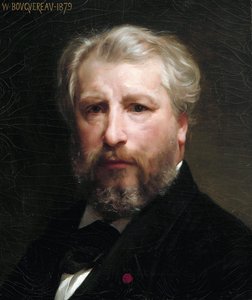
ウィリアム・アドルフ・ボーギュレウ
1825 - 1905 , フランス
基本情報
- Artistic Movement Or Style: アカデミズムのリアリズム
- Artists Who Influenced This Artist: ['ラファエル」「ティツィアーノ']
- Date Of Birth: 1825年11月30日 ラ ロシェル フランス
- Date Of Death: 1905年8月19日 ラ ロシェル フランス
- Full Name: William-Adolphe Bouguereau
- Nationality: フランス人
- Notable Artworks: ['ニムファイウム」「ベレジェール1886年」「泉にての子」「天使の歌」「ヴェヌス誕生']
- Place Of Birth: ラ ロシェル フランス
関連記事
サンクトペテルブルク・エルミタージュ美術館:至宝25選 - 歴史と芸術の輝きをあなたの空間に
サンクトペテルブルク・エルミタージュ美術館の至宝25選。レムブランド、ダ・ヴィンチの名作を紐解き、歴史と芸術の輝きをご堪能ください。ArtsDot.comで高品質な複製画やインテリアアートを見つけ、空間に感動を。今すぐコレクションをご覧ください。

The Enduring Legacy of Oil on Canvas: Technique, History & Aesthetic Impact
Explore the rich history & techniques of oil painting – from Renaissance masters to Impressionism. Discover pigments, layering methods, and why this timeless medium endures. Expert insights for artists & art enthusiasts.

Oil on Canvas: A Historical & Technical Exploration of a Timeless Artistic Medium
Explore the rich history & enduring techniques of oil painting on canvas. Discover the science behind its longevity, conservation practices, and contemporary relevance. Expert insights for art enthusiasts.
Romantic Realism's Finest: 10 Masterpieces for Your Home | ArtsDot
Explore 10 defining masterpieces of Romantic Realism! Discover Courbet, Millet & Daumier's powerful paintings—capturing emotion and social realities. Find museum-quality reproductions for your home at ArtsDot.com.

The Enduring Power of Painting: A Historical & Contemporary Exploration of Form and Emotion
Explore the rich history & enduring techniques of oil painting with ArtsDot. Discover masterpieces, learn about art collecting, and find authentic handmade reproductions crafted by skilled artists.