

 プレビュー
プレビュー
 シェアする
シェアする シェアする
シェアする
 詳細を見る
詳細を見る

 ダウンロード
 似ている作品
 X線調査
X線調査 スライドショー
 統計情報
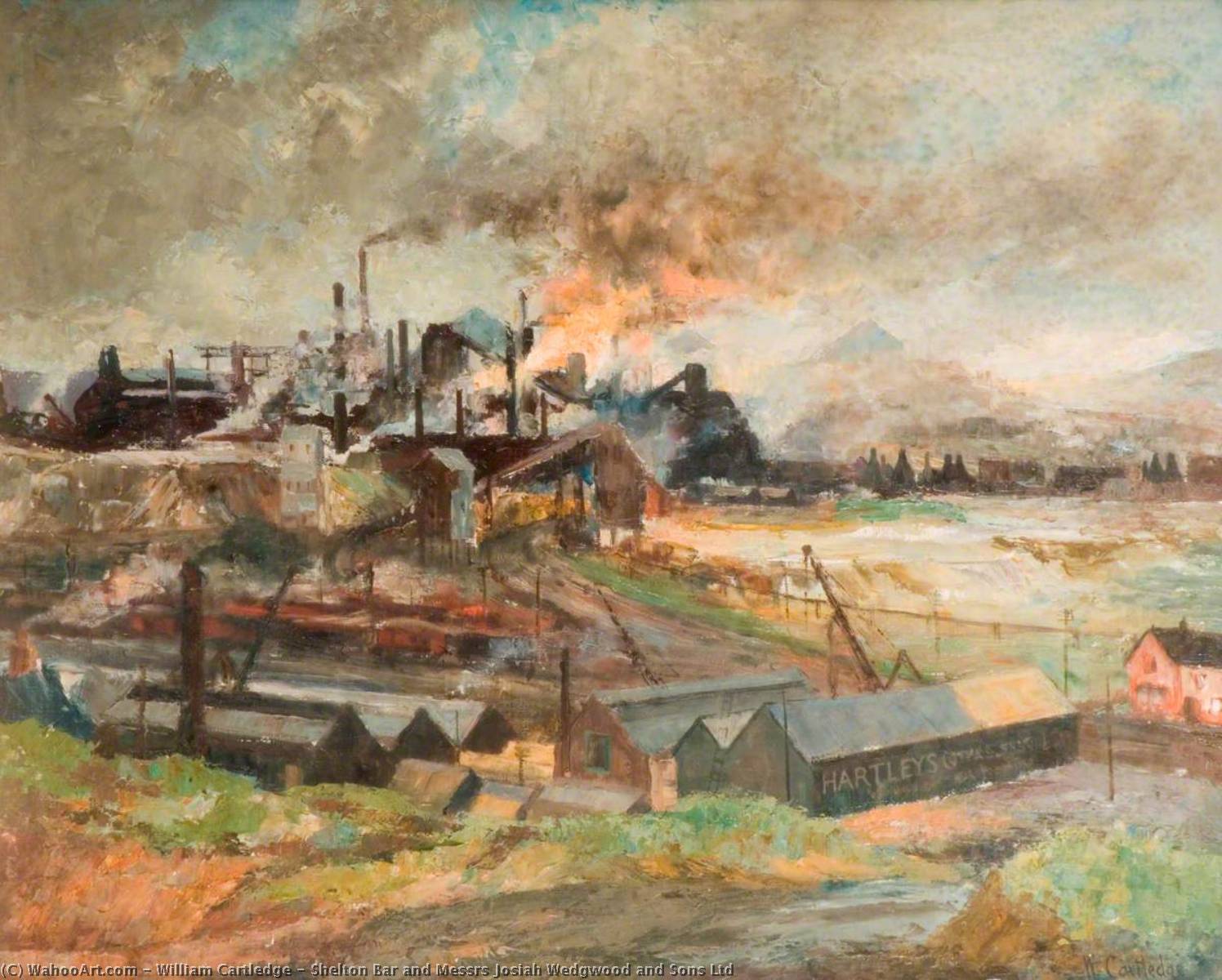
統計情報Shelton Bar and Messrs Josiah Wedgwood and Sons Ltd
 1949
1949 61.0 x 74.0 cm
 The Shire Hall Gallery
 詳細を見る
詳細を見る
ジークレー/アートプリント
迅速な制作と多彩な仕上げオプションを備えた、ミュージアムクオリティのジークレーまたはキャンバスプリント。 ( 手描きの絵画を購入 デジタル画像販売へ切り替え)




































作品のオリジナル比率に合わせた、当店の規定サイズからお選びください。

特定のフレームやスペースに合わせて、ご自身でサイズを指定することも可能です。選択されたサイズが元の画像の比率と一致しない場合、作品をトリミングするか、鏡面反射または単色での塗りつぶしによって画像を拡張いたします。制作を開始する前に、ご確認用のデジタルモックアップをお送りいたします。
画面上のプレビューには、実際のトリミングや拡張は反映されませんのでご注意ください。最終的な構図を正確に確認できるのは、モックアップのみとなります。
カスタムサイズも承っておりますが、元の比率を維持するためには、あらかじめ用意されたリストからサイズを選択することをお勧めいたします。


 ガラスオプションは、110cm未満のサイズでのみご利用いただけます。

Shelton Bar and Messrs Josiah Wedgwood and Sons Ltd
ジークレー/アートプリント
複製画のサイズ
-


合計金額
$ 62
関連作品









アーティストの略歴
The Soul of the English Landscape: The Life and Art of William Cartledge
In the quiet, rolling expanses of the British countryside, where the mist clings to the hedgerows of Cheshire and the light shifts subtly over the Staffordshire plains, lies the enduring legacy of William Cartledge. Born in 1867 in Shelton Bar, Cheshire, Cartledge emerged during a transformative era in British history, a time when the industrial revolution began to reshape the very landscape he so lovingly documented. His work serves as a poignant visual diary of a vanishing world, capturing the delicate balance between the burgeoning modernity of the late Victorian period and the timeless, rhythmic pulse of rural life.
Cartledge’s artistic journey was one of rigorous discipline and profound refinement. His early training at the Newcastle Art School provided him with a sturdy foundation in the fundamentals of drawing and watercolor, but it was his subsequent move to London that would truly define his aesthetic trajectory. At the prestigious Slade School of Fine Art, he came under the mentorship of the legendary Frederic Leighton. From Leighton, the master of classical beauty and harmonious composition, Cartledge inherited a deep respect for light, shadow, and the ability to imbue a subject with emotional resonance through subtle visual cues. This classical lineage breathed a sense of dignity into his depictions of even the most humble agricultural scenes.
A Mastery of Light and Texture
What distinguishes a Cartledge painting is not merely the subject matter, but the palpable atmosphere that seems to breathe within the frame. He was a master of atmospheric perspective, employing a sophisticated, layered technique that allowed him to build depth through thin washes of color and meticulous glazing. This method enabled him to replicate the luminous quality of the English sky and the heavy, damp textures of the earth after a rainfall. When viewing his landscapes, one does not simply see a field; one feels the humidity in the air and hears the distant movement of livestock.
His commitment to realism was never about mere photographic imitation, but rather an unflinching honesty toward his subjects. While many of his contemporaries sought to present an idealized, pastoral utopia, Cartledge found beauty in the grit and labor of the countryside. His canvases often feature:
- The textures of agricultural life: The rough grain of wooden implements, the heavy coats of working animals, and the intricate patterns of harvested crops.
- Dynamic seasonal shifts: A profound ability to capture the specific light of a late autumn afternoon or the bright, sharp clarity of a spring morning.
- Humanity in motion: The integration of manual labor—such as the rhythmic intensity found in his depictions of steam threshing—into the broader natural environment.
Legacy and Historical Significance
Beyond his landscapes, Cartledge was a formidable portraitist, capable of capturing the social hierarchy of his time with great sensitivity. His portrait of Sir William Kay, currently held at Manchester Town Hall, exemplifies this skill, showcasing his ability to render the rich textures of ceremonial robes and the dignified presence of his subjects. This duality—the ability to move between the grandiosity of formal portraiture and the intimate, earthy reality of rural life—marks him as a versatile and vital chronicler of the British spirit.
As the 20th century progressed and the social fabric of Britain underwent radical changes, Cartledge’s work remained a steadfast anchor to the past. He documented a way of life that was being steadily eroded by urbanization and industrial expansion. Today, his paintings are more than mere art; they are historical windows. Through his meticulous brushwork and emotive use of color, William Cartledge ensured that the essence of Victorian and Edwardian Britain—its light, its labor, and its quiet, enduring beauty—would never truly fade into obscurity.
基本情報
- Artistic Movement Or Style: Victorian Painting
- Artists Or Movements Influenced By This Artist: ['Pre-Raphaelitism']
- Artists Who Influenced This Artist: ['Gustave Dore']
- Date Of Death: Living
- Full Name: William Cartledge
- Nationality: British
- Notable Artworks:
- Steam Threshing
- Royal Portraits
- Place Of Birth: Shelton Bar, Cheshire, England