

 プレビュー
プレビュー
 プリントを購入
 シェアする
シェアする シェアする
シェアする
 詳細を見る
詳細を見る

 ダウンロード
 似ている作品
 X線調査
X線調査 スライドショー
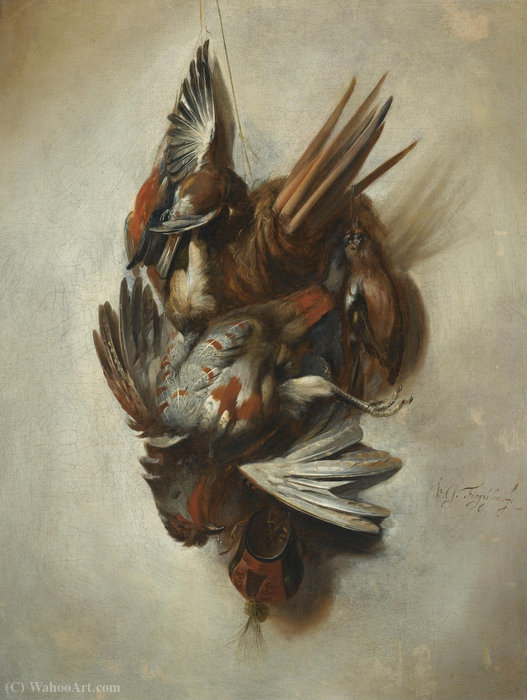
A falconry still life with a dead partridge, songbirds, and hunting attributes hanging on a rope
 詳細を見る
詳細を見る




































作品のオリジナル比率に合わせた、当店の規定サイズからお選びください。

特定のフレームやスペースに合わせて、ご希望のサイズをご入力いただけます。選択されたサイズが元の画像の比率と異なる場合、アートワークをトリミングするか、手描きで要素を追加して絵画を拡張いたします。デジタルモックアップ を制作し、制作開始前にご確認(承認)をいただきます。
画面上のプレビューは、実際のトリミングや拡張を正確に反映しているものではありません。最終的な構図は、モックアップによってのみ正確にご確認いただけます。
カスタムサイズもご利用いただけますが、元の比率を維持するためには、あらかじめ用意されたリストからサイズを選択することをお勧めいたします。
ご注文後、ArtsDot.com チームより詳細な指示をお送りするとともに、仕上がりイメージ(モックアップ)をご提供いたします。


 ガラスオプションは、110cm未満のサイズでのみご利用いただけます。

A falconry still life with a dead partridge, songbirds, and hunting attributes hanging on a rope
複製技法
複製画のサイズ
-


合計金額
$ 263
関連作品
アーティストの略歴
A Life Amongst Stillness: The World of William Gowe Ferguson
William Gouw (or Gow, or Gowe) Ferguson remains a somewhat enigmatic figure in the landscape of 17th-century art, yet his quiet mastery of still life painting secured him a respected place amongst his contemporaries. Born around 1632/3 in Scotland—a nation not particularly renowned for its artistic output at that time—Ferguson’s journey took him far from his homeland and into the heart of European artistic innovation. His early training is believed to have occurred within Scotland itself, but an ambition for greater refinement led him towards France and Italy, formative experiences that would profoundly shape his aesthetic vision. By 1660, Ferguson had established a residence in The Hague, a bustling center of trade and culture, where he entered into an unusual agreement with a house proprietor: the annual creation of a painting as part of his tenancy. This arrangement speaks to both the demand for his work and the practical realities of an artist’s life during this period. He continued to reside there until at least 1668, steadily building a reputation for his evocative depictions of the natural world.The Dutch Influence and Artistic Development
Ferguson's artistic development was deeply intertwined with his time in the Netherlands, particularly within the circles of Utrecht, The Hague, and Amsterdam. It’s here that he absorbed the meticulous detail and realism characteristic of the Dutch Golden Age still life tradition. Artists like Jan Vonck and Willem van Aelst served as significant influences, inspiring Ferguson's precise rendering of textures, light, and form. However, Ferguson wasn’t merely an imitator; he infused his work with a distinctly personal sensibility. While specializing in *dead game*—still lifes featuring meticulously arranged birds, animals, and hunting implements—he also ventured into compositions incorporating classical ruins and sculptural fragments, often bathed in dramatic chiaroscuro lighting. This blending of genres reveals a sophisticated artistic intellect, capable of harmonizing the naturalistic precision of Dutch painting with the more theatrical elements favored by Italianate artists. In 1681, he was betrothed to Sara van Someren of Stockholm while living in Amsterdam’s Batavier Graat, suggesting a degree of social standing and integration within the city's artistic community. Horace Walpole noted his extended sojourn in Italy and France, further emphasizing the breadth of his European experience.Themes of Vanitas and Evocative Realism
Ferguson’s still lifes are not simply exercises in technical skill; they resonate with deeper symbolic meaning. The *dead game* genre, popular throughout the 17th century, often served as a visual meditation on mortality—a reminder of the fleeting nature of life and the inevitability of decay. The meticulously rendered feathers, fur, and flesh, while beautiful in their detail, simultaneously hint at transience. This subtle interplay between beauty and decay aligns with the broader *Vanitas* tradition prevalent during this era. Beyond the symbolic weight, Ferguson’s paintings are remarkable for their evocative realism. He possessed an exceptional ability to capture the textures and colors of his subjects, creating a sense of tangible presence that draws the viewer into the scene. His skillful use of light and shadow further enhances this effect, imbuing his compositions with a dramatic intensity. Examples of his work can be found in prestigious institutions like the Rijksmuseum in Amsterdam and the Berlin State Museums, testaments to his enduring artistic quality.Later Life and Legacy
The details surrounding Ferguson’s later life remain somewhat obscure. His last known dated painting appears in 1689, after which records become scarce. It is believed he returned to London, though some accounts suggest a possible return to Scotland. Intriguingly, twelve of his paintings were sold in Edinburgh between 1692 and 1693, indicating continued artistic activity or the dispersal of earlier works. Despite the lack of definitive biographical information, Ferguson’s legacy as a skilled still life painter is secure. His work has often been favorably compared to that of more celebrated artists, and instances have even occurred where his paintings were mistakenly attributed to Cornelis van Lelienbergh or Jan Weenix—a testament to the quality and stylistic similarities of their respective oeuvres. He occupies a unique position as one of Scotland’s most accomplished 17th-century painters, bridging the gap between native artistic traditions and the innovations of the Dutch Golden Age. His paintings continue to captivate viewers with their exquisite detail, evocative realism, and subtle exploration of themes surrounding life, death, and the beauty of the natural world.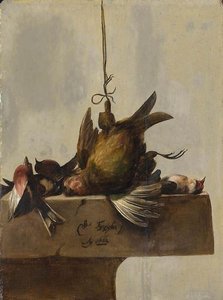
william gowe ferguson
1632 - 1689 , United Kingdom
基本情報
- Artistic Movement Or Style: Still life, Baroque
- Artists Who Influenced This Artist:
- Jan Vonck
- Willem van Aelst
- Date Of Birth: 1632/3
- Date Of Death: After 1689
- Full Name: William Gowe Ferguson
- Nationality: Scottish
- Notable Artworks:
- Still Life with Birds
- Dead Game Painting
- Place Of Birth: Scotland