


 プレビュー
プレビュー
 プリントを購入
 シェアする
シェアする シェアする
シェアする
 詳細を見る
詳細を見る

 ダウンロード
 似ている作品
 X線調査
X線調査 スライドショー
Hunting scene


 詳細を見る
詳細を見る




































作品のオリジナル比率に合わせた、当店の規定サイズからお選びください。

特定のフレームやスペースに合わせて、ご希望のサイズをご入力いただけます。選択されたサイズが元の画像の比率と異なる場合、アートワークをトリミングするか、手描きで要素を追加して絵画を拡張いたします。デジタルモックアップ を制作し、制作開始前にご確認(承認)をいただきます。
画面上のプレビューは、実際のトリミングや拡張を正確に反映しているものではありません。最終的な構図は、モックアップによってのみ正確にご確認いただけます。
カスタムサイズもご利用いただけますが、元の比率を維持するためには、あらかじめ用意されたリストからサイズを選択することをお勧めいたします。
ご注文後、ArtsDot.com チームより詳細な指示をお送りするとともに、仕上がりイメージ(モックアップ)をご提供いたします。


 ガラスオプションは、110cm未満のサイズでのみご利用いただけます。

Hunting scene
複製技法
複製画のサイズ
-


合計金額
$ 263
関連作品
アーティストの略歴
The Self-Taught Master of Victorian Charm
In the heart of the Victorian era, a period defined by both industrial upheaval and a deep nostalgia for the pastoral, the works of William Joseph Shayer, Senior offered a luminous window into a vanishing world. Born in Southampton in 1787, Shayer’s journey to artistic prominence was not paved with the prestige of formal academies, but rather through a humble and industrious apprenticeship with the physical world. Before he ever touched an oil canvas with the intent of capturing a landscape, his hands were occupied with the delicate task of decorating rush-bottom chairs and the meticulous painting of carriages in Guildford. This early, tactile engagement with texture and surface would later become the foundation of his unique technical prowess, instilling in him an observational eye that saw beauty in the most mundane details of English life.
As Shayer transitioned from heraldic painting to the grander medium of oil on canvas, he began to weave a visual narrative of the British countryside that resonated deeply with the sensibilities of his age. His evolution was marked by a move toward much more complex compositions, where the stillness of a woodland scene or the bustling energy of a coastal beach could be captured with equal mastery. He possessed an uncanny ability to populate his landscapes with life, creating scenes teeming with fishermen, travelers, and animals that felt less like static portraits and more like living, breathing moments frozen in time.
A Symphony of Light and Collaboration
What truly distinguishes Shayer from the many landscape painters of his contemporaries was his sophisticated use of technique, specifically his masterful application of glazing. By spreading thin, transparent layers of oil over dry paint, he achieved a luminous depth and a radiant brightness that seemed to emanate from within the canvas itself. This method allowed him to capture the fleeting effects of light filtering through forest canopies or the shimmering atmosphere of the Hampshire coast with breathtaking precision. His work often evokes the spirit of George Morland, yet Shayer’s canvases possess a certain atmospheric clarity and tonal richness that are uniquely his own.
The history of Shayer's art is also a story of creative partnership. He was a central figure in a collaborative tradition that defined much of the era's charm. Most notably, his work with Edward Charles Williams created a seamless fusion of landscape and figure painting. In these celebrated collaborations, Williams would provide the sweeping, architectural, or natural backdrops—such as the evocative The Old Roadside Inn—while Shayer would breathe life into the scene by adding the human element: the weary traveler, the lively group of villagers, or the resting livestock. This synergy allowed for a level of detail and storytelling that few individual artists could achieve alone.
Legacy of the English Pastoral
Shayer’s influence extended far beyond the borders of Southampton and the New Forest. His works found homes in some of the most prestigious collections in the world, including the Victoria and Albert Museum, the Tate Gallery, and the Metropolitan Museum of Art in New York. These exhibitions cemented his status as a premier chronicler of the Victorian pastoral ideal, capturing a sense of peace and communal harmony that provided a much-needed respite from the rapid urbanization of the 19th century.
Even as the decades passed, Shayer’s artistic lineage continued through his eldest son, William Joseph Shayer, Junior, ensuring that the family's dedication to the craft endured. When he passed away in 1879 at the age of 92, he left behind a legacy defined by:
- Technical Innovation: The use of glazing to create unparalleled depth and light.
- Narrative Depth: The ability to transform landscapes into storytelling vessels through figure painting.
- Cultural Documentation: A visual record of the rural traditions, coastal life, and social structures of Victorian England.
Today, Shayer’s paintings remain much more than mere historical artifacts; they are emotive experiences that invite the viewer to step into a sun-drenched, tranquil past, reminding us of the enduring beauty found in the quiet corners of the natural world.
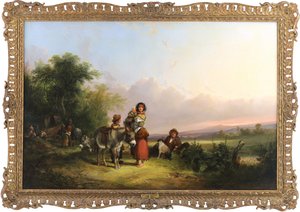
william joseph shayer, senior
1787 - 1879 , United Kingdom
基本情報
- Artistic Movement Or Style: Victorian Landscape/Figure
- Artists Or Movements Influenced By This Artist: ['Edward Charles Williams']
- Artists Who Influenced This Artist: ['George Morland']
- Date Of Birth: 1787-06-17
- Date Of Death: 1879-12-21
- Full Name: William Joseph Shayer Senior
- Nationality: British
- Notable Artworks:
- Old Roadside Inn
- Near Wantage, Berkshire
- Fisherfolk on Hampshire Coast
- Place Of Birth: Southampton, UK
関連記事
The Pursuit of Power & Prestige: Hunting Scenes in Western Art
Explore the rich history of hunting scenes in Western art, from royal pursuits to powerful allegories. Discover masterpieces & expert insights for discerning collectors. ArtsDot offers museum-quality reproductions.
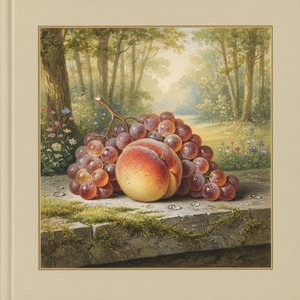
William Henry Hunt: Luminosity & Detail in Early 19th-Century Watercolour Painting
Explore the captivating watercolour paintings of William Henry Hunt (1790-1864). Discover his mastery of naturalistic detail, luminous technique & influence on 19th-century art. Learn about collecting Hunt's work and its enduring value.
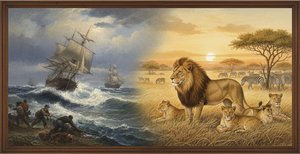
Heywood Hardy: Navigating Victorian Sentiment Through Marine Painting & Wildlife Illustration
Explore the captivating world of Heywood Hardy (1842-1933), a master of Victorian animal & equestrian painting. Discover his realistic landscapes, hunting scenes, and enduring legacy with ArtsDot.
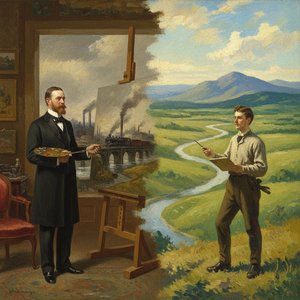
Alfred Worthington: Bridging Victorian Realism & Early Modern Landscape Painting
Explore the captivating landscapes of Alfred Worthington (1834-1927), a pivotal figure bridging Victorian realism & early Impressionism. Discover his Welsh hunting scenes, artistic evolution, and collecting guide.
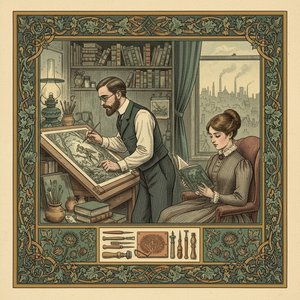
The Refined Aesthetic of Victorian Illustration: A Study in Narrative & Technique
Explore the captivating world of Victorian illustration! Discover Pre-Raphaelite influences, key artists like Rossetti & Stephens, and the era's rich narrative detail. A deep dive for art enthusiasts.

