

 プリントを購入
 シェアする
シェアする シェアする
シェアする
 詳細を見る
詳細を見る

 ダウンロード
 似ている作品
 スライドショー
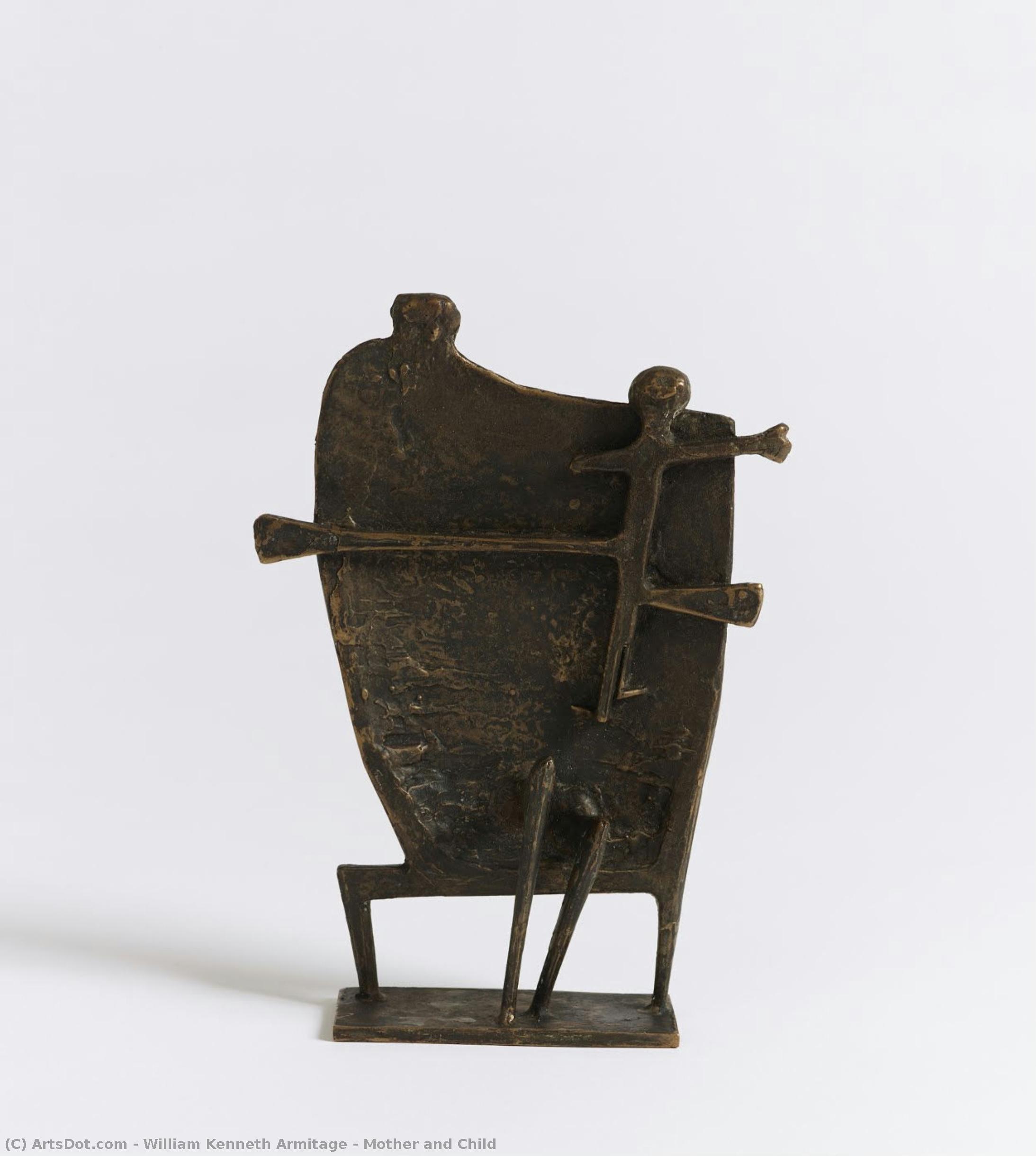
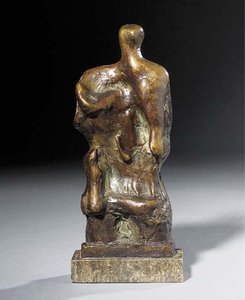
Mother and Child
 Sculpture Bronze
- Abstract Expressionism
 1953
1953 21.0 x 15.0 cm
 Arts Council Collection
 詳細を見る
詳細を見る




































作品のオリジナル比率に合わせた、当店の規定サイズからお選びください。

特定のフレームやスペースに合わせて、ご希望のサイズをご入力いただけます。選択されたサイズが元の画像の比率と異なる場合、アートワークをトリミングするか、手描きで要素を追加して絵画を拡張いたします。デジタルモックアップ を制作し、制作開始前にご確認(承認)をいただきます。
画面上のプレビューは、実際のトリミングや拡張を正確に反映しているものではありません。最終的な構図は、モックアップによってのみ正確にご確認いただけます。
カスタムサイズもご利用いただけますが、元の比率を維持するためには、あらかじめ用意されたリストからサイズを選択することをお勧めいたします。
ご注文後、ArtsDot.com チームより詳細な指示をお送りするとともに、仕上がりイメージ(モックアップ)をご提供いたします。


 ガラスオプションは、110cm未満のサイズでのみご利用いただけます。

Mother and Child
複製技法
複製画のサイズ
-


合計金額
$ 288
Exploring Intimacy and Resilience: Kenneth Armitage’s “Mother and Child”
Kenneth Armitage's "Mother and Child," created in 1953, stands as a testament to the sculptor’s profound engagement with human emotion and his masterful manipulation of form and texture. Born in Leeds in 1916 amidst the aftermath of World War I, Armitage embarked on an artistic path marked by both formal training and formative experiences within wartime service – influences that undeniably permeate his oeuvre. His early education at Leeds College of Art instilled a foundational understanding of sculptural technique, followed by rigorous study at Slade School of Fine Art in London where he honed his skills before dedicating himself to the military. This period served as an crucible for shaping his artistic sensibility and informing his preoccupation with themes of vulnerability and strength. The sculpture itself embodies Armitage’s signature style: a deliberate simplification of organic forms into geometric abstractions. Unlike representational art striving for photographic accuracy, “Mother and Child” prioritizes conveying essence over imitation. The figure of the mother is depicted supporting her child on her back—a motif that resonates deeply with archetypal images of maternal care and protection. However, Armitage eschews traditional depiction, opting instead for a flattened rectangular torso form – a stylistic choice reminiscent of Henry Moore’s explorations into similar themes. This deliberate reduction in detail isn't merely aesthetic; it reflects Armitage’s fascination with the parallels between engineering precision and human anatomy—a preoccupation born from his involvement with aircraft identification during his time in the army. The rough, uneven surface texture achieved through bronze casting speaks volumes about Armitage’s artistic process. The sculptor meticulously crafted this piece to capture not just the visual appearance but also the tactile qualities of the material itself. This technique contributes significantly to the sculpture's emotional impact—a palpable sense of solidity and permanence that conveys a feeling of enduring love and unwavering support. The muted matte finish further enhances the sculpture’s contemplative atmosphere, inviting viewers to contemplate the profound connection between mother and child. Symbolically, “Mother and Child” transcends its literal depiction to explore universal concepts of nurturing, resilience, and familial bonds. Armitage's deliberate abstraction serves as a conduit for conveying emotions that are inherently difficult to articulate—a quiet dignity born from confronting vulnerability. The sculpture’s geometric form – particularly the flattened torso – symbolizes stability amidst perceived chaos, mirroring Armitage’s own experiences navigating the turbulent landscape of wartime Britain. It is an artwork designed not just to be seen but felt; a reminder of the enduring power of human connection and the beauty found in understated elegance.- Material: Bronze
- Dimensions: 21 x 15 cm
- Date Created: 1953
関連作品


アーティストの略歴
A Life Sculpted in Bronze: The World of Kenneth Armitage
William Kenneth Armitage, known to the art world as Kenneth Armitage, emerged from the industrial heartland of Leeds, England, in 1916, a year steeped in the shadows of the First World War. His journey toward becoming one of Britain’s most significant sculptors of the 20th century was not predetermined but forged through dedication, artistic exploration, and the disruptive forces of global conflict. Early talent blossomed at Leeds College of Art from 1934 to 1937, a foundation upon which he built further skills at the prestigious Slade School of Fine Art in London until 1939. However, the looming specter of war interrupted his studies as he answered the call to serve in the Royal Artillery. This period undoubtedly shaped his perspective, instilling a sense of resilience and perhaps contributing to the underlying tension often perceived within his work. Following demobilization, Armitage found himself drawn to education, taking on a pivotal role at the Bath Academy of Art from 1946 to 1956, where he headed the sculpture department, nurturing a new generation of artists while simultaneously refining his own distinctive style.The Geometry of Fear and Human Form
Armitage’s artistic signature lies in his compelling exploration of the human figure rendered primarily in bronze. He didn't seek to replicate reality but rather to distill it, stripping away extraneous detail to reveal the essence of form and emotion. His sculptures are characterized by a semi-abstract quality; figures remain recognizable as human, yet they are simplified, stylized, and often fragmented. This wasn’t merely an aesthetic choice but a deliberate attempt to convey a sense of vulnerability and existential questioning that resonated with the post-war climate. Geometric shapes play a crucial role in his visual language, lending structure and a certain austerity to his figures. Critics coined the term ‘Geometry of Fear’ to describe the work of Armitage alongside contemporaries like Lynn Chadwick and Henry Moore, recognizing a shared preoccupation with anxiety, alienation, and the fragility of human existence. However, while acknowledging Moore's profound influence – particularly his exploration of the human form in space – Armitage forged his own path, embracing a more angular, geometric approach that set him apart. The echoes of ancient art also resonate within his work; he drew inspiration from the simplified forms and archaic qualities found in Ancient Egyptian and Cycladic sculptures, imbuing his pieces with a timeless quality.Recognition and Lasting Legacy
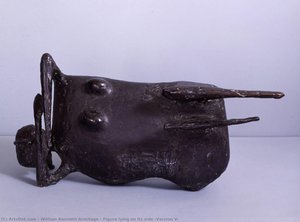
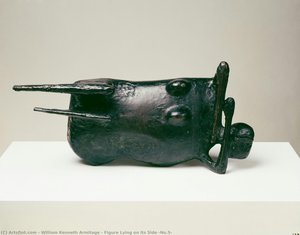
Throughout his career, Armitage received significant recognition for his contributions to British sculpture. A watershed moment arrived in 1958 when he was awarded Best International Sculpture under Age 45 at the Venice Biennale – an accolade that propelled him onto the international stage. This success was followed by further honors, including appointment as a Commander of the Order of the British Empire (CBE) in 1969 and election as an Associate Royal Academician in 1994. However, perhaps his most poignant legacy is embodied in “Both Arms,” unveiled in Millennium Square, Leeds, in 2001 with Nelson Mandela himself performing the honors. This sculpture became an instant landmark, a powerful symbol of reconciliation and hope for the city he called home. Other notable works like "Figure Lying on its Side (Version V)" – part of the British Council Collection – and “Legs Walking,” erected in City Square, Leeds, in 2018, continue to captivate audiences with their evocative forms and enduring themes.A Continuing Dialogue
Kenneth Armitage passed away in London in 2002, leaving behind a rich artistic legacy that continues to inspire and provoke thought. His sculptures are celebrated not only for their aesthetic qualities but also for their ability to tap into universal human emotions – anxiety, loneliness, resilience, and the search for meaning. He wasn’t simply creating objects; he was initiating a dialogue about what it means to be human in a complex and often unsettling world. His work stands as a testament to the power of art to reflect, challenge, and ultimately transcend the limitations of our time. Today, his pieces are exhibited in major museums and public spaces across the UK and internationally, ensuring that his unique vision continues to resonate with generations to come. Armitage’s influence can be seen in the work of contemporary sculptors who continue to explore the boundaries between abstraction and figuration, demonstrating the enduring relevance of his artistic innovations.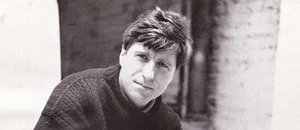
William Kenneth Armitage
1916 - 2002 , United Kingdom
基本情報
- Artistic Movement Or Style: Semi-abstract sculpture
- Artists Or Movements Influenced By This Artist: Abstract figurative art
- Artists Who Influenced This Artist:
- Henry Moore
- Barbara Hepworth
- Date Of Birth: July 18, 1916
- Date Of Death: January 22, 2002
- Full Name: William Kenneth Armitage
- Nationality: British
- Notable Artworks:
- Both Arms
- Mother and Child
- Legs Walking
- Place Of Birth: Leeds, United Kingdom
関連記事

Bronze Age to Modern Masters: 10 Sculptures That Redefined Art | ArtsDot
Journey through art history with 10 legendary bronze sculptures – from Michelangelo's David to Rodin’s Thinker. Explore the stories, techniques & timeless beauty of these masterpieces. Find museum-quality reproductions & elevate your home decor on ArtsDot.com.

Bronze Sculptures That Defined Art History | ArtsDot
Journey through art history with our Top 10 bronze sculptures! Explore masterpieces by Rodin, Michelangelo & more. Discover stories behind iconic statues and find museum-quality reproductions for your home decor at ArtsDot.com.
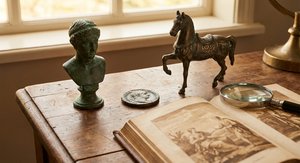
The Enduring Legacy of Bronze: A Historical & Artistic Exploration for the Collector
Explore the rich history & enduring appeal of bronze sculpture with expert insights for collectors at ArtsDot. Learn about casting techniques, iconic artists, collecting tips & contemporary interpretations.
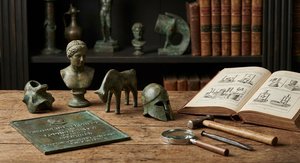
The Enduring Legacy of Bronze: History, Technique & Artistic Expression for the Collector
Explore the rich history & enduring appeal of bronze sculpture with expert insights for collectors at ArtsDot. Learn about casting techniques, iconic artists, and collecting tips.
The Enduring Legacy of Bronze Sculpture: A Collector's Guide to Form & Cultural Significance
Explore the rich history & enduring appeal of bronze sculpture with expert insights for collectors at ArtsDot. Learn about casting techniques, iconic artists, and collecting tips to build a discerning art collection.