


 プレビュー
プレビュー
 シェアする
シェアする シェアする
シェアする
 詳細を見る
詳細を見る

 ダウンロード
 似ている作品
 X線調査
X線調査 スライドショー
 Stats
StatsHauling Sheaves to the Threshing Machine
 Watercolor
- WallArt
- Contemporary Realism
 1961
1961- Modern
 76.0 x 91.0 cm
 McMichael Canadian Art Collection
 詳細を見る
詳細を見る
手描き油彩複製画
当社のアーティストが、お客様のご希望のサイズと額縁に合わせて、キャンバスに手描きで制作する油彩画です。 ( Switch to Print Switch to Digital Image)




P118B $10

P118H $10

P118W $10

P438Z $10

P508JH $12

P508YH $12

P805H $10

P805Z $10

P919BZ $10

P919G $10

P919XJ $10

P959ZH $10

P968JZ $12

W106C $8

W218G $10

W218JH $8

W218Y $10

W307PJ $10

W316G $10

W316PJ $8

W316Y $10

W398PJ $8

W4111J $10

W500HY $15

W500JH $15

W692G $12

W849H $8

W940BG $15

W953PJ $8




作品のオリジナル比率に合わせた、当店の規定サイズからお選びください。

特定のフレームやスペースに合わせて、ご希望のサイズをご入力いただけます。選択されたサイズが元の画像の比率と異なる場合、アートワークをトリミングするか、手描きで要素を追加して絵画を拡張いたします。デジタルモックアップ を制作し、制作開始前にご確認(承認)をいただきます。
画面上のプレビューは、実際のトリミングや拡張を正確に反映しているものではありません。最終的な構図は、モックアップによってのみ正確にご確認いただけます。
カスタムサイズもご利用いただけますが、元の比率を維持するためには、あらかじめ用意されたリストからサイズを選択することをお勧めいたします。
ご注文後、ArtsDot.com チームより詳細な指示をお送りするとともに、仕上がりイメージ(モックアップ)をご提供いたします。


 ガラスオプションは、110cm未満のサイズでのみご利用いただけます。

Hauling Sheaves to the Threshing Machine
複製技法
複製画のサイズ
-


合計金額
$ 263
A Pastoral Symphony of Canadian Heritage
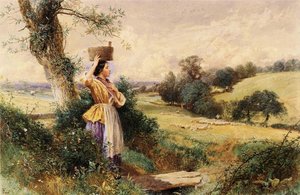
In the evocative watercolor Hauling Sheaves to the Threshing Machine, created in 1961, the legendary Canadian artist William Stephen Kurelek invites us into a meticulously detailed world where the rhythms of rural life dictate the passage of time. The scene unfolds with a profound sense of communal labor and quiet companionship, centered around a man resting atop a bountiful pile of hay. Flanked by two gentle sheep, the figure serves as an anchor for a composition that is both intimate and expansive. While the title suggests the heavy industry of harvest, the painting captures a moment of stillness amidst the movement, where the tools of the land meet the quietude of nature. The presence of fishing rods in the man's hands adds a layer of poignant duality, suggesting a life lived in harmony with both the soil and the water, bridging the gap between the toil of the threshing season and the restorative peace of the wild.
Kurelek’s mastery of the watercolor medium is on full display through his delicate yet purposeful application of pigment. The artist employs a layered technique that allows for a luminous depth, capturing the hazy, sun-drenched atmosphere of the Canadian prairies. His ability to render texture—from the coarse, golden stalks of the hay to the soft, woolly coats of the sheep—creates a tactile experience for the viewer. In the background, the landscape breathes with life; scattered figures and animals move through the terrain, while the distant silhouettes of trucks hint at the encroaching modernization of the mid-20th century. This interplay between the traditional agrarian lifestyle and the subtle arrival of machinery creates a visual tension that is characteristic of Kurelek’s ability to document a vanishing era with both precision and nostalgia.
Beyond its technical brilliance, this artwork serves as a profound emotional vessel, resonating deeply with those who find beauty in the heritage of the land. For the collector or interior designer, the piece offers more than mere decoration; it provides a window into a soulful, hardworking past. The symbolism of the harvest—representing abundance, cycle, and reward—is woven into the very fabric of the composition. There is an inherent warmth in the palette that can breathe life into a sophisticated gallery wall or serve as a contemplative centerpiece in a rustic-modern study. To possess a reproduction of this work is to hold a fragment of Kurelek’s unique vision: a vision that celebrates the resilience of the human spirit and the enduring, quiet majesty of the rural landscape.
関連作品

アーティストの略歴
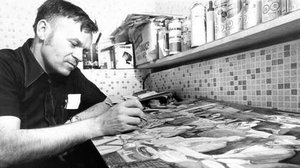
William Stephen Kurelek: A Life in Art
Early Life and Influences
- Born on March 3, 1927, near Whitford, Alberta, Canada, William Stephen Kurelek’s life was deeply rooted in the Canadian prairies.
- He was the oldest of seven children in a Ukrainian immigrant family, a heritage that profoundly shaped his artistic vision. His parents, Dmytro and Mary Huculak, were cousins who immigrated from Bukovina.
- The family faced hardship during the Great Depression, moving to Manitoba and eventually Ontario, experiences which instilled a sense of resilience and observation in Kurelek.
- Early education included Ukrainian school, fostering a strong connection to his cultural roots.
Artistic Development & Education
- Despite initial parental reservations about the practicality of art as a career, Kurelek pursued formal training at the University of Manitoba and the Ontario College of Art (OCA).
- At OCA, he was influenced by Mexican muralists like Diego Rivera, David Alfaro Siqueiros, and José Clemente Orozco, adopting their narrative style.
- He furthered his studies at the Instituto Allende in Mexico, but remained largely self-taught, developing a unique visual language.
Struggles with Mental Health & The Maze
- Kurelek’s life was marked by struggles with clinical depression and schizophrenia.
- In 1952, he voluntarily admitted himself to the Maudsley Psychiatric Hospital in London, England, where he received treatment.
- During his hospitalization, he created his most famous work, The Maze, a powerful and haunting depiction of his inner turmoil – a man’s ‘unraveled head lying in a wheat field’. This painting remains a poignant symbol of mental illness.
Artistic Style & Themes
- Kurelek's style is characterized by a blend of realism, folk art influences, and narrative storytelling.
- His paintings often depict scenes from rural Canadian life, particularly the prairies, reflecting his childhood memories and connection to the land.
- Recurring themes include Ukrainian-Canadian culture, religious faith (following his conversion to Roman Catholicism), and the complexities of human emotion.
- He frequently used watercolor, oil, and egg tempera in his work.
Notable Works & Achievements
- Besides The Maze, significant works include Hauling Sheaves to the Threshing Machine (McMichael Canadian Art Collection), showcasing his ability to capture the essence of rural life.
- He authored and illustrated several books, including A Prairie Boy’s Summer and A Prairie Boy’s Winter, which are autobiographical accounts of his childhood.
- His work is held in prominent Canadian collections such as the National Gallery of Canada, the Art Gallery of Ontario, and the Winnipeg Art Gallery.
Legacy & Historical Significance
- Kurelek was appointed a Member of the Order of Canada and elected to the Royal Canadian Academy of Arts, recognizing his contributions to Canadian art and culture.
- He died on November 3, 1977, leaving behind a body of work that continues to resonate with audiences today.
- His honest and unflinching portrayal of mental illness helped break down stigmas and fostered greater understanding.
- Kurelek’s art serves as a valuable historical record of prairie life and Ukrainian-Canadian heritage in the 20th century, solidifying his place as a significant figure in Canadian art history.
william stephen kurelek
1927 - 1977 , Canada
基本情報
- Birth Date: 1927-03-03
- Birth Place: Whitford, Alberta, Canada
- Death Date: 1977-11-03
- Influenced By: Mexican muralists (Rivera, Siqueiros, Orozco)
- Movement: Figurative art, Prairie School
- Name: William Stephen Kurelek
- Nationality: Canadian
- Notable Works:
- The Maze
- Hauling Sheaves to the Threshing Machine
関連記事

Ephemeral Visions: Exploring the Artistic Legacy & Nuances of Watercolor Painting
Explore the captivating world of watercolor painting! Discover its rich history, essential techniques, influential artists & collecting tips from art experts. A comprehensive guide for enthusiasts.

Ephemeral Visions: Exploring the Artistic Legacy & Contemporary Practice of Watercolor Painting
Explore the captivating world of watercolor painting! Discover its rich history, essential techniques, influential artists & collecting tips. A comprehensive guide for art enthusiasts from ArtsDot.
水彩の永続的な魅力:歴史、技法、そして現代の実践
水彩画の歴史、技法、現代の実践を深く探求。巨匠たちの名画から初心者向けテクニックまで解説。ArtsDot.comでは高品質な複製画やカスタムポートレートをご提供します。アートコンサルテーションも受付中。

Watercolor Wonders: 10 Masterpieces That Redefined Art History | ArtsDot
Journey through 10 legendary watercolor masterpieces by Sargent, Turner & Homer! Explore iconic landscapes, portraits & floral art that redefined history. Find museum-quality reproductions and curated decor ideas at ArtsDot.com.

Ephemeral Visions: Exploring the History & Emotional Resonance of Watercolor Painting
Explore the captivating history of watercolor painting, from ancient techniques to modern masters like Kandinsky & Blake. Discover essential artists, collecting tips & the emotional power of this luminous medium. Expert insights for art enthusiasts.