

 プレビュー
プレビュー
 シェアする
シェアする シェアする
シェアする
 詳細を見る
詳細を見る

 ダウンロード
 似ている作品
 X線調査
X線調査 スライドショー
 Stats
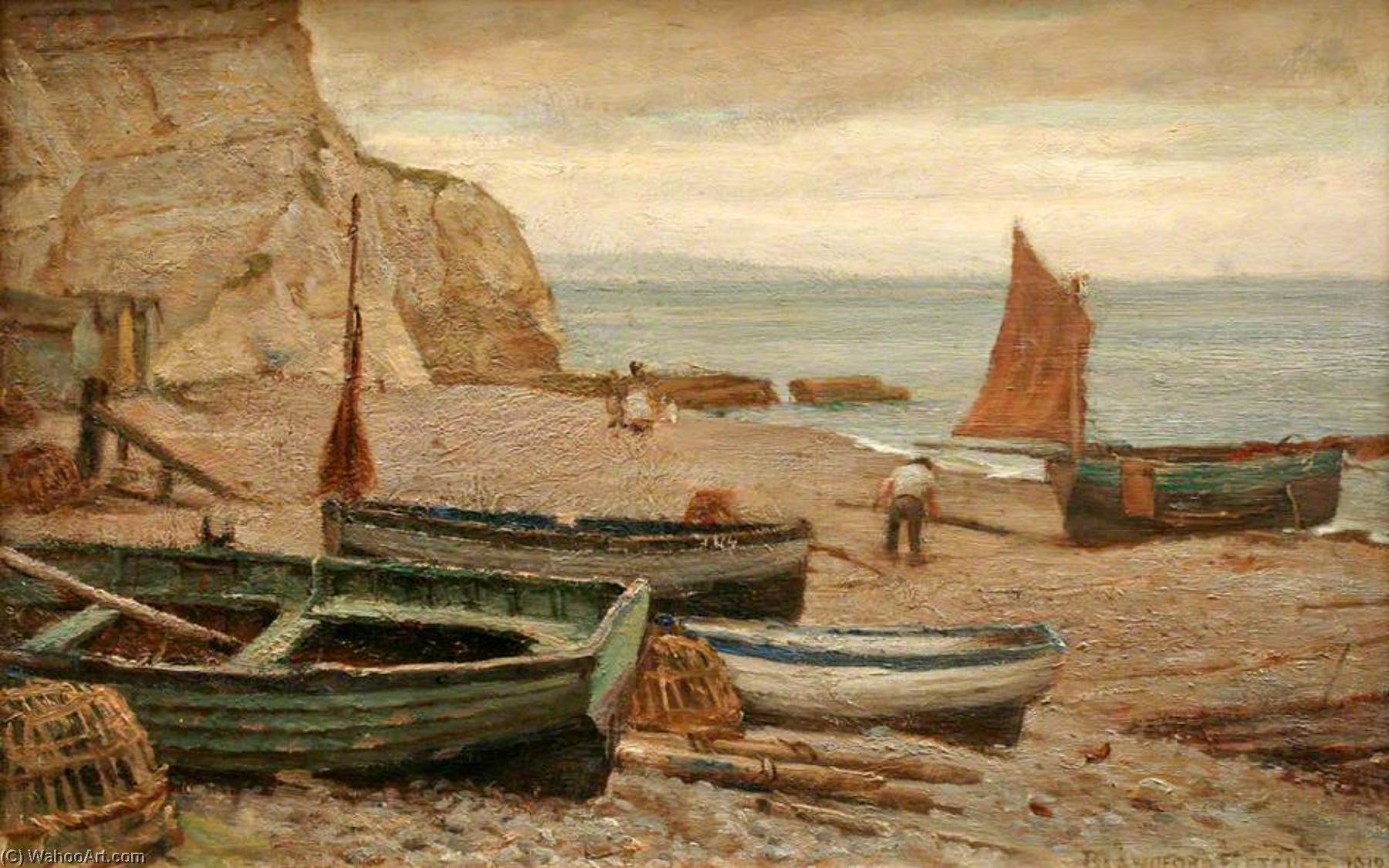
StatsBeer, Devon
 1912
1912 31.0 x 48.0 cm
 詳細を見る
詳細を見る
ジークレー/アートプリント
迅速な制作と多彩な仕上げオプションを備えた、ミュージアムクオリティのジークレーまたはキャンバスプリント。 ( 手描きの絵画を購入 Switch to Digital Image)




































作品のオリジナル比率に合わせた、当店の規定サイズからお選びください。

特定のフレームやスペースに合わせて、ご自身でサイズを指定することも可能です。選択されたサイズが元の画像の比率と一致しない場合、作品をトリミングするか、鏡面反射または単色での塗りつぶしによって画像を拡張いたします。制作を開始する前に、ご確認用のデジタルモックアップをお送りいたします。
画面上のプレビューには、実際のトリミングや拡張は反映されませんのでご注意ください。最終的な構図を正確に確認できるのは、モックアップのみとなります。
カスタムサイズも承っておりますが、元の比率を維持するためには、あらかじめ用意されたリストからサイズを選択することをお勧めいたします。


 ガラスオプションは、110cm未満のサイズでのみご利用いただけます。

Beer, Devon
ジークレー/アートプリント
複製画のサイズ
-


合計金額
$ 62
Composition and Details
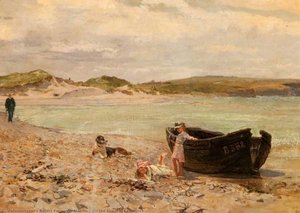
The painting features a beach scene with several boats of various sizes scattered along the shore. There is also a man standing near one of the boats, possibly attending to it or preparing for a sail. The boats are positioned in different orientations and distances from each other, creating an interesting composition that captures the essence of a bustling beach environment. In addition to the boats, there is a person visible on the right side of the painting, possibly enjoying the view or engaging in some activity near the water's edge. Key Elements of the painting include the use of warm colors, which evoke a sense of comfort and tranquility, and the attention to detail in the depiction of the boats and the surrounding environment. The painting is currently located at the Royal Cornwall Museum in the United Kingdom.Artist and Style
William Teulon Blandford Fletcher was a skilled artist known for his ability to capture the beauty of coastal scenes. His style is characterized by the use of oil on canvas, which allows for rich and vibrant colors. For more information on Fletcher's work, visit /art/list/?Filter=AQUBF2-William-Teulon-Blandford-Fletcher-Beer-Devon. Other notable artists whose work can be found on ArtsDot include Emily Carr, known for her breathtaking oil on canvas artworks such as Yan Q.C.I., and James Ensor, famous for his Expressionist pieces like Carnaval sur la plage 1.For a deeper understanding of the art world, visit https://ArtsDot.com and explore the various collections, including those from the Musée du Berry in Bourges, France.
- View more paintings by William Teulon Blandford Fletcher on ArtsDot.
- Discover the works of other notable artists such as Sun Zong-Wei and John Korner.
- Learn more about the Royal Cornwall Museum and its collections.
関連作品






アーティストの略歴
William Teulon Blandford Fletcher: A Master of English Pastoral Light
William Teulon Blandford Fletcher, a name perhaps less familiar than some of his Newlyn School contemporaries, nevertheless represents a quietly significant voice in late nineteenth and early twentieth-century British art. Born in London in 1858 to a respectable middle-class family – his father an upholsterer – Fletcher’s artistic journey was one marked by both rebellion against familial expectations and a deep engagement with the changing landscape of English painting. His life, spanning nearly eight decades, witnessed profound shifts in artistic styles and social attitudes, and he navigated these changes with a consistent dedication to capturing the serene beauty of rural England, particularly the Devon and Surrey countryside that would become his lifelong subject.
Fletcher’s early artistic training was unconventional. Despite his father's reservations, he enrolled at the South Kensington School of Art, demonstrating an immediate aptitude for drawing and a keen interest in capturing natural forms. This initial formal education provided him with a solid foundation, but it was his travels to Brittany – a region renowned for its vibrant Impressionist movement – that truly ignited his artistic spirit. There, amidst the rugged coastline and picturesque villages, he encountered artists like Stanhope Forbes who were challenging the prevailing academic style and advocating for direct observation of nature. This encounter proved pivotal, shaping Fletcher’s approach to painting and instilling in him a desire to translate the fleeting effects of light and atmosphere onto canvas.
The Newlyn School and Beyond
Fletcher's arrival at the Newlyn School in 1885 marked a crucial turning point. This loosely organized group of artists, centered around the fishing village of Newlyn in Cornwall, represented a radical departure from the established art world. Rejecting the studio-bound practices of traditional academic painting, they embraced *plein air* techniques – working directly outdoors to capture the immediacy of nature. Fletcher’s time at Newlyn was relatively brief, lasting only a year, but it profoundly influenced his artistic development. He collaborated with figures like Albert Chevallier Tayler and Stanhope Forbes, absorbing their innovative approaches while simultaneously forging his own distinctive style.
Unlike some of his more flamboyant colleagues, Fletcher’s work is characterized by a remarkable restraint and subtlety. His paintings are not overtly dramatic or emotionally charged; rather, they possess a quiet dignity and an almost meditative quality. He meticulously observed the nuances of light and shadow, rendering the textures of fields, farms, and cottages with astonishing accuracy. His palette is typically muted – dominated by earthy greens, browns, and blues – creating a sense of atmospheric depth and timelessness. Fletcher’s skill lay in his ability to evoke not just the appearance of a scene but also its underlying mood and character.
Key Works and Recurring Themes
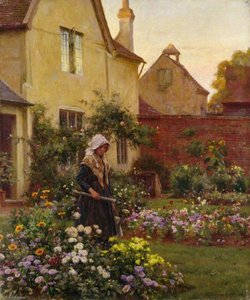
Several paintings stand out as particularly representative of Fletcher's artistic vision. “Evicted” (1887), depicting a family forced from their home, is arguably his most famous work, capturing the poignant dignity of rural poverty with remarkable sensitivity. The painting’s enduring appeal lies in its ability to convey both the hardship of circumstance and the resilience of the human spirit. “Sacrament Sunday” (1897) offers a glimpse into the quiet rhythms of village life, while “The Farm Garden” (1888) celebrates the bounty of the land. These works, along with numerous other landscapes and scenes of rural England, demonstrate Fletcher’s consistent focus on depicting the beauty and tranquility of the countryside.
Recurring themes in Fletcher's oeuvre include the relationship between humanity and nature, the passage of time, and the enduring values of rural communities. He frequently depicted farmers, laborers, and villagers engaged in their daily routines – tending to crops, gathering wood, or simply enjoying a moment of respite. His paintings are not merely representations of landscapes; they are reflections on the lives of those who inhabit them.
Later Years and Legacy
Following his departure from Newlyn, Fletcher continued to paint throughout his life, traveling extensively and establishing homes in various locations – including Dorking and Abingdon. He remained a dedicated artist until his death in 1936, producing a substantial body of work that is now recognized for its quiet beauty and understated elegance. While he never achieved the widespread fame of some of his contemporaries, Fletcher’s paintings are treasured for their authentic portrayal of English rural life and their masterful handling of light and color.
Today, Fletcher's works can be found in public collections across Britain, including the Ashmolean Museum in Oxford and the Penlee House Gallery & Museum in Cornwall. His legacy as a skilled landscape painter and a sensitive observer of human experience endures, reminding us of the enduring power of art to capture the essence of place and time.
william teulon blandford fletcher
1858 - 1936
基本情報
- Artistic Movement Or Style: Newlyn School, Landscape
- Artists Or Movements Influenced By This Artist: ['Newlyn School']
- Artists Who Influenced This Artist: ['Stanhope Forbes']
- Date Of Birth: November 8, 1858
- Date Of Death: June 27, 1936
- Full Name: William Teulon Blandford Fletcher
- Nationality: British
- Notable Artworks:
- Evicted
- The Farm Garden
- Sacrament Sunday
- Place Of Birth: London, England