

 プレビュー
プレビュー
 シェアする
シェアする シェアする
シェアする
 詳細を見る
詳細を見る

 ダウンロード
 似ている作品
 X線調査
X線調査 スライドショー
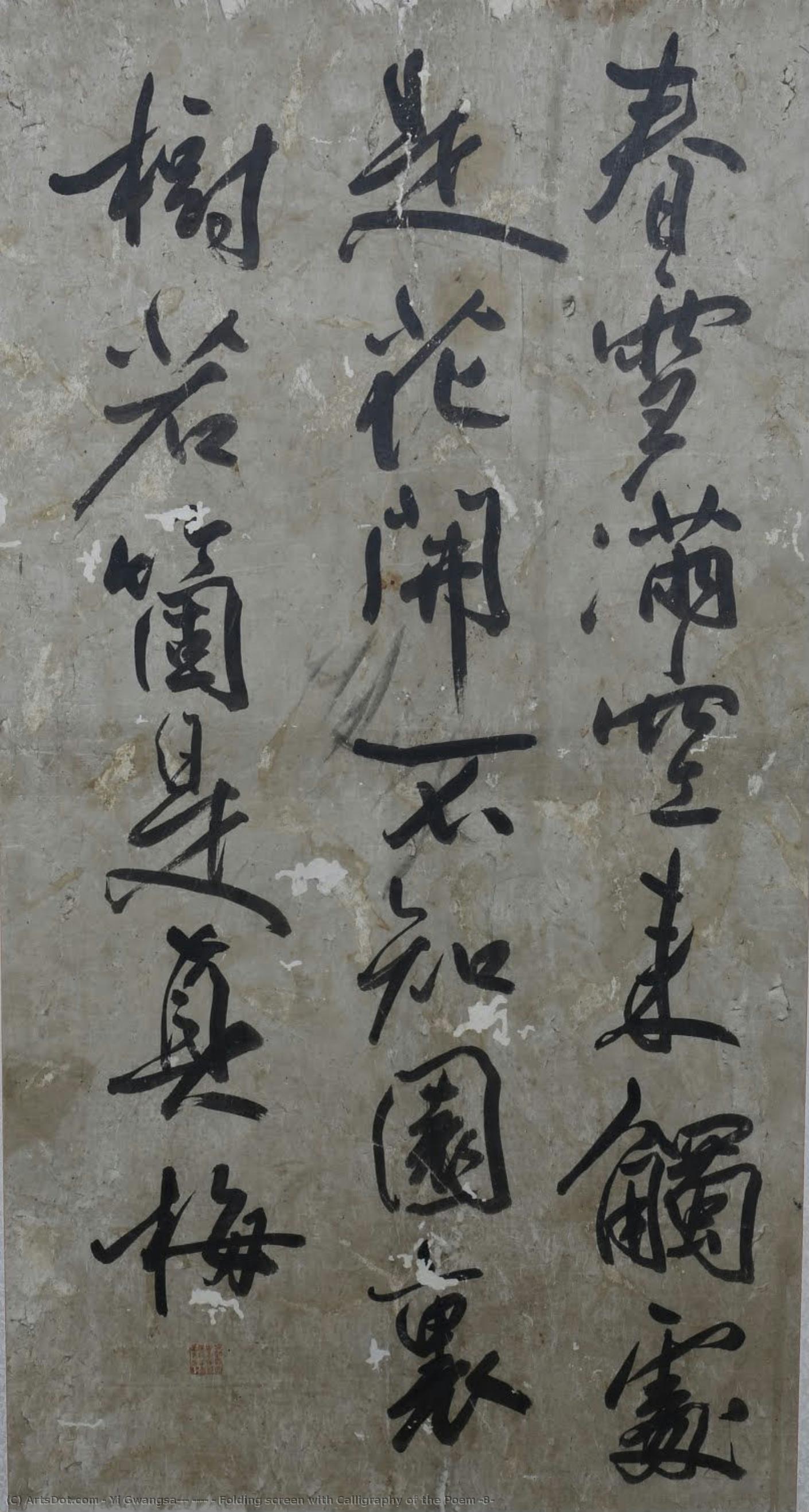
Folding screen with Calligraphy of the Poem (8)

 詳細を見る
詳細を見る
ジークレー/アートプリント
迅速な制作と多彩な仕上げオプションを備えた、ミュージアムクオリティのジークレーまたはキャンバスプリント。 ( 手描きの絵画を購入 画像を購入)




































作品のオリジナル比率に合わせた、当店の規定サイズからお選びください。

特定のフレームやスペースに合わせて、ご自身でサイズを指定することも可能です。選択されたサイズが元の画像の比率と一致しない場合、作品をトリミングするか、鏡面反射または単色での塗りつぶしによって画像を拡張いたします。制作を開始する前に、ご確認用のデジタルモックアップをお送りいたします。
画面上のプレビューには、実際のトリミングや拡張は反映されませんのでご注意ください。最終的な構図を正確に確認できるのは、モックアップのみとなります。
カスタムサイズも承っておりますが、元の比率を維持するためには、あらかじめ用意されたリストからサイズを選択することをお勧めいたします。


 ガラスオプションは、110cm未満のサイズでのみご利用いただけます。

Folding screen with Calligraphy of the Poem (8)
ジークレー/アートプリント
複製画のサイズ
-


合計金額
$ 62
関連作品





アーティストの略歴
Yi Gwangsa (Wongyo): A Master of Calligraphy in the Late Joseon Dynasty
Yi Gwangsa, more commonly known as Wongyo (圓嶠 李匡師), stands as a pivotal figure in Korean calligraphy during the late Joseon dynasty. Born in Jeonju, South Korea, in 1705 and tragically dying in exile in 1777, his life was marked by both artistic brilliance and political upheaval. His unique style, blending traditional techniques with a distinctly personal voice, profoundly influenced generations of calligraphers and continues to be celebrated for its elegance and depth.Early Life and Training
Wongyo’s journey into the world of calligraphy began under the tutelage of Yoon-soon (윤선), a renowned calligrapher and scholar during the Joseon period. This formative experience instilled in him a deep respect for tradition while simultaneously nurturing his own creative spirit. Yoon-soon's teachings emphasized not just technical proficiency but also the philosophical underpinnings of calligraphy – its connection to nature, spirituality, and the cultivation of inner harmony. Wongyo’s training wasn’t merely about mastering brushstrokes; it was a path toward self-discovery and artistic expression. He quickly distinguished himself, developing a handwriting that possessed both remarkable control and an undeniable sense of individuality, diverging from purely imitative approaches.The Naju Byeokseo Incident and Exile
Wongyo’s career took a dramatic turn in 1755 with the Naju Byeokseo incident (那津兵科擾亂). This political scandal involved corruption within the military administration, and Wongyo, along with several other prominent figures, was implicated. Despite his innocence, he was unjustly exiled to Sinjido (新知島), a remote island in the Yellow Sea, marking the beginning of a twenty-three year period of isolation and hardship. This exile profoundly shaped his artistic perspective; it imbued his later works with a poignant sense of melancholy and introspection – a reflection of his personal suffering and a yearning for connection to the world he had lost. Despite the challenging circumstances, Wongyo continued to practice calligraphy, producing some of his most powerful and evocative pieces during this period.Style and Technique
Wongyo’s calligraphic style is characterized by its refined elegance, balanced composition, and a subtle yet profound emotional depth. He skillfully employed the semi-cursive style (半草書), drawing inspiration from Wang Xizhi, a revered master of Chinese calligraphy, but imbuing it with his own unique sensibility. His brushwork is fluid and expressive, conveying a sense of movement and vitality while maintaining an underlying stability. He demonstrated a masterful understanding of ink control, utilizing varying densities to create nuanced tonal effects. Crucially, Wongyo wasn’t simply replicating existing styles; he was interpreting them through the lens of his own experience and artistic vision. His works often feature landscapes – mountains, rivers, and trees – rendered with remarkable detail and imbued with a sense of quiet contemplation.Legacy and Influence
Despite his untimely death in exile, Yi Gwangsa’s influence on Korean calligraphy is undeniable. His work served as an inspiration for countless calligraphers who followed, shaping the development of the art form for decades to come. His emphasis on personal expression, combined with a deep understanding of traditional techniques, established a new standard for artistic excellence. The “Album of Calligraphy” (楷行篆隸帖_鸞翥鳳翔), featuring his work, stands as a testament to his skill and artistry. Today, Wongyo’s calligraphy is studied and admired for its beauty, emotional resonance, and enduring legacy – a poignant reminder of an artist who transformed adversity into profound creative achievement. His works are held in prestigious collections like the National Museum of Korea, ensuring that his artistic voice continues to resonate with audiences worldwide.
yi gwangsa(圓嶠 李匡師)
1705 - 1777 , South Korea
基本情報
- Artistic Movement Or Style: Calligraphy (Joseon Dynasty)
- Artists Who Influenced This Artist: ['Yoon-soon']
- Date Of Birth: 1705, Jeonju, Korea
- Date Of Death: 1777
- Full Name: Yi Gwangsa (Wongyo)
- Nationality: Korean
- Notable Artworks: ['Album of Calligraphy']
- Place Of Birth: Jeonju, South Korea

