

 プリントを購入
 シェアする
シェアする シェアする
シェアする
 詳細を見る
詳細を見る

 ダウンロード
 似ている作品
 スライドショー
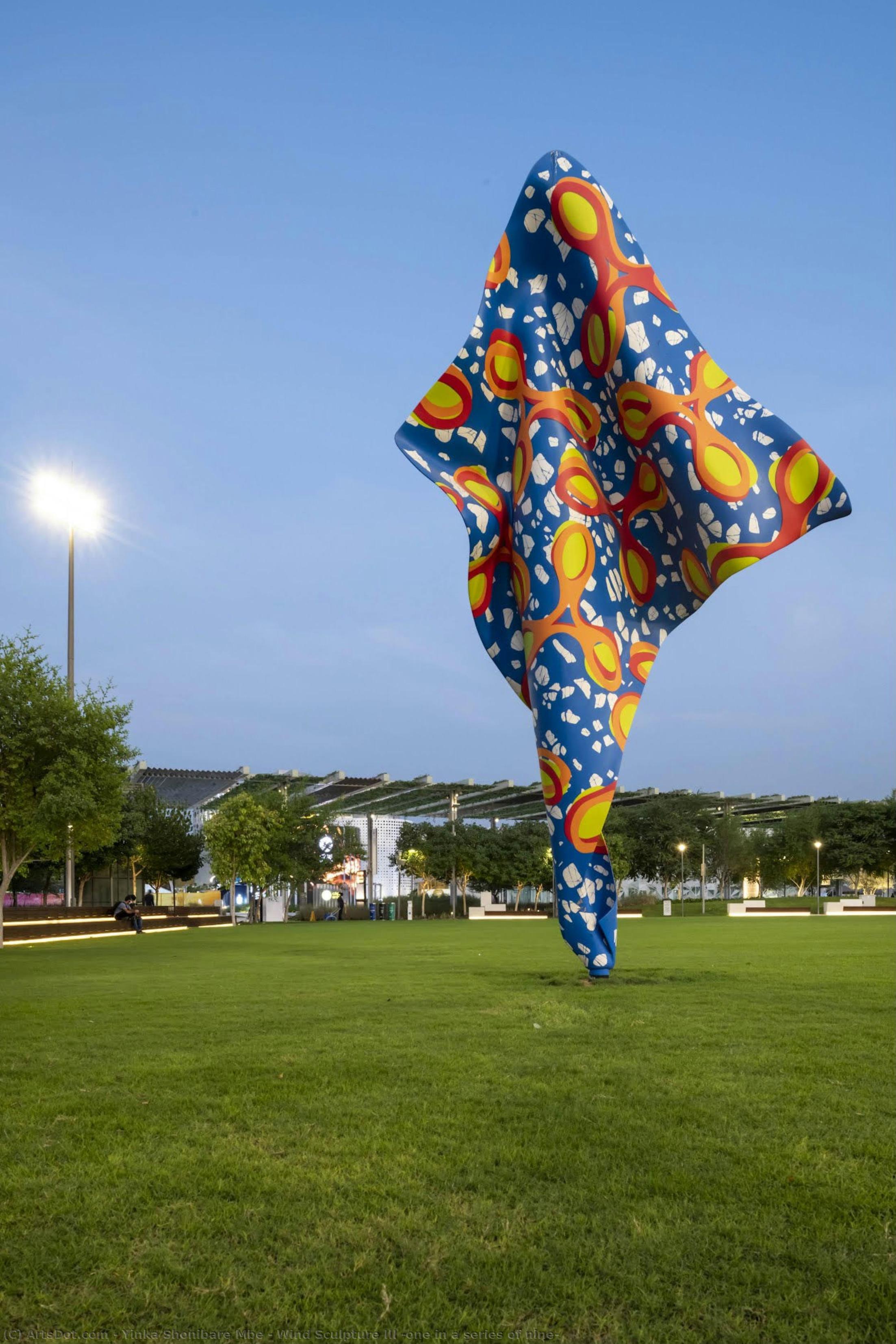
Wind Sculpture III (one in a series of nine)
 Sculpture
- Sculpture
- Contemporary Hybrid
 Contemporary
 610.0 x 110.0 cm
 Expo 2020 Dubai
 詳細を見る
詳細を見る




































作品のオリジナル比率に合わせた、当店の規定サイズからお選びください。

特定のフレームやスペースに合わせて、ご希望のサイズをご入力いただけます。選択されたサイズが元の画像の比率と異なる場合、アートワークをトリミングするか、手描きで要素を追加して絵画を拡張いたします。デジタルモックアップ を制作し、制作開始前にご確認(承認)をいただきます。
画面上のプレビューは、実際のトリミングや拡張を正確に反映しているものではありません。最終的な構図は、モックアップによってのみ正確にご確認いただけます。
カスタムサイズもご利用いただけますが、元の比率を維持するためには、あらかじめ用意されたリストからサイズを選択することをお勧めいたします。
ご注文後、ArtsDot.com チームより詳細な指示をお送りするとともに、仕上がりイメージ(モックアップ)をご提供いたします。


 ガラスオプションは、110cm未満のサイズでのみご利用いただけます。

Wind Sculpture III (one in a series of nine)
複製技法
複製画のサイズ
-


合計金額
$ 263
A Dance with Heritage: Deconstructing Identity in Yinka Shonibare’s “Wind Sculpture III”
Yinka Shonibare CBE's "Wind Sculpture III," a monumental kite-like structure dominating the grassy expanse of its setting, is far more than just a striking visual element. It’s a potent meditation on colonialism, cultural hybridity, and the enduring complexities of identity – a conversation woven through vibrant fabrics and meticulously crafted form. Measuring an impressive 610 x 110 cm, this piece immediately commands attention, inviting viewers to step into a world where historical narratives collide with contemporary concerns.
The sculpture’s genesis lies in Shonibare's own lived experience: born in London to Nigerian parents, his early years spent navigating the cultural currents of Lagos before returning to Britain. This dual heritage – a potent blend of African and European influences – forms the bedrock of his artistic practice. “Wind Sculpture III” isn’t simply an aesthetic statement; it’s a deliberate exploration of the ‘double consciousness’ articulated by W.E.B. Du Bois, a concept describing the internal conflict experienced by individuals belonging to two distinct racial groups. The kite itself becomes a metaphor for this fractured identity – simultaneously rooted in tradition and adrift in a globalized world.
The Language of Ankara: Technique and Symbolism
Shonibare’s signature technique—the extensive use of brightly colored Ankara wax print fabric—is central to the sculpture's impact. This West African textile, traditionally used for clothing, is meticulously applied to create a dazzling, layered surface. The bold blues and reds, reminiscent of Dutch Delftware (a historical connection reflecting Shonibare’s own research into colonial trade routes), are not merely decorative; they carry significant symbolic weight. Ankara fabric, often associated with resistance and cultural pride in West Africa, represents a reclaiming of heritage against the backdrop of European colonialism.
The kite's design is deliberately asymmetrical, its flowing lines suggesting movement and instability. This mirrors the feeling of navigating multiple identities – constantly shifting between cultures and experiences. The intricate patterns within the fabric are not random; they’re often inspired by historical textiles and motifs, subtly referencing a rich tapestry of African artistic traditions. The sheer scale of the sculpture further amplifies this effect, creating an immersive experience that draws the viewer into its complex narrative.
A Historical Echo: Colonial Trade Routes and Artistic Appropriation
Shonibare’s work is deeply rooted in historical research, particularly concerning the transatlantic slave trade and the subsequent exchange of goods between Europe and Africa. The use of Ankara fabric, a product of Dutch colonial influence on West African textile production, highlights this intricate network of trade and cultural appropriation. He deliberately employs Western artistic conventions – the kite form itself – to subvert them with African materials and imagery, creating a powerful commentary on power dynamics and the ongoing legacy of colonialism.
The sculpture’s placement within a grassy field evokes images of open skies and freedom, yet it's framed by a subtle awareness of historical constraints. It’s a poignant reminder that even in moments of apparent openness, the echoes of the past continue to resonate. Shonibare masterfully utilizes this juxtaposition to provoke reflection on how history shapes our present realities.
Emotional Resonance and Contemporary Relevance
"Wind Sculpture III" is not merely an aesthetically pleasing object; it’s a deeply emotive work that speaks to universal themes of belonging, identity, and cultural exchange. The sculpture's vibrant colors and dynamic form generate a sense of movement and energy, inviting viewers to contemplate their own place within the global landscape. Its enduring appeal lies in its ability to spark dialogue about complex social issues while simultaneously celebrating the beauty and richness of diverse cultures.
As a reproduction, “Wind Sculpture III” offers a remarkable opportunity to bring Shonibare’s powerful vision into any space. Its scale and intricate detail are faithfully captured, allowing viewers to experience the full impact of this extraordinary artwork – a testament to the enduring power of art to challenge, provoke, and inspire.
関連作品


アーティストの略歴
A Life Interwoven: The Art of Yinka Shonibare MBE
Yinka Shonibare’s artistic journey is one profoundly shaped by displacement, identity, and a keen interrogation of history. Born in London in 1962 to Nigerian parents, his early life was marked by a geographical and cultural shift when the family relocated to Lagos at the age of three. This formative period instilled within him an awareness of belonging – and not belonging – that would become central to his artistic explorations. Returning to Britain for his education, attending Redrice School before pursuing Fine Art at Byam Shaw School of Art (now Central Saint Martins) and Goldsmiths, University of London, Shonibare began to articulate a visual language rooted in this complex interplay of cultures. A pivotal moment arrived at eighteen when he contracted transverse myelitis, resulting in paralysis on one side of his body. This physical challenge didn’t halt his creative drive but fundamentally altered his artistic process; he now collaborates with assistants to realize his ambitious visions, transforming limitation into a unique mode of production and emphasizing the collaborative nature of authorship itself.Deconstructing Colonial Narratives
Shonibare's signature aesthetic revolves around the captivating use of brightly colored Ankara fabrics – often referred to as “Dutch wax prints.” These textiles, seemingly emblematic of African culture, possess a surprisingly convoluted history. Originating in Indonesian batik techniques, they were adapted and mass-produced by Dutch manufacturers for export to West Africa, becoming symbols not of authentic tradition but of colonial trade and cultural appropriation. This inherent contradiction is the very core of Shonibare’s artistic power. He doesn't simply *use* these fabrics; he dissects their layered meanings, exposing the complexities of globalization, identity construction, and the enduring legacy of colonialism. His work spans a diverse range of media – painting, sculpture, photography, film, and installation art – each serving as a vehicle for this critical examination. Initially focusing on portraiture to explore themes of race and identity, Shonibare’s practice evolved into a broader critique of power dynamics and cultural exchange. He frequently references and reinterprets iconic works from Western art history, subtly subverting their original narratives and challenging established canons.Landmark Creations & Global Recognition
Several key works have cemented Shonibare's position as one of the most important contemporary artists working today. Gallantry and Criminal Conversation (2002), commissioned for documenta XI, propelled him to international acclaim. This installation reimagines 19th-century European aristocratic scenes – complete with opulent furnishings and elegant figures – entirely clad in Ankara fabrics. The result is a jarring yet compelling juxtaposition that dismantles notions of power, class, and historical authenticity. Nelson's Ship in a Bottle (2010), a commission for the Fourth Plinth in Trafalgar Square, became an instant landmark and sparked widespread public debate. This miniature replica of HMS Victory – Admiral Nelson’s flagship – encased within a bottle is a potent symbol of British naval dominance and colonial expansion, rendered fragile and contained. His ongoing series of large-scale wind sculptures, resembling billowing sails, are exhibited globally, embodying movement, migration, and the interconnectedness of trade routes. These works aren't merely visually striking; they carry a weight of historical resonance, prompting viewers to contemplate the forces that have shaped our world.Honors & Enduring Influence
Yinka Shonibare’s contributions to contemporary art haven’t gone unnoticed. He was awarded an MBE in 2004 and a CBE in 2019, recognizing his significant cultural impact. His election as a Royal Academician in 2013 further solidified his standing within the artistic establishment, and he holds honorary doctorates from the Royal College of Art. Beyond his individual achievements, Shonibare actively fosters creativity through initiatives like Guest Projects, providing a platform for emerging artists to develop their work. He is considered one of the most important contemporary artists working today, significantly contributing to critical dialogues surrounding postcolonialism, globalization, and cultural identity. By challenging conventional narratives and employing a visually arresting aesthetic, he engages audiences in meaningful conversations about history, power, representation, and the complexities of belonging in an increasingly interconnected world. His work continues to push boundaries, prompting us to question our assumptions and reconsider the stories we tell ourselves about the past – and the present.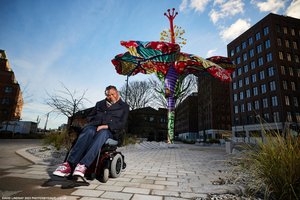
Yinka Shonibare MBE
1962 - , United Kingdom
基本情報
- Artistic Movement Or Style: Postcolonial art
- Artists Or Movements Influenced By This Artist: Contemporary artists
- Date Of Birth: 1962
- Full Name: Yinka Shonibare MBE
- Nationality: British-Nigerian
- Notable Artworks:
- Gallantry & Criminal Conversation
- Nelson's Ship in a Bottle
- Wind Sculptures
- Planets in My Head, Physics
- Sleep of Reason (Europe)
- Sleep of Reason (Australia)
- Place Of Birth: London, UK
関連記事

Bronze Sculptures That Defined Art History | ArtsDot
Journey through art history with our Top 10 bronze sculptures! Explore masterpieces by Rodin, Michelangelo & more. Discover stories behind iconic statues and find museum-quality reproductions for your home decor at ArtsDot.com.

The Enduring Form: Exploring Themes & Techniques in Sculpture Across Historical Periods
Explore the rich history of sculpture from ancient masterpieces to contemporary innovations. Discover key techniques, influential artists & investment potential for discerning art collectors.

The Enduring Form: Sculpture Across History, Technique & Emotional Resonance
Explore the rich history of sculpture with ArtsDot. Discover key techniques, influential artists & investment potential for discerning collectors. Expert insights into valuing and collecting timeless masterpieces.

Bronze Age to Modern Masters: 10 Sculptures That Redefined Art | ArtsDot
Journey through art history with 10 legendary bronze sculptures – from Michelangelo's David to Rodin’s Thinker. Explore the stories, techniques & timeless beauty of these masterpieces. Find museum-quality reproductions & elevate your home decor on ArtsDot.com.
青銅彫刻の永続的遺産:歴史、技法、そして現代における解釈
青銅彫刻の歴史、技法、現代における解釈を専門家が解説。古代から現代までの貴重な作品群を深く理解し、コレクションや投資に役立つ情報を提供します。美術品鑑定、修復についてもご紹介。

