

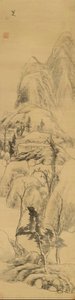
![Setsu Gekka [snow, Moon, Flowers]\n\n- Snow (kawai Gyokudō) — Yokoyama Taikan](/media/artworks/images-full/f7/28/f7280d518cf25369b4d5320a5cb52a55.jpg)
 プレビュー
プレビュー
 プリントを購入
 シェアする
シェアする シェアする
シェアする
 詳細を見る
詳細を見る

 ダウンロード
 似ている作品
 X線調査
X線調査 スライドショー
Setsu gekka [snow, moon, flowers]\n\n- Snow (Kawai Gyokudō)


 詳細を見る
詳細を見る




































作品のオリジナル比率に合わせた、当店の規定サイズからお選びください。

特定のフレームやスペースに合わせて、ご希望のサイズをご入力いただけます。選択されたサイズが元の画像の比率と異なる場合、アートワークをトリミングするか、手描きで要素を追加して絵画を拡張いたします。デジタルモックアップ を制作し、制作開始前にご確認(承認)をいただきます。
画面上のプレビューは、実際のトリミングや拡張を正確に反映しているものではありません。最終的な構図は、モックアップによってのみ正確にご確認いただけます。
カスタムサイズもご利用いただけますが、元の比率を維持するためには、あらかじめ用意されたリストからサイズを選択することをお勧めいたします。
ご注文後、ArtsDot.com チームより詳細な指示をお送りするとともに、仕上がりイメージ(モックアップ)をご提供いたします。


 ガラスオプションは、110cm未満のサイズでのみご利用いただけます。

Setsu gekka [snow, moon, flowers]\n\n- Snow (Kawai Gyokudō)
複製技法
複製画のサイズ
-


合計金額
$ 263
関連作品









アーティストの略歴
A Legacy Forged in Tradition and Innovation
Yokoyama Taikan, born Sakai Hidemaro in 1868 in the quiet town of Toyohara, Japan, stands as a monumental figure in pre-World War II Japanese art. He wasn’t merely a painter; he was an architect of *Nihonga*, a distinctly Japanese style that sought to reconcile centuries of artistic heritage with the burgeoning influences of the Western world. His life unfolded against a backdrop of rapid modernization and cultural shifts, and his work became a poignant reflection of this era—a delicate balance between honoring the past and embracing the future. Taikan’s journey began humbly in Mito city, Ibaraki Prefecture, where an innate artistic sensibility blossomed largely through self-directed study. This early independence would prove crucial to shaping his unique vision. He formally entered the world of traditional Japanese painting at the Kyoto Kaishi, a private school steeped in established techniques. However, it was his move to Tokyo that truly ignited a transformative period. Exposure to *Yōga*, Western-style painting, opened new vistas and sparked within him a desire to synthesize these seemingly disparate artistic languages.The Shaping of a Nihonga Master
Taikan’s formal education continued at the Tōkyō Bijutsu Gakkō (now Tokyo University of the Arts), where he came under the tutelage of Hashimoto Gahō, a prominent artist of the Kanō school. This mentorship proved foundational, instilling in him a deep understanding of traditional Japanese aesthetics and technical mastery. Yet, even within this rigorous training, Taikan’s inquisitive spirit remained restless. He wasn't content to simply replicate the past; he sought to *reimagine* it. Alongside his studies, he began teaching, but resigned when his mentor Okakura Kakuzō was forced out of his position. This act of loyalty and principle led him to co-found the Japan Fine Arts Academy with Okakura, a pivotal institution dedicated to fostering artistic innovation rooted in Japanese tradition. It was during this period that Taikan truly began to forge his distinctive style. He championed traditional materials—the delicate washes of ink, the vibrant hues of natural pigments—but infused them with a modern sensibility. His paintings weren’t mere imitations of nature; they were interpretations, imbued with emotion and philosophical depth. Notable works like “Bamboo in the Wind” and “Landscape with Mountains” exemplify this approach, showcasing his mastery of natural forms while simultaneously conveying a sense of spiritual resonance.Expanding Horizons: Travel and Artistic Exchange
Taikan’s artistic development wasn't confined to the borders of Japan. He embarked on extensive travels that broadened his perspective and further enriched his creative palette. A particularly significant journey took him to Calcutta in 1902, where he encountered Abanindranath Tagore, a leading figure in Indian nationalist art. This encounter proved profoundly influential, sparking an exchange of techniques and motifs that resonated far beyond the two artists involved—it greatly influenced global Modernism. He continued his explorations, venturing to New York, London, Berlin, and Paris, absorbing the diverse artistic currents of the West. These experiences didn’t lead him to abandon his core principles; rather, they provided new tools and perspectives with which to refine his vision. He skillfully integrated Western concepts of composition and perspective into his Nihonga style, creating a unique synthesis that was both distinctly Japanese and universally appealing. His portraits, such as “Portrait of a Woman,” demonstrate this fusion—a delicate balance between traditional Japanese elegance and modern psychological insight.A Lasting Influence on Japanese Art
Yokoyama Taikan’s legacy extends far beyond his individual paintings. He played a crucial role in reviving the Japan Fine Arts Academy, providing a vital platform for artists to exhibit their work and challenge conventional norms. His emphasis on traditional techniques helped safeguard Japan's cultural heritage during a period of rapid Westernization. He successfully bridged the gap between East and West, demonstrating that artistic innovation didn’t require abandoning one’s roots. Taikan wasn’t simply preserving tradition; he was *evolving* it, ensuring its continued relevance in a changing world. His influence on subsequent generations of Japanese artists is undeniable. He inspired countless painters to explore new creative avenues while remaining grounded in the rich traditions of their ancestors. Today, his works are displayed in prominent museums worldwide and continue to captivate audiences with their beauty, serenity, and profound emotional depth. The enduring appeal of Yokoyama Taikan lies not only in his technical brilliance but also in his ability to capture the essence of Japan—its landscapes, its people, and its spirit—in a way that transcends cultural boundaries.Key Achievements & Recognition
- Pioneering Nihonga: A central figure in establishing and developing Nihonga as a major force in Japanese painting.
- Reviving the Japan Fine Arts Academy: Instrumental in restoring this important institution, providing opportunities for artists.
- International Recognition: Exhibited his work internationally, gaining acclaim and fostering cross-cultural exchange.
- Cultural Medal (1937): Honored with one of Japan’s highest cultural awards, recognizing his significant contributions to the arts.
- Influential Mentor: Inspired and guided numerous younger artists, shaping the future of Japanese painting.
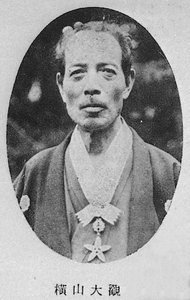
Yokoyama Taikan
1868 - 1958 , Japan
基本情報
- Artistic Movement Or Style: Nihonga painting
- Artists Or Movements Influenced By This Artist: Modern Japanese art
- Artists Who Influenced This Artist:
- Hashimoto Gahō
- Abanindranath Tagore
- Date Of Birth: 1868
- Date Of Death: 1958
- Full Name: Yokoyama Taikan
- Nationality: Japanese
- Notable Artworks:
- Bamboo in the Wind
- Landscape with Mountains
- Portrait of a Woman
- Place Of Birth: Toyohara, Japan