

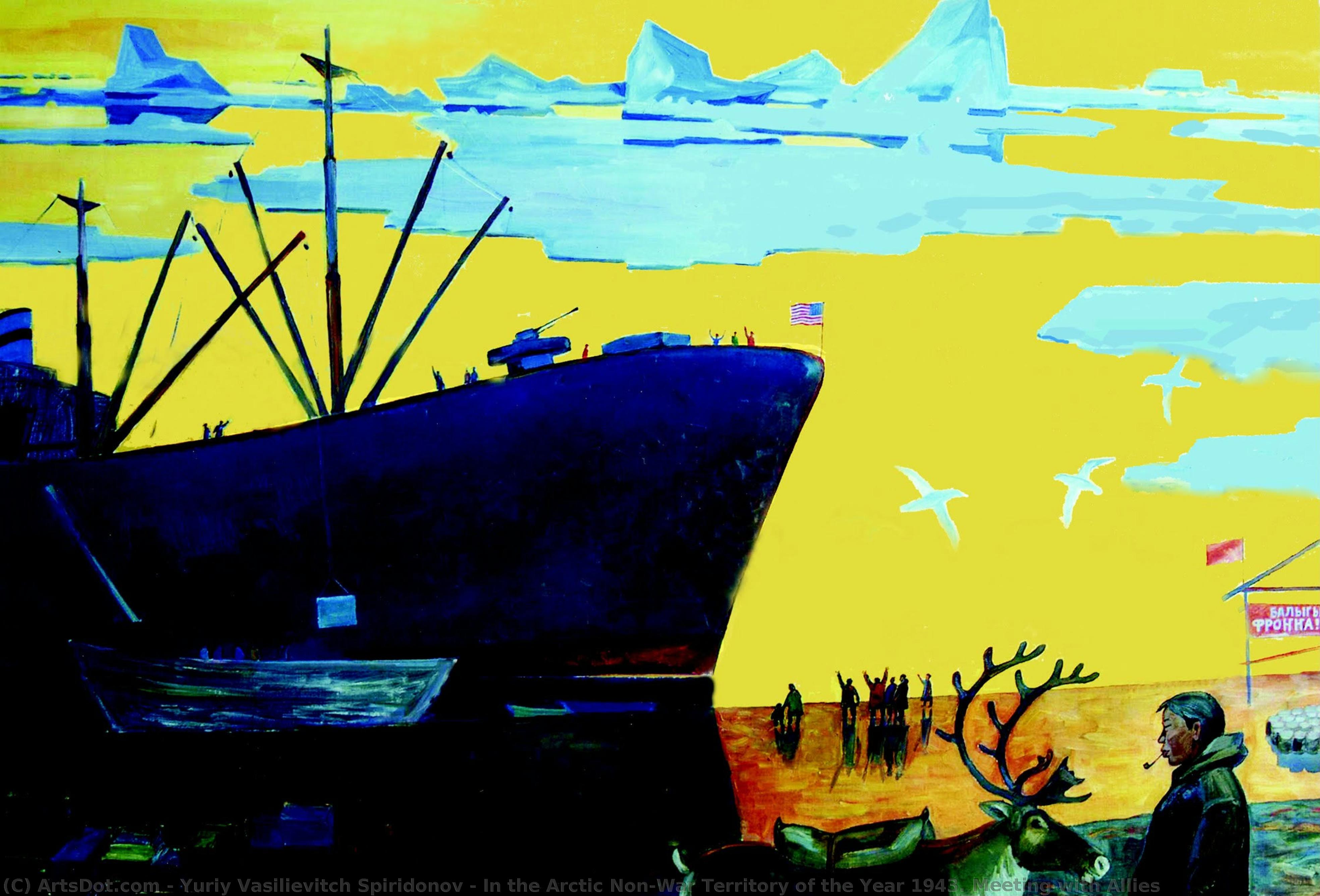
 プレビュー
プレビュー
 シェアする
シェアする シェアする
シェアする
 詳細を見る
詳細を見る

 ダウンロード
 似ている作品
 X線調査
X線調査 スライドショー
In the Arctic Non-War Territory of the Year 1943. Meeting with Allies
 114.0 x 87.0 cm
 詳細を見る
詳細を見る
ジークレー/アートプリント
迅速な制作と多彩な仕上げオプションを備えた、ミュージアムクオリティのジークレーまたはキャンバスプリント。 ( 手描きの絵画を購入 画像を購入)




































作品のオリジナル比率に合わせた、当店の規定サイズからお選びください。

特定のフレームやスペースに合わせて、ご自身でサイズを指定することも可能です。選択されたサイズが元の画像の比率と一致しない場合、作品をトリミングするか、鏡面反射または単色での塗りつぶしによって画像を拡張いたします。制作を開始する前に、ご確認用のデジタルモックアップをお送りいたします。
画面上のプレビューには、実際のトリミングや拡張は反映されませんのでご注意ください。最終的な構図を正確に確認できるのは、モックアップのみとなります。
カスタムサイズも承っておりますが、元の比率を維持するためには、あらかじめ用意されたリストからサイズを選択することをお勧めいたします。


 ガラスオプションは、110cm未満のサイズでのみご利用いただけます。

In the Arctic Non-War Territory of the Year 1943. Meeting with Allies
ジークレー/アートプリント
複製画のサイズ
-


合計金額
$ 62
関連作品



アーティストの略歴
Francesco Clemente: A Weaver of Dreams and Myth
Francesco Clemente, born in Naples in 1952, is an Italian artist whose work has long captivated audiences with its evocative blend of ancient mythology, personal symbolism, and a distinctly spiritual sensibility. His journey through the art world began not within the confines of formal architecture training – he initially enrolled at the Sapienza University of Rome – but rather through immersion in the vibrant artistic circles of the city, encountering figures like Luigi Ontani and Alighiero Boetti, who profoundly shaped his early development. This initial exposure to a diverse range of contemporary artists, coupled with a formative trip to Afghanistan with Boetti in 1974, laid the groundwork for Clemente’s distinctive approach – one that deliberately rejects rigid categorization and embraces a fluid exploration of imagery and technique.Early Influences and the Transavanguardia Movement
Clemente's artistic trajectory is inextricably linked to the Italian *Transavanguardia* movement, which emerged in the 1980s as a reaction against the prevailing dominance of conceptual art and formalism. Rejecting the intellectualism of these movements, *Transavanguardia* artists sought inspiration from a wider range of sources – including historical painting, religious iconography, and popular culture – creating works that were richly layered with symbolism and imbued with emotional intensity. Clemente’s early work, characterized by dreamlike imagery and a fascination with ancient myths and Eastern spirituality, firmly positioned him within this influential group. His collaborations with Cy Twombly in the 1970s further broadened his artistic horizons, exposing him to new techniques and approaches to drawing. The influence of figures like Pino Pascali and Michelangelo Pistoletto, who similarly explored themes of memory, identity, and the human condition through unconventional media, contributed significantly to Clemente’s evolving aesthetic language.A Master of Diverse Media: From Drawing to Fresco
Clemente's artistic practice is remarkably diverse, encompassing a wide range of media including drawing, fresco painting, graphic art, mosaic, and sculpture. Initially drawn to the immediacy and intimacy of drawing on paper – often utilizing ink and graphite to capture fleeting images and recollections from his subconscious – he gradually expanded his repertoire to include more ambitious projects such as large-scale frescoes and intricate mosaics. His work with fresco, particularly in the 1980s, demonstrated a remarkable command of technique and a willingness to engage with traditional artistic practices while simultaneously pushing their boundaries. The use of collage, often incorporating found objects and fragments of text, further enriched his visual vocabulary, creating layered compositions that invite multiple interpretations.Ballpoint Pen as a Language of the Everyday
In recent decades, Clemente has become increasingly recognized for his groundbreaking work utilizing ballpoint pens. Beginning in the 1970s and continuing to this day, he has developed a highly refined technique employing thousands of these inexpensive instruments to create monumental drawings on paper and canvas. This seemingly humble medium – often associated with mundane office supplies – becomes a vehicle for profound exploration, revealing intricate patterns, subtle gradations of tone, and an astonishing level of detail. His ballpoint pen works are characterized by their reductive palette, non-referential imagery, and a deliberate avoidance of overt narrative. Instead, they invite viewers to contemplate the inherent beauty of line and form, and to engage with the meditative process of creation. The San Jose Museum of Art’s 2007 retrospective highlighted this pivotal aspect of his oeuvre, showcasing the scale and complexity of these extraordinary drawings.Legacy and Recognition
Francesco Clemente's work has been exhibited extensively throughout Europe and North America, including major institutions such as The Metropolitan Museum of Art, The Aldrich Contemporary Art Museum, and numerous museums in Korea. His pieces are held in prominent collections worldwide, reflecting the enduring appeal of his distinctive vision. His influence extends beyond the art world, with his work featured in publications like *The New York Times* and *Artnews*, solidifying his position as a significant contemporary artist whose exploration of myth, spirituality, and the human experience continues to resonate deeply with audiences today. His ongoing practice demonstrates a commitment to pushing the boundaries of artistic expression while remaining firmly rooted in a rich tradition of symbolism and personal reflection.
yuriy vasilievitch spiridonov
1952 - , Russia
基本情報
- Artistic Movement Or Style: Transavanguardia
- Artists Or Movements Influenced By This Artist: ['Arte povera']
- Artists Who Influenced This Artist:
- Cy Twombly
- Alighiero Boetti
- Date Of Birth: March 23, 1952
- Full Name: Francesco Clemente
- Nationality: Italian
- Notable Artworks: [None]
- Place Of Birth: Naples, Italy

