アーティストの略歴
The Enigmatic Brush of Zhao Yunhe
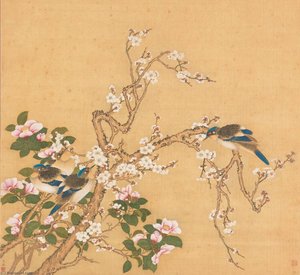
Zhao Yunhe is a contemporary Chinese artist whose work exists in a fascinating space between tradition and innovation, figuration and abstraction. While biographical details remain deliberately scarce – Yunhe prefers the dialogue to occur through his paintings rather than personal narrative – his canvases speak volumes about a deep engagement with classical Chinese aesthetics, coupled with a distinctly modern sensibility. Born in China (the exact year remains undisclosed), he has rapidly gained recognition for his evocative depictions of birds and flowers, landscapes steeped in atmospheric mist, and increasingly, abstract compositions that hint at the underlying structures of nature. He is currently living and working as an artist.
A Dialogue with the Past
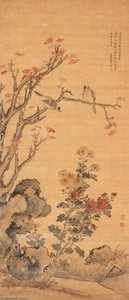
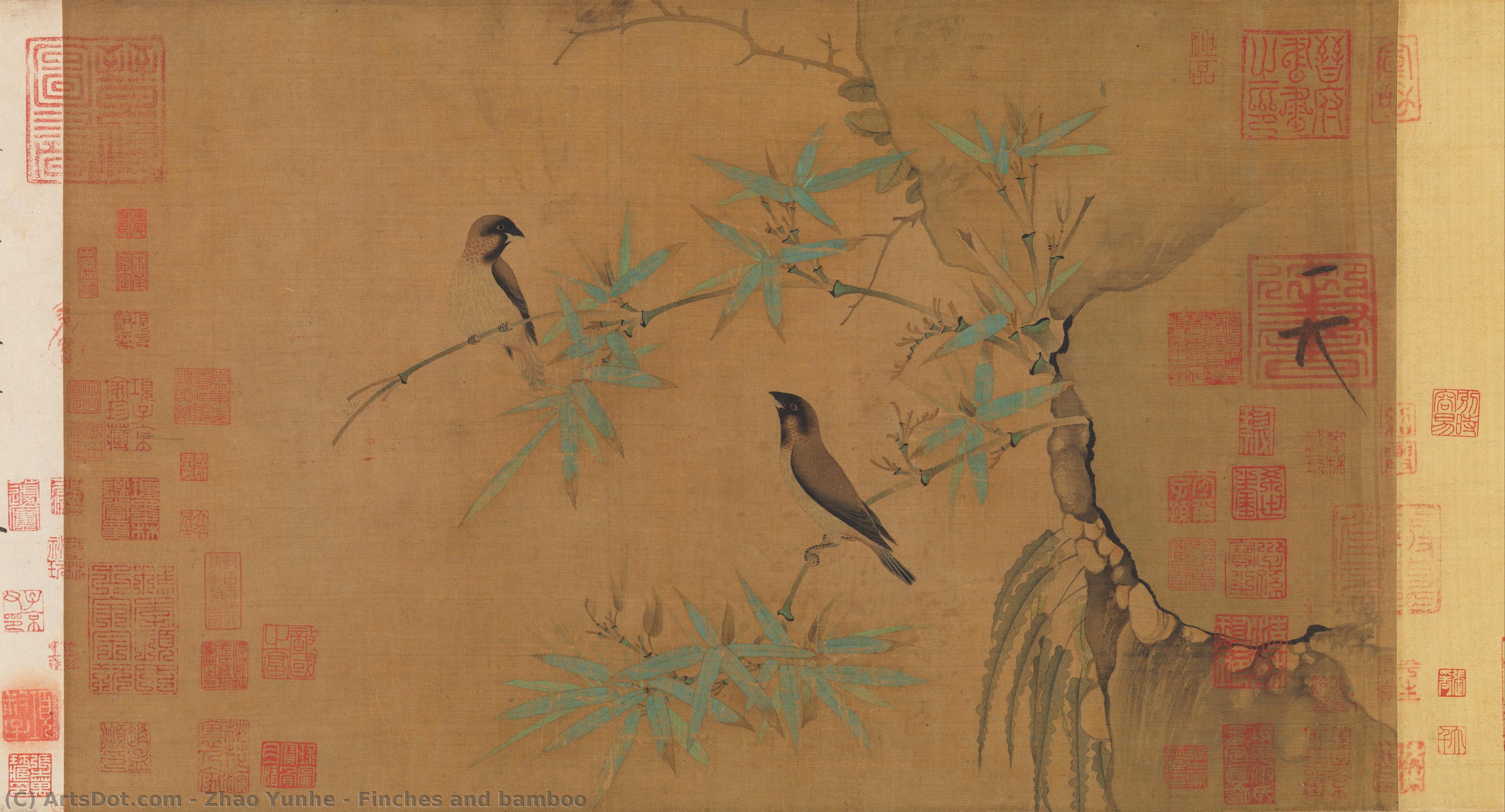
Yunhe’s artistic journey appears rooted in a profound study of Song Dynasty painting. The delicate brushwork, subtle ink washes, and emphasis on capturing the *qi* – the vital energy or life force – present in traditional landscapes are clearly echoed in his earlier works. However, he doesn't simply replicate these historical styles; instead, he engages in a conversation with them. His birds aren’t merely ornithological studies but become symbols of freedom, resilience, and spiritual aspiration. The flowers, often rendered with an almost ethereal quality, represent the fleeting beauty of existence and the cyclical nature of life and death. This is not imitation, but rather a reinterpretation – a distillation of centuries-old techniques through a contemporary lens. He draws inspiration from masters like Fan Kuan and Guo Xi, yet his palette often ventures beyond traditional monochrome, incorporating muted blues, greens, and ochres to create a unique atmospheric depth.
The Evolution of Form
Over the past decade, Yunhe’s work has undergone a noticeable evolution. While early paintings focused on recognizable forms – birds perched on blossoming branches, mountains shrouded in clouds – he began to deconstruct these elements, moving towards increasingly abstract compositions. These later works aren't devoid of representation entirely; rather, they suggest landscapes and natural phenomena through fragmented shapes, layered washes, and dynamic brushstrokes. The influence of Abstract Expressionism is subtly present, particularly in the gestural quality of his painting, but it’s always tempered by a distinctly Chinese sensibility. He seems less interested in depicting *what* he sees and more focused on conveying *how* it feels – the emotional resonance of nature, the energy that flows through all things. This shift reflects a deeper exploration of the underlying principles of Chinese philosophy, particularly Daoism, which emphasizes harmony with nature and the interconnectedness of all beings.
Technique and Materials
Yunhe’s mastery lies in his control of ink and water – traditional materials that demand both precision and spontaneity. He typically works on Xuan paper (rice paper), renowned for its absorbency and delicate texture, using brushes crafted from the hair of various animals to achieve a wide range of effects. His technique is characterized by layering washes, creating subtle gradations of tone and depth. He often employs *piling ink* (diao mo) – a method of building up layers of ink to create rich, complex textures – and *broken ink* (pocai) – allowing the ink to bleed and blend on the paper, resulting in unpredictable and organic forms. The artist’s studio is described as minimalist, fostering an environment conducive to contemplation and focused practice. He often prepares his own inks and papers, ensuring complete control over the materials he uses.
Historical Significance & Current Standing
Zhao Yunhe represents a new generation of Chinese artists who are successfully bridging the gap between tradition and modernity. His work challenges conventional notions of landscape painting, moving beyond mere representation to explore the emotional and philosophical dimensions of nature. He is part of a growing movement that seeks to revitalize classical Chinese aesthetics for a contemporary audience. While his deliberate avoidance of publicity contributes to an air of mystery surrounding his persona, his paintings have garnered critical acclaim and are increasingly sought after by collectors worldwide. Yunhe’s significance lies not only in his technical skill but also in his ability to evoke a sense of tranquility and contemplation – qualities that resonate deeply with viewers seeking respite from the fast-paced rhythms of modern life. His work serves as a powerful reminder of the enduring beauty and wisdom found within the natural world, and the importance of connecting with one’s inner self through artistic expression.


 プレビュー
プレビュー
 シェアする
シェアする シェアする
シェアする
 詳細を見る
詳細を見る

 ダウンロード
 似ている作品
 X線調査
X線調査 スライドショー
 統計情報
統計情報 1101
1101 34.0 x 55.0 cm
 詳細を見る
詳細を見る
 手描きの絵画を購入





































 ガラスオプションは、110cm未満のサイズでのみご利用いただけます。