The First Glance: Moving from Passive Seeing to Active Observation
 Decoding Masterpieces: A Practical Guide for Art Historians – Techniques, Contexts, and Interpretations Across Eras
Foundations of Art Historical Analysis: Object, Experience, and Context The pursuit of understanding art transcends mere aesthetic appreciation; it’s a rigorous intellectual journey demanding a systematic approach to unraveling the layers of meaning ...
To stand before a masterpiece is to enter into a silent conversation, yet many of us approach art with a sense of polite detachment, merely glancing at the surface before moving on. True engagement begins when we transition from passive seeing—the mere recognition of a subject—to active observation. This shift requires a moment of stillness, an intentional decision to let the eyes linger upon the canvas. When we observe actively, we stop asking simply
what is depicted and begin to notice
how it is presented. We start to perceive the physical reality of the work: the way light catches a raised ridge of oil paint, or how a particular pigment seems to glow from beneath layers of glaze. This initial stage of looking is about acknowledging the artwork as a tangible entity, a physical object born from specific materials and meticulous techniques. It is in this quiet, unhurried moment that the foundation for all deeper analysis is laid, allowing the viewer to move past the superficial and prepare for the intellectual journey ahead.
The Building Blocks: Mastering Formal Analysis through Line, Color, and Shape
Understanding Formal Analysis - Getty Museum--- title: Line url: https://www.getty.edu/education/teachers/building_lessons/formal_analysis.html hostname: getty.edu description: This page provides definitions and examples of the elements of art and principles of design that are used by artists ...
Once we have settled into a state of deep observation, we can begin to deconstruct the painting using the tools of formal analysis. This method, often referred to as formalism, focuses on the intrinsic visual elements that exist within the frame, independent of any outside story. Consider first the power of line; it is the most fundamental path an artist creates, guiding our gaze through the composition like an invisible hand. A series of horizontal lines might evoke a sense of profound rest or a vast, receding landscape, while sharp, diagonal strokes can inject a sudden surge of energy or tension into a scene. Alongside these paths, we encounter the language of color and shape. Color is perhaps the most visceral element, capable of altering our very heartbeat through its warmth or coolness, its vibrancy or its muted melancholy. When an artist employs complementary colors, they create a visual vibration that demands attention, whereas analogous tones might foster a sense of harmony and peace. Shapes and forms provide the structure, defining the boundaries of objects and creating a rhythm of light and shadow. By analyzing how these elements—line, color, shape, texture, and space—interact, we begin to understand the underlying architecture of the artist's vision, discovering how they manipulate our perception to create balance or chaos.
Decoding the Narrative: Understanding Subject Matter and Symbolism
 Beyond Representation: Emotional Resonance & Formal Innovation in Abstract Painting
The Shift from Mimetic Representation: A Historical Overview Abstract expressionism Abstract expressionism in the United States emerged as a distinct art movement in the aftermath of World War II and gained mainstream acceptance in the 1950s, a shift...
Beyond the structural beauty of form lies the heart of the painting’s story: its subject matter and the hidden language of symbolism. For centuries, the primary function of art was mimetic, a faithful rendering of the world around us, from sacred religious icons to intimate portraits. However, as we look closer, we realize that what appears to a casual observer as a simple arrangement of objects often contains a complex web of meaning. An artist might place a single wilting rose in a corner not merely to depict decay, but to serve as a
memento mori—a symbolic reminder of the fleeting nature of life. A particular fruit, a specific gesture of a hand, or even the way light falls upon a certain figure can all be loaded with cultural and allegorical significance. Learning to read these symbols allows us to decode the narrative layers embedded within the work. This process transforms the painting from a static image into a living text, where every element serves as a clue to a deeper, often more profound, message intended by the creator.
Contextual Layers: How History, Culture, and Biography Shape Meaning
 Beyond Representation: Exploring Emotional Resonance & Formal Innovation in Abstract Art
The Genesis of Abstraction: From Representation to Inner Vision Abstract expressionism Abstract expressionism in the United States emerged as a distinct art movement in the aftermath of World War II and gained mainstream acceptance in the 1950s, a sh...
To truly comprehend an artwork, one must eventually look beyond the edges of the frame and consider the world that birthed it. No painting is created in a vacuum; every brushstroke is an echo of its time, place, and the artist's own lived experience. The historical context provides the essential framework for understanding why certain themes were prioritized or why specific techniques emerged. For instance, the rise of Abstract Expressionism in the mid-20th century cannot be fully understood without acknowledging the profound social anxieties and disillusionment following World War II. Artists sought new, non-representational modes of expression to capture raw human emotions like grief and transcendence that traditional realism could no longer convey. Similarly, an artist's biography—their struggles, their education, and their cultural heritage—acts as a lens through much of the work's meaning. By weaving together the threads of history, sociology, and biography, we gain a holistic view of the artwork, recognizing it as a vital piece of a much larger human tapestry.
Emotional Resonance: Connecting Personal Intuition with Artistic Intent
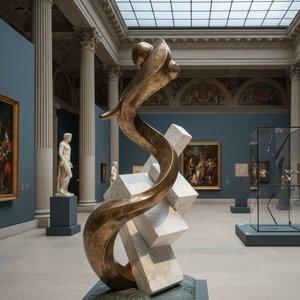 The Eloquence of Form: Aesthetic Principles & Conceptual Representations in Art History
Introduction: The Enduring Power of Formal Analysis For the seasoned collector, the allure of a work extends far beyond its subject matter—beyond the narrative depicted or the artist’s biographical details. It resides in something more fundamental, a...
While formal analysis and historical study provide the intellectual rigor of art criticism, the most profound connection to a painting often occurs on an intuitive, emotional level. This is the realm of aesthetic experience, where the interplay of form and substance resonates within our own souls. We may find ourselves moved to tears by the turbulent textures of an impasto landscape or calmed by the luminous, ethereal light of an Impressionist scene, even if we cannot immediately articulate why. This emotional resonance is the bridge between the artist's intention and the viewer's response. It is a deeply subjective experience that transcends academic knowledge. As we learn to analyze art, we should never lose sight of this visceral connection. The ultimate goal of understanding the "how" and the "why" of a painting is not to strip away its mystery, but to deepen our capacity for wonder, allowing us to engage with the artwork on both a cerebral and an emotional plane.
From Analysis to Appreciation: Bringing Art into Your Own Living Space
The journey of learning to read a painting culminates in the ability to bring that sense of discovery and meaning into our daily lives. Art is not meant to be confined to the sterile halls of museums; it is a living presence that has the power to transform the atmosphere of a home. When we understand how composition, color, and history work together, choosing art for our personal spaces becomes an act of intentional curation rather than mere decoration. Whether it is a large-scale mural that recreates the grandeur of a Renaissance ceiling or a carefully selected multi-panel set that adds modern architectural rhythm to a hallway, the art we choose reflects our own values and aesthetic sensibilities. By applying these analytical tools, we can select pieces that do more than just fill a void on a wall; we can choose works that provoke thought, evoke peace, and serve as enduring windows into the vast, beautiful complexity of the human experience.
Discovering Art with ArtsDot.com
At
ArtsDot.com, we believe that fine art should be an accessible and enriching part of everyone's life. Whether you are looking to transform a room with a breathtaking handmade oil reproduction or seeking to reimagine a personal memory through our custom "photo-to-masterpiece" services, our mission is to connect you with the profound beauty of human creativity. From the meticulous craftsmanship of our academy-trained artists to our expert art consultations that help you find the perfect piece for your unique space, we are here to guide your journey of discovery. Explore our vast library of masterpieces and start building your own collection today.