The Genesis of Rebellion: Moving Beyond Mid-Century Cool
 Beyond the Surface: The Raw Power and Provocative Legacy of Aggressive Confrontational Pop Art
The Genesis of Rebellion: From Mid-Century Consumerism to Confrontational Aesthetics Aggressive Pop Art: The Bold Rebellion of Confrontational Imagery and its Impact on Modern Aesthetics The Genesis of Rebellion: From Mid-Century Consumerism to Confr...
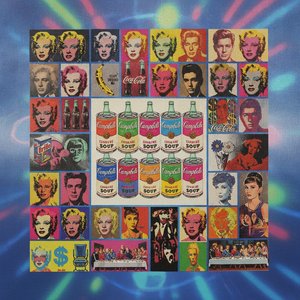
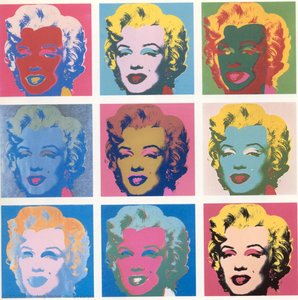
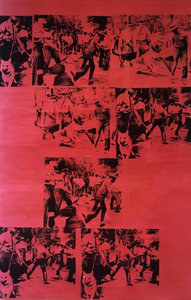
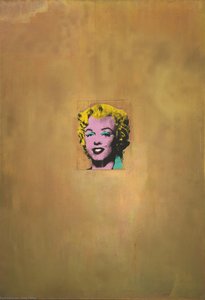
To truly grasp the visceral impact of Aggressive Pop Art, one must first look back at the polite boundaries and the certain, detached, ironic coolness that defined the mid-century era. The initial wave of Pop Art in the 1950s and 60s sought to bridge the gap between high culture and the everyday objects of consumerism, yet it often did so with a polished veneer. Figures like Andy Warhol utilized the repetitive, mechanical aesthetics of mass production to comment on the ephemeral nature of fame and commodity, presenting the world through a lens of commercial detachment. While this era brought the soup can and the celebrity portrait into the gallery, there remained a certain glossy stability—a surface that was beautiful, but perhaps too comfortable.
Beneath this surface of glossy stability, a more turbulent energy began to stir, signaling a profound desire to move beyond mere observation toward active confrontation. This rebellion was not merely a change in subject matter; it was an ontological shift in how art engaged with the viewer. Where traditional Pop Art might present a static icon of stability, the emerging aggressive strains sought to destabilize that very foundation. The movement began to absorb the anxieties of the late 20th century: the sensory overload of television, political upheavals, and the increasingly loud, saturated noise of global advertising. It was no longer enough for art to mirror the world; it had to strike back at it, using the very tools of mass media to critique its overwhelming power.
The Visual Language of Tension: Saturated Hues and Kinetic Energy
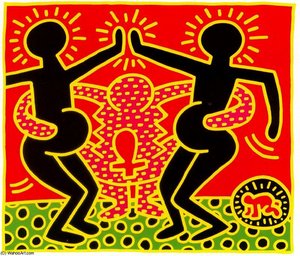
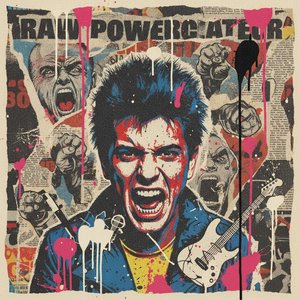
 Chromatic Convergence of Three Faces in a Vibrant Pop Art Symphony
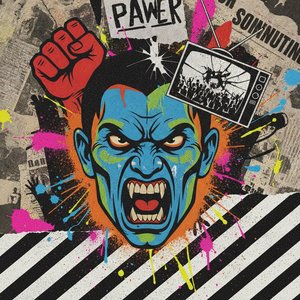
A Vision of Aggressive Confrontational Pop Experience the electric pulse of Chromatic Convergence of Three Faces in a Vibrant Pop Art Symphony , a breathtaking masterpiece that redefines the boundaries of modern graphic expression. This work captures...
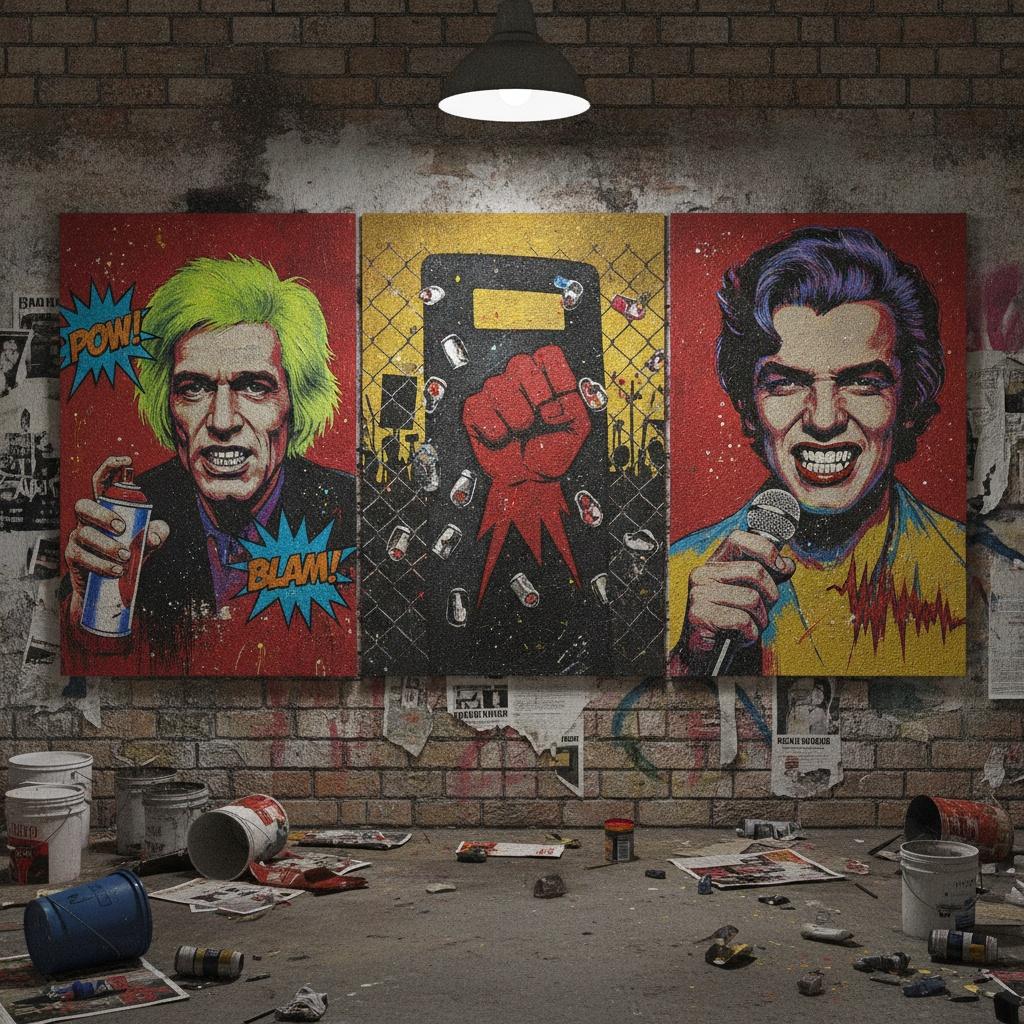
The transition from observation to confrontation required a new, more aggressive visual vocabulary. This era saw the rise of a palette that refused to be ignored, characterized by saturated hues and an almost electric pulse of color. We see this beautifully realized in works like Chromatic Convergence of Three Faces in a Vibrant Pop Art Symphony, where the use of thick, assertive black outlines and a saturated palette of cyan, magenta, and orange commands attention with an unapologetic energy. This is not art designed for quiet contemplation in a corner; it is art that demands presence.
The movement utilizes an asymmetrical arrangement and a hypnotic, high-energy visual experience to create a state of beautiful tension. Through the interplay of geometric curves and sharp angular segments, accented by rhythmic textures, the canvas transforms into a dynamic symphony. This kinetic energy is achieved through a deliberate use of contrast—where bold, heavy lines meet vibrant, glowing colors—creating a sense of movement that mimics the frantic pace of modern life. It is a visual language that captures the beautiful tension of our contemporary existence, turning the screen and the street into a stage for high-octel graphic expression.
Subverting the Icon: From Warhol’s Detachment to Haring’s Social Commentary
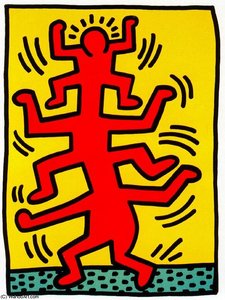
 Andy mouse
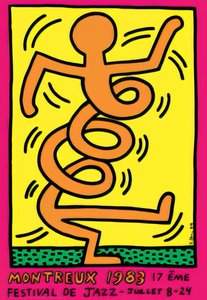
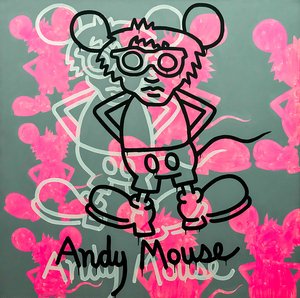
Andy Mouse: A Pop Art Icon Reimagined Keith Haring’s *Andy Mouse* isn't merely a cartoon; it’s a vibrant collision of artistic movements and cultural icons. Born from the late 20th-century Neo-Pop Art movement, this piece brilliantly merges the unive...
As the movement evolved, it began to dismantle the very icons it once celebrated. We see this evolution most clearly in the transition from the detached irony of the original Pop masters to the more direct, socially-charged Neo-Pop movement. A quintessential example is Keith Haring’s Andy Mouse. This piece is far more than a playful cartoon; it is a vibrant collision of artistic movements and cultural icons. By merging the universally recognized imagery of Disney’s Mickey Mouse with the groundbreaking aesthetic pioneered by Andy Warhol, Haring created a work that resonates with both playful nostalgia and critical observation.
Haring injected his signature style—bold lines, simplified forms, and a potent dose of social commentary—into this iconic character. The piece embodies a dynamic dialogue: Mickey Mouse, representing childhood innocence and global recognition, is juxtapified against Warhol’s aesthetic to create a commentary on the commodification of art and the pervasive influence of media. This is the essence of subversion; it takes the familiar, the beloved, and the mass-produced, and recontextualizes them to ask difficult questions about our relationship with consumer culture and the symbols we hold dear.
The Architect of Dissonance: Exploring Modern Subversion in Digital Imagery
 Louis Cartier
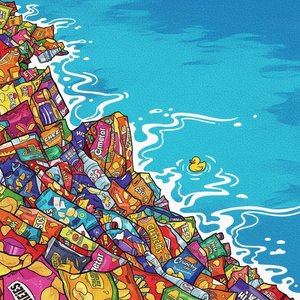
The Architect of Subversion Born in 1970 in Lyon, Louis Cartier has emerged as a definitive voice in contemporary digital imagery through his mastery of Parody and Subtle Subversion Pop . His practice is built upon the precise manipulation of cultura...
In the contemporary landscape, this spirit of confrontation has found a new home within digital imagery and the mastery of subtle subversion. Artists like Louis Cartier have emerged as definitive voices in this realm, building a practice upon the precise manipulation of cultural iconography. The technique is devastatingly simple yet profoundly effective: identifying recognizable source images and introducing a singular, precise visual dissonance. By placing a heroic figure within an absurd context or an authoritative portrait into a domestic vacuum, Cartier creates a profound gap between expectation and reality.
The critique lives entirely within this tension, as the original meaning of the subject is consumed by its own visual language. This modern iteration of Pop Art utilizes the mechanical precision of the digital gaze to create high-fidelity textures that invite close inspection, revealing layers of irony embedded in every pixel. It is a mastery of parody that continues the legacy of the movement, proving that even in an age of infinite digital reproduction, the power to destabilize and provoke remains as potent as ever.
Bringing the Bold Home: Integrating Confrontational Aesthetics into Modern Interiors
 Two Home Homes
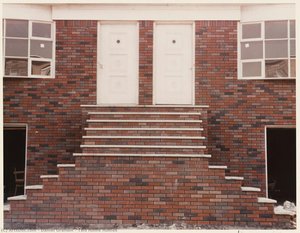
Dan Graham's "Two Home Homes" (1966) is a captivating photographic exploration of space and perception, challenging our understanding of domesticity and urban environments. A seminal work of conceptual art.
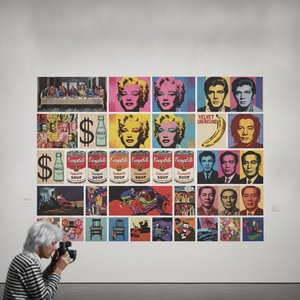
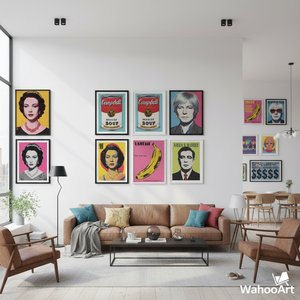
For the modern decorator, integrating these bold, confrontational aesthetics is about more than just adding color; it is about creating a space that possesses character, energy, and narrative depth. Much like the movement itself, choosing art with a provocative edge allows you to transform a room from a static environment into a dynamic experience. Whether it is a large-scale multi-panel set that stretches across a wide wall or a singular, high-impact canvas, these pieces act as anchors for a modern, sophisticated interior.
When selecting works for your home, consider the interplay of color and mood. A vibrant, saturated piece can serve as a focal point in a minimalist room, providing a much-needed pulse of life, while more subversive, monochromatic works can add a layer of intellectual intrigue to a professional study. At ArtsDot.com, we believe that art should be an accessible discovery. We specialize in bringing these powerful aesthetics to life through our Handmade Oil Reproductions, where the physical texture of visible brushstrokes and the depth of real oil on canvas provide a tactile soul that digital prints simply cannot replicate. Whether you are looking to reimagine a personal memory through a Pop Art lens or seeking a museum-quality masterpiece to anchor your collection, we invite you to explore the transformative power of bold art.