The Philosophy of the Floating World: Understanding Ukiyo-e's Transient Essence
 Floating Worlds: The Captivating Magic and Timeless Legacy of Japanese Ukiyo-e Art
The Philosophy of the Floating World: Understanding Ukiyo-e To understand Ukiyo-e is to grasp the very essence of a transient existence. The term itself, translating to "pictures of the floating world," carries a profound, bittersweet weight. Origina...
To truly comprehend the allure of Ukiyo-e, one must first grasp the profound, bittersweet weight of its name. Translating literally to
"pictures of the floating world," the term carries a dual legacy. Originally rooted in Buddhist concepts regarding the ephemeral and often sorrow and sorrowful nature of human existence, the meaning underwent a radical, hedonistic transformation during Japan's Edo period. As urban centers like Edo—modern-day Tokyo—flourished under the Tokugawa shogunate, the focus shifted from the impermanence of suffering to a vibrant celebration of fleeting pleasures. This was an art form born of the
chōnin class—the merchants, craftsmen, and workers who, despite being at the bottom of the social hierarchy, possessed the growing wealth to patronize the theater, the tea houses, and the seasonal beauty of a world that exists only in the moment.
This philosophy birthed an aesthetic that sought to capture the pulse of contemporary life rather than the eternal or the divine. Every line etched into a woodblock was an attempt to freeze a passing glance, a sudden movement, or the delicate fall of a cherry blossom. For the modern connoisseur, Ukiyo-e offers more than mere decoration; it provides a window into a cultural mindset that found profound meaning in the transient, teaching us that beauty is most potent precisely because it cannot last. It was an art of the
now, documenting the excitement of the pleasure districts and the seasonal rhythms of a society finding joy within its own fleeting boundaries.
Mastery of the Block: The Technical Precision of Mokuhanga Woodblock Printing
 Woodblock printing in Japan
Woodblock printing in Japan (木版画, mokuhanga) is a technique best known for its use in the ukiyo-e artistic genre, but it was also used for printing books in the same period. Invented in China during the Tang dynasty, woodblock printing was widely ado...
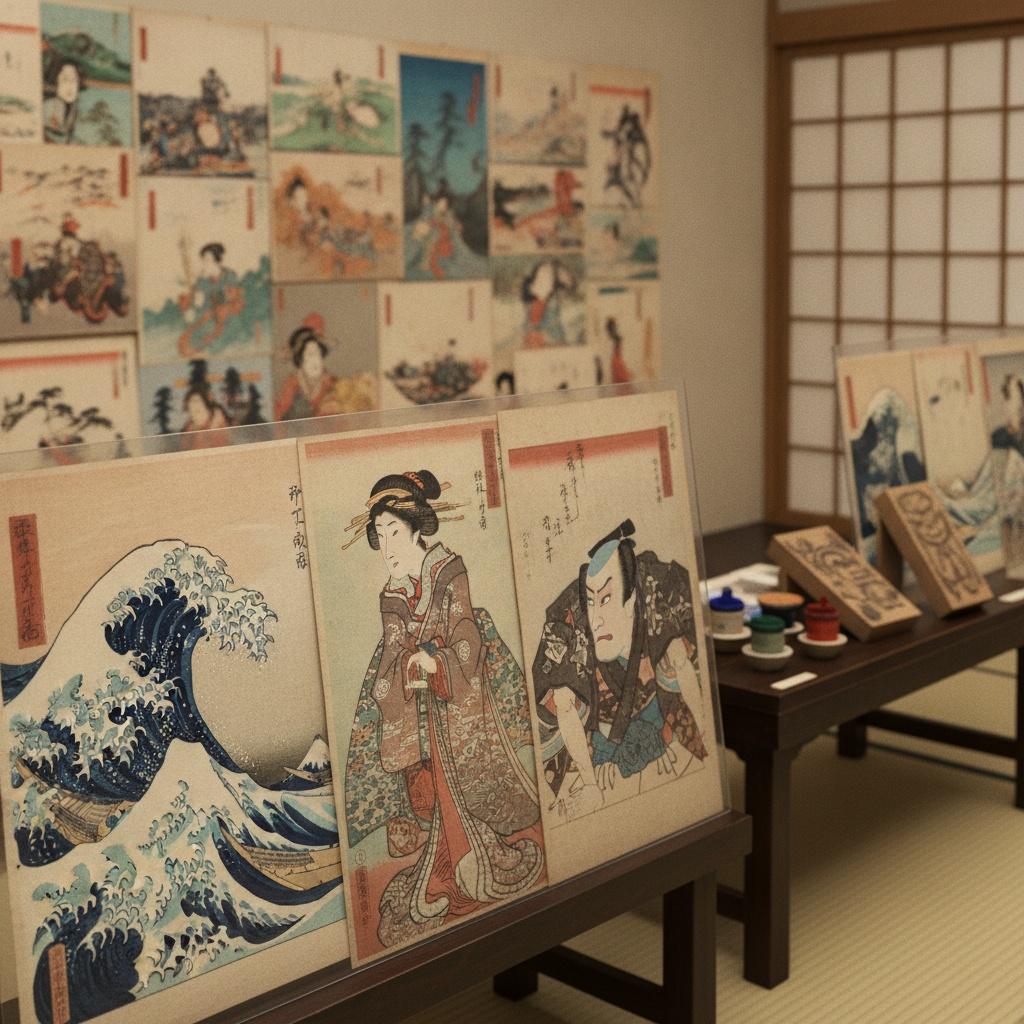
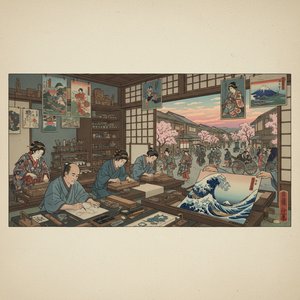
The creation of these vibrant images was far from a solitary endeavor; it was a highly sophisticated, collaborative system known as
mokuhanga. While many Westerners associate woodcut techniques with oil-based inks, the Japanese method utilized water-based inks, a distinction that allowed for an extraordinary range of vivid colors, glazes, and a unique transparency. This technical nuance is what gives Ukiyo-e its characteristic luminosity and depth. The process was a meticulous relay between specialized roles: the designer (
mokusha) who conceived the image, the carver (
sori) whose skilled hands translated lines into relief on wooden blocks, and the printer (
surimono) who applied the pigments.
The labor involved in carving these blocks was immense, requiring a level of precision that could capture even the finest strands of hair or the subtle texture of a silk kimono. Each color required its own separate block, meaning a complex print might involve dozens of individual impressions, each carefully aligned to ensure perfect registration. This disciplined approach allowed for mass production, making art accessible to the burgeoning middle class, yet it never sacrificed the technical caliber that remains remarkable even by modern museum standards. The result was a medium that could oscillate between the delicate, muted tones of elegant portraits and the explosive, dynamic energy of street scenes or maritime storms.
Iconic Subjects: From Kabuki Stars and Courtesans to Majestic Landscapes
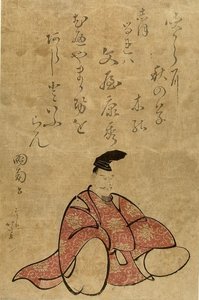
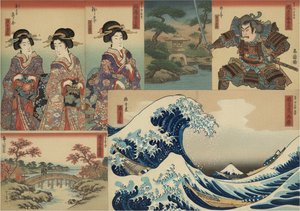
Woodblock Prints in the Ukiyo-e StyleWoodblock prints of the Edo period most frequently depicted the seductive courtesans and exciting Kabuki actors ( JP2822 ) of the urban pleasure districts.
The subject matter of Ukiyo-e served as a mirror to the vibrant social fabric of the Edo period. Perhaps the most frequent subjects were the
Kabuki actors and the
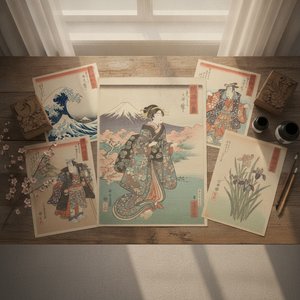
Oiran, or high-ranking courtesans, who were the celebrities of their era. These prints functioned much like modern fashion magazines or celebrity posters, capturing the dramatic poses of famous performers and the intricate, seasonal fashions of the pleasure districts. Artists like Suzuki Harunobu captured the grace of these figures with delicate linework, while others focused on the raw, muscular energy of sumo wrestlers and historical legends.
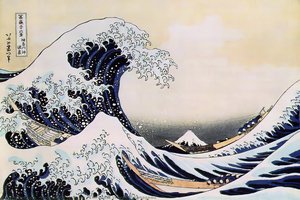
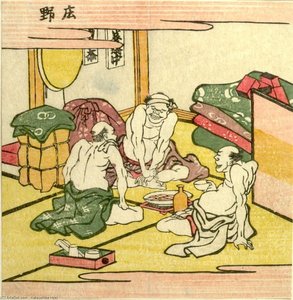
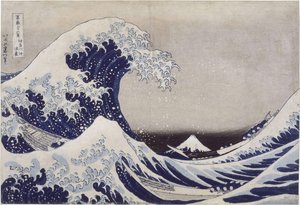
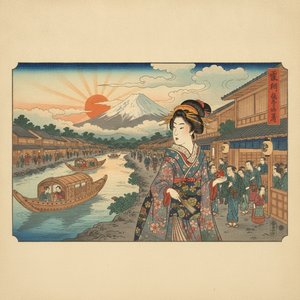
As the genre evolved, the gaze of the artist expanded beyond the urban confines of Edo to encompass the natural world. The landscape became a profound subject in its own right, moving from mere backdrops to central protagonists. Travelers began to see their own journeys reflected in prints depicting famous roads, serene inns, and the changing seasons. Whether it was the quiet departure from a mountain inn or the terrifying majesty of a crashing wave, these subjects allowed the viewer to participate in a shared national identity, celebrating the geography and the seasonal motifs that defined the Japanese experience.
The Great Masters: Exploring the Legitimacies of Hokusai, Hiroshige, and Kuniyoshi
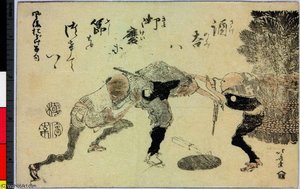 Furyu odoke hyakku
Witness the dynamic energy of Katsushika Hokusai’s ‘Furyu Odoke Hyakku,’ a vibrant Edo-period Ukiyo-e woodblock print depicting a chaotic street fight. Explore Japanese art history!
The history of Ukiyo-e is written through the hands of masters who possessed an uncanny ability to translate human emotion into graphic precision. No name carries more weight than
Katsushika Hokusai, a visionary whose work redefined the boundaries of the medium. His ability to infuse landscapes with both spiritual depth and dynamic movement—most famously seen in his depictions of Mount Fuji—set a standard for composition that continues to influence global art. Alongside him, the lineage of masters continued through figures like
Utagawa Kuniyoshi, who brought a sense of dramatic tension and heroic action to the woodblock, and
Ando Hiroshige, whose mastery of atmosphere and weather could evoke a profound sense of nostalgia and serenity.
Other artists, such as
Fujiwara no Chikanobu, bridged the gap between classical traditions and contemporary trends, bringing a refined, painterly quality to urban landscapes. Even within established schools like the Utagawa school, artists like
Utagawa Sadatora sought to capture the subtle shifts in nature and the ephemeral beauty of seasonal motifs. These masters did not merely document their era; they transformed the ordinary into the extraordinary, creating a visual language that was as much about emotional resonance as it was about technical skill.
Ukiyo-e’s Global Impact: Influence on Western Impressionism and Modern Design
The Floating World of Ukiyo-E Overview - Library of Congress--- title: The Floating World of Ukiyo-E Overview url: https://www.loc.gov/exhibits/ukiyo-e/intro.html hostname: loc.gov description: Although Ukiyo-e was initially considered "low" art, by and for the non-elite classes, its artistic and technical ca...
The legacy of Ukiyo-e extends far beyond the borders of Japan, having played a pivotal role in the development of modern Western art. When Japanese prints began to reach Europe in the 19th century, they triggered a phenomenon known as
Japonisme. The bold compositions, flattened perspectives, and unexpected cropping of Ukiyo-e profoundly influenced the Impressionists and Post-Impressionists. Artists like Monet, Degas, and Van Gogh found inspiration in the way Japanese masters utilized color and line to suggest depth without relying on traditional Western chiaroscuro.
Today, the influence of the "Floating World" is visible everywhere, from the graphic clarity of modern poster design to the narrative flow of contemporary manga. The ability of Ukiyo-e to capture a moment of intense beauty or dramatic action remains a cornerstone of visual storytelling. For those looking to bring this historical elegance into a modern space, the medium offers a timeless aesthetic that bridges the gap between ancient tradition and contemporary sophistication, proving that the "floating world" is, indeed, eternal.