Introduction
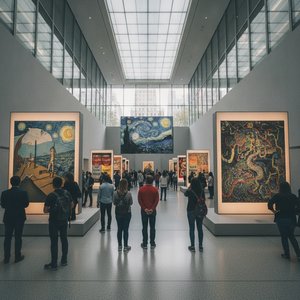
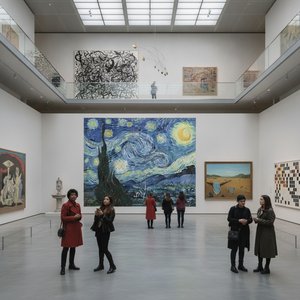
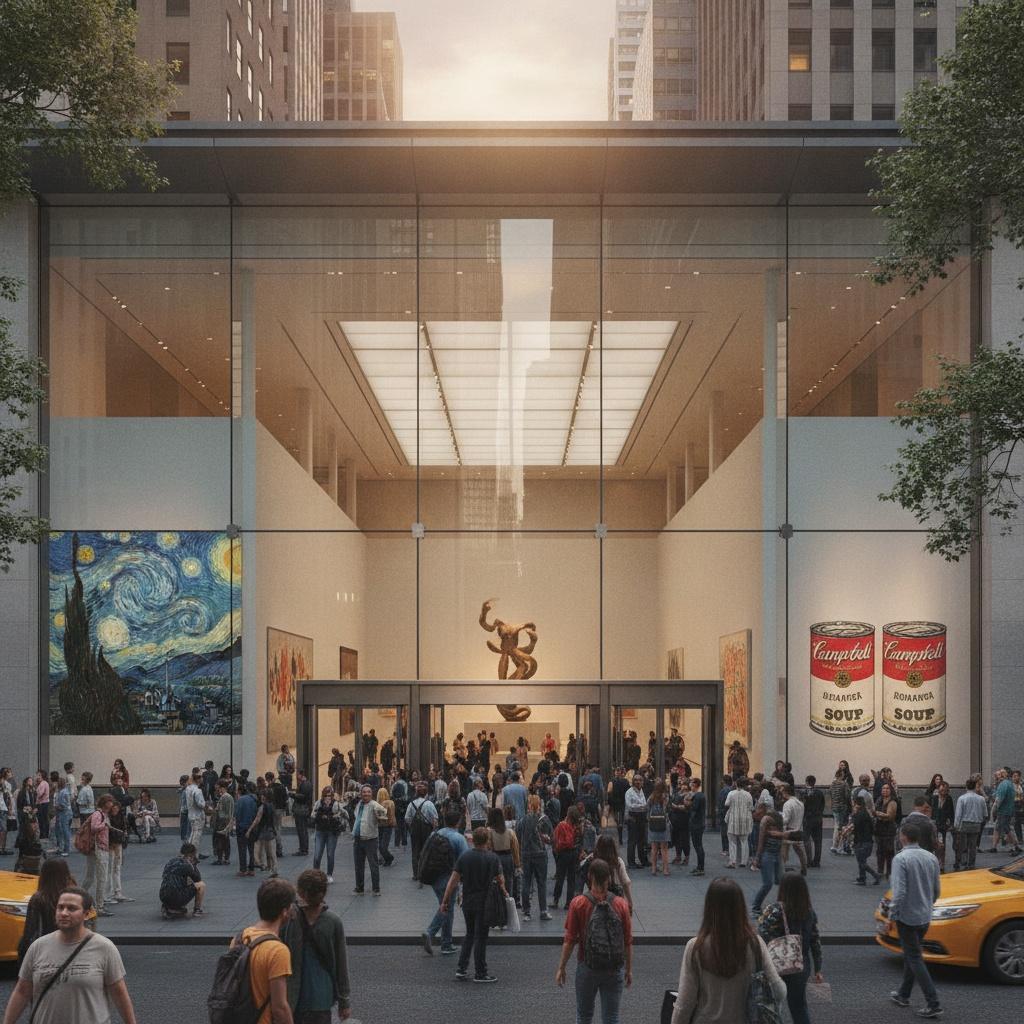
Walking into the Museum of Modern Art in the heart of Manhattan isn't just a museum trip; it’s a high-voltage encounter with the DNA of modern culture. Since its debut in 1929, MoMA has functioned as the ultimate disruptor—a space where the rules of tradition were shredded to make room for the radical, the bold, and the visually explosive.
This isn't about dusty relics or quiet galleries; it’s about the moments when art found its pulse. From the fractured, perspective-shifting genius of Cubism to the electric, consumerist energy of Pop Art , MoMA has curated the very movements that define our visual world today. These works are the ancestors of everything we love in contemporary design—from street art aesthetics to the high-impact graphics of digital media and modern pop culture.
Why do these pieces still hit so hard? Because they represent the ultimate rebrand of human expression. They capture the chaos, the color, and the raw emotion that continue to shape how we see, move, and create in an urban landscape. We’ve stripped away the academic fluff to bring you the heavy hitters: a curated selection of the top 25 artworks that didn't just change art history—they changed the way we experience reality.
Starry Night (New York, MoMA) - vincent willem van gogh
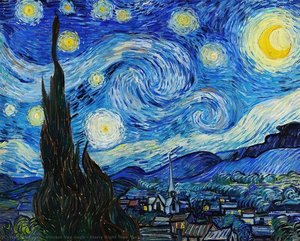 Starry Night (New York, MoMA) - vincent willem van gogh
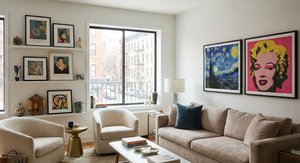
Owning Starry Night by Vincent van Gogh isn’t just a purchase; it’s an inheritance. As a cornerstone of the MoMA collection, its spot in this top 25 is a legacy—a handshake across centuries that connects your personal space to the very soul of Post-Impressionism. This work is far more than a nocturnal landscape; it is a visceral, swirling vortex of emotion rendered through thick, rhythmic impasto brushstrokes. The vibrant yellows of the stars collide with deep, turbulent blues, creating a sky that seems to pulse with life and unrestrained energy. The dark, flame-like cypress tree acts as a vertical anchor, bridging the quiet, sleeping village with the infinite, glowing cosmos above. To feature such a masterpiece on your walls is to claim a lineage of taste, where every glance at these celestial swirls serves as a profound nod to the masters and an invitation to experience the sublime power of human expression.
Three Musicians - Pablo Picasso
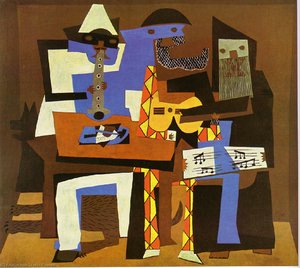 Three Musicians - Pablo Picasso
Forget everything you know about traditional portraits. Picasso’s Three Musicians is a total visual takeover within the legendary collection of the Museum of Modern Art, New York City. This 1921 masterpiece is where Synthetic Cubism hits its peak, trading messy fragments for bold, flat color blocks and sharp, graphic energy that feels like a high-end design remix. You’ve got Harlequin, Pierrot, and a monk locked in a silent, geometric performance—their forms deconstructed into a high-impact puzzle of deep blues, earthy ochres, and crisp whites.
Picasso masterfully plays with space, using layered oil to create a surface that feels both flat and incredibly textured. Owning Three Musicians by Pablo Picasso isn’t just a purchase; it’s an inheritance of pure, disruptive creativity. It’s a piece that commands the room, bringing that iconic MoMA energy straight to your walls. This is more than art—it’s a lineage of taste for those who live for the bold.
The Young Ladies of Avignon - Pablo Picasso
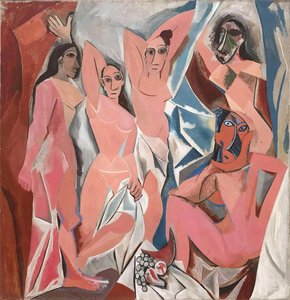 The Young Ladies of Avignon - Pablo Picasso
Imagine standing before a canvas that refuses to be ignored, where the air feels suddenly sharp and fractured. Before you even process the figures, there is a sense of confrontation—a jagged energy that disrupts the gallery's stillness. Pablo Picasso’s 1907 masterpiece, Les Demoiselles d'Avignon , acts as a visual detonation, shattering centuries of artistic tradition in a single, bold stroke. By deconstructing the human form into aggressive, geometric planes and incorporating the raw power of African mask influences, Picasso didn't just paint a scene; he birthed Cubism.
This work earns its place among the top 25 artworks at MoMA because it represents the ultimate rebellion: the moment art stopped imitating life and started reinventing it. It is a profound reminder that true impact lies in the disruption of the expected. Bringing such high-impact, transformative energy into your own space allows you to embrace that same spirit of modern innovation and fearless expression every single, vibrant day.
The Menaced Assassin - René Magritte
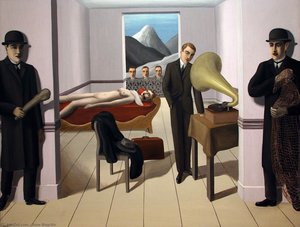 The Menaced Assassin - René Magritte
In The Menaced Assassin , René Magritte manipulates light not to comfort, but to confront. The illumination is deceptively flat, casting a clinical glow over the peach-toned room that strips away any sense of privacy. This precise, almost photographic lighting highlights the vibrant red of the chaise lounge and the unsettling sheen of the golden gramophone horn, while simultaneously pushing the shadowy observers into the periphery. It is this masterful tension between what is revealed and what remains obscured that secured its place among the top 25 artworks in MoMA .
The way Magritte uses light to create a sense of "quiet dread" is legendary. For the design-conscious professional, bringing this level of chiaroscuro into a contemporary space offers more than just decor; it introduces a cinematic, high-impact dimension. When reproduced with our signature hand-painted texture, the interplay of these muted tones and deep, mysterious shadows adds an incredible layer of architectural depth and sophisticated drama to any urban interior.
Sleeping Gypsy - henri julien félix rousseau (le douanier)
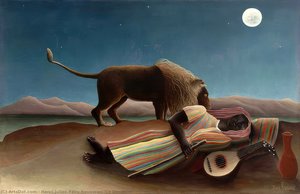 Sleeping Gypsy - henri julien félix rousseau (le douanier)
Imagine a moonlit night where the line between dream and reality dissolves. In Henri Rousseau’s Sleeping Gypsy , you aren't just viewing a canvas; you are stepping into a fever dream. A traveler rests in total vulnerability, unaware of the majestic lion looming nearby, creating a moment of profound tension held in perfect, silent equilibrium.
This masterpiece earns its spot among the top 25 artworks in MoMA - Museum of Modern Art, New York City because it defies every rule of academic perfection. Rousseau’s signature Naïve style—with its bold, flattened shapes and hypnotic colors—strikes a chord that resonates far beyond the museum walls. It captures that raw, human instinct to find peace amidst the wild.
Integrating such an evocative piece into your personal space transforms a room from a mere living area into a curated sanctuary of mystery, proving that even the most unexpected visions can anchor a modern, design-conscious home.
Joan Miró- Catalan Landscape (The Hunter) - Joan Miró
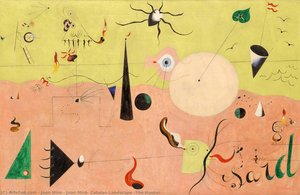 Joan Miró- Catalan Landscape (The Hunter) - Joan Miró
Close your eyes. Can you feel the light in Catalan Landscape (The Hunter) by Joan Miró? It’s not just illumination; it’s a language . The artist didn’t paint light—they composed it , like a musician crafting a sonata. This is why it’s in the Top 25: it doesn’t just reflect light; it invents it .
Now, open your eyes. That light? It’s waiting to spill into your home, turning walls into portals of inspiration. Miró invites us into a fever dream of the Catalan countryside, where the boundaries between reality and the subconscious dissolve. The canvas becomes a rhythmic dance of biomorphic shapes—vibrant pink orbs, spindly lines, and eye-like symbols that watch from the shadows of olive greens and earthy ochres. It is a surrealist playground where every stroke feels spontaneous yet meticulously placed, pulling you into a landscape of pure, uninhibited emotion.
Still Life with Old Shoe - Joan Miró
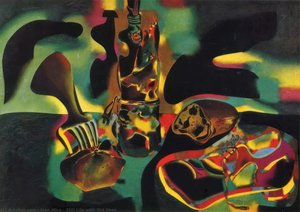 Still Life with Old Shoe - Joan Miró
The lines in Still Life with Old Shoe by Joan Miró aren’t merely drawn; they are choreographed . Within the legendary lineup of the top 25 artworks at the Museum of Modern Art, this piece isn't just a composition—it is a dance frozen in time . Painted amidst the heavy shadows of 1937, Miró takes the mundane—a worn shoe, a bottle, and organic shapes—and thrusts them into a surreal, floating dreamscape where gravity feels optional. There is no stable ground here, only a rhythmic, high-impact interplay of biomorphic forms and saturated colors that pulse with an underlying, beautiful anxiety. The thick, expressive brushstrokes create a tactile energy that demands you look closer at the tension between decay and creation. It is a masterclass in making chaos feel like harmony. What if your living room could hold that same electric balance? What if your walls could breathe rhythm through such a visceral, visual statement?
Dutch Interior I - Joan Miró
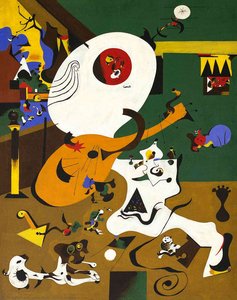 Dutch Interior I - Joan Miró
Imagine stepping into a dream where gravity is optional and every shape has its own heartbeat. Joan Miró’s Dutch Interior I hits you with an immediate surge of Surrealist adrenaline. This 1928 masterpiece isn't just art; it’s a visual glitch in reality, where bold reds, electric blues, and sun-drenched yellows collide amidst a frenetic dance of stylized animals and cryptic symbols—like that commanding, central ‘8’ anchoring the chaos.
It earns its spot in MoMA’s top 25 because it refuses to be quiet. It captures that raw, electric moment when logic breaks and pure imagination takes over. For the design-conscious urbanite, bringing this level of high-impact energy into your space is a game-changer. It transforms a static room into a cinematic experience, proving that even in our structured modern lives, there is profound beauty to be found in the beautifully unhinged and the vibrantly abstract.
Portrait of the Postman Joseph Roulin - vincent willem van gogh
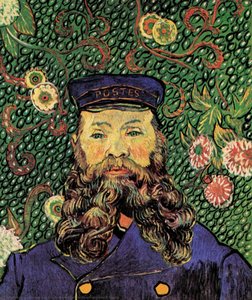 Portrait of the Postman Joseph Roulin - vincent willem van gogh
There’s a gaze in Portrait of the Postman Joseph Roulin by vincent willem van gogh that follows you—not with judgment, but with understanding . This isn’t just a portrait; it’s a mirror . As one of the most electric pieces among the top 25 artworks in MoMA - Museum of Modern Art, New York City, it captures more than just a man in a blue postal uniform; it captures a profound human connection. Van Gogh utilizes thick, rhythmic impasto strokes to create a background so vibrant and swirling it feels almost psychedelic, contrasting Roulin's steady, serene presence with an explosion of color. The gold buttons on the uniform catch the light amidst a sea of lush, decorative florals, symbolizing the vital messages we all carry. Its spot in this collection is a testament to its power to make the invisible visible. Now, imagine that gaze in your space. Not watching you, but reminding you : you are seen. You are part of the story.
The false mirror - René Magritte
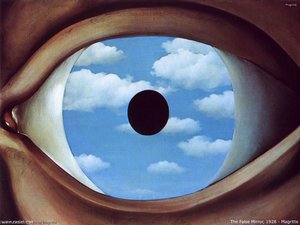 The false mirror - René Magritte
At ArtsDot.com, we believe in democratizing beauty by making legendary masterpieces accessible to every collector. René Magritte’s The false mirror is a profound testament to this mission, standing as an essential pillar among the top 25 artworks in 'MOMA - Museum of Modern Art, New York City' . This surrealist icon shatters the boundary between sight and thought; by replacing the pupil with a luminous expanse of blue sky and drifting clouds, Magritte forces us to confront the beautiful glitch between reality and illusion. The hyper-realistic detail of the eye—the delicate lashes and textured skin—clashes brilliantly with the dreamscape held within, creating a visual tension that is both unsettling and hypnotic. This piece does more than decorate; it provokes, inspiring modern interiors to embrace mystery and intellectual depth. Through our high-fidelity reproductions, you can bring this transformative, surreal presence into your home, office, or personal gallery, turning any contemporary space into a profound window to the infinite.
Multiplicatiion of the Arcs - Yves Tanguy
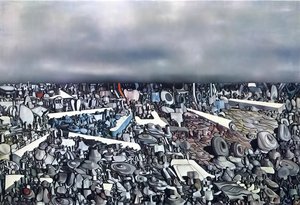 Multiplicatiion of the Arcs - Yves Tanguy
Step into the mechanical chaos of Yves Tanguy’s Multiplication of the Arcs . As a standout in MoMA’s legendary collection, this 1954 masterpiece isn’t just art; it’s a visual takeover. Tanguy presents a haunting landscape of industrial decay, where a dense graveyard of gears, pipes, and metallic fragments sprawls under a brooding, stormy sky.
The palette is cold and striking—dominated by muted blues, sharp greys, and stark whites that hit with a tactile, almost gritty intensity. It’s the ultimate collision of Surrealism and industrial realism, creating a dreamlike world of fragmented machinery that challenges your very perception of reality. This isn't mere decoration; it is transformation . By bringing this energy into your space, you aren't just hanging a canvas; you are installing a portal of post-war tension and cinematic beauty that turns any room into a true gallery of the soul.
Chateau Noir - Paul Cézanne
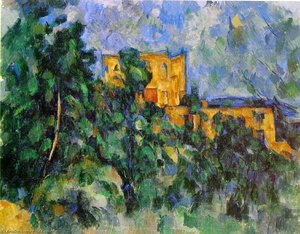 Chateau Noir - Paul Cézanne
Imagine standing on a sun-drenched hillside in Provence, where the air feels heavy with the scent of warm earth and wild, lush greenery. In Chateau Noir , Paul Cézanne captures this exact moment of profound stillness and vitality.
This masterpiece is a cornerstone of the top 25 artworks in MoMA - Museum of Modern Art, New York City because it represents a seismic shift in art history. Through thick, textured brushstrokes and a vibrant palette of warm ochres against cool, swirling blues, Cézanne moves beyond mere impression to find the geometric soul of the landscape. He masterfully bridges the gap between the fleeting light of the 19th century and the structured revolution of Cubism.
Integrating such a powerful, rhythmic composition into your modern environment does more than decorate a wall; it injects a sense of organic stability and timeless peace into the high-speed pulse of contemporary life.
Hope II - Gustav Klimt
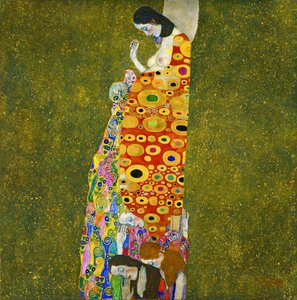 Hope II - Gustav Klimt
Gustav Klimt’s Hope II is a hypnotic dive into the soul of the Vienna Secession, capturing a moment where decorative opulence meets raw human vulnerability. As one of the top 25 artworks in MoMA - Museum of Modern Art, New York City , it earns its legendary status through sheer technical audacity and symbolic depth. Klimt’s mastery is visible in the jewel-like surfaces, where meticulous layers of oil create a shimmering, gold-green field that seems to pulse with life.
The intertwined figures, draped in swirling, organic patterns, invite us to reflect on the profound interconnectedness of existence and the strength found in intimacy. It is a masterpiece that transcends its 1908 origins, challenging our very perception of beauty through its blend of realism and abstract ornamentation. For the design-conscious collector, the essence of Hope II offers a timeless conversation for modern interiors, bringing a sense of spiritual transcendence and high-impact texture to any curated space.
Dog - Francis Bacon
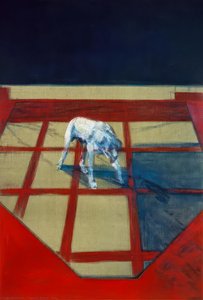 Dog - Francis Bacon
Imagine standing in a space where the silence feels heavy with raw, unspoken tension. This is the visceral experience of encountering Dog by Francis Bacon . A pivotal masterpiece within MoMA’s collection, this 1952 work captures the fractured psyche of the post-war era through a lens of profound existentialism.
Drawing inspiration from Muybridge’s studies of motion, Bacon transforms a solitary animal into a symbol of primal vulnerability. The composition is strikingly unsettling; a stark white figure is trapped within a rigid, geometric grid of textured red lines. Through heavy impasto brushwork and a moody palette of deep blues, blacks, and muted whites, the artist creates a sense of claustrophobia and intense introspection. The interplay between organic form and architectural structure makes this piece an essential highlight of the top 25 artworks in MoMA, New York City.
Even decades later, Bacon’s ability to evoke such deep-seated anxiety and beauty ensures that this painting remains a transformative force, capable of injecting unmatched emotional gravity into any contemporary collection.
painting, 1946 - Francis Bacon
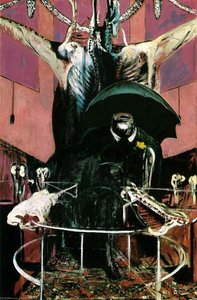 painting, 1946 - Francis Bacon
What if I told you that painting, 1946 by Francis Bacon was born from a moment of pure, visceral rebellion—a strike against the ordinary? This isn't just canvas and oil; it’s a manifesto of existential tension . As one of the most striking pieces in MoMA’s top 25 artworks, it captures post-war anxiety through distorted figures, haunting chains, and a claustrophobic palette of deep reds and bruised purples. The thick, impasto brushwork and surreal imagery—from mysterious umbrellas to unsettling creatures—demand your attention, refusing to let you look away.
Its place in the Museum of Modern Art's legendary collection is earned through its sheer, unapologetic impact. Now, imagine this level of raw energy transformed into a centerpiece for your own space. Whether it’s an urban loft or a design-conscious office, bringing this kind of bold, contemporary edge to your walls ensures that your space is not just a room—it’s a statement.
Slowly Toward The North - Yves Tanguy
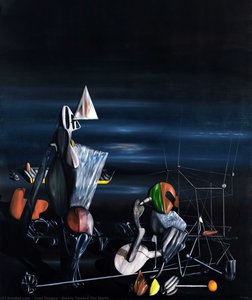 Slowly Toward The North - Yves Tanguy
Yves Tanguy’s Slowly Toward The North is a total visual trip, a masterclass in Surrealist edge that feels as relevant today as it did in 1942. This isn't just art; it’s an immersive dreamscape where organic, biomorphic shapes collide with cold, mechanical structures. Its spot among the top 25 works at MoMA is earned through pure atmospheric impact—it challenges your perception of reality with every dark, moody stroke.
The painting’s deep blues and sharp, shadowy contrasts create a cinematic tension that pulls you into the unknown. It captures that haunting intersection between human consciousness and technological evolution, making it a profound reflection on our own tech-heavy era. For the design-conscious collector, this piece is the ultimate statement maker. Whether you're looking to anchor a minimalist loft or add a layer of mysterious depth to a contemporary gallery wall, Tanguy’s work brings an unmatched, high-impact energy that turns any space into a curated experience.
L'Atelier rouge Huile sur Toile - (181x219) - Henri Matisse
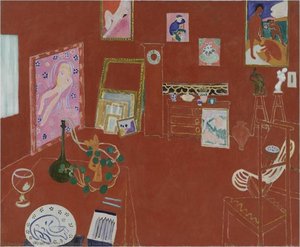 L'Atelier rouge Huile sur Toile - (181x219) - Henri Matisse
Imagine walking into a room where the walls, floor, and even the air seem to vibrate with a single, intense pulse of crimson. When Henri Matisse executed L'Atelier rouge , he wasn't merely documenting his studio; he was staging a revolution against the physical world. As one of the most visually arresting pieces within the top 25 artworks at MoMA , this masterpiece exemplifies the Fauvist leap—where color ceases to be descriptive and becomes purely emotional.
Matisse abandoned traditional perspective, using flat, unmodulated areas of paint to create a decorative, almost hypnotic surface. The way objects like sculptures and even a sleeping cat emerge from that warm, reddish-pink haze creates a layered, collage-like depth that is both chaotic and profoundly harmonious. This mastery of atmosphere offers the ultimate inspiration for the modern professional; integrating such high-impact, vibrant energy into a home office or study can transform any workspace into a sophisticated sanctuary of pure, unbridled creativity.
The city rises - Umberto Boccioni
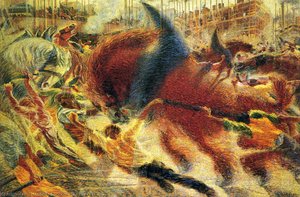 The city rises - Umberto Boccioni
Before it became a cornerstone of the MoMA collection, Umberto Boccioni’s The city rises acted as a radical middle finger to the static, dusty traditions of the past. Originally titled "Il lavoro" , this 1910 masterpiece wasn't just a painting; it was an adrenaline shot for the Futurist movement.
Boccioni achieved a legendary conceptual leap by deconstructing reality to capture pure motion. Using thick, aggressive impasto and swirling, jagged lines, he captured the literal pulse of urban expansion. The canvas vibrates with the raw energy of horses, men, and machinery, blending them into a single, high-impact explosion of color and grit. It is controlled chaos—a visual symphony of speed that refuses to stay still.
For the design-conscious professional, this piece is the ultimate power move for a home office. Its relentless drive and vibrant, clashing energy inject an atmosphere of unstoppable momentum into any study, transforming your workspace into a high-octane command center for innovation.
White Light - Paul Jackson Pollock
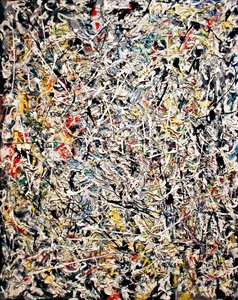 White Light - Paul Jackson Pollock
In White Light by Paul Jackson Pollock , the chaos is the composition. A frenetic web of gestural lines and splattered pigments creates a complex geometry where no single point dominates, yet every stroke contributes to a larger, rhythmic equilibrium. This intricate dance of primary reds, deep blues, and stark whites achieves a structural harmony that feels both volatile and timeless—a key reason it secures its spot among the top 25 artworks in MOMA - Museum of Modern Art, New York City .
Beyond the raw energy of the drip technique, there is a profound connection to modern design. Much like the principles of minimalist architecture , the work uses high-contrast visual weight to anchor a room. It provides a powerful, textured focal point that grounds a clean, contemporary aesthetic, proving that even the most explosive Abstract Expressionism can serve as the ultimate soul for a sophisticated, modern interior.
Reflections of Clouds on the Water-Lily Pond (tryptich, center panel) - Claude Monet
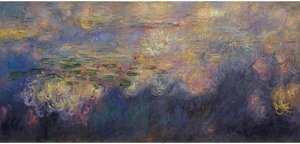 Reflections of Clouds on the Water-Lily Pond (tryptich, center panel) - Claude Monet
Close your eyes. Can you feel the light in Reflections of Clouds on the Water-Lily Pond (triptych, center panel) by Claude Monet ? It’s not just illumination; it’s a language . The artist didn’t paint light—they composed it , like a musician crafting a sonata.
This is why it’s in the Top 25 of MoMA's most legendary collection: it doesn’t just reflect light; it invents it . In this breathtaking central panel, Monet captures the ephemeral pulse of Giverny. The palette of deep blues and emerald greens vibrates with life, as thick, textured brushstrokes mimic the shimmering dance of clouds reflected on the water's surface. It is a masterclass in luminism, where the boundary between sky and pond dissolves into pure emotion, inviting you into a world of profound serenity.
Now, open your eyes. That light? It’s waiting to spill into your home, turning walls into portals of inspiration.
The Laugh - Umberto Boccioni
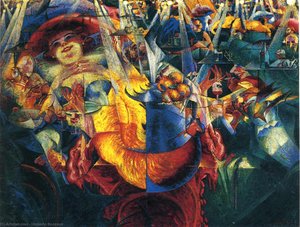 The Laugh - Umberto Boccioni
In The Laugh by Umberto Boccioni, the canvas explodes with a calculated geometry that redefines how we perceive motion. Rather than static figures, Boccioni utilizes intersecting planes and fractured lines to build a structural harmony that feels both chaotic and perfectly balanced. This rhythmic arrangement of shapes—where vibrant reds and sun-drenched yellows collide—is what secures its place among the top 25 artworks in MoMA - Museum of Modern Art, New York City.
There is a profound, enduring appeal in how the artist captures the very vibration of joy through deconstructed forms. Much like the principles of modern minimalist design or high-impact graphic art, the painting’s ability to ground intense energy within a structured, geometric framework offers a blueprint for contemporary aesthetics. It doesn't just show a woman laughing; it uses the architecture of Futurism to make the viewer feel the pulse of the moment, creating a visual impact that remains as disruptive today as it was in 1911.
My Grandparents, My Parents, and I (Family Tree) - Frida Kahlo
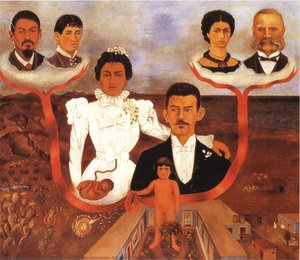 My Grandparents, My Parents, and I (Family Tree) - Frida Kahlo
What if I told you that "My Grandparents, My Parents, and I (Family Tree)" by Frida Kahlo was born from a moment of rebellion—a stroke of defiance against the ordinary? This is not merely a portrait; it is a manifesto . Through vibrant, primitive textures and symbolic red roots, Kahlo weaves her complex Mexican and German heritage into a single, pulsing organism that breathes life into the concept of lineage.
Its place in the Top 25 at MoMA is not just earned; it is demanded by its ability to transform personal history into a universal exploration of identity. The way Kahlo uses earth tones and dreamlike figures to map her soul redefines the very boundaries of emotional expression.
Now, imagine this rebellion hanging in your own space, turning every glance into a reminder: your space is not just a room. It’s a statement. At ArtsDot.com, we bring this museum-grade energy to your home, making Kahlo's powerful legacy accessible as high-impact, living decor for the modern collector.
New York Movie - Edward Hopper
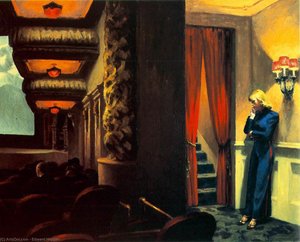 New York Movie - Edward Hopper
There is a cinematic, almost voyeuristic tension in New York Movie by Edward Hopper that continues to haunt the halls of MoMA. As one of the most evocative pieces within the top 25 artworks at the Museum of Modern Art, this 1939 masterpiece captures the profound mystery of urban solitude. The scene—a woman isolated against a heavy red curtain, lost in her own private world—serves as a powerful metaphor for the psychological landscape of the modern city.
Hopper masterfully uses light and shadow to explore the friction between public presence and private thought. In our current age of digital hyper-connectivity, where we are often physically present but mentally miles away behind a screen, this painting feels incredibly contemporary. It mirrors our modern "alone together" social trend, making Hopper’s exploration of loneliness a vital, recurring talking point in contemporary design and culture. It isn't just a painting; it is a mood piece for the urban soul.
States of Mind II - Those Who Stay - Umberto Boccioni
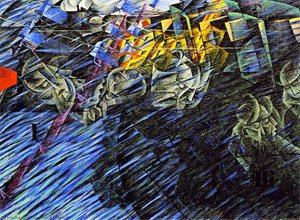 States of Mind II - Those Who Stay - Umberto Boccioni
Forget static portraits; Boccioni’s States of Mind II - Those Who Stay is pure, unadulterated motion. This 1912 masterpiece isn't just about a train station—it’s the original visual glitch. Before we had digital distortion, Boccioni was fracturing reality, using heavy impasto strokes to capture the raw, industrial pulse of the machine age. It’s all about that tension: the heavy, lingering energy of being left behind while the world accelerates around you.
The way the colors collide and the forms shatter creates a high-impact visual rhythm that hits like a bass drop in a dark club. This isn't just art for your wall; it’s an injection of dynamic energy into your space. Owning a piece of this MoMA legend means surrounding yourself with the very DNA of modern movement. It’s bold, it’s fragmented, and it’s designed to transform a room into a high-octane gallery of the soul.
Woman with cockerel - Pablo Picasso
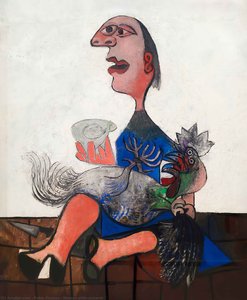 Woman with cockerel - Pablo Picasso
In the high-voltage halls of MoMA, Pablo Picasso’s Woman with cockerel stands as a masterclass in visual impact. Created in 1938, this piece is a striking collision of Cubist fragmentation and the raw, direct energy of Naive Art. The composition pulls you in with its bold, graphic palette—think deep blues against sharp, geometric contours and those iconic, defiant red shoes. As the figure cradles the cockerel, there is an underlying tension, a reflection of the political turbulence gripping Spain at the time.
To surround yourself with works of this caliber isn’t just a purchase; it is an inheritance . It is about claiming a lineage of taste that connects your modern space to the most influential movements in history. Bringing the spirit of MoMA’s top 25 artworks into your home transforms your walls into a curated gallery, where every glance honors the legends who redefined the visual world.
Conclusion
Walking through the halls of MoMA feels like witnessing a revolution in real-time. These masterpieces are far more than static relics behind museum glass; they are living, breathing presences that continue to pulse with the energy of human innovation. They represent those rare, electric moments when the world shifted—when color became emotion and form became a radical statement. But these works do not have to remain confined to the quiet corridors of Manhattan. The true magic happens when their light, texture, and transformative spirit move into our own spaces, turning our homes into sanctuaries of inspiration . By bringing these iconic visions into your daily life, you are doing more than decorating a wall; you are inviting a permanent dialogue with the very soul of modern creativity. Let the bold strokes and profound perspectives found in our full collection serve as a constant, vibrant reminder of the beauty found in breaking boundaries.