The Alchemical Revolution: How Oil Painting Transformed the Northern Canvas
 The Alchemical Revolution: Unlocking the Hyper-Real Mastery of Early Netherlandish Art
The Alchemical Revolution: How Oil Painting Unlocked New Dimensions of Light The Alchemy of Light: Discovering the Luminous Realism of Early Netherlandish Masters The Alchemical Revolution: How Oil Painting Unlocked New Dimensions of Light The Northe...
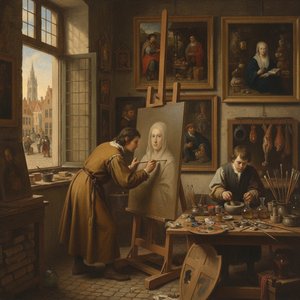
To step into the world of fifteenth-century Flemish art is to witness a profound revolution in the very chemistry of light. Before the masters of the North achieved their legendary status, the visual language of Europe was largely defined by the matte, opaque, and somewhat rigid qualities of egg tempera. While this older medium possessed its own delicate beauty, it lacked the capacity for the slow, luminous transitions that would eventually define the Northern Renaissance. The true transformation occurred through what can only be a described as an alchemical mastery over transparency and depth.
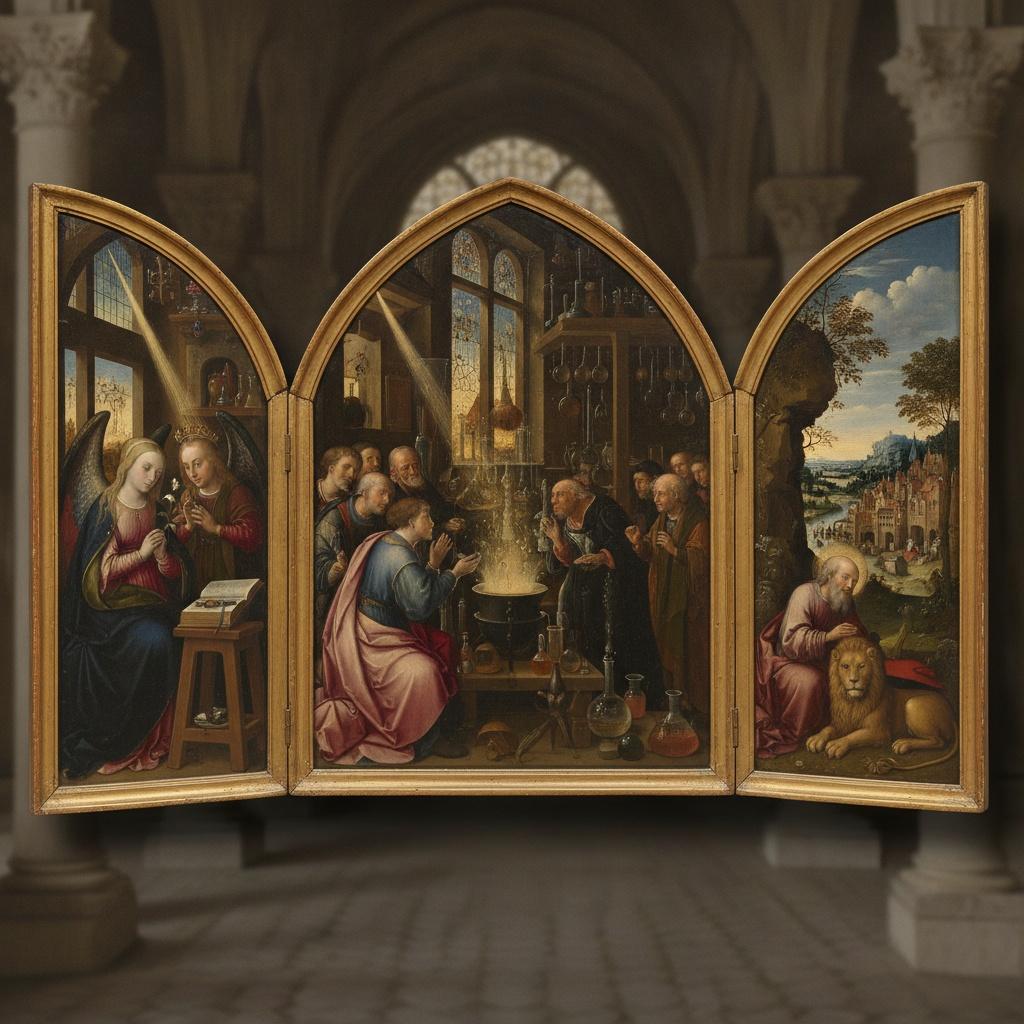
The innovation lay in the refinement of layering thin, translucent glazes of pigment suspended in drying oils, such as walnut or poppy seed. This technique allowed artists to unlock a new dimension of expression, creating a jewel-like brilliance where light would penetrate the surface, catch within the pigment, and refract back to the viewer’s eye. This created a sense of internal radiance that seemed to emanate from within the canvas itself. While the roots of oil painting can be traced much further back to ancient traditions in places like Afghanistan, it was the Early Netherlandish painters who breathed true life into the medium, using its forgiving nature and rich color density to move art away from the symbolic flatness of the Middle Ages toward a breathtakingly tactile reality.
Luminous Realism: The Meticulous Detail of Jan van Eyck and the Flemish Masters
--- title: Early Netherlandish Painting - The Metropolitan Museum of Art author: Maryan Ainsworth url: https://www.metmuseum.org/essays/early-netherlandish-painting hostname: metmuseum.org description: Whether they were made as objects for veneration...
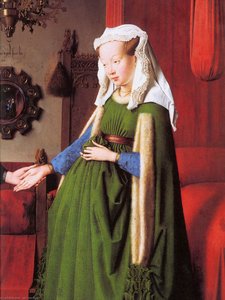
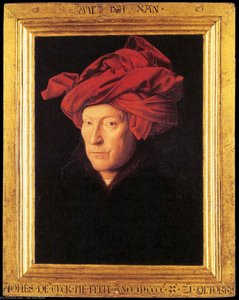
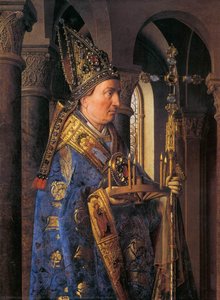
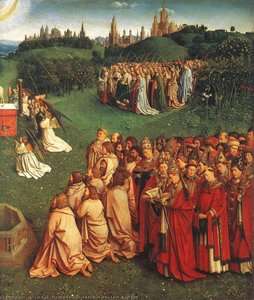
The name most inextricably linked with this revolution is that of Jan van Eyck. While not necessarily the inventor of oil painting, Van Eyck perfected a meticulous technique—often referred to as the Flemish Technique—that fundamentally altered the course of art history. His approach involved building up layers of translucent glazes, a process that demanded immense patience and an almost microscopic level of devotion. When one stands before a work attributed to this era, one encounters an almost unsettling level of realism; his meticulous attention to detail, the luminosity of color achieved through innovative oil painting techniques, and the profound symbolism embedded within seemingly ordinary objects are breathtaking.
This pursuit of hyper-realism extended beyond mere mimicry of nature. It was a spiritual endeavor to render the unseen palpable. Whether it was the way light caught the edge of a polished brass ewer or the soft texture of a velvet robe, these artists sought to capture the essence of existence through the physical properties of their medium. This era of painting, often referred to as the Flemish Primitives, established a standard of excellence where the boundary between the painted image and the tangible world began to blur, inviting the viewer into a space of profound contemplation.
Symbolic Depth: Decoding the Hidden Narratives in Netherlandish Art
--- title: Early Netherlandish painting: deep feeling and great truth of character url: https://artuk.org/discover/stories/early-netherlandish-painting-deep-feeling-and-great-truth-of-character hostname: artuk.org description: Explore 1 million artwo...
In the masterpieces of the Early Netherlandish period, nothing is ever merely what it seems. Every object, from a single candle to a stray flower, serves as a vessel for deeper theological or moral meaning. This disguised symbolism allowed the artists to weave complex narratives into the very fabric of domestic scenes. A basin of water might signify purity; a reflection in a mirror could represent the all-seeing eye of God; even the way light falls across a tabletop can suggest the presence of the divine within the mundane.
This layer of meaning transformed religious paintings from simple icons into intricate puzzles for the faithful. To look upon a work by Hans Memling or Hugo van der Goes was to engage in a silent dialogue with the sacred. The artists utilized the richness of oil to create textures that felt heavy with significance, ensuring that the viewer’s eye would linger on each detail, searching for the hidden truths embedded within the composition. It was an art form designed not just for sight, but for deep, intellectual, and spiritual interrogation.
From Devotion to Humanism: The Evolving Social Landscape of the 15th Century
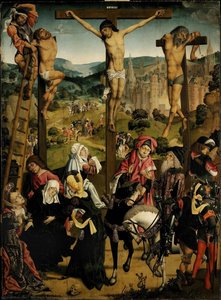 northern netherlandish painter
The Enigmatic Vision of Pieter Bruegel the Elder Pieter Bruegel the Elder, a name synonymous with the late Northern Renaissance, remains one of the most profoundly enigmatic and enduring figures in Western art history. Born around 1525 in what is now...
The period from about the mid-fifteenth century through the sixteenth century was marked by a significant shift in the social and cultural fabric of the Burgundian and Habsburg Netherlands. As cities like Bruges emerged as thriving commercial hubs, a new class of wealthy merchants and patrons began to emerge. These individuals sought art that reflected not only their piety but also their worldly success and burgeoning humanist worldview. This led to a diversification of subject matter, where religious devotion began to coexist with increasingly sophisticated portraiture and landscape studies.
We see this evolution in the works of later masters like Pieter Bruegel the Elder, whose enigmatic visions offered a complex reflection on human existence and social dynamics. While his predecessors focused heavily on the sacred, Bruegel brought a profound focus to the rhythms of peasant life and the vastness of the natural world. This transition represents the slow movement from the medieval preoccupation with the afterlife toward a Renaissance fascination with the dignity, struggles, and intricate beauty of human life on earth.
The Legacy of Light: How Early Netherlandish Techniques Influenced the Renaissance
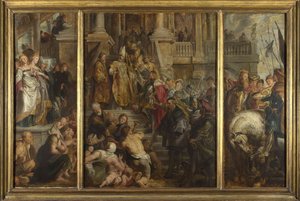 Oil Sketch for High Altarpiece, St Bavo, Ghent
Oil Sketch for High Altarpiece, St Bavo, Ghent: A Window into Rubens’s Baroque Vision The Oil Sketch for High Altarpiece, St Bavo, Ghent, offered by ArtsDot.com, is more than just a depiction of a religious scene; it's an intimate glimpse into the c...
The ripples of the Northern Renaissance spread far beyond the borders of the Low Countries. The mastery of oil glazing developed by the Flemish masters provided a technical foundation that would eventually influence the great Italian masters, including Leonardo da Vinci and later, the dramatic Baroque vision of Peter Paul Rubens. The ability to manipulate light and shadow—the chiaroscuro that would become a hallmark of European art—owes much to the experimental spirit of the Netherlandish painters.
Today, we continue to find inspiration in this era of unparalleled craftsmanship. For those who wish to bring this historical grandeur into their own contemporary spaces, ArtsDot.com offers an unparalleled collection of hand-painted reproductions. Our master artists, holding degrees from prestigious Fine Arts academies, specialize in recreating the exact textures, brushstrokes, and luminous depths of these Old Masters. Whether you seek a faithful replica of a Van Eyck or wish to see a modern memory reimagined in the style of the Flemish Primitives, our service ensures that the legacy of light continues to shine in the homes of collectors worldwide.