


The Alchemy of Pigment: Inorganic Stability vs. Organic Evanescence
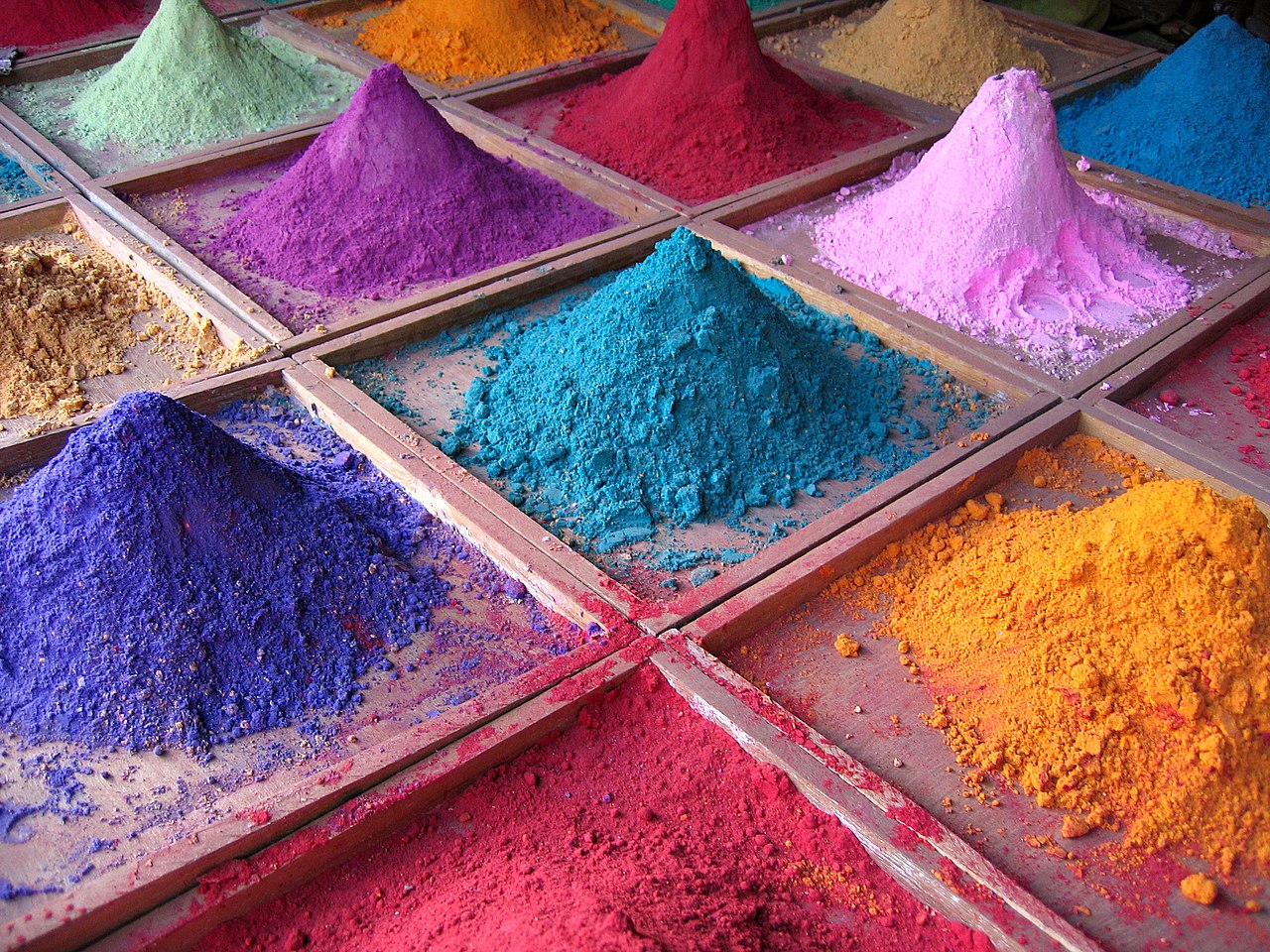 Pigment
A pigment is a chemical compound that gives a substance or organism color, or is used by humans to add or alter color or change visual appearance. Pigments are nearly or completely insoluble and chemically unreactive in water or another medium; in co...
To gaze upon a masterpiece by Monet or Renoir is to witness a silent, chemical dance that has captivated the human spirit for centuries. We often find ourselves lost in the luminous glow of a sun-drenched landscape, yet we rarely pause to consider the elemental struggle occurring beneath the surface of the canvas. The vibrant colors we adore are not merely aesthetic choices; they are a delicate balance of matter and light. At the heart of this endurance lies the distinction between pigments and dyes. While dyes are organic compounds that dissolve into a medium, often leaving behind a beautiful but fleeting trace, pigments are nearly or completely insoluble particles. These chemical compounds, such as the prehistoric ochre or the precious lapis lazondi, possess an inherent resistance to the elements that allows them to remain suspended in their medium without losing their structural integrity.
In the world of fine art, particularly within the Impressionist tradition, the choice of pigment is a matter of both soul and science. Inorganic pigments, often derived from minerals and earth, provide a foundation of stability. They are chemically unreactive and possess a ruggedness that defies the passage of time. In contrast, organic pigments, while capable of offering breathtakingly vivid hues, can be more susceptible to the whims of chemistry. When we observe the deep, velvety blacks or the rich, earthy siennas in a classic work, we are seeing the triumph of inorganic stability over the ephemeral nature of organic brilliance. It is this very tension—the marriage of the permanent and the transient—that gives an Impressionist painting its unique, breathing vitality.
Lightfastness and the Battle Against Photodegradation
 Lightfastness
Lightfastness is a property of a colourant such as dye or pigment that describes its resistance to fading when exposed to light. Dyes and pigments are used for example for dyeing of fabrics, plastics or other materials and manufacturing paints or pri...
The sun, the very source of life and the primary inspiration for the Impressionists, is also the greatest adversary to a painting’s longevity. This paradox is defined by the concept of lightfastness, the property that describes a colorant's resistance to fading when exposed to light. When ultraviolet radiation strikes a painted surface, it does not merely illuminate; it attacks. The high energy of UV photons can penetrate the chemical structure of a molecule, specifically targeting the chromophore—the part of the molecule responsible for its color. This process, known as photodegradation, involves the breaking of chemical bonds, leading to the bleaching or shifting of hues that we so dearly cherish.
For the collector, understanding this invisible battle is essential. A pigment with a high lightfastness rating, such as the iron oxide found in Mars Black, possesses a molecular armor that resists this oxidative decay. When we admire the enduring brilliance of a work from the late 19th century, we are admiring materials that have successfully withstood the impact of billions of photons over decades. The tragedy of many lesser works lies in their lack of lightfastness, where once-vibrant magentas and blues fade into ghostly, unrecognizable shadows. True mastery involves selecting pigments that can capture the fleeting dance of light without being destroyed by it, ensuring that the artist's vision remains as potent today as the moment the brush first touched the canvas.
The Eternal Binder: How Drying Oils Create a Protective Matrix
 Drying oil
A drying oil is an oil that hardens to a tough, solid film after a period of exposure to air, at room temperature. The oil hardens through a chemical reaction in which the components crosslink (and hence polymerize) by the action of oxygen (not throu...
If pigments are the soul of a painting, then the binder is its very flesh. The technique of oil painting, which reached its zenith during the Renaissance and was later reimagined by the Impressionists, relies on the use of drying oils—such as linseed, poppy, or walnut oil—to suspend pigment particles. Unlike water-based mediums that dry through evaporation, drying oils undergo a profound chemical transformation known as autoxidation. This is not merely a drying process but a curing process, where oxygen from the air reacts with the oil to create crosslinks between molecular chains, resulting in a tough, solid, and polymerized film.
This polymerization creates a protective matrix that encapsulates each pigment particle, shielding it from much of the external environment. This chemical hardening turns a liquid medium into a durable, waterproof layer that can endure for centuries. At ArtsDot.com, we understand this profound alchemy; our artists utilize specific oils, such as safflower for whites, to prevent the dreaded yellowing that can occur with heavier oils. By carefully managing the chemistry of the binder, we ensure that the texture and clarity of the brushwork—the very impasto that gives a Van Gogh or a Pissarro their tactile depth—remain preserved in a state of permanent grace.
Layering Light: The Art of Glazing and the Preservation of Depth
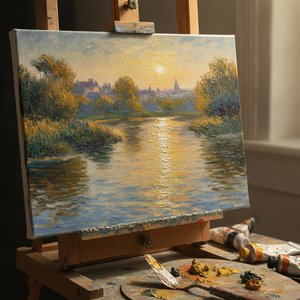 The Soul of Impressionism: Why Oil on Canvas Captures Eternal Light and Timeless Emotion
The Alchemy of Light: How Oil Pigments Breathe Life into the Impressionist Vision The Timeless Magic of Oil on Canvas: A Masterclass in Texture, Depth, and Impasto Artistry The Alchemy of Pigment: Understanding the Soul of Oil on Canvas To behold a t...
The true magic of an oil painting lies in its ability to hold light within its layers. This is achieved through the sophisticated technique of glazing, where thin, translucent layers of pigment-rich oil are applied over one another. When light enters these transparent strata, it does not simply bounce off the surface; it travels through the glazes, reflects off the underlying layers, and returns to the viewer's eye, imbued with a complex, inner luminosity. This creates a sense of depth and "glow" that no flat print or digital image can ever replicate.
From a chemical perspective, this layering is a feat of structural engineering. Each layer must be chemically compatible with the one beneath it to prevent cracking or delamination. The use of flexible gesso and carefully controlled drying times allows for a build-up of color that feels three-dimensional. When we see the shimmering water in a Monet or the soft skin tones in a Renoir, we are seeing the result of light navigating a complex labyrinth of dried oil and mineral pigment. This structural depth is what separates a handmade reproduction from a mere copy; it is the difference between looking at a surface and looking into a world.
Modern Stewardship: Protecting Your Impressionist Treasures for Generations
 Enchanting Strokes: Unveiling the Luminous Magic and Timeless Soul of Impressionist Masterpieces
The Luminous Revolution: Capturing the Fleeting Dance of Light and Color Capturing the Soul: The Most Emotionally Moving Impressionist and Post-Impressionist Masterpieces The Luminous Revolution: How Impressionism Redefined the Art of Seeing Impressi...
As lovers of art, we are not merely owners but temporary stewards of these magnificent visions. While the chemistry of pigments and oils provides a formidable defense against time, the modern environment presents new challenges. To ensure that your cherished Impressionist pieces remain as vibrant as the day they were completed, certain precautions are paramount. The most significant threat remains direct, prolonged exposure to sunlight, which can accelerate the degradation of even the most lightfast pigments.
To preserve the integrity of your collection, we recommend displaying works in environments with controlled lighting and stable humidity. Using acid-free matting and high-quality, UV-protective glass can create a vital air gap and a shield against atmospheric pollutants and moisture. At ArtsDot.com, our commitment to permanence is reflected in every piece we create—from the use of archival 100% cotton canvases to the final application of a protective Damar varnish. By honoring the scientific principles that allowed the masters to succeed, we ensure that the light-drenched beauty of Impressionism continues to illuminate our lives for generations to come.