The Sublime Vista: The Emotional Power of Mountain Landscapes in High-End Design
 Romantic Landscapes: 10 Masterpieces for Your Home | ArtsDot
Introduction Imagine standing before a vista so breathtaking it stills your breath, a scene imbued with not just visual beauty but also a profound sense of emotion – the sublime power of nature, the weight of history, and the stirrings of the human s...
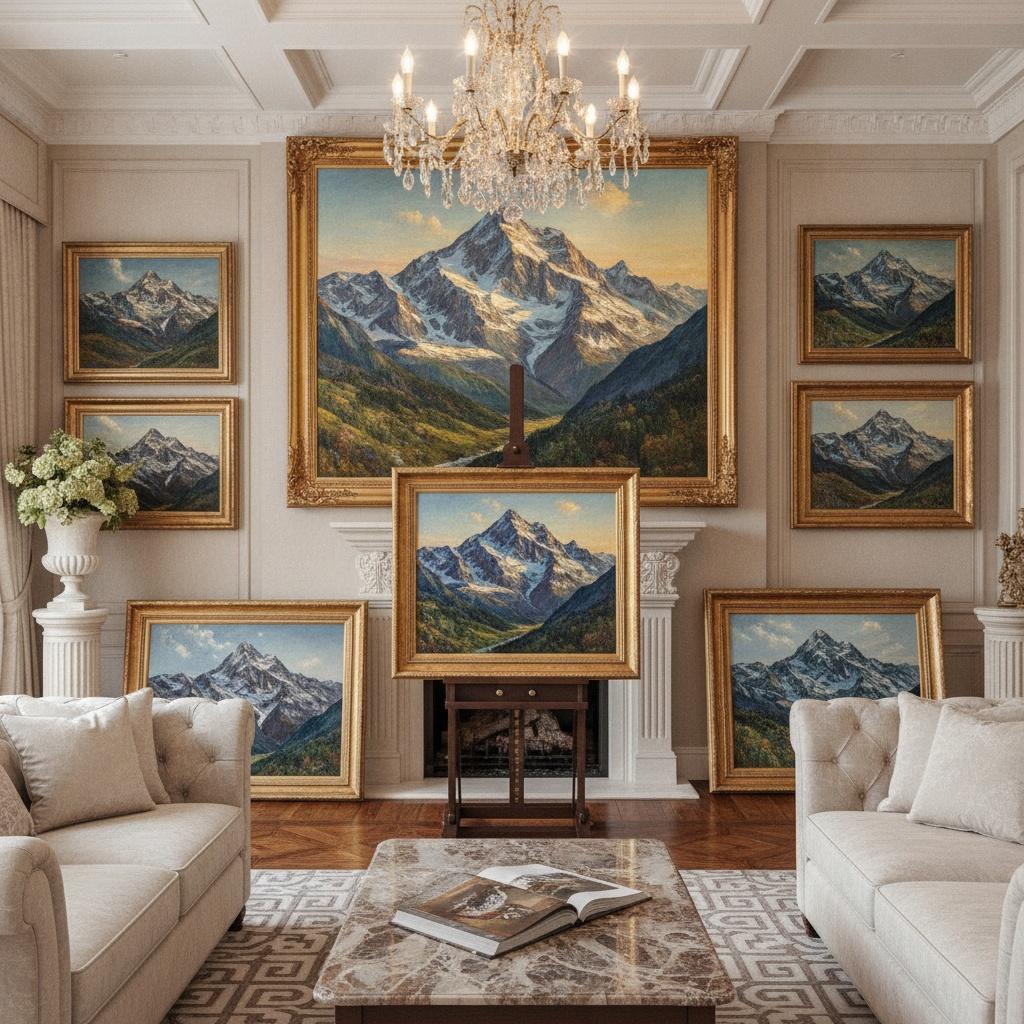
In the realm of luxury interior design, a landscape is never merely a depiction of geography; it is an invitation to a profound emotional experience. For the discerning hotel designer, selecting a piece of art for a grand lobby or a private suite requires more than an eye for color—it demands an understanding of how space interacts with the human soul. Mountain landscapes, in particular, possess a unique ability to command a room through their inherent sense of scale and permanence. When we gaze upon a vista of rugged peaks, we are met with a humbling vastness that can ground a modern, minimalist space or provide a dramatic focal point for an opulent, classical hall.
The power of these works lies in their ability to evoke what philosophers call the sublime—that breathtaking intersection of awe and terror found in nature's most untamed corners. In a hospitality setting, where the goal is often to provide an escape from the mundane, a well-placed mountain oil painting acts as a window into another realm. It offers guests a moment of quiet contemplation, a sense of belonging to something much larger than the immediate surroundings. By integrating these vistas, designers can manipulate the perceived depth of a room, using the receding horizons of alpine ranges to create an illusion of infinite space and tranquility.
Mastering the Atmosphere: Exploring Romanticism and the Grandeur of the Peaks
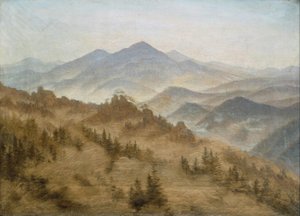
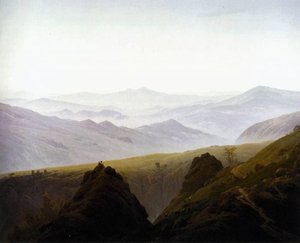 morning in the mountains
A Vista of Romantic Sublime: Exploring Caspar David Friedrich’s “Morning in the Mountains” This evocative painting by German master Caspar David Friedrich transports viewers to a realm of serene beauty and profound contemplation. Depicting a mountain...
To truly appreciate the majesty of mountain art, one must look toward the Romantic movement, an era that revolutionized our relationship with the natural world. Moving away from the rigid order of the Enlightenment, Romantic artists sought to capture the untamed, the mysterious, and the intensely personal. They did not simply paint mountains; they painted the feeling of standing before them in the midst of a storm or under the soft, ethereal light of dawn. This movement celebrated intuition and the raw power of nature, making it an essential reference for any designer seeking to imbulate a space with character and depth.
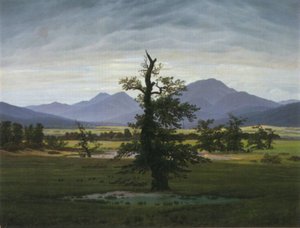
Consider the evocative works of masters like Caspar David Friedrich, whose paintings such as “Morning in the Mountains” transport the viewer to a realm of profound spiritual connection. His ability to use light and shadow to suggest the individual’s place within the vastness of the universe provides a blueprint for creating atmospheric interiors. Similarly, the rugged, dramatic landscapes of the Yorkshire Dales captured by James Henry Crossland offer a more intimate, yet equally powerful, sense of history and texture. These works are not mere decorations; they are narratives of weather, light, and time, rendered with a technical skill that honors the very essence of the earth they depict.
Curating Scale and Depth: Selecting Mountainous Masterpieces for Hotel Lobbies and Suites
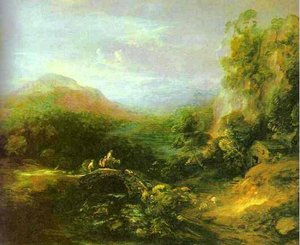
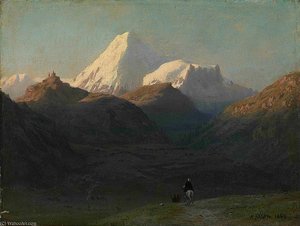 Mountain Landscape
Experience the serene beauty of Lef Feliksovich Lagorio’s ‘Mountain Landscape.’ A captivating 19th-century painting evoking vast vistas and atmospheric depth. Acquire a stunning, hand-painted reproduction.
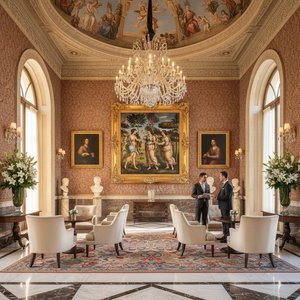
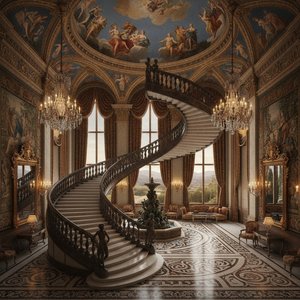
For the professional decorator, the challenge lies in the curation of scale. A monumental landscape can serve as the architectural anchor of a hotel lobby, much like a frescoed ceiling, directing the eye upward and outward. When selecting reproductions, one must consider the interplay between the physical dimensions of the artwork and the architectural volume of the space. Large-format works, such as those inspired by the Hudson River School, can transform a wide corridor or a grand staircase into a gallery-like experience, where each step reveals a new layer of topographical detail.
Depth is achieved through the careful selection of composition and color palette. A painting featuring a foreground lake reflecting a sunset—reminiscent of Frederic Edwin Church’s early period—can introduce a sense of serenity and light into a darker, more enclosed suite. Conversely, works that utilize bold, dark tones and heavy impasto can add a layer of sophisticated weight to contemporary, high-contrast designs. The key is to use the artwork to balance the room's existing elements, ensuring that the mountains do not merely sit upon the wall but become an integral part of the architectural fabric.
From Hudson River School to Modern Abstraction: A Journey Through Alpine Artistry
Mountain Landscape, previously known as Sunset—West Rock, New Haven, is an 1849 landscape painting by American artist Frederic Edwin Church of the Hudson River School, completed during his early period. The work depicts a mountain landscape with a la...
The evolution of mountain painting offers a rich palette of styles for the modern designer. The Hudson River School brought a meticulous, almost scientific naturalism to the American landscape, capturing the orderly beauty of forests and lakes with unparalleled clarity. This style is ideal for traditional or neoclassical interiors where precision and light are paramount. In contrast, the transition toward more expressive forms provides opportunities for much bolder design statements.
For spaces that lean toward the contemporary or avant-garde, the works of artists like Wayne Bennett offer a refreshing departure. His use of vibrant color palettes and bold abstraction captures the essence of a landscape through emotion rather than literal representation. This allows a designer to bridge the gap between classical heritage and modern energy. Whether one is drawn to the serene, realistic beauty of Lef Feliksovich Lagorio or the textured, energetic strokes of an abstract mountain scene, the diversity of this history ensures that there is a masterpiece capable of complementing any aesthetic vision.
The Art of Bespoke Installation: Custom Commissions, Multi-Panel Sets, and Architectural Murals
 From Canvas to Legacy: A Detailed Examination of Handmade Oil Reproduction Techniques for Galleries and Hospitality Environments
The Enduring Appeal of Oil Reproduction: Bridging Access, Affordability & Artistic Appreciation The Enduring Appeal of Oil Reproduction: Bridging Access, Affordability & Artistic Appreciation Discover the beauty of art with 's exquisite oil painting ...
In high-end hospitality, the standard is often not enough; true luxury resides in the bespoke. For projects requiring a singular, transformative impact, ArtsDot.com specializes in creating large-format murals and frescoes that can recreate historical grandeur on a massive scale. These works, painted on expansive canvas rolls, allow designers to treat walls as canvases for entire mountain ranges, much like the legendary ceilings of the Renaissance.
Furthermore, the modern trend toward multi-panel or group set paintings offers a sophisticated way to decorate wide architectural expanses. By splitting a single, breathtaking vista across three, four, or even five panels, a designer can create a rhythmic, contemporary flow that guides guests through a space. This technique is particularly effective in staircases or long corridors, where the continuity of brushstrokes and color across each panel creates a cohesive, immersive journey. From custom color matching to the "remixing" of historical styles, the ability to commission art that is uniquely tailored to a property's identity remains the ultimate hallmark of excellence in interior design.