

 Предпросмотр
 Поделиться
 Поделиться
 Детали произведения

 Скачать
 Похожие работы
 Рентгенография
 Слайд-шоу
 Статистика
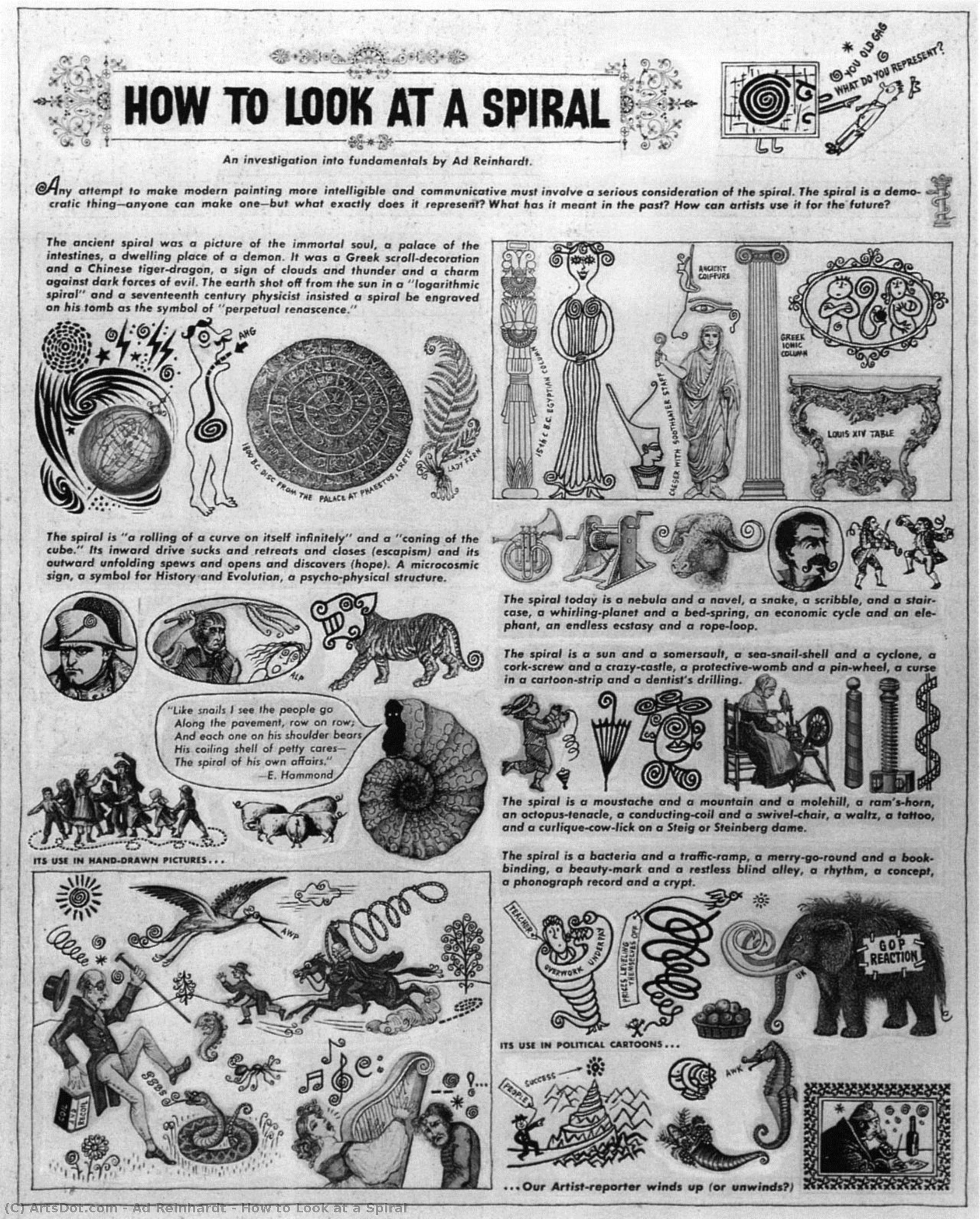
How to Look at a Spiral
 Acrylic On Paper
- WallArt
- Art Nouveau
 1946
1946 33.0 x 26.0 cm
 Музей Уитни американского искусства
 Читать далее
Масляная репродукция ручной работы
Картина маслом на холсте в выбранном вами размере и раме, написанная на заказ нашими художниками. ( Перейти к печати Перейти к цифровым изображениям)




P118B $10

P118H $10

P118W $10

P438Z $10

P508JH $12

P508YH $12

P805H $10

P805Z $10

P919BZ $10

P919G $10

P919XJ $10

P959ZH $10

P968JZ $12

W106C $8

W218G $10

W218JH $8

W218Y $10

W307PJ $10

W316G $10

W316PJ $8

W316Y $10

W398PJ $8

W4111J $10

W500HY $15

W500JH $15

W692G $12

W849H $8

W940BG $15

W953PJ $8




Выберите один из наших стандартных размеров, соответствующих оригинальным пропорциям произведения искусства.

Вы можете указать собственные размеры, чтобы картина идеально вписалась в выбранную раму или пространство. Если выбранный вами размер не соответствует пропорциям оригинала, мы либо обрежем полотно, либо расширим его за счет дополнительных элементов, написанных вручную. Цифровой макет будет отправлен вам на утверждение перед началом производства.
Обратите внимание, что предварительный просмотр на экране не отражает фактическую обрезку или расширение. Только макет точно покажет окончательную композицию.
Хотя доступны индивидуальные размеры, мы рекомендуем выбирать вариант из предопределенного списка, чтобы сохранить исходные пропорции.
После оформления заказа команда ArtsDot.com свяжется с клиентом по электронной почте для уточнения деталей и предоставит предварительный макет
Доставка по всему миру () за 3–4 недели вместо стандартных 5 недель. (12 Сентябрь). Без компромиссов в качестве.

Бесплатная экспресс-доставка по всему миру

Высококачественный льняной холст

Полное страхование доставки

Гарантия возмещения таможенных пошлин

Гарантия точного соответствия цветов

100-дневная политика возврата (только при обнаружении дефектов)

Гарантия возврата 100% средств

Предложение оптовых скидок
 Вариант со стеклом доступен только для размеров менее 110 см

How to Look at a Spiral
Техника репродукции
Размер репродукции
-


Итоговая стоимость
$ 288
A Labyrinth of Thought: Ad Reinhardt’s “How to Look at a Spiral”
Ad Reinhardt's "How to Look at a Spiral," created in 1946, isn’t merely an illustration; it’s an invitation. An intellectual and deeply layered work, it embodies the artist’s core philosophy of stripping art down to its essential elements – a pursuit that profoundly influenced generations of abstract artists. The piece, rendered with meticulous hand-drawn detail on paper, likely incorporating subtle watercolor washes for shading, presents a densely packed visual argument about the spiral motif itself. It's a chaotic yet deliberate composition, overflowing with overlapping images, textual excerpts, and intricate decorative patterns, all arranged within a roughly circular framework that mirrors the very subject it explores.
The artwork’s style leans heavily into Art Nouveau, but with a distinctly Reinhardtian sensibility – a rejection of ornamentation in favor of pure form and conceptual clarity. The lines are predominantly curvilinear and flowing, guiding the eye through a complex network of symbols and ideas. Notice the deliberate flattening of perspective; depth is sacrificed for the sake of visual relationships, prioritizing the intellectual engagement over a realistic depiction. This choice immediately signals that “How to Look at a Spiral” isn’t about *seeing* something beautiful in the traditional sense, but rather about *understanding* its underlying structure and significance.
Decoding the Symbolism: Spirals and Beyond
At first glance, the image appears overwhelming – a visual feast of interconnected elements. However, closer inspection reveals a carefully orchestrated system of symbolism. The spiral itself is, of course, central, representing growth, evolution, history, and even consciousness. Reinhardt was fascinated by its appearance in diverse fields, from archaeology (tracing ancient civilizations) to psychology (exploring the human psyche), and literature (representing cyclical narratives). Within this larger framework, the artwork incorporates numerous specific symbols: spirals nested within spirals, stylized figures – including a woman depicted in classical robes, evoking notions of wisdom and knowledge – animals like lions and elephants representing power and instinct, and decorative patterns reminiscent of ancient artifacts, hinting at universal themes and timeless truths.
Crucially, the inclusion of textual excerpts throughout the composition adds another layer of interpretation. These fragments—references to historical figures, philosophical concepts, and literary allusions—serve as prompts for contemplation, encouraging the viewer to actively engage with the artwork’s meaning. Reinhardt wasn't simply illustrating a spiral; he was constructing an argument *about* spirals, inviting us to consider their significance within a broader context of human experience.
A Window into Reinhardt’s Philosophy
“How to Look at a Spiral” is deeply rooted in Ad Reinhardt’s unique artistic philosophy – what he termed “Art-as-Art.” He believed that art should be divorced from representational concerns, focusing instead on the pure essence of form and color. This approach was radical for its time, challenging conventional notions of beauty and demanding that viewers actively participate in the creation of meaning. The artwork’s dense composition reflects this philosophy; it's a deliberate attempt to overwhelm the senses, forcing the viewer to confront the fundamental questions about what constitutes art and how we perceive it.
The piece was created during a pivotal moment in Reinhardt’s career, as he began to explore his signature “black” paintings – works that appear at first glance to be simply black canvases but are actually composed of layers of nearly black shades. This exploration represented a culmination of his lifelong quest to reduce art to its most essential elements, stripping away all extraneous details and focusing solely on the experience of seeing.
A Timeless Masterpiece: Reproduction and Beyond
Originally created in 1946, “How to Look at a Spiral” remains a remarkably prescient work, anticipating many of the trends that would define abstract art in the decades to come. Today, high-quality reproductions offer an accessible way to experience Reinhardt’s complex vision. When selecting a reproduction, consider the detail and color accuracy – elements crucial to capturing the artwork's layered symbolism and intellectual depth. “How to Look at a Spiral” is more than just a beautiful image; it’s a testament to Ad Reinhardt’s profound understanding of art and its power to provoke thought and inspire contemplation.
Похожие произведения
Биография художника
A Life Dedicated to the Essence of Art
Ad Reinhardt, born Adolph Dietrich Friedrich Reinhardt in Buffalo, New York, on December 24, 1913, was a figure who dedicated his life not merely to creating art, but to defining what art *could* be. His early years were marked by a familial mobility—his father’s work led the family to Queens, New York—and a close bond with his cousin Otto. Even as a child, Reinhardt displayed an exceptional talent for drawing and painting, winning accolades in school that hinted at the rigorous artistic journey ahead. He wasn't simply interested in *making* images; he was driven by a need to understand the very foundations of visual expression. This intellectual curiosity led him to Columbia University where he studied art history under the influential Meyer Schapiro, an experience that profoundly shaped his thinking about aesthetics and the role of the artist. Further training at Columbia’s Teachers College, the American Artists School with Carl Holty and Francis Criss, and portraiture studies at the National Academy of Design under Karl Anderson solidified his technical skills—skills he would later deliberately attempt to transcend. Reinhardt believed he had mastered traditional techniques early on, freeing him to pursue a more conceptual path.From Geometric Beginnings to the “Ultimate” Black
Reinhardt’s artistic evolution was far from linear. He began with works rooted in geometric abstraction, exploring form and color with a precision that demonstrated his technical mastery. However, this early work served as a stepping stone toward something more radical. His involvement with the WPA Federal Art Project during the 1930s provided him with crucial support and exposure, allowing him to hone his craft while contributing to public art initiatives. The 1940s saw Reinhardt become an active member of American Abstract Artists (AAA), a group he considered pivotal to his development. He found kinship with fellow artists who shared a commitment to non-representational art, exhibiting regularly alongside them and engaging in lively debates about the future of painting. His association with Betty Parsons Gallery further cemented his place within the burgeoning New York art scene. Throughout the 1950s, Reinhardt embarked on a series of paintings exploring subtle variations within single hues—all red, all blue, all white—a deliberate reduction that foreshadowed his most iconic works. It was in the 1960s, however, that he achieved what many consider his defining achievement: the “black” paintings. These weren’t simply black canvases; they were meticulously crafted explorations of near-black shades, subtle gradations and textures designed to challenge perception and push the boundaries of painting itself. He referred to them as his "ultimate" paintings, suggesting a culmination of artistic endeavor—a point beyond which further progress was impossible.Art-as-Art: A Philosophy of Pure Aestheticism
Central to understanding Reinhardt’s work is his philosophy of *Art-as-Art*. He vehemently believed in the autonomy of art, rejecting any notion that it should serve political, social, or narrative purposes. For Reinhardt, the value of a painting lay solely in its aesthetic qualities—its form, color, composition, and the way it engaged with the viewer on a purely visual level. This conviction led him to critique what he saw as problematic tendencies within the art world, particularly artists who prioritized messaging over aesthetics. He expressed these critiques through satirical cartoons and writings, often challenging prevailing artistic norms with wit and intellectual rigor. His friendships with Robert Lax and Thomas Merton, both of whom explored themes of simplicity in their respective fields, further informed his aesthetic principles. Reinhardt’s work resonated with a growing interest in minimalism and conceptual art, influencing artists who sought to strip away extraneous elements and focus on the essential qualities of their medium. He wasn't merely creating paintings; he was articulating a theoretical position about the nature of art itself.The “Black Paintings” and Their Significance
Reinhardt’s “black” paintings represent perhaps his most enduring legacy. These works, created between 1954 and 1967, are not simply devoid of color; they are intensely layered with subtle variations in tone, texture, and reflectivity. He meticulously applied thin washes of paint to create a sense of depth and ambiguity, inviting the viewer to engage with the surface of the canvas on a purely tactile level. The paintings were often described as “silent,” reflecting Reinhardt’s belief that art should not impose itself upon the viewer but rather stimulate contemplation and sensory experience. They challenged conventional notions of representation and color theory, demonstrating that painting could exist without reference to external reality. The series was met with both acclaim and controversy, with some critics dismissing them as mere exercises in monochrome, while others recognized their profound philosophical implications. Despite the criticism, Reinhardt maintained that his black paintings represented the ultimate expression of abstract art—a distillation of form and color to its purest essence.A Lasting Legacy: Minimalism, Conceptualism, and Beyond
Ad Reinhardt’s influence extends far beyond his own body of work. His “black” paintings are now recognized as seminal contributions to minimalist and monochrome painting, challenging conventional notions of representation and pushing the boundaries of visual perception. His writings on *Art-as-Art* continue to be studied by artists and critics alike, sparking debate about the role of art in society and the relationship between form and content. Though he was a key figure within Abstract Expressionism through his association with AAA and Betty Parsons Gallery, Reinhardt ultimately transcended categorization, paving the way for subsequent generations of conceptual and minimalist artists. He taught at numerous institutions—Brooklyn College, California School of Fine Arts, University of Wyoming, Yale University, and Hunter College—imparting his rigorous intellectual approach to aspiring artists. Even his involvement in protests – against MoMA in the 1940s, with “The Irascibles” against the Metropolitan Museum of Art in the 1950s, and through a lithograph for Artists and Writers Protest Against the Vietnam War in 1967—demonstrated a commitment to artistic freedom and social responsibility. Ad Reinhardt died on August 30, 1967, in New York City, leaving behind a legacy that continues to inspire and provoke. His work remains a powerful testament to the enduring power of abstract art and the importance of questioning fundamental assumptions about the nature of creativity itself. The Ad Reinhardt Estate is currently represented by David Zwirner Gallery, ensuring his continued presence within the contemporary art world.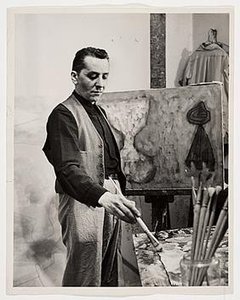
Ад Рейнхардт
1913 - 1967 , США
Основные сведения
- Artistic Movement Or Style: Абстракционизм, Минимализм
- Artists Or Movements Influenced By This Artist:
- Концептуальное искусство
- Минимализм
- Artists Who Influenced This Artist:
- Майер Шapiro
- Роберт Лакс
- Томас Мёртон
- Date Of Birth: 24 декабря 1913
- Date Of Death: 30 августа 1967
- Full Name: Адольф Фридрих Рейнхарт
- Nationality: Американский
- Notable Artworks:
- Черные картины
- Красный и серый
- Число - (107)
- Place Of Birth: Буффало, США
Похожие статьи

Геометрическая абстракция: 10 шедевров, изменивших искусство | ArtsDot.com
Погрузитесь в мир геометрической абстракции! От Кандинского до Малевича – 10 шедевров, изменивших искусство. Узнайте историю создания и значение культовых картин. Репродукции музейного качества на ArtsDot.com. Вдохновение для вашего интерьера!

Топ-25 шедевров Василия Кандинского: Абстрактное искусство для вашего интерьера
Погрузитесь в мир абстрактного искусства с Василием Кандинским! 25 шедевров экспрессионизма, баухауса и русского авангарда. Репродукции картин Кандинского для вдохновения и декора вашего интерьера. Откройте всю коллекцию на ArtsDot.com
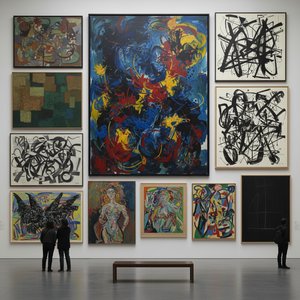
Топ-10 шедевров абстрактного экспрессионизма: искусство для вашего интерьера от ArtsDot.com
Погрузитесь в мир абстрактного экспрессионизма! Откройте для себя 10 шедевров Поллока, Ротко и других гениев. История искусства, техники живописи и вдохновение для вашего интерьера от ArtsDot.com. Explore the full collection online!

Edmund Dulac: A Master of Golden Age Illustration – Exploring Myth, Symbolism & Art Nouveau Legacy
Explore the captivating world of Edmund Dulac, a master of Golden Age illustration! Discover his enchanting fairy tales, Art Nouveau style, and lasting influence on art & design. Learn about *The Rubaiyat* and more.

Kay Rasmus Nielsen: A Golden Age Illustrator's Enchanting Legacy of Symbolism & Narrative
Explore the captivating world of Kay Rasmus Nielsen, a celebrated Golden Age illustrator renowned for his Art Nouveau fairy tale art & Disney contributions. Discover his unique style, enduring legacy, and how to collect his enchanting works.