 Предпросмотр
 Поделиться
 Поделиться
 Детали произведения

 Скачать
 Похожие работы
 Рентгенография
 Слайд-шоу
 Статистика
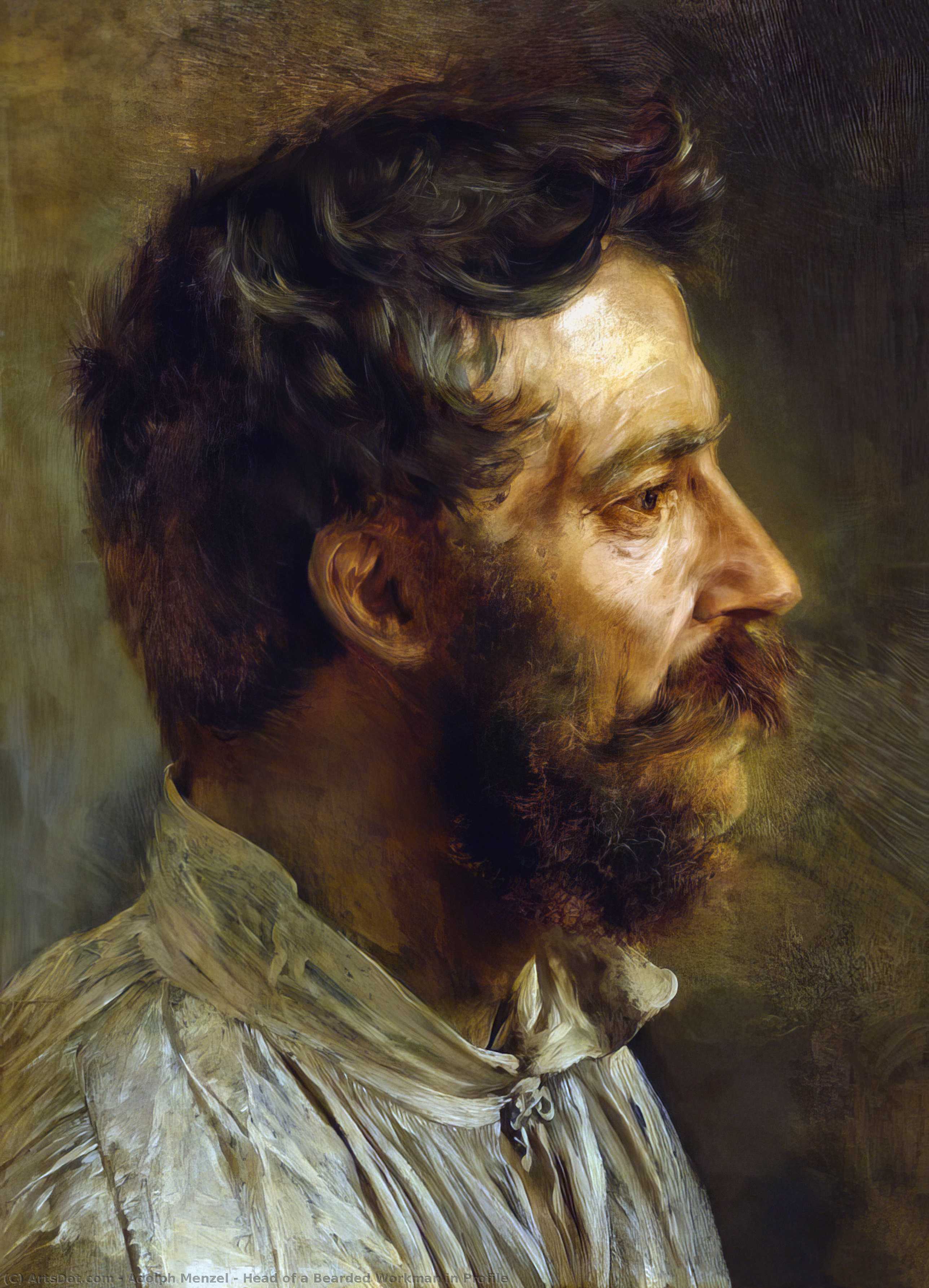
Head of a Bearded Workman in Profile

 Читать далее
Приобретите цифровое изображение высокого разрешения в улучшенном качестве, которое значительно превосходит онлайн-превью.
Каждый файл тщательно подготавливается нашими специалистами с использованием передовых инструментов и экспертной ручной ретуши. Мы гарантируем исключительную четкость, точную цветопередачу и детальную проработку каждого изображения.
Финальный файл доставляется по электронной почте в течение 72 часов и оптимизирован для немедленного использования в профессиональной среде, при верстке и печати. Это тот же уровень качества, которому доверяют ведущие дизайнерские студии, издательства и галереи.
Цифровое изображение
Скачайте файл высокого разрешения для личного использования, печати и творческих проектов. ( Перейти к печати Купить картину ручной работы)
Включено в каждый заказ цифровых изображений
Гарантия экспертной цифровой доставки
Выбирая ArtsDot.com, вы получаете не просто изображение — вы приобретаете профессионально обработанное цифровое произведение искусства, созданное с безупречной точностью и под защитой гарантии качества. Вот всё, что автоматически входит в ваш заказ:

Мгновенная доставка по e-mail
Ваш цифровой файл в высоком разрешении будет отправлен вам по электронной почте в течение 72 часов после оформления заказа — и сразу станет доступен для использования.

Цифровой файл с ИИ-улучшением
Ваше произведение искусства проходит профессиональную оптимизацию с использованием передовых инструментов ИИ и ручной обработки, что гарантирует максимальную детализацию, четкость и точность цветопередачи.

Бессрочная бесплатная повторная доставка
Случайно удалили или потеряли файл? Не беспокойтесь — мы отправим его вам повторно в любое время и совершенно бесплатно.

Без импортных пошлин — навсегда
Наслаждайтесь вашим произведением искусства мгновенно без таможенных пошлин, сборов или затрат на доставку — цифровые загрузки всегда не облагаются налогом.

Гарантия точности цветопередачи
Мы гарантируем, что ваше цифровое изображение максимально точно передает оригинальные цвета благодаря использованию профессиональных инструментов и систем управления цветом.

Гарантия удовлетворенности 100 дней
Если вы не будете удовлетворены своим цифровым изображением, мы внесем правки или вернем 100% стоимости в течение 100 дней — без лишних вопросов.

100% Гарантия возврата средств
Не удовлетворены покупкой? Получите полный возврат средств в течение 100 дней после получения цифрового файла — без лишних вопросов.

Скидки на оптовые заказы
Купите 3 изображения, сэкономьте 10% — Купите 5, сэкономьте 15% — Купите 10+, сэкономьте 20%. Отличное решение для творческих проектов, галерей и агентств.
Похожие произведения

Биография художника
A Life Immersed in Prussian Reality: The World of Adolph Menzel
Adolph Menzel, born on December 30, 1815, in Düsseldorf, Germany, was not merely a painter; he was a visual chronicler of his time, an artist whose work became inextricably linked with the spirit – and often, the anxieties – of 19th-century Prussia. His father, Wilhelm Menzel, a renowned calligrapher and art educator, instilled in him a rigorous academic foundation from a young age, but it was the burgeoning industrial landscape and the social currents swirling around Berlin that truly shaped his artistic vision. Unlike many artists who sought escape in idealized landscapes or mythological narratives, Menzel turned his gaze inward, focusing on the everyday lives of ordinary people and the monumental shifts occurring within Prussian society. He died in 1905 in Berlin, leaving behind a legacy as one of Germany’s most important Realist painters.Early Training and the Rise of Historical Realism
Menzel's early artistic development was marked by a meticulous attention to detail, honed through his father’s instruction and further refined during studies with Carl Joseph Begas at the Düsseldorf Academy. However, he quickly grew restless within the confines of academic tradition. A pivotal moment came in 1835 when he traveled to Italy – a customary pilgrimage for aspiring artists – but found himself largely unimpressed by the classical grandeur that captivated his peers. Instead, he was drawn to the raw energy and immediacy of everyday life, sketching scenes of bustling markets, humble workshops, and the working classes. This nascent interest in Realism solidified upon his move to Berlin in 1840, where he became associated with a circle of intellectuals and artists who challenged conventional artistic norms. His early works, such as *The Potato Eaters* (1836) and scenes from Frederick the Great’s court, already demonstrated a remarkable ability to capture both historical accuracy and psychological depth. He wasn't simply recreating events; he was attempting to understand – and portray – the human experience within them.Chronicler of an Era: Menzel’s Major Works
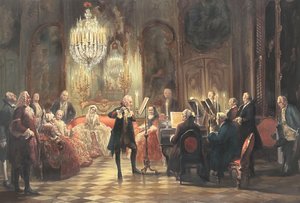
Menzel’s career reached its zenith in the latter half of the 19th century with a series of monumental historical paintings that cemented his reputation as Prussia's foremost artist. *The Flute Concert* (1872), perhaps his most famous work, is a masterpiece of Realist observation, depicting a private musical gathering within a bourgeois home. The painting’s power lies not in grand gestures or dramatic narratives but in the subtle interplay of light and shadow, the nuanced expressions of the figures, and the palpable sense of intimacy. Similarly, *Frederick the Great Playing the Flute in Sanssouci* (1853) eschews romanticized depictions of the Prussian king, presenting him as a contemplative figure immersed in his music. His work on the series *History of German Art*, commissioned by Kaiser Wilhelm I, further showcased his dedication to historical accuracy and meticulous research. Beyond these large-scale canvases, Menzel produced an astonishing volume of drawings, watercolors, and prints – often serving as studies for larger compositions but also standing as compelling works in their own right. These smaller pieces offer a fascinating glimpse into his artistic process and his unwavering commitment to capturing the details of everyday life.Influences and Artistic Development
While Menzel is firmly associated with Realism, his work was not devoid of influence. He admired the Dutch Masters – particularly Rembrandt and Vermeer – for their mastery of light and shadow and their ability to imbue ordinary scenes with psychological depth. The burgeoning field of photography also played a role in shaping his artistic vision, encouraging him to capture fleeting moments with unprecedented accuracy. However, Menzel was not simply imitating these influences; he synthesized them into a uniquely personal style characterized by its meticulous detail, psychological insight, and unwavering commitment to portraying the realities of Prussian society. His work evolved over time, becoming increasingly complex and nuanced as he grappled with the social and political changes unfolding around him. He moved from early Romantic tendencies towards an almost scientific objectivity in his later works, yet always retained a deep empathy for his subjects.Legacy and Historical Significance
Adolph Menzel’s impact on German art is profound. He elevated Realism to new heights, demonstrating its potential to capture not only historical events but also the complexities of human experience. His work served as a powerful commentary on Prussian society – celebrating its achievements while simultaneously acknowledging its inequalities and anxieties. He was appointed professor at the Academy of Arts in Berlin in 1873, though he often clashed with the institution’s conservative norms.- His influence extended beyond painting, inspiring generations of artists to embrace Realism and social commentary.
- Menzel's meticulous documentation of Prussian life provides invaluable insights into the period for historians and art scholars alike.
- He remains a celebrated figure in German cultural history, his works continuing to captivate audiences with their beauty, accuracy, and psychological depth.