

 Поделиться
 Поделиться
 Детали произведения

 Скачать
 Похожие работы
 Слайд-шоу
 Статистика
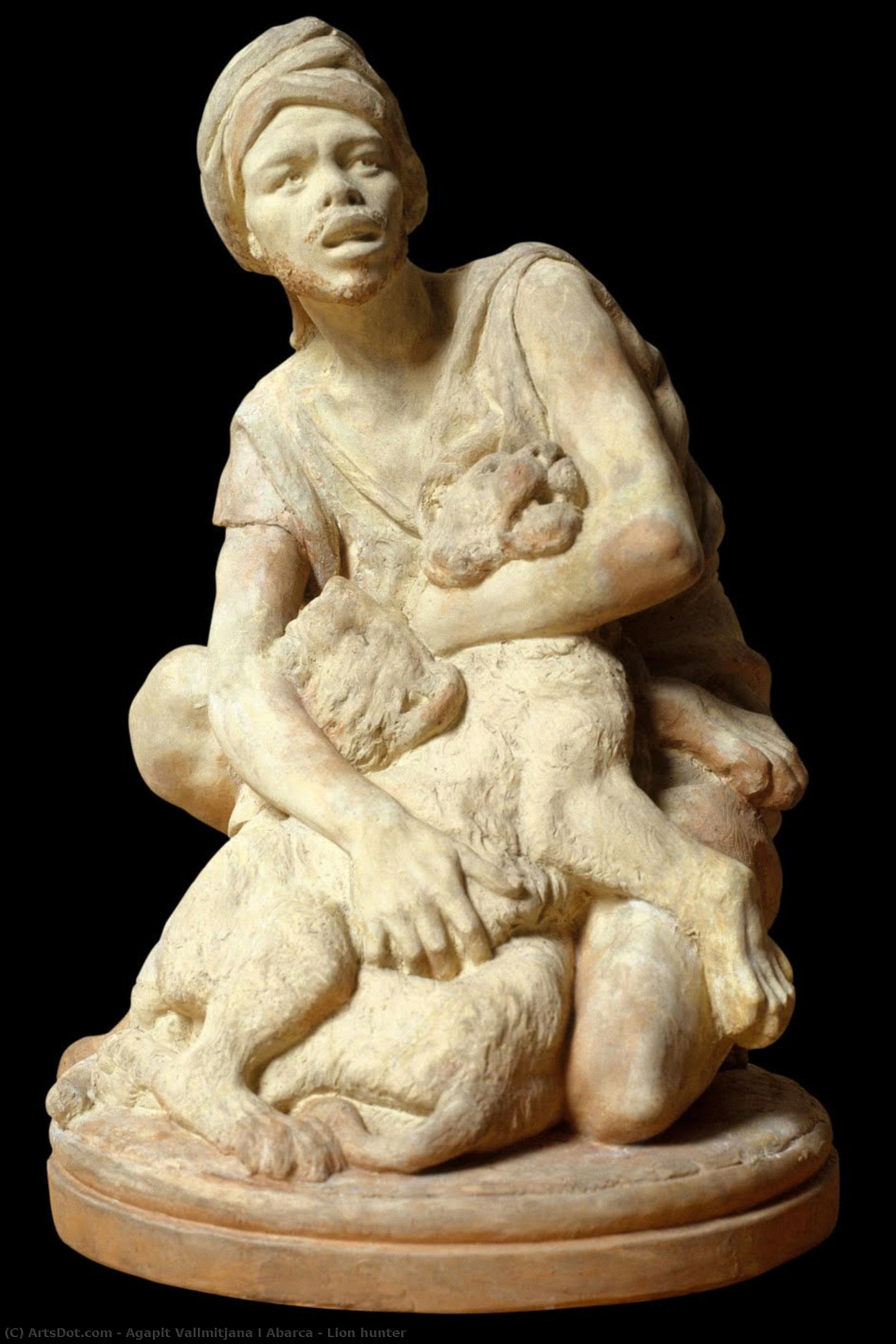
Lion hunter
 Sculpture Bronze
- Realist sculpture
 1882
1882 260.0 x 375.0 cm
 Музей национального искусства Каталонии (MNAC)
 Читать далее
Жикле / Арт-принт
Печать (жикле) или холст музейного качества с быстрыми сроками изготовления и широким выбором вариантов отделки. ( Купить картину ручной работы Перейти к цифровым изображениям)




































Выберите один из наших стандартных размеров, соответствующих оригинальным пропорциям произведения искусства.

Вы можете указать свои собственные размеры, чтобы репродукция идеально подошла под конкретную раму или пространство. Если выбранный вами размер не будет соответствовать пропорциям оригинала, мы либо обрежем произведение, либо дополним изображение зеркальным отражением краев или однотонной заливкой. Перед началом производства вам будет отправлен цифровой макет для утверждения.
Пожалуйста, обратите внимание, что предварительный просмотр на экране не отображает фактическую обрезку или расширение изображения. Только макет точно покажет финальную композицию.
Несмотря на возможность заказа индивидуальных размеров, мы рекомендуем выбирать размер из предопределенного списка, чтобы сохранить оригинальные пропорции.
Доставка по всему миру () за 2 недели вместо стандартных 4/5 недель. (11 Сентябрь)

Бесплатная экспресс-доставка по всему миру

Высококачественный льняной холст

Полное страхование доставки

Гарантия возмещения таможенных пошлин

Гарантия точного соответствия цветов

100-дневная политика возврата (только при обнаружении дефектов)

Гарантия возврата 100% средств

Предложение оптовых скидок
 Вариант со стеклом доступен только для размеров менее 110 см

Lion hunter
Жикле / Арт-принт
Размер репродукции
-


Итоговая стоимость
$ 62
A Legacy Sculpted in Realism: The Life and Art of Agapit Vallmitjana i Abarca
Agapit Vallmitjana i Abarca (1860-1915), a pivotal figure in Spanish sculpture during the late 19th century, stands as a testament to the burgeoning movement towards capturing life with uncompromising honesty. His artistic journey began within a familial crucible of creativity—his father, Venanci Vallmitjana Barbany, himself a respected sculptor—establishing a foundation for Agapit’s own distinctive style and fostering a collaborative spirit that would permeate his oeuvre. Formal training at the Escola de la Llotja in Barcelona provided him with technical mastery, yet it was the immersive experience alongside his father and an innate talent that truly propelled his artistic development. The period witnessed a significant shift away from idealized representations towards portraying subjects with palpable emotion and anatomical accuracy—a trend Vallmitjana wholeheartedly embraced.The Lion Hunter: A Study in Dramatic Composition
“The Lion Hunter,” completed in 1882, exemplifies Vallmitjana’s commitment to realism. This monumental sculpture depicts a woman holding her child tenderly while simultaneously cradling a lion cub – an arresting juxtaposition that speaks volumes about the artist's fascination with both human vulnerability and the untamed power of nature. The figure is adorned in a turban, subtly referencing cultural influences prevalent during Vallmitjana’s time and adding an element of exoticism to the scene. Two dogs flank the woman and child, serving as companions and reinforcing the sculpture’s harmonious portrayal of interconnectedness between humanity and animal kingdom.Technique and Material: Marble's Embrace
Vallmitjana skillfully employed white marble on limestone—a choice reflecting the prevailing sculptural traditions of Catalonia at the time. The meticulous carving process demanded considerable patience and precision, resulting in a surface texture that captures subtle nuances of light and shadow. Vallmitjana’s attention to anatomical detail is evident throughout the sculpture, demonstrating his profound understanding of human musculature and posture. Furthermore, the sculptor's masterful manipulation of marble allowed him to convey an overwhelming sense of emotion—fear, tenderness, and protective instinct—creating a visual experience that transcends mere representation.Historical Context: Catalan Realism and Artistic Influences
Vallmitjana’s artistic vision was deeply rooted in the broader context of Catalan realism—a movement championed by artists like Josep Reynés Gurguí who sought to depict everyday life with unflinching honesty. He drew inspiration from classical sculpture, particularly works emphasizing idealized beauty and heroic grandeur, adapting these principles to his own stylistic concerns. The sculpture’s commission by the City Council of Barcelona coincided with the Universal Exposition of 1888—a pivotal moment in Catalan cultural history—solidifying Vallmitjana's reputation as a leading sculptor of his era.Symbolism and Emotional Resonance
“The Lion Hunter” transcends its formal elements to convey profound symbolic meanings. The woman represents maternal care and protection, while the lion cub embodies primal instinct and vulnerability. Together, they symbolize the delicate balance between civilization and wilderness—a theme that resonates powerfully with viewers today. Vallmitjana’s ability to evoke emotion through sculpture is undeniable; the sculpture compels contemplation on themes of courage, compassion, and the enduring relationship between humans and animals. It remains a captivating masterpiece, embodying the spirit of realism and artistic innovation characteristic of its time.Похожие произведения
Биография художника
A Legacy Sculpted in Realism: The Life and Art of Agapit Vallmitjana i Abarca
Agapit Vallmitjana i Abarca, born in the vibrant artistic heart of Barcelona in 1860, emerged as a significant figure in Spanish sculpture during a period defined by a renewed appreciation for realism. His life was deeply intertwined with that of his father, Venanci Vallmitjana Barbany, himself a respected sculptor, and it was within this familial creative environment that Agapit first honed his skills. He wasn’t merely a son following in a father's footsteps; he became a dedicated disciple, collaborating frequently with Venanci and absorbing the artistic principles that would shape his own distinctive style. His formal training at the Escola de la Llotja in Barcelona provided him with a solid foundation in technique, but it was the practical experience alongside his father and his innate talent that truly propelled his development as an artist. The late 19th century witnessed a shift towards capturing life’s essence with meticulous detail, and Vallmitjana embraced this movement wholeheartedly, becoming known for sculptures that breathed with authenticity.The Sculptor's Hand: Style and Notable Works
Vallmitjana’s artistic signature lies in his unwavering commitment to realism. He didn’t seek to idealize or abstract; instead, he strived to represent the world as it was, imbuing his sculptures with a tangible sense of life. This dedication is particularly evident in works like The Lion Hunter (1882), a piece that showcases not only technical mastery but also a keen understanding of anatomy and movement. The sculpture isn’t simply a depiction of a man and an animal; it's a narrative frozen in time, capturing the intensity of the hunt and the raw power of nature. Beyond individual pieces, Vallmitjana’s talent extended to monumental works, most notably his contribution to the monument dedicated to Alfonso XII in Buen Retiro Park, Madrid. This large-scale project demonstrates his ability to translate artistic vision into a public statement, solidifying his reputation as a sculptor capable of both intimate detail and grand ambition. His sculptures weren't merely objects; they were reflections of Spanish society and its relationship with the natural world.Influences and Artistic Lineage
The artistic landscape surrounding Agapit Vallmitjana was rich with inspiration, and he readily absorbed influences from both his immediate surroundings and the broader European art scene. His father, Venanci Vallmitjana Barbany, served as a primary mentor, instilling in him not only technical skills but also a deep appreciation for the sculptural tradition. The Escola de la Llotja introduced him to other prominent artists of the time, including Josep Reynés Gurguí, whose work likely contributed to his developing aesthetic sensibilities. However, Vallmitjana’s influences weren't limited to individual figures; he was also shaped by the prevailing artistic currents of his era. The emphasis on realism that swept through Europe in the late 19th century provided a fertile ground for his talent to flourish, encouraging him to focus on meticulous observation and faithful representation. He wasn’t simply imitating others but synthesizing these influences into something uniquely his own.Preserving the Legacy: Museums and Collections
Today, Agapit Vallmitjana i Abarca's sculptures continue to captivate audiences in museums and collections across Spain and beyond. The Museu Frederic Marès in Barcelona stands as a particularly important repository of his work, offering visitors a chance to experience the breadth of his artistic vision within the context of Catalan art history. The museum’s diverse collection allows for a nuanced understanding of Vallmitjana's place within the broader artistic landscape of the region. Furthermore, pieces by Vallmitjana can be found in the Museo de Bellas Artes in Seville, an institution renowned for its impressive holdings of European art spanning centuries. These public displays ensure that his legacy endures, allowing future generations to appreciate the skill and artistry of this remarkable Spanish sculptor. His work serves as a tangible link to a bygone era, reminding us of the power of realism to capture the beauty and complexity of the world around us.A Lasting Impression
Agapit Vallmitjana i Abarca passed away in 1915, leaving behind a body of work that continues to resonate with its unwavering commitment to realism and meticulous detail. He wasn’t merely a sculptor; he was a chronicler of his time, capturing the essence of Spanish life and the majesty of the natural world in enduring forms. His contributions to Catalan art are undeniable, and his sculptures remain a testament to the power of observation, skill, and artistic vision. For those seeking to understand the evolution of Spanish sculpture in the late 19th century, Vallmitjana’s work offers an invaluable insight into the aesthetic values and artistic ambitions of the era. His legacy is not simply preserved in museums; it lives on in the enduring power of his art to inspire and captivate.
Agapit Vallmitjana i Abarca
1860 - 1915 , Spain
Основные сведения
- Artistic Movement Or Style: Realist sculpture
- Artists Who Influenced This Artist:
- Venanci Vallmitjana Barbany
- Josep Reynés Gurguí
- Date Of Birth: 1860
- Date Of Death: 1915
- Full Name: Agapit Vallmitjana i Abarca
- Nationality: Spanish
- Notable Artworks:
- The Lion Hunter (1882)
- Monument to Alfonso XII
- Place Of Birth: Barcelona, Spain
Похожие статьи

10 легендарных бронзовых скульптур, изменивших искусство навсегда | ArtsDot
Погрузитесь в мир великих бронзовых скульптур! От Давида Микеланджело до работ Родена – история искусства, техники и вдохновения. Купите репродукции шедевров для вашего интерьера на ArtsDot.com
Непреходящее наследие бронзовой скульптуры: история, техники и современные интерпретации
Узнайте историю бронзовой скульптуры, техники литья и советы по коллекционированию от экспертов. Откройте для себя вечное искусство бронзы!

The Enduring Form: Exploring Themes & Techniques in Sculpture Across Historical Periods
Explore the rich history of sculpture from ancient masterpieces to contemporary innovations. Discover key techniques, influential artists & investment potential for discerning art collectors.

The Enduring Form: Sculpture Across History, Technique & Emotional Resonance
Explore the rich history of sculpture with ArtsDot. Discover key techniques, influential artists & investment potential for discerning collectors. Expert insights into valuing and collecting timeless masterpieces.

10 легендарных бронзовых шедевров, изменивших искусство | ArtsDot
Погрузитесь в мир великих бронзовых шедевров! От Давида Донателло до Мыслителя Родена – узнайте историю создания, технику и значение легендарных скульптур. Вдохновение для интерьера и музейное качество репродукций на ArtsDot.com.