

 Предпросмотр
 Поделиться
 Поделиться
 Детали произведения

 Скачать
 Похожие работы
 Рентгенография
 Слайд-шоу
 Статистика
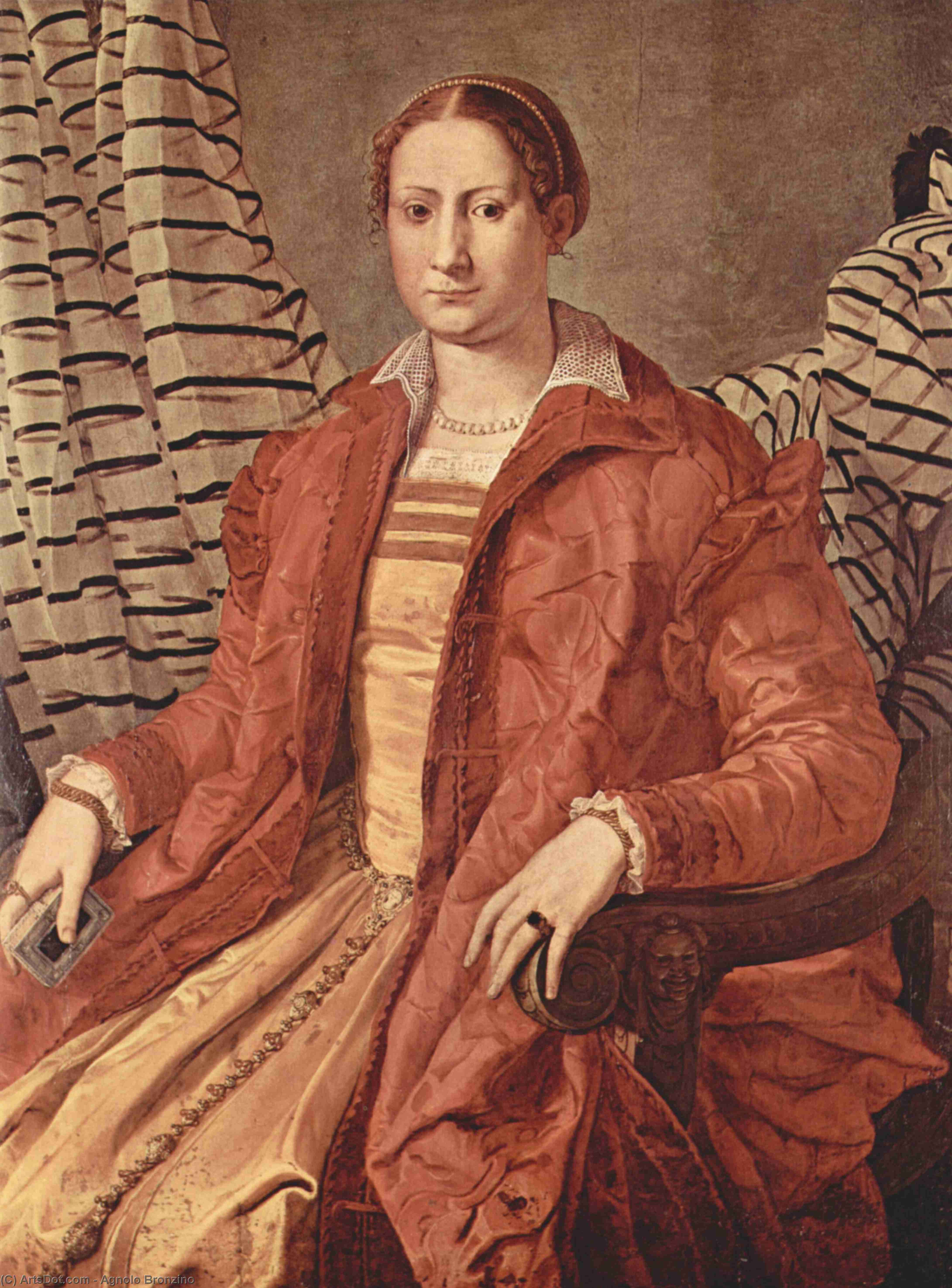
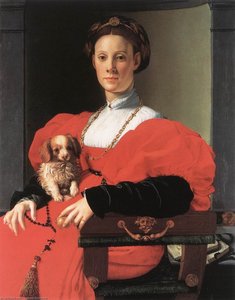
Portrait of Eleonora da Toledo
 Oil On Panel
- Renaissance
 1555
1555- Renaissance
 109.0 x 85.0 cm
 Читать далее
Приобретите цифровое изображение высокого разрешения в улучшенном качестве, которое значительно превосходит онлайн-превью.
Каждый файл тщательно подготавливается нашими специалистами с использованием передовых инструментов и экспертной ручной ретуши. Мы гарантируем исключительную четкость, точную цветопередачу и детальную проработку каждого изображения.
Финальный файл доставляется по электронной почте в течение 72 часов и оптимизирован для немедленного использования в профессиональной среде, при верстке и печати. Это тот же уровень качества, которому доверяют ведущие дизайнерские студии, издательства и галереи.
Цифровое изображение
Скачайте файл высокого разрешения для личного использования, печати и творческих проектов. ( Перейти к печати Купить картину ручной работы)
Включено в каждый заказ цифровых изображений
Гарантия экспертной цифровой доставки
Выбирая ArtsDot.com, вы получаете не просто изображение — вы приобретаете профессионально обработанное цифровое произведение искусства, созданное с безупречной точностью и под защитой гарантии качества. Вот всё, что автоматически входит в ваш заказ:

Мгновенная доставка по e-mail
Ваш цифровой файл в высоком разрешении будет отправлен вам по электронной почте в течение 72 часов после оформления заказа — и сразу станет доступен для использования.

Цифровой файл с ИИ-улучшением
Ваше произведение искусства проходит профессиональную оптимизацию с использованием передовых инструментов ИИ и ручной обработки, что гарантирует максимальную детализацию, четкость и точность цветопередачи.

Бессрочная бесплатная повторная доставка
Случайно удалили или потеряли файл? Не беспокойтесь — мы отправим его вам повторно в любое время и совершенно бесплатно.

Без импортных пошлин — навсегда
Наслаждайтесь вашим произведением искусства мгновенно без таможенных пошлин, сборов или затрат на доставку — цифровые загрузки всегда не облагаются налогом.

Гарантия точности цветопередачи
Мы гарантируем, что ваше цифровое изображение максимально точно передает оригинальные цвета благодаря использованию профессиональных инструментов и систем управления цветом.

Гарантия удовлетворенности 100 дней
Если вы не будете удовлетворены своим цифровым изображением, мы внесем правки или вернем 100% стоимости в течение 100 дней — без лишних вопросов.

100% Гарантия возврата средств
Не удовлетворены покупкой? Получите полный возврат средств в течение 100 дней после получения цифрового файла — без лишних вопросов.

Скидки на оптовые заказы
Купите 3 изображения, сэкономьте 10% — Купите 5, сэкономьте 15% — Купите 10+, сэкономьте 20%. Отличное решение для творческих проектов, галерей и агентств.
The Regal Presence of Renaissance Portraiture
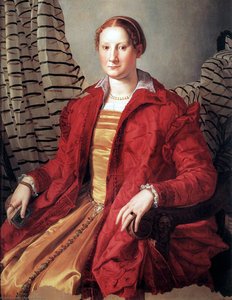
To gaze upon Agnolo Bronzino's Portrait of Eleonora da Toledo is to step directly into the rarefied atmosphere of High Renaissance Florence. This painting, executed in 1555, transcends a mere likeness; it is a carefully constructed monument to status, power, and exquisite refinement. The subject, Eleonora da Toledo, radiates an almost palpable aura of aristocratic dignity. Bronzino captures her not just as a woman, but as a symbol of Medici influence—a figure whose very bearing speaks of wealth accumulated through generations of patronage and political maneuvering. Her magnificent red gown, richly accented with shimmering gold trim, does more than clothe her; it announces her elevated station within the courtly circles of Cosimo I de' Medici.
Mastery in Technique and Color
Bronzino’s technical prowess is immediately apparent upon viewing the work. His handling of oil paint on panel is nothing short of masterful, achieving a luminosity that seems to emanate from within the fabric itself. Observe the meticulous detail in the gold embroidery; it catches the light with an almost tangible brilliance. The artist employs vivid colors not merely for decoration, but to build psychological depth. While the red dominates the foreground, the subtle interplay of shadows and highlights on her skin reveals a profound understanding of human form and texture. This cool composure, characteristic of Bronzino’s style, allows the viewer to appreciate every carefully rendered strand of hair pulled back into its elegant bun, every fold in the sumptuous drapery.
A Glimpse into Courtly Life
The historical context surrounding this portrait enriches its narrative weight immeasurably. As a product of the Medici era, the painting serves as an invaluable document of Renaissance society. Beyond Eleonora herself, the inclusion of other figures—one standing subtly behind her and another positioned to the right—suggests a carefully orchestrated tableau vivant. These secondary presences ground the portrait in a specific moment, hinting at the complex web of relationships that defined life among Italy's most powerful families. It invites us, the modern viewer, to speculate on the whispers exchanged just beyond the frame.
Symbolism and Enduring Allure
The symbolism woven into this piece is one of controlled grandeur. The richness of the materials—the velvet, the gold, the sheer volume of fabric—speaks to earthly power, yet Eleonora’s direct, intense gaze anchors the work in something more enduring: the portrait of a formidable spirit. It is an embodiment of reserved elegance, where every gesture and fold of cloth contributes to an overall statement of unwavering self-possession. For those who appreciate art that speaks volumes without uttering a word, this painting offers a compelling study in aristocratic poise.
Bringing History Home
Owning a reproduction of the Portrait of Eleonora da Toledo is not simply acquiring decoration; it is curating a piece of history for your own space. Whether placed in a grand salon or a richly appointed drawing-room, this artwork commands attention with its sophisticated palette and undeniable gravitas. It allows contemporary admirers to connect intimately with the artistic genius of Agnolo Bronzino, experiencing firsthand the breathtaking skill that defined Italian portraiture at its zenith.
Похожие произведения
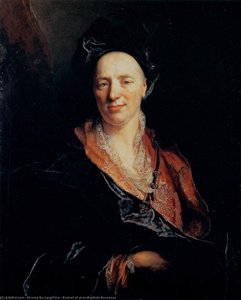
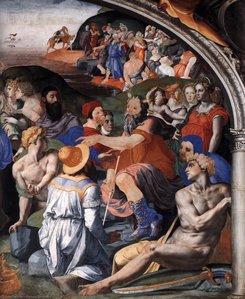
Биография художника
Agnolo Bronzino: Florentine Master of Reserved Elegance
Agnolo di Cosimo, known to history as Bronzino, emerged from the vibrant artistic landscape of Renaissance Florence in 1503, a period already brimming with genius. Born the son of a butcher, his path diverged sharply from familial trade, guided instead by an innate talent that would see him become one of the most sought-after portraitists of his era and a defining figure of Mannerism. His early training began with Raffaellino del Garbo, but it was under the tutelage of Jacopo da Pontormo that Bronzino’s artistic sensibilities truly took shape. While absorbing Pontormo's innovative style—characterized by expressive emotion and dynamic movement—he ultimately forged his own distinct voice—one characterized by a cool composure and refined detail markedly different from his teacher’s often emotionally charged works. This early period was also influenced by studies with Andrea del Sarto, exposing him to the legacies of Michelangelo and Leonardo da Vinci, foundational influences that would subtly permeate his mature style. The young Bronzino quickly demonstrated an aptitude for capturing not just physical likeness but a certain psychological depth, even in his earliest commissions.Early Influences and Artistic Formation
Bronzino’s formative years were marked by exposure to the artistic currents of Florence under Pontormo's guidance. Pontormo’s distinctive style—marked by elongated figures, swirling draperies, and an unsettling blend of realism and abstraction—challenged conventional notions of beauty and representation. Bronzino absorbed these lessons diligently, adapting Pontormo’s expressive techniques to his own artistic vision. Simultaneously, he studied the monumental sculptures of Michelangelo and Leonardo da Vinci, absorbing their mastery of anatomy and perspective. These influences instilled in him a profound appreciation for technical precision and intellectual rigor—qualities that would become hallmarks of his oeuvre. His early portraits showcased an uncanny ability to convey inner states through subtle gestures and facial expressions, demonstrating a sensitivity to psychological nuance rarely found among artists of his time.Ascension at the Medici Court: Patronage and Artistic Output
Bronzino’s career ascended dramatically with the patronage of Cosimo I de’ Medici, Duke of Tuscany. Recognizing Bronzino's exceptional talent, Cosimo appointed him as the official court painter—a position he held until his death in 1572—solidifying his status as one of Florence’s most celebrated artists. This relationship fostered a prolific artistic output, encompassing monumental frescoes for churches and palaces, elaborate decorative schemes, and countless portraits of the Medici family and their associates. Cosimo's wedding to Eleonora di Toledo served as an impetus for Bronzino’s creative endeavors—resulting in opulent decorations that proclaimed Florentine grandeur and dynastic ambition. The Duke commissioned a series of paintings depicting biblical narratives and mythological allegories—demonstrating Bronzino’s versatility as a storyteller and his command of visual symbolism.The Mannerist Style: Cool Composure and Refined Detail
Bronzino's artistic style is quintessentially Mannerist—a movement that flourished in Italy during the mid-16th century as a reaction against the High Renaissance's emphasis on naturalism and harmonious balance. He embraced elongated forms, stylized poses, and an often cool, detached emotionality. His figures are rarely caught in moments of spontaneous action; instead, they appear carefully posed, almost sculptural in their stillness. This stylistic preference—characterized by deliberate restraint and meticulous attention to detail—contrasted sharply with the expressive dynamism of artists like Pontormo and Raphael. Bronzino’s palette favored muted tones—particularly cool blues and greens—creating an atmosphere of serenity and elegance. He meticulously rendered textures—from velvet drapery to polished marble—enhancing the illusion of realism while simultaneously elevating it beyond mere imitation. His technique involved layering thin glazes over a preparatory underpainting, achieving remarkable luminosity and depth.Legacy and Influence: Shaping Florentine Art History
Bronzino’s influence extended far beyond his own lifetime, shaping the visual language of aristocratic portraiture throughout Europe for decades to come. He established himself as Florence's foremost artist—a master of Mannerist refinement whose portraits continue to captivate viewers centuries later. His meticulous attention to detail and stylistic control became models for subsequent generations of painters—inspiring them to pursue similar standards of excellence. Bronzino’s legacy resides not only in his impressive artistic output but also in his role as a champion of intellectual rigor and stylistic innovation—a figure who helped redefine the boundaries of artistic expression during a pivotal moment in European art history. His enduring fame testifies to the power of visual artistry to convey profound psychological insight and aesthetic beauty.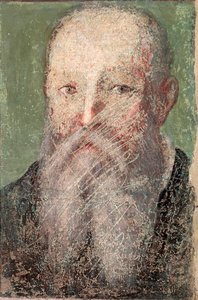
Агноло Бронзино
1503 - 1572 , Италия
Основные сведения
- Artistic Movement Or Style: Маньеризм
- Artists Who Influenced This Artist:
- Якопо да Понтормо
- Микеланджело
- Леонардо да Винчи
- Date Of Birth: 17 ноября 1503 г.
- Date Of Death: 23 ноября 1572 г.
- Full Name: Agnolo di Cosimo
- Nationality: Итальянский
- Notable Artworks:
- Венера и Купидон и Время
- Портреты Козимо I де' Медичи и Элеоноры Толедо
- Place Of Birth: Флоренция, Италия