


 Предпросмотр
 Поделиться
 Поделиться
 Детали произведения

 Скачать
 Похожие работы
 Рентгенография
 Слайд-шоу
 Статистика
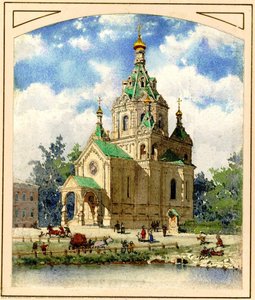
The church of St Nicholas at the Malaya Neva river
 Watercolor
- WallArt
- Realism
 1880
1880 50.0 x 35.0 cm
 Эрмитаж
 Читать далее
Приобретите цифровое изображение высокого разрешения в улучшенном качестве, которое значительно превосходит онлайн-превью.
Каждый файл тщательно подготавливается нашими специалистами с использованием передовых инструментов и экспертной ручной ретуши. Мы гарантируем исключительную четкость, точную цветопередачу и детальную проработку каждого изображения.
Финальный файл доставляется по электронной почте в течение 72 часов и оптимизирован для немедленного использования в профессиональной среде, при верстке и печати. Это тот же уровень качества, которому доверяют ведущие дизайнерские студии, издательства и галереи.
Цифровое изображение
Скачайте файл высокого разрешения для личного использования, печати и творческих проектов. ( Перейти к печати Купить картину ручной работы)
Включено в каждый заказ цифровых изображений
Гарантия экспертной цифровой доставки
Выбирая ArtsDot.com, вы получаете не просто изображение — вы приобретаете профессионально обработанное цифровое произведение искусства, созданное с безупречной точностью и под защитой гарантии качества. Вот всё, что автоматически входит в ваш заказ:

Мгновенная доставка по e-mail
Ваш цифровой файл в высоком разрешении будет отправлен вам по электронной почте в течение 72 часов после оформления заказа — и сразу станет доступен для использования.

Цифровой файл с ИИ-улучшением
Ваше произведение искусства проходит профессиональную оптимизацию с использованием передовых инструментов ИИ и ручной обработки, что гарантирует максимальную детализацию, четкость и точность цветопередачи.

Бессрочная бесплатная повторная доставка
Случайно удалили или потеряли файл? Не беспокойтесь — мы отправим его вам повторно в любое время и совершенно бесплатно.

Без импортных пошлин — навсегда
Наслаждайтесь вашим произведением искусства мгновенно без таможенных пошлин, сборов или затрат на доставку — цифровые загрузки всегда не облагаются налогом.

Гарантия точности цветопередачи
Мы гарантируем, что ваше цифровое изображение максимально точно передает оригинальные цвета благодаря использованию профессиональных инструментов и систем управления цветом.

Гарантия удовлетворенности 100 дней
Если вы не будете удовлетворены своим цифровым изображением, мы внесем правки или вернем 100% стоимости в течение 100 дней — без лишних вопросов.

100% Гарантия возврата средств
Не удовлетворены покупкой? Получите полный возврат средств в течение 100 дней после получения цифрового файла — без лишних вопросов.

Скидки на оптовые заказы
Купите 3 изображения, сэкономьте 10% — Купите 5, сэкономьте 15% — Купите 10+, сэкономьте 20%. Отличное решение для творческих проектов, галерей и агентств.
The Church of St Nicholas at the Malaya Neva River – A Watercolor Echo of Imperial Russia
Albert Nikolayevich Benois’s 1880 watercolor, “The church of St Nicholas at the Malaya Neva river,” stands as a testament to the artistic spirit of late nineteenth-century Russia—a period marked by grandeur, intellectual ferment, and a fervent embrace of tradition. More than just a depiction of architectural space, it embodies a carefully crafted aesthetic that reflects Benois’s profound understanding of Russian culture and his mastery of watercolor technique.
The painting captures the imposing St Nicholas Church nestled within a tranquil park setting on the banks of the Malaya Neva river—a location steeped in history and symbolic significance. Constructed in 1839, the church served as a focal point for religious life and civic pride during Tsar Alexander II’s reign, representing Orthodox faith amidst the burgeoning modernization of St Petersburg.
Boisois's artistic style leans heavily toward realism infused with romantic idealism. He meticulously renders the church’s façade—characterized by soaring domes adorned with gilded ornamentation—employing precise lines and shading to convey a palpable sense of solidity and grandeur. Figures strolling along the riverbank, engaged in leisurely activities, populate the foreground, adding a human element to the serene landscape.
The watercolor technique itself is paramount to the artwork’s emotive power. Benois skillfully utilizes washes of color—delicate layers of pigment diluted with water—to achieve atmospheric perspective and imbue the scene with luminosity. Soft textures contribute to an overall impression of tranquility and warmth, mirroring the spiritual atmosphere of the church.
Boisois's meticulous attention to detail extends beyond mere representation; it speaks to a deeper engagement with artistic principles prevalent during his time. Like many artists of his era, he championed watercolor as a medium capable of capturing nuanced tonal variations and conveying subtle emotional impressions—a deliberate choice that elevates “The church of St Nicholas at the Malaya Neva river” beyond a simple visual record into an evocative meditation on beauty and faith.
Currently housed in the Hermitage Museum, Saint Petersburg, this artwork exemplifies Benois’s enduring legacy as one of Russia's foremost watercolorists. Its serene composition and masterful execution continue to inspire admiration among art connoisseurs and collectors alike—a timeless reminder of a pivotal moment in Russian artistic history.
Похожие произведения
Биография художника
Albert Nikolayevich Benois: A Watercolorist of Russian Landscapes and Cultural Bridges
Born in St. Petersburg on March 14, 1852, into a family deeply intertwined with the artistic and intellectual currents of Russia, Albert Nikolayevich Benois (died May 16, 1936) emerged as a significant figure in late 19th and early 20th-century Russian art. His lineage—descended from Louis Jules Benois, a French confectioner who became a royal headwaiter—combined European sophistication with the rich traditions of his homeland, shaping an artistic sensibility that would ultimately bridge diverse cultural landscapes. Benois’s life was not merely one of artistic creation; it was a tapestry woven with family legacies, academic pursuits, and extensive travels, all contributing to the unique perspective reflected in his evocative watercolor paintings.
His early years were steeped in artistic influence. Educated at the Imperial Academy of Arts from 1871 to 1877, Benois initially focused on architecture before discovering a profound passion for watercolor painting under the guidance of Luigi Premazzi. This shift proved pivotal, establishing his signature style—characterized by delicate washes, atmospheric perspective, and an intimate portrayal of Russian landscapes and architectural details. Crucially, he was part of the founding members of the “Circle of Russian Watercolorists” (Russkoe Kratokrasnoye Obshchestvo) in 1880, a group that championed watercolor as a serious artistic medium and challenged the dominance of oil painting within the Russian art establishment. This association exposed him to innovative techniques and fostered a spirit of experimentation that would inform his later work.
The Influence of Family and Travel
Benois’s family history profoundly shaped his artistic trajectory. His father, Nicholas Benois, was a renowned architect responsible for many iconic buildings in St. Petersburg, including the Principal Imperial Stables at Peterhof. His mother, Camilla Cavos, a granddaughter of Catterino Cavos (the designer of the Mariinsky Theatre), instilled within him an appreciation for elegance and theatricality. The family’s connections to prominent musicians—particularly Nikolai Tcherepnin, with whom he maintained a close relationship—further enriched his cultural awareness. However, it was Benois's own travels that truly broadened his artistic horizons. Beginning in 1890, he embarked on extensive journeys through Europe, North Africa, Central Asia, Korea, and Japan, meticulously documenting the landscapes, architecture, and people he encountered. These experiences weren’t merely sightseeing trips; they were immersive investigations into diverse cultures, resulting in a series of paintings that captured the essence of these faraway lands with remarkable sensitivity and detail.
A Curator and Artistic Collaborator
Beyond his painting practice, Benois played an active role in the Russian art world. He served as a keeper at the Alexander III Russian Museum from 1895 to 1903, gaining invaluable experience in museum management and collection curation. In 1894, he was appointed a professor of watercolor painting at the Imperial Academy of Arts, a position he held until 1905, shaping generations of young artists. His involvement extended beyond academia; he became a curator at the Russian Museum in 1903, contributing to its expansion and development. Notably, his collaboration with Sergei Diaghilev’s Ballets Russes proved transformative. Benois's stage designs—particularly for “Les Sylphides,” “Giselle,” and “Petrushka”—were groundbreaking, employing innovative color palettes, architectural elements, and a sense of theatricality that redefined ballet aesthetics. His work with the Moscow Art Theatre further solidified his reputation as a versatile artist and designer.
Legacy and Artistic Significance
Albert Nikolayevich Benois’s legacy extends far beyond his individual paintings. He was a pivotal figure in the development of Russian watercolor, elevating it from a secondary medium to one of serious artistic merit. His meticulous observation, atmospheric rendering, and ability to capture both the grandeur and intimacy of landscapes—from the vast expanse of the Finnish skerries to the bustling streets of St. Petersburg—established him as a master of his craft. His travels not only enriched his artistic repertoire but also fostered a deep appreciation for cultural diversity, reflected in the nuanced portrayals of foreign lands within his oeuvre. Benois’s work continues to be celebrated for its beauty, technical skill, and profound connection to Russian culture and history. His influence can still be felt today in the works of contemporary watercolor artists who draw inspiration from his innovative techniques and artistic vision.
albert nikolaevich benois
1852 - 1936
Основные сведения
- Artistic Movement Or Style: Watercolor landscapes
- Artists Or Movements Influenced By This Artist: ['World of Art']
- Artists Who Influenced This Artist: ['Luigi Premazzi']
- Date Of Birth: March 14, 1852
- Date Of Death: May 16, 1936
- Full Name: Albert Nikolayevich Benois
- Nationality: Russian
- Notable Artworks:
- Sunset on the river
- Bay with sailboats, 1900
- Place Of Birth: St Petersburg, Russia