

 Предпросмотр
 Поделиться
 Поделиться
 Детали произведения

 Скачать
 Похожие работы
 Рентгенография
 Слайд-шоу
 Статистика
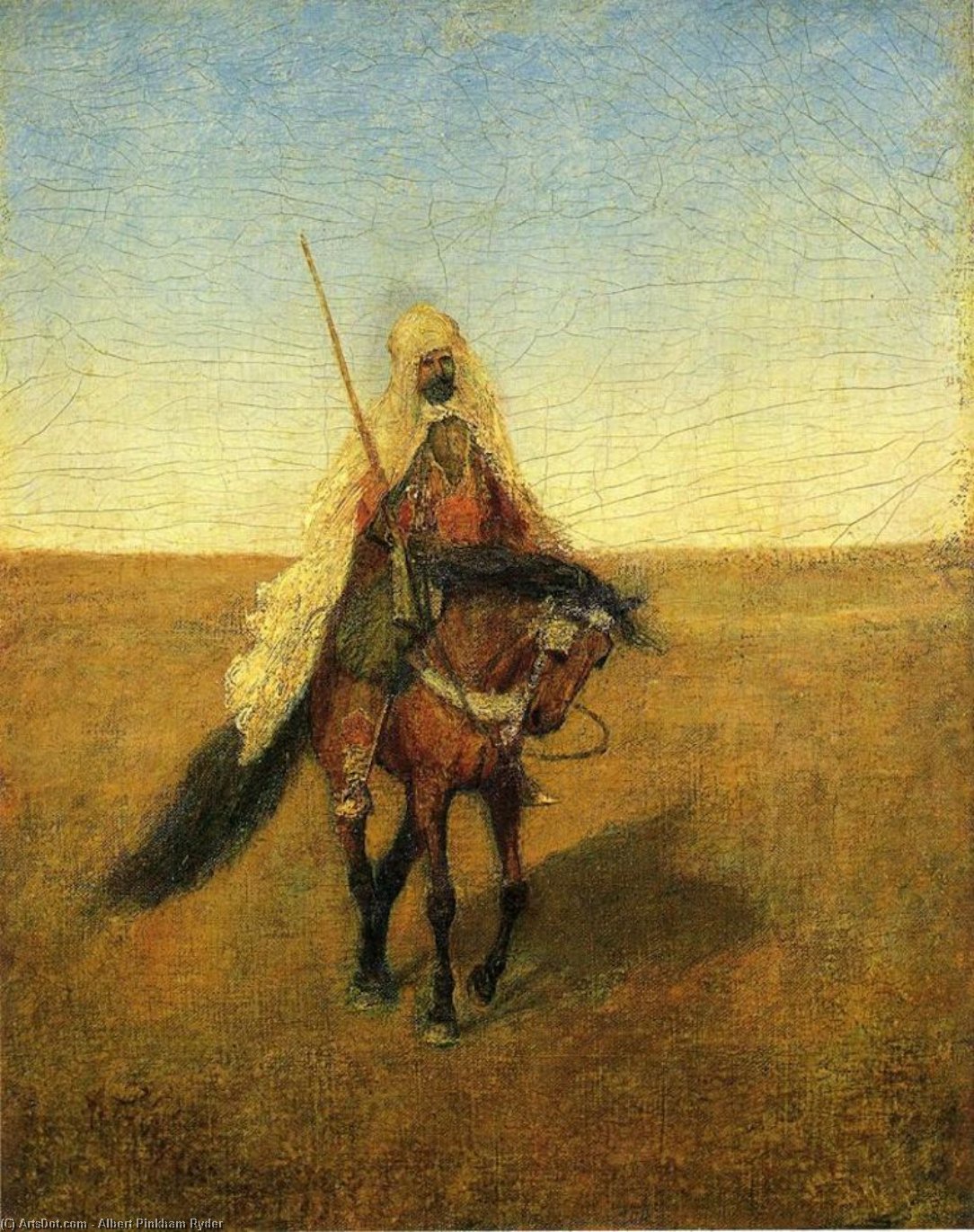
The Lone Scout


 Читать далее
Приобретите цифровое изображение высокого разрешения в улучшенном качестве, которое значительно превосходит онлайн-превью.
Каждый файл тщательно подготавливается нашими специалистами с использованием передовых инструментов и экспертной ручной ретуши. Мы гарантируем исключительную четкость, точную цветопередачу и детальную проработку каждого изображения.
Финальный файл доставляется по электронной почте в течение 72 часов и оптимизирован для немедленного использования в профессиональной среде, при верстке и печати. Это тот же уровень качества, которому доверяют ведущие дизайнерские студии, издательства и галереи.
Цифровое изображение
Скачайте файл высокого разрешения для личного использования, печати и творческих проектов. ( Перейти к печати Купить картину ручной работы)
Включено в каждый заказ цифровых изображений
Гарантия экспертной цифровой доставки
Выбирая ArtsDot.com, вы получаете не просто изображение — вы приобретаете профессионально обработанное цифровое произведение искусства, созданное с безупречной точностью и под защитой гарантии качества. Вот всё, что автоматически входит в ваш заказ:

Мгновенная доставка по e-mail
Ваш цифровой файл в высоком разрешении будет отправлен вам по электронной почте в течение 72 часов после оформления заказа — и сразу станет доступен для использования.

Цифровой файл с ИИ-улучшением
Ваше произведение искусства проходит профессиональную оптимизацию с использованием передовых инструментов ИИ и ручной обработки, что гарантирует максимальную детализацию, четкость и точность цветопередачи.

Бессрочная бесплатная повторная доставка
Случайно удалили или потеряли файл? Не беспокойтесь — мы отправим его вам повторно в любое время и совершенно бесплатно.

Без импортных пошлин — навсегда
Наслаждайтесь вашим произведением искусства мгновенно без таможенных пошлин, сборов или затрат на доставку — цифровые загрузки всегда не облагаются налогом.

Гарантия точности цветопередачи
Мы гарантируем, что ваше цифровое изображение максимально точно передает оригинальные цвета благодаря использованию профессиональных инструментов и систем управления цветом.

Гарантия удовлетворенности 100 дней
Если вы не будете удовлетворены своим цифровым изображением, мы внесем правки или вернем 100% стоимости в течение 100 дней — без лишних вопросов.

100% Гарантия возврата средств
Не удовлетворены покупкой? Получите полный возврат средств в течение 100 дней после получения цифрового файла — без лишних вопросов.

Скидки на оптовые заказы
Купите 3 изображения, сэкономьте 10% — Купите 5, сэкономьте 15% — Купите 10+, сэкономьте 20%. Отличное решение для творческих проектов, галерей и агентств.
The Lone Scout: A Vision of American Symbolism
Albert Pinkham Ryder’s “The Lone Scout,” painted in 1885, is more than just a depiction of a rider on horseback; it's a deeply resonant exploration of solitude, discovery, and the untamed spirit of the American West. Housed within the Fine Arts Museums of San Francisco, this oil-on-canvas masterpiece stands as a pivotal work in Ryder’s oeuvre and a significant example of American Symbolism and Tonalism – movements that sought to capture not just visual reality but also emotional atmosphere and subjective experience.
Ryder, born in New Bedford, Massachusetts, possessed an intensely private and often eccentric personality. His early life was steeped in the maritime traditions of his hometown, a landscape of rugged coastlines and bustling harbors that undoubtedly informed his artistic sensibilities. However, it was his relocation to New York City in the late 1860s, amidst his brother’s burgeoning hotel business, that provided him with access to a vibrant cultural scene – an exposure that would profoundly shape his artistic development. Influenced by the Barbizon School in France and the Hague School in Holland, Ryder developed a distinctive style characterized by bold colors, expressive brushstrokes, and a masterful manipulation of light and shadow. “The Lone Scout” exemplifies this approach, eschewing photographic realism in favor of an evocative portrayal of mood and feeling.
A Landscape of Dreams: Composition and Technique
The painting’s composition immediately draws the viewer into its dreamlike quality. A solitary figure, clad in a dark coat and turban-like head covering, dominates the left side of the frame, perched atop a powerful horse that surges forward across an expansive, undulating landscape. The background is dominated by a vast, turbulent sky – a swirling vortex of blues, grays, and hints of violet – suggesting both immensity and impending change. Ryder’s technique is particularly noteworthy; he employs loose, gestural brushstrokes to create a sense of movement and dynamism, while simultaneously utilizing tonal variations to establish depth and atmosphere. The colors are rich and saturated, yet subtly muted, contributing to the painting's overall mood of quiet contemplation.
Ryder’s use of light is particularly striking. It isn’t a bright, direct illumination but rather a diffused glow that seems to emanate from an unseen source, casting long shadows and highlighting key elements within the composition. This technique creates a sense of mystery and invites the viewer to actively participate in interpreting the scene.
Symbolism and Narrative
“The Lone Scout” is rich with symbolic meaning. The solitary figure on horseback represents exploration, both physical and spiritual – a journey into the unknown. The vast landscape symbolizes the challenges and opportunities of the American frontier, while the turbulent sky hints at the unpredictable nature of life itself. Some art historians interpret the scout as an allegory for the pioneer spirit, embodying the courage and resilience required to forge a new path in a challenging environment. Ryder himself often imbued his paintings with personal symbolism, drawing inspiration from literature, mythology, and his own emotional experiences.
Interestingly, “The Lone Scout” was created during a period of significant social and cultural change in America – the late 19th century, a time marked by westward expansion, industrialization, and increasing urbanization. Ryder’s painting can be seen as a reflection of these broader societal trends, capturing both the allure and the anxieties associated with this era of transformation.
A Legacy of Mystique
Albert Pinkham Ryder remains one of America's most enigmatic and beloved artists. “The Lone Scout” stands as a testament to his unique vision and artistic genius – a painting that continues to captivate viewers with its evocative atmosphere, symbolic depth, and masterful technique. Reproductions of this iconic work offer an accessible way to experience the power and beauty of Ryder’s art, bringing a touch of American Symbolism into any space. For those seeking to delve deeper into Ryder's life and work, resources such as Wikipedia and ArtsDot.com provide valuable insights into his artistic journey.
Похожие произведения
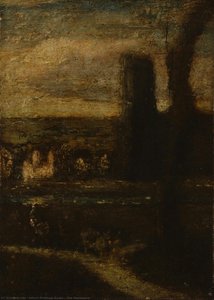
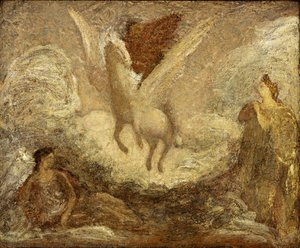
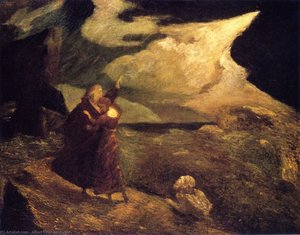
Биография художника
Albert Pinkham Ryder (1847–1917): A Visionary of American Romanticism
Albert Pinkham Ryder, born March 19, 1847, in New Bedford, Massachusetts, remains a somewhat enigmatic figure in American art history. Details of his childhood are scarce, shrouded in the mists that would later become so characteristic of his paintings. However, it is known that he began to explore his artistic inclinations early on, capturing the landscapes of his native New Bedford with nascent skill. This coastal upbringing, steeped in the atmosphere of a bustling whaling port, undoubtedly left an indelible mark on his imagination and would resurface throughout his career as a recurring source of inspiration.In the late 1860s, Ryder’s family relocated to New York City, where his brother managed the renowned Hotel Albert in Greenwich Village. This move placed young Albert within a vibrant cultural milieu, offering opportunities for artistic development and exposure to new ideas. While assisting with family responsibilities, he continued to pursue his passion for painting, laying the groundwork for his future artistic journey.
Formal Training and European Influences
Ryder’s formal art education began with studies under William Edgar Marshall in New York City. He then enrolled at the National Academy of Design, attending between 1870 and 1875, where he exhibited his first work in 1873 and forged a lifelong friendship with fellow artist Julian Alden Weir. These formative years provided him with a solid foundation in traditional techniques and introduced him to the established art world.
However, Ryder’s artistic vision extended beyond conventional academic training. Between 1877 and 1903, he embarked on four journeys to Europe, immersing himself in the artistic currents of the Old World. He was particularly drawn to the French Barbizon school, with its emphasis on naturalism and plein air painting, and the Dutch Hague School, known for its atmospheric landscapes and muted color palettes. These influences profoundly shaped his aesthetic sensibilities, contributing to the development of his unique style.
A Painter's Soul: Ryder’s Distinctive Style
Ryder’s artistic signature is instantly recognizable—a captivating blend of Symbolism, Tonalism, and a deeply personal vision. His paintings are not mere representations of reality but rather evocative interpretations of nature infused with mood, mystery, and spiritual resonance. He favored broad, often ill-defined shapes and stylized figures set within dreamlike landscapes or seascapes, creating an atmosphere that is both ethereal and haunting.
Light plays a crucial role in Ryder’s work. His scenes are frequently illuminated by dim sunlight filtering through eerie clouds or the soft glow of moonlight, casting long shadows and enhancing the sense of drama and introspection. He masterfully manipulated color to create subtle variations and atmospheric effects, often employing a limited palette to achieve maximum emotional impact.
Notable Works and Legacy
Ryder’s most celebrated paintings include Misty Moonlight (ca. 1893), which captures the sublime beauty of coastal New Bedford under an overcast sky—a testament to his ability to distill nature's essence into a single, unforgettable image. Also noteworthy are The Race Track (1894) and Siegfried & Rhine Maidens (1896), where Ryder explored mythological themes with symbolic imagery and expressive brushwork.
Ryder’s influence extends far beyond his immediate contemporaries. His emphasis on form, color, and emotional expression paved the way for later generations of artists, including Jackson Pollock, who acknowledged Ryder as a significant precursor to Abstract Expressionism. He remains celebrated as a pioneer of American Tonalism and Symbolism, an artist whose mystical paintings continue to inspire awe and wonder.
Lloyd Goodrich says that Ryder is “one of the few authentic religious painters of his period” in whom religion was not mere conformity, but deep personal emotion. The life of Christ moved him to some of his most tender and impressive works.
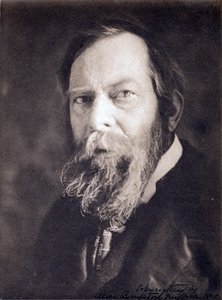
Альберт Пинхэм Райдер
1847 - 1917 , США
Основные сведения
- Artistic Movement Or Style: Тонализм и Символизм
- Artists Who Influenced This Artist:
- Вильям Эдгар Маршалл
- Дж. Эйлен Уир
- Date Of Birth: Марч 19, 1847
- Date Of Death: Марч 28, 1917
- Full Name: Albert Pinkham Ryder
- Nationality: Американский
- Notable Artworks:
- Морской туман
- Сигильфред и Рейнская дева
- Place Of Birth: Нью-Берфорд, США