

 Предпросмотр
 Поделиться
 Поделиться
 Детали произведения

 Скачать
 Похожие работы
 Рентгенография
 Слайд-шоу
 Статистика
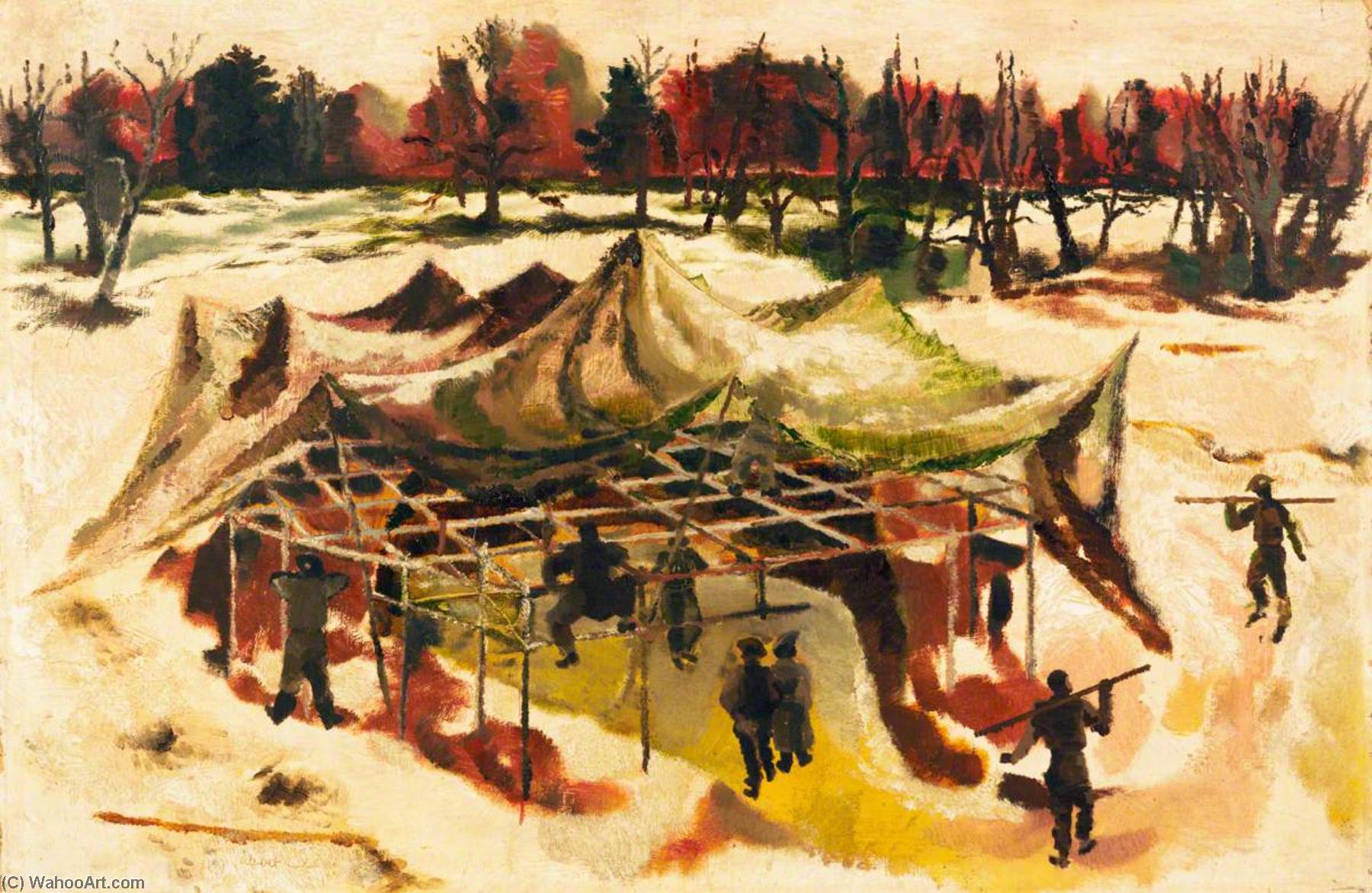
A Covering for a Gun Site
 1942
1942 44.0 x 68.0 cm
 Читать далее
Масляная репродукция ручной работы
Картина маслом на холсте в выбранном вами размере и раме, написанная на заказ нашими художниками. ( Перейти к печати Перейти к цифровым изображениям)




































Выберите один из наших стандартных размеров, соответствующих оригинальным пропорциям произведения искусства.

Вы можете указать собственные размеры, чтобы картина идеально вписалась в выбранную раму или пространство. Если выбранный вами размер не соответствует пропорциям оригинала, мы либо обрежем полотно, либо расширим его за счет дополнительных элементов, написанных вручную. Цифровой макет будет отправлен вам на утверждение перед началом производства.
Обратите внимание, что предварительный просмотр на экране не отражает фактическую обрезку или расширение. Только макет точно покажет окончательную композицию.
Хотя доступны индивидуальные размеры, мы рекомендуем выбирать вариант из предопределенного списка, чтобы сохранить исходные пропорции.
После оформления заказа команда ArtsDot.com свяжется с клиентом по электронной почте для уточнения деталей и предоставит предварительный макет
Доставка по всему миру () за 3–4 недели вместо стандартных 5 недель. (11 Сентябрь). Без компромиссов в качестве.

Бесплатная экспресс-доставка по всему миру

Высококачественный льняной холст

Полное страхование доставки

Гарантия возмещения таможенных пошлин

Гарантия точного соответствия цветов

100-дневная политика возврата (только при обнаружении дефектов)

Гарантия возврата 100% средств

Предложение оптовых скидок
 Вариант со стеклом доступен только для размеров менее 110 см

A Covering for a Gun Site
Техника репродукции
Размер репродукции
-


Итоговая стоимость
$ 263
Artistic Composition
The painting depicts a group of people standing in the snow under a large tent, with at least nine individuals visible in the scene. The tent is situated towards the center of the image and appears to be a focal point for the gathering. Two guns are present in the painting, one located near the right side of the image and another slightly more centrally positioned, suggesting that the group may be involved in some form of outdoor activity or event. Key Elements of the painting include the use of color and light to create a sense of depth and atmosphere. The snow-covered landscape and the tent's fabric are rendered in exquisite detail, drawing the viewer's eye into the scene. The Museu Margate Old Town Local History Museum in Margate, UK, is home to a collection of artworks that showcase the region's history and culture, including pieces by renowned artists like Albert Richards.Artist's Background
Albert Richards was a talented artist known for his ability to capture the essence of everyday life. His work is characterized by attention to detail and a deep understanding of color and composition. The A Covering for a Gun Site is a prime example of his skill, showcasing his ability to create a sense of depth and atmosphere in a painting.- Visit the A Covering for a Gun Site page on ArtsDot to learn more about this captivating painting.
- Explore the Museum of Latin American Art collection on ArtsDot to discover more artworks by talented artists.
- Read about the Clarence Alphonse Gagnon and his watercolor paintings on Wikipedia: Clarence Gagnon.
The A Covering for a Gun Site by Albert Richards is a masterpiece that showcases the artist's exceptional skill and attention to detail. This captivating oil on panel painting is a must-see for art enthusiasts and historians alike, offering a glimpse into the world of everyday life during wartime.
Похожие произведения




Биография художника
A Soldier Painter’s Vision of War
The life of Albert Richards was a poignant intersection of artistic devotion and the brutal realities of mid-twentieth-century conflict. Born in Liverpool on December 13, 1919, to Hannah Beatty and George Richards, his early years were shaped by the quiet strength of a working-class household in Wallasey, Cheshire. His father, a veteran of the Great War, instilled in him a profound sense of duty and resilience—virtues that would later define both his military service and his approach to the canvas. From a young age, Richards found solace and inspiration in the landscapes surrounding his home, developing an eye for the subtle nuances of light and terrain that would eventually become the hallmark of his wartime documentation.
His formal journey into the world of fine art began at Wallasey Central School, leading him to the prestigious Wallasey School of Art and Crafts. His talent was so undeniable that he secured a scholarship from the Borough of and Wallasey to attend the Royal College of Art, beginning his studies in early 1940. It was within these hallowed halls that Richards was exposed to the cutting-edge movements of the era, including Cubism and Surrealism. These modernist influences provided him with an experimental toolkit, allowing him to move beyond mere representation toward a more visceral, textured way of capturing the world around him.
The Canvas of Conflict
The outbreak of World War II fundamentally redirected the trajectory of Richards’s life, transforming him from a student of art into a chronicler of combat. In May 1941, the War Artists Advisory Committee (WAAC) recognized his unique ability to merge technical skill with the raw immediacy of a soldier's perspective and recruited him for a commission. Though he initially found great fulfillment in the Parachute Regiment—a role that offered both physical challenge and artistic stimulation—he ultimately accepted the call to document the unfolding struggle. This period saw him translating the adrenaline of airborne operations into enduring works of art.
Richards’s work from this era is characterized by a remarkable ability to capture movement and atmosphere. During his extensive parachute training at RAF Ringway, he produced evocative pieces such as “Kilkenny’s Circus” and “Parachute Training Over Tatton Park,” which meticulously detail the physicality of the descent. His later commissions took him into the heart of major military operations, including Operation Mush, where he participated in large-scale parachute drops over Gloucestershire. Whether depicting the chaotic energy of a sky filled with silk or the somber stillness of a frozen trench, his paintings possess an emotional weight that transcends simple reportage.
Legacy and Artistic Mastery
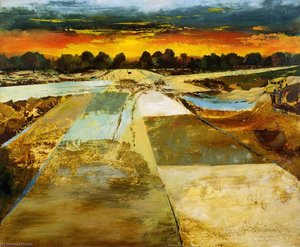
The technical breadth of Richards’s oeuvre is nothing short of extraordinary, ranging from the expressionistic to the deeply realistic. In works like “Take Off and Landing Field,” one can witness his use of impasto textures and dramatic sunset hues to convey a sense of cinematic grandeur. Conversely, his more somber compositions, such as “Sappers Erecting Pickets in the Snow” or “Royal Engineers’ Dump,” utilize geometric forms and a muted palette to evoke the stark, often harrowing reality of life on the front lines. His ability to find beauty within the grim machinery of war remains his most significant contribution to the history of British art.
Tragically, Richards’s life was cut short in 1945, making him the youngest of the three British official war artists killed during the conflict. Yet, through his surviving works, his vision remains undimmed. He left behind a legacy that serves as both a historical record and a profound meditation on human endurance. His paintings do more than just show us what the war looked like; they allow us to feel the tension of the drop, the chill of the winter trenches, and the unwavering spirit of those who served.
albert richards
1919 - 1945
Основные сведения
- Artistic Movement Or Style: Expressionism
- Artists Or Movements Influenced By This Artist: ['Luminism']
- Artists Who Influenced This Artist:
- Turner
- Ruskin
- Date Of Birth: December 1919
- Date Of Death: March 1945
- Full Name: Albert Richards
- Nationality: British
- Notable Artworks:
- A Covering for a Gun Site
- The Drop
- Take off and Landing Field
- Place Of Birth: Liverpool, England