

 Предпросмотр
 Поделиться
 Поделиться
 Детали произведения

 Скачать
 Похожие работы
 Рентгенография
 Слайд-шоу
 Статистика
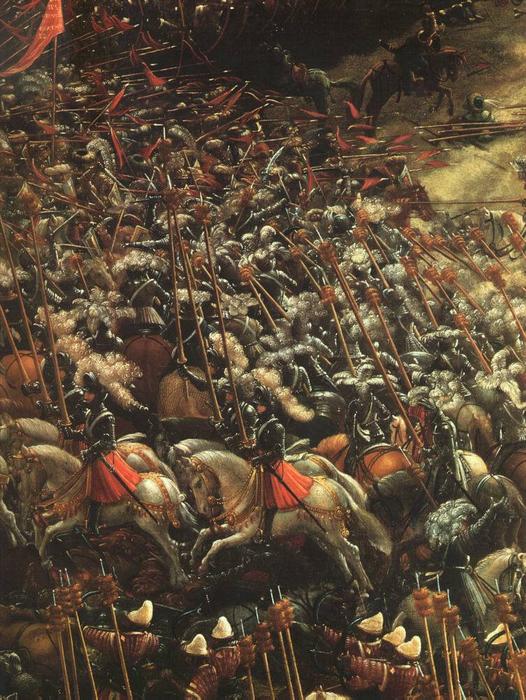
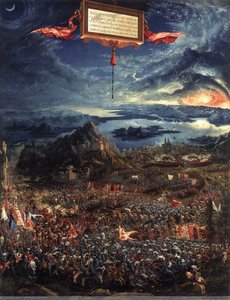
The Battle of Alexander (detail)


 Читать далее
Приобретите цифровое изображение высокого разрешения в улучшенном качестве, которое значительно превосходит онлайн-превью.
Каждый файл тщательно подготавливается нашими специалистами с использованием передовых инструментов и экспертной ручной ретуши. Мы гарантируем исключительную четкость, точную цветопередачу и детальную проработку каждого изображения.
Финальный файл доставляется по электронной почте в течение 72 часов и оптимизирован для немедленного использования в профессиональной среде, при верстке и печати. Это тот же уровень качества, которому доверяют ведущие дизайнерские студии, издательства и галереи.
Цифровое изображение
Скачайте файл высокого разрешения для личного использования, печати и творческих проектов. ( Перейти к печати Купить картину ручной работы)
Включено в каждый заказ цифровых изображений
Гарантия экспертной цифровой доставки
Выбирая ArtsDot.com, вы получаете не просто изображение — вы приобретаете профессионально обработанное цифровое произведение искусства, созданное с безупречной точностью и под защитой гарантии качества. Вот всё, что автоматически входит в ваш заказ:

Мгновенная доставка по e-mail
Ваш цифровой файл в высоком разрешении будет отправлен вам по электронной почте в течение 72 часов после оформления заказа — и сразу станет доступен для использования.

Цифровой файл с ИИ-улучшением
Ваше произведение искусства проходит профессиональную оптимизацию с использованием передовых инструментов ИИ и ручной обработки, что гарантирует максимальную детализацию, четкость и точность цветопередачи.

Бессрочная бесплатная повторная доставка
Случайно удалили или потеряли файл? Не беспокойтесь — мы отправим его вам повторно в любое время и совершенно бесплатно.

Без импортных пошлин — навсегда
Наслаждайтесь вашим произведением искусства мгновенно без таможенных пошлин, сборов или затрат на доставку — цифровые загрузки всегда не облагаются налогом.

Гарантия точности цветопередачи
Мы гарантируем, что ваше цифровое изображение максимально точно передает оригинальные цвета благодаря использованию профессиональных инструментов и систем управления цветом.

Гарантия удовлетворенности 100 дней
Если вы не будете удовлетворены своим цифровым изображением, мы внесем правки или вернем 100% стоимости в течение 100 дней — без лишних вопросов.

100% Гарантия возврата средств
Не удовлетворены покупкой? Получите полный возврат средств в течение 100 дней после получения цифрового файла — без лишних вопросов.

Скидки на оптовые заказы
Купите 3 изображения, сэкономьте 10% — Купите 5, сэкономьте 15% — Купите 10+, сэкономьте 20%. Отличное решение для творческих проектов, галерей и агентств.
The Clash of Empires: Albrecht Altdorfer’s “The Battle of Alexander at Issus”
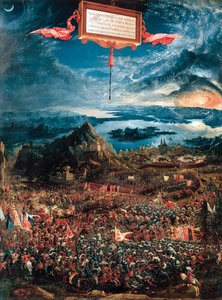
Albrecht Altdorfer's "The Battle of Alexander at Issus," painted in 1529 and now residing within the Alte Pinakothek in Munich, isn’t merely a depiction of a historical battle; it’s a visceral embodiment of ambition, conflict, and the precarious balance between East and West. More than just a military scene, this monumental work is a carefully constructed panorama—a stage upon which the destinies of empires collide, rendered with an unprecedented dynamism and emotional intensity for its time. The painting immediately assaults the viewer with its scale and frenetic energy; figures surge across the canvas in a swirling vortex of steel, color, and movement, creating a sense of overwhelming chaos that belies the strategic brilliance at play.
Altdorfer’s genius lies not simply in his technical skill—though it is undeniably masterful—but in his ability to fuse meticulous detail with an almost hallucinatory intensity. Every shield gleams, every plume of war paint reflects the light, and the musculature of each soldier is rendered with a startling realism. Yet, this hyper-realism isn’t employed to create a photographic likeness; rather, it serves to amplify the drama and heighten the sense of immediacy. The artist masterfully employs atmospheric perspective—distant figures fading into a hazy blue – to draw the eye deeper into the scene, while simultaneously utilizing bold color contrasts—the fiery reds of the Macedonian cavalry against the somber blues and greens of the Persian ranks—to establish a clear visual hierarchy.
A Landscape Transformed: The Dawn of Independent Landscape
What truly distinguishes “The Battle of Alexander” is Altdorfer’s revolutionary approach to landscape. Prior to this painting, landscapes were typically relegated to secondary roles, serving merely as backdrops for historical or religious narratives. Altdorfer, however, elevates the landscape to a central protagonist, imbuing it with its own expressive power and significance. The rolling hills of the Bavarian countryside—recognizable in the distant background—are not simply a setting; they are actively engaged in the drama unfolding before them, mirroring the turmoil and uncertainty of the conflict. The artist’s use of color – particularly the vibrant greens and blues – evokes both the beauty and the danger inherent in nature, suggesting that even the landscape itself is caught in the crosscurrents of war.
This shift towards independent landscape marked a pivotal moment in art history, establishing Altdorfer as one of the pioneers of what would later be known as the “world landscape.” He wasn’t interested in creating a realistic representation of a specific place; instead, he used the landscape to amplify the emotional impact of the scene and to convey a sense of timelessness. The inclusion of elements like the rising sun on the left side of the painting—a symbol of hope and renewal—further reinforces this notion of landscape as an active participant in the unfolding drama.
Symbolism and Political Undertones
Beyond its purely visual impact, “The Battle of Alexander” is laden with symbolic meaning. The battle itself represents a clash between two civilizations – the burgeoning power of the West, embodied by Alexander the Great, and the declining empire of Persia. However, Altdorfer subtly complicates this narrative by incorporating elements that suggest a broader political context. The painting was commissioned by Duke William IV of Bavaria, who was actively preparing for war against the Ottoman Turks—a formidable threat to Europe at the time. Some art historians believe that Altdorfer deliberately used the imagery of Alexander’s victory to bolster morale and inspire his patrons to confront this contemporary enemy.
The inclusion of figures fleeing in disarray, particularly those representing Darius III, reinforces this sense of impending doom. The composition itself—with Alexander positioned at the center, radiating authority and control—suggests that Western civilization is destined to triumph over Eastern decadence. Even the sky, with its dramatic interplay of light and shadow, seems to foreshadow a future of conflict and uncertainty.
A Timeless Masterpiece: Reproduction and Beyond
“The Battle of Alexander at Issus” remains a profoundly moving and intellectually stimulating work of art. Its dynamic composition, masterful technique, and rich symbolism continue to captivate viewers centuries after its creation. High-quality reproductions offer an accessible way to experience the painting’s power and beauty, allowing art lovers, collectors, and interior designers alike to bring this iconic image into their homes or offices. When selecting a reproduction, seek out versions that faithfully capture Altdorfer's vibrant color palette and dramatic lighting—elements that are crucial to understanding the painting’s emotional impact. This monumental work serves as a potent reminder of the enduring power of art to both reflect and shape our understanding of history, politics, and the human condition.
Похожие произведения
Биография художника
Albrecht Altdorfer: The Pioneer of German Landscape
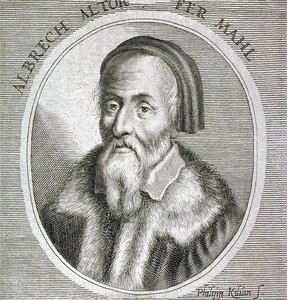
Albrecht Altdorfer, born around 1480 in the vibrant city of Regensburg on the banks of the Danube River, stands as a truly remarkable figure – a bridge between the late Gothic era and the burgeoning artistic spirit of the German Renaissance. He wasn’t merely an artist *of* his time; he fundamentally reshaped it, particularly through his groundbreaking exploration of landscape painting. His origins were deeply rooted in a family steeped in artistic tradition: his father, Ulrich Altdorfer, was himself a painter and miniaturist, providing Albrecht with an early immersion into the world of art. This familial legacy, combined with Regensburg’s position as a thriving center of trade and culture – a free imperial city strategically located on the Danube – fostered within him a unique artistic sensibility, a profound connection to the natural world that would become the cornerstone of his distinctive style. Beyond his artistic pursuits, Altdorfer was also a man of civic responsibility, serving not only as an artist but also as a town architect and a respected member of Regensburg’s council – a testament to his diverse talents and multifaceted personality. His legacy rests primarily on his early engravings and drawings from around 1506, such as *Stygmata of St. Francis* and *St. Jerome*, which offered tantalizing glimpses into the emotional intensity and meticulous detail that would define his mature work.The Danube School: A Revolutionary Approach to Nature
Altdorfer’s most significant contribution to art history lies in his membership within the influential Danube School, a collective of artists active primarily during the early 16th century in southern Germany. This group shared a common passion – an intense fascination with capturing the expressive potential of landscape, elevating it from its traditional role as mere background to become a central and vital subject in its own right. Prior to Altdorfer’s arrival on the scene, landscapes were largely relegated to serving as settings for religious or historical narratives; he dared to depict nature *for itself*, imbuing it with atmosphere, emotion, and a profound sense of presence. A pivotal moment in his artistic development occurred around 1511 when Altdorfer embarked on a transformative journey down the Danube River and into the majestic Alps. The dramatic vistas – towering mountains, dense forests, and expansive valleys – ignited within him an unquenchable desire to translate these experiences onto canvas, capturing not just what he saw but also *how* it felt to be immersed in such breathtaking beauty. This marked a radical shift; Altdorfer became, arguably, the first modern landscape painter, prioritizing emotional response over strict topographical accuracy – conveying the awe, mystery, and even spiritual connection evoked by the natural world. His work, exemplified by pieces like “The Large Spruce,” demonstrates this shift brilliantly, offering a serene and intricately detailed depiction of nature’s beauty that transcends simple representation.Masterpieces and Artistic Influences: A Synthesis of Styles
Throughout his prolific career, Altdorfer produced an astonishingly diverse body of work encompassing paintings, engravings, drawings, and even architectural designs. Among the most celebrated achievements of his oeuvre is *The Battle of Alexander at Issus* (1529), a monumental painting commissioned by Duke William IV of Bavaria. This epic artwork showcases not only Altdorfer’s exceptional mastery of composition, perspective, and detail but also his innovative use of landscape to heighten the dramatic tension and visceral impact of the battle scene itself. The swirling clouds, jagged mountain peaks, and chaotic melee of soldiers create a sense of overwhelming energy, dynamism, and almost apocalyptic grandeur. His collaboration with Emperor Maximilian I in Innsbruck from 1513 further broadened his artistic horizons, providing him with opportunities to undertake large-scale projects that showcased his versatility and ambition. Altdorfer’s artistic style wasn't born in isolation; he was deeply influenced by a range of artists and movements. The poetic lyricism of Italian Renaissance painter Giorgione, the expressive figures of Lucas Cranach the Elder, and the meticulous detail evident in the works of Albrecht Dürer all left an indelible mark on his art. However, Altdorfer skillfully synthesized these diverse influences into a uniquely personal vision – one characterized by its intense emotionality, dramatic use of light and shadow, and evocative depictions of landscapes. His engravings, such as “Mucius Scaevola Burning His Hand,” demonstrate his exceptional skill in this medium, showcasing delicate lines, intricate details, and a remarkable ability to convey movement and drama.Legacy and Lasting Impact: A Foundation for Future Generations
Albrecht Altdorfer’s artistic legacy extends far beyond the 55 panels, 120 drawings, and numerous engravings he created during his lifetime. He fundamentally altered the way artists approached landscape painting, paving the way for future generations to explore its expressive possibilities and embrace it as a subject worthy of independent consideration. His influence can be seen in the works of later German Romantic painters who similarly sought to capture the sublime beauty and emotional power of nature – figures like Caspar David Friedrich drew inspiration from Altdorfer’s pioneering approach. Today, Altdorfer’s art is proudly displayed in major museum collections around the world, including the Museum Ostdeutsche Galerie in Germany (where his *Madonna (Beautiful Maria of Regensburg)* resides) and the Kunstsammlungen und Museen Augsburg in Austria. His innovative spirit, technical skill, and profound connection to the natural world continue to inspire artists and captivate audiences centuries after his death in 1538. He remains a towering figure of the German Renaissance – a true pioneer who dared to see landscape not merely as scenery but as a powerful force capable of evoking deep emotion and spiritual meaning. His work stands as a testament to the enduring power of art to transform our perception of the world around us, a legacy that continues to resonate with viewers today.Exploring Altdorfer’s Diverse Works
Beyond his iconic landscapes and battle scenes, Altdorfer's artistic range encompassed religious subjects, mythological narratives, and even architectural designs. His depictions of biblical stories, such as “Abraham’s Sacrifice,” are imbued with a dramatic intensity and emotional depth that set them apart from earlier interpretations. He wasn’t simply illustrating scripture; he was exploring the human condition through the lens of faith – grappling with themes of sacrifice, obedience, and divine justice.- Engravings: Altdorfer's engravings, like “Mucius Scaevola Burning His Hand,” demonstrate his mastery of line and detail, often conveying a sense of movement and drama.
- Drawings: His drawings offer intimate glimpses into his creative process, revealing his meticulous observation skills and expressive use of shading.
- Architectural Designs: As town architect of Regensburg, Altdorfer contributed to the city’s fortifications and urban planning, showcasing his practical as well as artistic talents.
Альбрехт Альтдорфер
1480 - 1538 , Германия
Основные сведения
- Artistic Movement Or Style: Данновская школа, Ренессанс
- Artists Or Movements Influenced By This Artist: ['Немецкий романтизм']
- Artists Who Influenced This Artist:
- Джорджоне
- Лукас Кранх
- Альбрехт Дюрер
- Date Of Birth: ок. 1480 г.
- Date Of Death: 1538 г.
- Full Name: Albrecht Altdorfer
- Nationality: Немецкий
- Notable Artworks: ['Битва Александра при Иссе", "Большое сосна", "Святой Георг и дракон']
- Place Of Birth: Рейгенсбург, Германия