 Предпросмотр
 Поделиться
 Поделиться
 Детали произведения

 Скачать
 Похожие работы
 Рентгенография
 Слайд-шоу
 Статистика
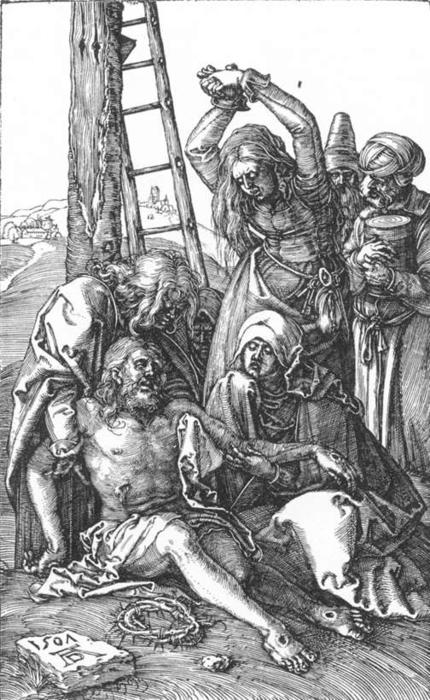
Lamentation over Christ (No. 12)
 Engraving
- WallArt
- Northern Renaissance Engraving
 1507
1507- Renaissance
 115.0 x 71.0 cm
 Музей Метрополитен
 Читать далее
Жикле / Арт-принт
Печать (жикле) или холст музейного качества с быстрыми сроками изготовления и широким выбором вариантов отделки. ( Купить картину ручной работы Перейти к цифровым изображениям)




P118B $10

P118H $10

P118W $10

P438Z $10

P508JH $12

P508YH $12

P805H $10

P805Z $10

P919BZ $10

P919G $10

P919XJ $10

P959ZH $10

P968JZ $12

W106C $8

W218G $10

W218JH $8

W218Y $10

W307PJ $10

W316G $10

W316PJ $8

W316Y $10

W398PJ $8

W4111J $10

W500HY $15

W500JH $15

W692G $12

W849H $8

W940BG $15

W953PJ $8




Выберите один из наших стандартных размеров, соответствующих оригинальным пропорциям произведения искусства.

Вы можете указать свои собственные размеры, чтобы репродукция идеально подошла под конкретную раму или пространство. Если выбранный вами размер не будет соответствовать пропорциям оригинала, мы либо обрежем произведение, либо дополним изображение зеркальным отражением краев или однотонной заливкой. Перед началом производства вам будет отправлен цифровой макет для утверждения.
Пожалуйста, обратите внимание, что предварительный просмотр на экране не отображает фактическую обрезку или расширение изображения. Только макет точно покажет финальную композицию.
Несмотря на возможность заказа индивидуальных размеров, мы рекомендуем выбирать размер из предопределенного списка, чтобы сохранить оригинальные пропорции.
Доставка по всему миру () за 2 недели вместо стандартных 4/5 недель. (11 Сентябрь)

Бесплатная экспресс-доставка по всему миру

Высококачественный льняной холст

Полное страхование доставки

Гарантия возмещения таможенных пошлин

Гарантия точного соответствия цветов

100-дневная политика возврата (только при обнаружении дефектов)

Гарантия возврата 100% средств

Предложение оптовых скидок
 Вариант со стеклом доступен только для размеров менее 110 см

Lamentation over Christ (No. 12)
Жикле / Арт-принт
Размер репродукции
-


Итоговая стоимость
$ 62
A Symphony of Sorrow: The Mastery of Dürer’s Lamentation
In the quiet, somber depths of Albrecht Dürer’s Lamentation over Christ (No. 12), we encounter one of the most profound meditations on grief ever etched into metal. Created around 1507, this exquisite engraving serves as a cornerstone of the Northern Renaissance, capturing a moment of biblical tragedy with a level of intimacy that transcends time. The scene is not merely a historical recount of the aftermath of the crucifixion; it is an immersive emotional landscape. As the viewer gazes upon the lifeless form of Christ, they are drawn into a tight-knit circle of mourners—Mary Magdalene, Nicodemus, Joseph of Arimathea, and Mary Cleophas—whose very postures radiate a heavy, palpable despair. It is a work that does not just show sorrow; it breathes it.
The brilliance of this piece lies in Dürer’s unparalleled command over the drypoint and engraving techniques. Through a meticulous dance of fine lines, hatching, and cross-hatching, the artist achieves a sculptural depth that feels almost tactile. One can almost feel the weight of the heavy, draped fabrics as they cascade around the central figures, and the subtle, velvety shadows that cling to the contours of skin and bone. This mastery of light and shadow—the chiaroscuro effect achieved through monochrome precision—creates a dramatic tension that anchors the composition. The pyramidal structure of the figures directs the eye upward, creating a sense of spiritual ascension even amidst the crushing weight of mortality.
Symbolism and the Renaissance Spirit
Beyond its technical virtuosity, the artwork is rich with the intellectual and spiritual symbolism characteristic of Dürer’s era. Every element within the frame serves a higher narrative purpose. The ladder leaning against the wall acts as a poignant visual counterpoint to the tragedy below, symbolizing the bridge between the earthly suffering of the crucifixion and the eventual ascension to heaven. Near the base of the composition, the presence of a skull serves as a stark memento mori, a chilling reminder of the inevability of death that would have resonated deeply with the humanist thinkers of Nuremberg. These symbols transform the engraving from a simple religious illustration into a complex philosophical inquiry into the human condition.
For the discerning collector or interior designer, a high-quality reproduction of this masterpiece offers more than just decoration; it provides a focal point of profound intellectual and emotional gravity. The monochromatic elegance of the piece allows it to integrate seamlessly into diverse aesthetic environments, from the moody, classical atmosphere of a traditional study to the stark, sophisticated minimalism of a modern gallery space. To possess such a work is to invite a piece of art history into one's home—a testament to the enduring power of human emotion and the timeless precision of the German Renaissance.
Похожие произведения
Биография художника
A Life Forged in Nuremberg: The Early Years and Apprenticeship
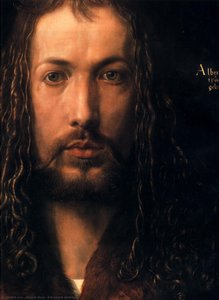
Albrecht Dürer, a name synonymous with the German Renaissance, emerged from the bustling artisan city of Nuremberg in 1471. His father, Albrecht Dürer the Elder, was a successful goldsmith who had immigrated from Hungary, bringing with him a lineage steeped in craftsmanship. It was within this environment—the scent of metal and the meticulous precision of handiwork—that young Albrecht’s artistic inclinations first took root. Though his father envisioned a similar path for him, apprenticing him initially in the family trade, it soon became undeniable that Albrecht possessed an exceptional gift for drawing. At thirteen, he transitioned to the workshop of Michael Wolgemut, Nuremberg's leading artist at the time. This was no mere technical training; it was immersion into a world of illuminated manuscripts, painted panels, and—crucially—the burgeoning art of woodcut illustration. The sheer volume of work produced by Wolgemut’s workshop, including the extensive illustrations for the *Nuremberg Chronicle*, provided Dürer with an unparalleled foundation in design, composition, and the mechanics of image-making. A remarkable silverpoint self-portrait from 1484, created when he was barely a teenager, stands as astonishing evidence of his precocious talent—a testament to a burgeoning artistic identity already taking shape. This early work demonstrated not only technical skill but also a nascent desire to capture the essence of human form and emotion, foreshadowing the profound impact he would later have on European art.The Italian Influence and Artistic Maturation
Dürer’s ambition extended far beyond the confines of Nuremberg. Driven by an insatiable curiosity and a desire to master the art of painting, he embarked on his first journey to Italy in 1494. This was not simply a sightseeing trip; it was a pilgrimage to the heart of the Renaissance. He encountered the works of masters like Raphael, Giovanni Bellini, and Leonardo da Vinci—artists who were redefining the possibilities of form, perspective, and human expression. The impact of this exposure was profound. Dürer absorbed the classical motifs, harmonious compositions, and subtle sfumato techniques that characterized Italian art, yet he never abandoned his Northern European sensibility for meticulous detail and symbolic depth. He studied the grandeur of Rome’s ancient ruins, marveling at the remnants of a civilization that had mastered proportion and harmony. This journey ignited within him a desire to synthesize the best elements of both Northern and Southern artistic traditions, creating a style uniquely his own. A second sojourn to Italy between 1505 and 1507 further solidified these influences, allowing him to refine his understanding of anatomy and proportion through direct observation and study. This synthesis of Northern precision and Italian grace became the hallmark of Dürer’s unique artistic style—a testament to his intellectual curiosity and artistic ambition.Mastering the Mediums: Painting, Engraving, and Woodcut
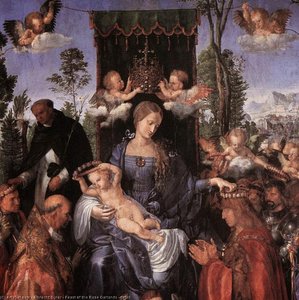
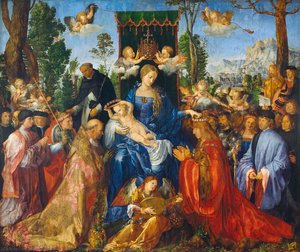
Dürer was a master of multiple mediums, each offering him distinct avenues for creative expression. His paintings, though fewer in number than his prints, demonstrate a remarkable command of oil paint and an ability to capture both physical likeness and psychological depth. Works like the *Feast of the Rose Garlands* (1507) reveal a vibrant palette influenced by Venetian colorism—bold hues and shimmering effects that evoke a sense of festive celebration. However, it was in the realm of printmaking—particularly engraving and woodcut—that Dürer truly revolutionized artistic practice. He elevated these techniques from mere reproductive methods to independent art forms, capable of conveying complex narratives and profound emotions. The *Apocalypse* series (1498), a collection of fourteen woodcuts illustrating the Book of Revelation, showcased his mastery of this medium despite its inherent limitations—the intricate detail and dramatic compositions demanded extraordinary skill and patience. Later engravings like *Melencolia I* (1514) and *Saint Jerome in His Study* (1514) are testaments to his unparalleled skill—intricate compositions filled with symbolic meaning and executed with breathtaking precision. He didn’t just depict reality; he imbued it with layers of intellectual and spiritual significance, transforming the printed image into a powerful vehicle for communication and contemplation.A Theorist and Innovator: The Legacy of Albrecht Dürer
Dürer was not merely an artist; he was a scholar, a theorist, and an innovator who sought to understand the underlying principles governing artistic creation. He believed in the mathematical foundations of art and dedicated himself to establishing a scientific approach to representation. His treatises on geometry, proportion, and human anatomy—most notably *Four Books of Human Proportion* (1528)—were groundbreaking for their time, demonstrating his commitment to rigorous observation and rational analysis. These writings were not simply academic exercises; they were intended to elevate the status of artists from mere craftsmen to intellectual practitioners. Dürer’s meticulous studies of human anatomy, combined with his understanding of perspective and proportion, allowed him to create images that were both visually stunning and intellectually stimulating. His work influenced generations of artists, shaping the course of European art for centuries to come. He demonstrated that art could be both technically masterful and intellectually rigorous—a legacy that continues to inspire artists and scholars alike. He remains, to this day, one of the most important figures in the history of Western art.Influences and Enduring Impact
- Michael Wolgemut: Dürer’s initial mentor, providing foundational skills in drawing, painting, and woodcut techniques.
- Leonardo da Vinci: Inspired Dürer’s exploration of anatomy, perspective, and sfumato—the subtle blending of tones.
- Raphael: Influenced Dürer’s compositional harmony and idealized forms.
- Giovanni Bellini: Contributed to Dürer's understanding of color and Venetian painting traditions.
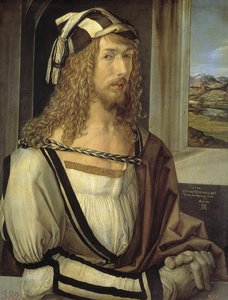
Альбрехт Дюрер
1471 - 1528 , Германия
Основные сведения
- Artistic Movement Or Style: Немецкий Ренессанс
- Artists Or Movements Influenced By This Artist:
- Северный Ренессанс
- Венская школа
- Artists Who Influenced This Artist:
- Леонардо да Винчи
- Рафаэль
- Джотто
- Date Of Birth: 21 мая 1471 г.
- Date Of Death: 6 апреля 1528 г.
- Full Name: Альбрехт Дюрер
- Nationality: Немецкий
- Notable Artworks:
- Апокалипсис
- Меланхолия I
- Святой Иосиф в его кабинете
- Place Of Birth: Нюрнберг, Германия
Похожие статьи
Топ-10 шедевров в оттенках черного: искусство, история и декор с ArtsDot
Погрузитесь в мир великих шедевров, где черный цвет – символ страсти и драмы. От Караваджо до Мунка, откройте историю искусства с ArtsDot. Купите репродукции картин онлайн и преобразите свой интерьер! Explore the full collection on ArtsDot.com

Белые шедевры: 10 знаменитых картин, покоривших мир (репродукции, декор)
Откройте для себя 10 знаменитых картин, где белый цвет – главный герой! Моне, Дега и другие мастера. История искусства, техники живописи и вдохновение для вашего интерьера. Репродукции высокого качества на ArtsDot.com

Топ-10 знаменитых картин в черных тонах: шедевры искусства для вашего интерьера
Погрузитесь в мир темных шедевров! Топ-10 знаменитых картин в черных тонах от Гойи, Рембрандта и Мунка. История искусства, техники живописи и вдохновение для вашего интерьера. Купите репродукции высокого качества на ArtsDot.com

Timeless & Chic: Elevating Your New Home with the Sophistication of Black and White Photography
Transform your new home with the timeless allure of black and white photography. ArtsDot.com specializes in elegant monochrome decor and custom hand-painted wedding portraits that turn cherished milestones into lasting, soulful masterpieces. Elevate your space with ease.

Monochrome Visions: Exploring the Aesthetic & Historical Significance of Black & White Photography
Explore the rich history & artistic power of black and white photography. From early techniques to iconic masters like Ansel Adams, discover why monochrome continues to captivate art lovers today. Expert insights for collectors.