 Предпросмотр
 Поделиться
 Поделиться
 Детали произведения

 Скачать
 Похожие работы
 Рентгенография
 Слайд-шоу
 Статистика
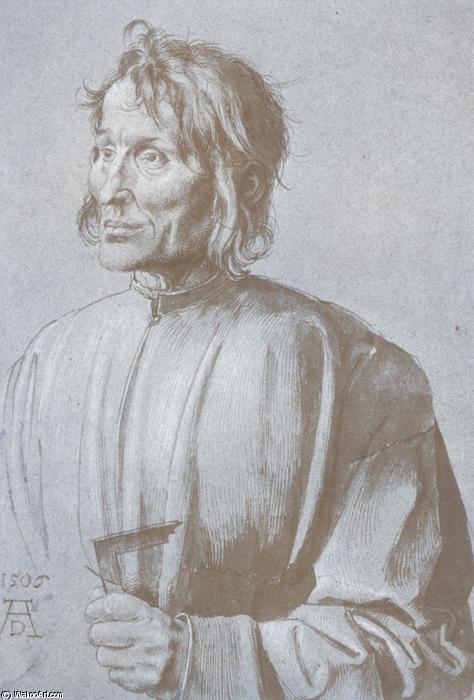
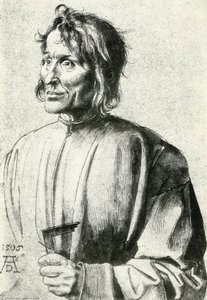
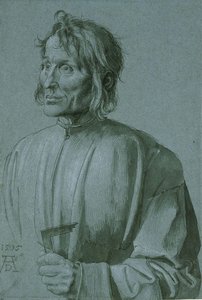
Portrait of an architect


 Читать далее
Масляная репродукция ручной работы
Картина маслом на холсте в выбранном вами размере и раме, написанная на заказ нашими художниками. ( Перейти к печати Перейти к цифровым изображениям)




P118B $10

P118H $10

P118W $10

P438Z $10

P508JH $12

P508YH $12

P805H $10

P805Z $10

P919BZ $10

P919G $10

P919XJ $10

P959ZH $10

P968JZ $12

W106C $8

W218G $10

W218JH $8

W218Y $10

W307PJ $10

W316G $10

W316PJ $8

W316Y $10

W398PJ $8

W4111J $10

W500HY $15

W500JH $15

W692G $12

W849H $8

W940BG $15

W953PJ $8




Выберите один из наших стандартных размеров, соответствующих оригинальным пропорциям произведения искусства.

Вы можете указать собственные размеры, чтобы картина идеально вписалась в выбранную раму или пространство. Если выбранный вами размер не соответствует пропорциям оригинала, мы либо обрежем полотно, либо расширим его за счет дополнительных элементов, написанных вручную. Цифровой макет будет отправлен вам на утверждение перед началом производства.
Обратите внимание, что предварительный просмотр на экране не отражает фактическую обрезку или расширение. Только макет точно покажет окончательную композицию.
Хотя доступны индивидуальные размеры, мы рекомендуем выбирать вариант из предопределенного списка, чтобы сохранить исходные пропорции.
После оформления заказа команда ArtsDot.com свяжется с клиентом по электронной почте для уточнения деталей и предоставит предварительный макет
Доставка по всему миру () за 3–4 недели вместо стандартных 5 недель. (12 Сентябрь). Без компромиссов в качестве.

Бесплатная экспресс-доставка по всему миру

Высококачественный льняной холст

Полное страхование доставки

Гарантия возмещения таможенных пошлин

Гарантия точного соответствия цветов

100-дневная политика возврата (только при обнаружении дефектов)

Гарантия возврата 100% средств

Предложение оптовых скидок
 Вариант со стеклом доступен только для размеров менее 110 см

Portrait of an architect
Техника репродукции
Размер репродукции
-


Итоговая стоимость
$ 263
A Study in Self-Reflection: Albrecht Dürer’s ‘Portrait of an Architect’
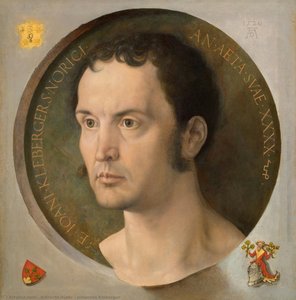
Albrecht Dürer's 'Portrait of an Architect,' executed in 1506, is more than a simple likeness; it’s a profound meditation on intellect, artistry, and the very nature of observation. Created during a pivotal moment in the Northern Renaissance, this monochrome drawing – meticulously crafted with charcoal or silverpoint on paper – reveals Dürer's unparalleled mastery of line and texture, offering a glimpse into the mind of one of history’s most influential artists. The subject, believed to be Dürer himself, is presented in a three-quarter view, his gaze directed slightly leftward, inviting the viewer into an intimate dialogue. This subtle gesture immediately establishes a connection, transforming the portrait from a mere representation into a shared moment of contemplation.
- Technical Brilliance: Dürer’s technique is breathtakingly precise. The use of hatching and cross-hatching creates a remarkable illusion of depth and volume, particularly evident in the rendering of the architect's wiry hair and the soft, draped quality of his clothing. Each line is carefully considered, contributing to an overall effect of astonishing realism for the period.
- Monochromatic Drama: The restricted palette – shades of gray and white – amplifies the emotional impact of the portrait. It evokes a sense of solemnity and dignity, reflecting the intellectual pursuits associated with the subject’s profession. This deliberate choice underscores Dürer's commitment to exploring tonal values rather than relying on vibrant color.
The Renaissance Mind: Context and Symbolism
‘Portrait of an Architect’ is firmly rooted in the artistic currents of the Northern Renaissance, a movement characterized by its emphasis on realism, meticulous detail, and individual portraiture. Dürer's work reflects this trend while simultaneously pushing the boundaries of artistic expression. The subject himself – an architect – carries significant symbolic weight. In the 16th century, architects were often viewed as embodying reason, order, and a deep understanding of human experience. Dürer’s choice to depict himself in this role suggests a self-awareness of his own intellectual capabilities and artistic ambitions. The simple collared shirt and tunic further reinforce the image of a scholar or professional, highlighting the architect's status within society.
Crafting Illusion: Dürer’s Drawing Techniques
Dürer’s skill is immediately apparent in the way he manipulates light and shadow. The diffused lighting creates subtle gradations in tone, suggesting a gentle light source from above and slightly to the left. This careful attention to illumination enhances the three-dimensionality of the portrait, making it appear as if the subject is truly present before us. The artist’s mastery extends beyond mere shading; he employs a sophisticated understanding of perspective – achieved not through traditional linear methods but through variations in tonal density and overlapping forms – to create a convincing sense of depth. The use of stippling, a technique involving the creation of tiny dots to build up tone, adds another layer of complexity and detail to the portrait.
A Legacy of Precision: Historical Significance
Completed in 1506, this drawing represents a crucial moment in Dürer’s artistic development. It showcases his growing confidence as a draftsman and his increasing interest in exploring psychological depth within his portraits. The ‘Portrait of an Architect’ is not just a technical masterpiece; it's a testament to Dürer’s profound understanding of human nature and his ability to translate that understanding into enduring works of art. Its influence can be seen throughout the course of Western art history, solidifying its place as one of the most important drawings of the Renaissance.
Похожие произведения
Биография художника
A Life Forged in Nuremberg: The Early Years and Apprenticeship
Albrecht Dürer, a name synonymous with the German Renaissance, emerged from the bustling artisan city of Nuremberg in 1471. His father, Albrecht Dürer the Elder, was a successful goldsmith who had immigrated from Hungary, bringing with him a lineage steeped in craftsmanship. It was within this environment—the scent of metal and the meticulous precision of handiwork—that young Albrecht’s artistic inclinations first took root. Though his father envisioned a similar path for him, apprenticing him initially in the family trade, it soon became undeniable that Albrecht possessed an exceptional gift for drawing. At thirteen, he transitioned to the workshop of Michael Wolgemut, Nuremberg's leading artist at the time. This was no mere technical training; it was immersion into a world of illuminated manuscripts, painted panels, and—crucially—the burgeoning art of woodcut illustration. The sheer volume of work produced by Wolgemut’s workshop, including the extensive illustrations for the *Nuremberg Chronicle*, provided Dürer with an unparalleled foundation in design, composition, and the mechanics of image-making. A remarkable silverpoint self-portrait from 1484, created when he was barely a teenager, stands as astonishing evidence of his precocious talent—a testament to a burgeoning artistic identity already taking shape. This early work demonstrated not only technical skill but also a nascent desire to capture the essence of human form and emotion, foreshadowing the profound impact he would later have on European art.The Italian Influence and Artistic Maturation
Dürer’s ambition extended far beyond the confines of Nuremberg. Driven by an insatiable curiosity and a desire to master the art of painting, he embarked on his first journey to Italy in 1494. This was not simply a sightseeing trip; it was a pilgrimage to the heart of the Renaissance. He encountered the works of masters like Raphael, Giovanni Bellini, and Leonardo da Vinci—artists who were redefining the possibilities of form, perspective, and human expression. The impact of this exposure was profound. Dürer absorbed the classical motifs, harmonious compositions, and subtle sfumato techniques that characterized Italian art, yet he never abandoned his Northern European sensibility for meticulous detail and symbolic depth. He studied the grandeur of Rome’s ancient ruins, marveling at the remnants of a civilization that had mastered proportion and harmony. This journey ignited within him a desire to synthesize the best elements of both Northern and Southern artistic traditions, creating a style uniquely his own. A second sojourn to Italy between 1505 and 1507 further solidified these influences, allowing him to refine his understanding of anatomy and proportion through direct observation and study. This synthesis of Northern precision and Italian grace became the hallmark of Dürer’s unique artistic style—a testament to his intellectual curiosity and artistic ambition.Mastering the Mediums: Painting, Engraving, and Woodcut
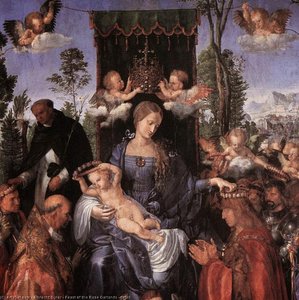
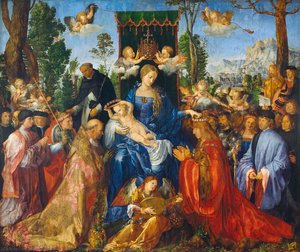
Dürer was a master of multiple mediums, each offering him distinct avenues for creative expression. His paintings, though fewer in number than his prints, demonstrate a remarkable command of oil paint and an ability to capture both physical likeness and psychological depth. Works like the *Feast of the Rose Garlands* (1507) reveal a vibrant palette influenced by Venetian colorism—bold hues and shimmering effects that evoke a sense of festive celebration. However, it was in the realm of printmaking—particularly engraving and woodcut—that Dürer truly revolutionized artistic practice. He elevated these techniques from mere reproductive methods to independent art forms, capable of conveying complex narratives and profound emotions. The *Apocalypse* series (1498), a collection of fourteen woodcuts illustrating the Book of Revelation, showcased his mastery of this medium despite its inherent limitations—the intricate detail and dramatic compositions demanded extraordinary skill and patience. Later engravings like *Melencolia I* (1514) and *Saint Jerome in His Study* (1514) are testaments to his unparalleled skill—intricate compositions filled with symbolic meaning and executed with breathtaking precision. He didn’t just depict reality; he imbued it with layers of intellectual and spiritual significance, transforming the printed image into a powerful vehicle for communication and contemplation.A Theorist and Innovator: The Legacy of Albrecht Dürer
Dürer was not merely an artist; he was a scholar, a theorist, and an innovator who sought to understand the underlying principles governing artistic creation. He believed in the mathematical foundations of art and dedicated himself to establishing a scientific approach to representation. His treatises on geometry, proportion, and human anatomy—most notably *Four Books of Human Proportion* (1528)—were groundbreaking for their time, demonstrating his commitment to rigorous observation and rational analysis. These writings were not simply academic exercises; they were intended to elevate the status of artists from mere craftsmen to intellectual practitioners. Dürer’s meticulous studies of human anatomy, combined with his understanding of perspective and proportion, allowed him to create images that were both visually stunning and intellectually stimulating. His work influenced generations of artists, shaping the course of European art for centuries to come. He demonstrated that art could be both technically masterful and intellectually rigorous—a legacy that continues to inspire artists and scholars alike. He remains, to this day, one of the most important figures in the history of Western art.Influences and Enduring Impact
- Michael Wolgemut: Dürer’s initial mentor, providing foundational skills in drawing, painting, and woodcut techniques.
- Leonardo da Vinci: Inspired Dürer’s exploration of anatomy, perspective, and sfumato—the subtle blending of tones.
- Raphael: Influenced Dürer’s compositional harmony and idealized forms.
- Giovanni Bellini: Contributed to Dürer's understanding of color and Venetian painting traditions.
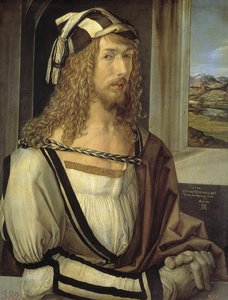
Альбрехт Дюрер
1471 - 1528 , Германия
Основные сведения
- Artistic Movement Or Style: Немецкий Ренессанс
- Artists Or Movements Influenced By This Artist:
- Северный Ренессанс
- Венская школа
- Artists Who Influenced This Artist:
- Леонардо да Винчи
- Рафаэль
- Джотто
- Date Of Birth: 21 мая 1471 г.
- Date Of Death: 6 апреля 1528 г.
- Full Name: Альбрехт Дюрер
- Nationality: Немецкий
- Notable Artworks:
- Апокалипсис
- Меланхолия I
- Святой Иосиф в его кабинете
- Place Of Birth: Нюрнберг, Германия
Похожие статьи
Топ-25 шедевров Британского музея: искусство для вашего дома от ArtsDot
Погрузитесь в мир искусства с 25 шедеврами Британского музея! Узнайте истории Ван Гога, Моне и других великих художников. Репродукции картин для вашего дома от ArtsDot.com – вдохновение и качество.
Топ-10 шедевров Северного Возрождения: искусство для вашего дома от ArtsDot.com
Погрузитесь в мир Северного Возрождения! Откройте 10 шедевров Ван Эйка, Дюрера и других великих художников. Узнайте историю создания культовых картин и вдохновитесь для декора вашего дома с ArtsDot.com. Explore the full collection online!
Топ-10 шедевров в серых тонах: искусство, история и декор от ArtsDot
Погрузитесь в мир искусства с 10 величайшими картинами в серых тонах! Узнайте истории Ван Гога, Мунка и других гениев. Репродукции картин высокого качества для вашего интерьера от ArtsDot.com – вдохновение и стиль в каждом мазке.
Альбрехт Дюрер: 25 шедевров эпохи Возрождения для вашего интерьера | ArtsDot
Погрузитесь в мир Альбрехта Дюрера! 25 величайших гравюр и картин немецкого Ренессанса. Узнайте историю создания шедевров, символизм и технику художника. Репродукции высокого качества для вашего интерьера на ArtsDot.com.
Albrecht Dürer: A Renaissance Master's Legacy of Innovation and Self-Portraiture
Explore the life & art of Albrecht Dürer, a pivotal German Renaissance master. Discover his groundbreaking printmaking techniques, iconic self-portraits, and lasting influence on Western art history. A deep dive into innovation & symbolism.