 Предпросмотр
 Поделиться
 Поделиться
 Детали произведения

 Скачать
 Похожие работы
 Рентгенография
 Слайд-шоу
 Статистика
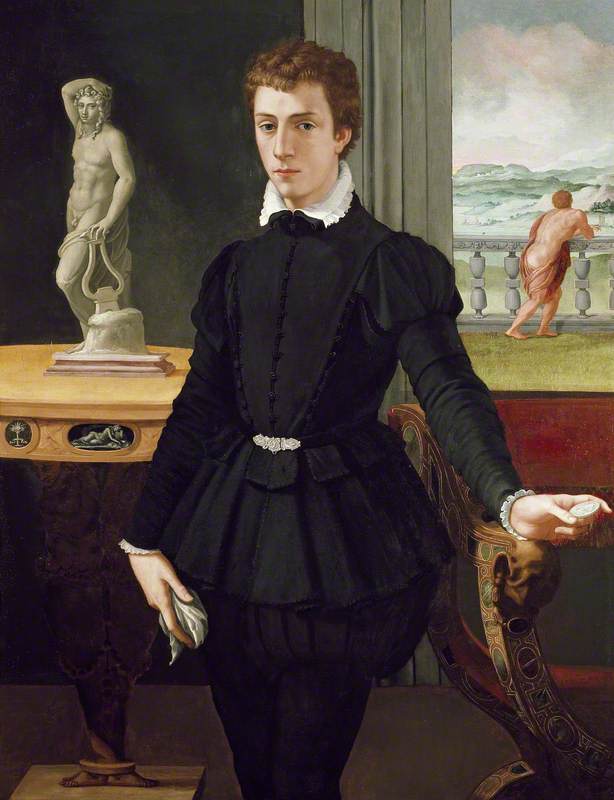
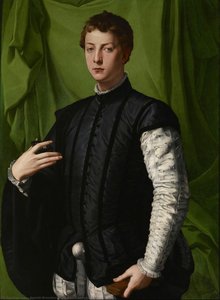
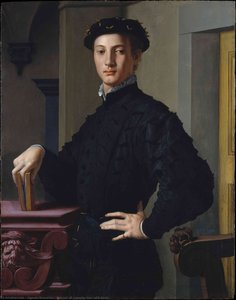
Portrait of a young Man
 Oil On Canvas
- WallArt
- Renaissance
 1560
1560 133.0 x 104.0 cm
 Ашмолеанский музей искусств и археологии
 Читать далее
Масляная репродукция ручной работы
Картина маслом на холсте в выбранном вами размере и раме, написанная на заказ нашими художниками. ( Перейти к печати Перейти к цифровым изображениям)




P118B $10

P118H $10

P118W $10

P438Z $10

P508JH $12

P508YH $12

P805H $10

P805Z $10

P919BZ $10

P919G $10

P919XJ $10

P959ZH $10

P968JZ $12

W106C $8

W218G $10

W218JH $8

W218Y $10

W307PJ $10

W316G $10

W316PJ $8

W316Y $10

W398PJ $8

W4111J $10

W500HY $15

W500JH $15

W692G $12

W849H $8

W940BG $15

W953PJ $8




Выберите один из наших стандартных размеров, соответствующих оригинальным пропорциям произведения искусства.

Вы можете указать собственные размеры, чтобы картина идеально вписалась в выбранную раму или пространство. Если выбранный вами размер не соответствует пропорциям оригинала, мы либо обрежем полотно, либо расширим его за счет дополнительных элементов, написанных вручную. Цифровой макет будет отправлен вам на утверждение перед началом производства.
Обратите внимание, что предварительный просмотр на экране не отражает фактическую обрезку или расширение. Только макет точно покажет окончательную композицию.
Хотя доступны индивидуальные размеры, мы рекомендуем выбирать вариант из предопределенного списка, чтобы сохранить исходные пропорции.
После оформления заказа команда ArtsDot.com свяжется с клиентом по электронной почте для уточнения деталей и предоставит предварительный макет
Доставка по всему миру () за 3–4 недели вместо стандартных 5 недель. (12 Сентябрь). Без компромиссов в качестве.

Бесплатная экспресс-доставка по всему миру

Высококачественный льняной холст

Полное страхование доставки

Гарантия возмещения таможенных пошлин

Гарантия точного соответствия цветов

100-дневная политика возврата (только при обнаружении дефектов)

Гарантия возврата 100% средств

Предложение оптовых скидок
 Вариант со стеклом доступен только для размеров менее 110 см

Portrait of a young Man
Техника репродукции
Размер репродукции
-


Итоговая стоимость
$ 263
A Renaissance Portrait of Quiet Dignity: Exploring Allori’s ‘Portrait of a Young Man’
Alessandro Allori's “Portrait of a Young Man,” painted around 1560, is more than just a depiction of an individual; it’s a carefully constructed window into the artistic sensibilities of late Mannerism and the burgeoning Renaissance spirit. This oil-on-canvas masterpiece, currently residing in the Ashmolean Museum in Oxford, immediately draws the viewer in with its serene composure and subtle yet profound details. It's a painting that whispers stories of status, contemplation, and the delicate balance between earthly beauty and intellectual pursuit – qualities deeply valued within the cultural landscape of 16th-century Florence.
The subject himself is presented with an almost sculptural quality, embodying the Mannerist fascination with idealized forms. His posture is erect, radiating a quiet confidence that speaks to his social standing. The dark doublet, meticulously rendered with intricate folds and textures, hints at wealth and nobility – a common motif in Florentine portraits of the era. The pearl necklace, a symbol of refinement and virtue, further reinforces this impression. Yet, it’s not merely a display of material possessions; there's an underlying sense of restraint, a suggestion that outward appearances mask deeper thoughts and emotions.
Decoding the Composition: Light, Space, and Symbolism
Allori masterfully employs perspective to create a convincing illusion of depth. The background, featuring a classical statue – likely referencing ancient Greek ideals of beauty and proportion – and a distant landscape glimpsed through a window, serves as both a visual anchor and a symbolic backdrop. This arrangement elevates the subject beyond a simple likeness, placing him within a broader context of artistic and philosophical tradition. The soft, diffused lighting, characteristic of Renaissance portraiture, casts gentle shadows that define the contours of his face and clothing, adding to the painting’s sense of realism and intimacy.
- Color Palette: Dominated by dark browns, blacks, and muted reds, punctuated by highlights of white and cream. This restrained palette emphasizes the subject's dignity and seriousness.
- Brushwork: Allori’s technique is characterized by meticulous layering – a process known as glazing – which builds up depth and luminosity with remarkable precision. Notice how he captures the sheen of fabrics, the smoothness of skin, and the rough texture of stone.
- Symbolism: The statue in the background represents classical ideals of beauty and virtue, while the landscape suggests a connection to nature and the wider world. The pearl necklace symbolizes purity and nobility.
Alessandro Allori: A Florentine Master in Transition
Born in Florence in 1535, Alessandro Allori was deeply influenced by his apprenticeship with Agnolo Bronzino, a leading figure of the Mannerist school. Bronzino’s emphasis on polished surfaces and elongated forms became a defining characteristic of Allori's style – though he ultimately developed his own distinct voice, incorporating elements of realism and anatomical study. His time in Rome exposed him to classical art and sculpture, further informing his artistic vision.
Allori’s career spanned several decades, during which he served as a prominent artist in Florence, working for the Medici family and contributing significantly to the city's artistic landscape. His work reflects the complex cultural currents of the late Renaissance – a period marked by both artistic innovation and political instability. He was known for his ability to capture not only physical likeness but also the inner character of his subjects, imbuing each portrait with a sense of dignity and contemplation.
A Timeless Portrait: Beyond Reproduction
“Portrait of a Young Man” is more than just an image; it’s a testament to the enduring power of Renaissance art. Its quiet elegance, meticulous detail, and subtle symbolism continue to captivate viewers centuries after its creation. When considering a high-quality reproduction, remember that capturing the nuances of Allori's glazing technique and the painting's atmospheric depth is crucial. This portrait offers a glimpse into a world of refined beauty, intellectual curiosity, and timeless grace – a reminder of the profound impact art can have on our understanding of ourselves and the human experience.
Похожие произведения
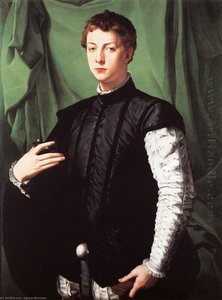

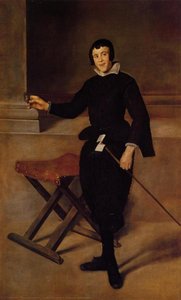
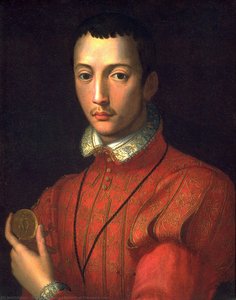

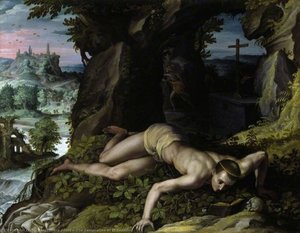
Биография художника
A Florentine Legacy: The Life and Art of Alessandro Allori
Alessandro Allori, born in Florence on May 31st, 1535, stands as a captivating figure within the late Mannerist school – an artist deeply shaped by circumstance and profoundly influenced by the tutelage of Agnolo Bronzino. His journey began with an unexpected inheritance: orphaned at a young age, he found a surrogate father in the renowned painter Bronzino, immersing himself not just in artistic skill but also into a world of refined technique, intellectual rigor, and a distinctive aesthetic sensibility that would become the very essence of Allori’s style. This adoption wasn't merely familial; it was an apprenticeship within a circle of artistic excellence, fostering a deep understanding of Bronzino’s meticulous approach to composition, color, and form – a preference for polished surfaces, elongated figures, and a subtle, almost sculptural quality that defined his work. While often criticized for its perceived derivative nature, this influence ultimately formed the bedrock of Allori's unique artistic identity, establishing him as a crucial link in the transmission of artistic knowledge within Florentine circles.The Echoes of Mannerism and Artistic Development
Allori’s art is inextricably linked to the Mannerist tradition – an era characterized by its deliberate artificiality, elegant complexity, and a conscious departure from the naturalistic ideals of the High Renaissance. However, he wasn't a revolutionary; rather, he was a master interpreter and skillful developer of existing forms, meticulously refining and reinterpreting the works of giants like Michelangelo and Raphael through Bronzino’s distinctive lens. Critics frequently noted his tendency to draw heavily upon pre-existing art, demonstrating an impressive ability to absorb and adapt established styles. This wasn't a criticism of laziness but rather a recognition of Allori’s role as a vital conduit for artistic knowledge within the vibrant Florentine art world. His paintings are immediately recognizable by their almost unsettling smoothness – figures possessing a remarkable marble-like quality that lends them an air of timelessness and formality, creating a visual effect reminiscent of ancient sculpture. This deliberate aesthetic choice wasn't simply a matter of technical proficiency; it reflected the Mannerist desire to elevate art beyond mere representation, aiming instead for images of idealized beauty, intellectual depth, and profound emotional resonance. He supplemented his formal training with an intense dedication to anatomical study – even undertaking dissections at the Hospital of Santa Maria Nuova in Florence – demonstrating a deep understanding of human anatomy that underpinned his stylized yet remarkably accurate depictions of the human form.Major Works and Patronage
Allori’s career flourished under the generous patronage of some of Florence's most influential families, particularly the powerful Medici dynasty. He contributed significantly to several prestigious decorative projects for them, showcasing his versatility and technical mastery. His *Pearl Fishers*, painted around 1571 as part of the elaborate program adorning the Studiolo of Duke Francesco I in the Palazzo Vecchio, stands as a testament to his skill – a complex allegorical scene brimming with graceful figures, intricate details, and a captivating sense of movement. This work exemplifies Allori’s ability to seamlessly blend narrative storytelling with sophisticated artistic technique. Beyond this monumental commission, he produced numerous portraits, religious paintings, and altarpieces that reflect the tastes and preferences of his wealthy patrons. Notably, he created a series of works for the Salviati family, including mythological scenes for Alamanno Salviati’s villa near Florence, intricate depictions of episodes from the Odyssey for Jacopo Salviati's Florentine palazzo, and significant contributions to the Chapel of St. Antoninus within San Marco – a space that also served as the family chapel. His dedication to his craft was further demonstrated by his expansion upon frescoes begun by earlier masters like Andrea del Sarto and Franciabigio within the Villa di Poggio a Caiano, skillfully harmonizing with their existing compositions and demonstrating both his technical skill and his deep appreciation for the artistic legacy of Florence.Legacy and Historical Significance
Alessandro Allori died in Florence on September 22nd, 1607, leaving behind a substantial body of work that continues to captivate art historians and enthusiasts alike. While he may not have achieved the same level of widespread recognition as some of his contemporaries – such as Michelangelo or Leonardo da Vinci – his significance lies in his pivotal role within the late Mannerist movement and his crucial function as a transmitter of artistic knowledge and tradition. He wasn’t an innovator in the same radical sense, but rather a supremely skilled craftsman who meticulously refined and developed existing styles, ensuring their survival for future generations. The story of “Allegory of Human Life,” a painting that was lost for decades before being rediscovered in the Uffizi Gallery, adds another layer to his legacy – a testament to the enduring power of his art and its ability to transcend time and circumstance. Allori’s influence extended through his numerous pupils, most notably his son Cristofano Allori, who continued the family's artistic tradition, ensuring that the distinctive style of Alessandro Allori would continue to resonate within the Florentine art world for years to come. His paintings remain valuable testaments to the elegance and intellectual complexity of Florentine Mannerism, offering a glimpse into a world where art was not merely about representation but about the pursuit of idealized beauty and refined expression. He remains an important figure for understanding the transition from Renaissance artistry towards the Baroque period.Exploring Allori’s World Today
- Museum Collections: Discover Alessandro Allori's masterpieces in institutions like the Uffizi Gallery, the Gemäldegalerie in Berlin, and various other museums worldwide.
- Notable Works: Explore iconic paintings such as “Allegory of Human Life,” “Stories of St. Jerome,” and his contributions to the Studiolo of Francesco I.
- Further Research: Delve deeper into Allori’s life and art through resources like Wikipedia, Getty Museum archives, and scholarly articles on Florentine Mannerism.

Алессандро Магнаско
1535 - 1607 , Италия
Основные сведения
- Artistic Movement Or Style: Маньеризм
- Artists Or Movements Influenced By This Artist: ['Кристофоро Аллори']
- Artists Who Influenced This Artist: ['Бронзино']
- Date Of Birth: 31 мая 1535 г.
- Date Of Death: 22 сент. 1607 г.
- Full Name: Alessandro Allori
- Nationality: Итальянец
- Notable Artworks:
- Аллегория жизни
- Рассказы о святом Иеронии
- Place Of Birth: Флоренция, Италия
Похожие статьи

Топ-25 шедевров Тинторетто: Венецианская драма и свет в вашем интерьере
Погрузитесь в мир драматизма и света с 25 шедеврами Тинторетто! Узнайте историю создания легендарных картин эпохи Возрождения. Репродукции высокого качества для вашего интерьера на ArtsDot.com.
Топ-25 шедевров Ренуара: искусство, история и вдохновение для интерьера
Погрузитесь в мир Ренуара! 🎨 Откройте топ-25 шедевров импрессионизма, историю создания картин и вдохновляющую красоту. Купите репродукции высокого качества для вашего интерьера на ArtsDot.com – музейное искусство онлайн!
25 Шедевров Эрмитажа: Искусство для Вашего Дома | ArtsDot.com
Погрузитесь в мир искусства с 25 шедеврами Эрмитажа! Узнайте истории Рембрандта, Леонардо да Винчи и Вермеера. Репродукции картин для вашего дома – вдохновение и декор от ArtsDot.com. Откройте всю коллекцию онлайн!
Топ-25 шедевров Прадо: Искусство Веласкеса, Гойи и Эль Греко для вашего интерьера
Погрузитесь в мир шедевров Прадо! От Веласкеса до Гойи – история искусства Испании, барокко и знаменитые картины. Купите репродукции высокого качества для вашего интерьера на ArtsDot.com.
25 Шедевров Уффици: Путешествие в Сердце Ренессанса | ArtsDot
Погрузитесь в мир Ренессанса с 25 шедеврами галереи Уффици! От Боттичелли до Леонардо да Винчи – истории, техники и вдохновение для вашего интерьера. Купите репродукции картин высочайшего качества на ArtsDot.com.