

 Предпросмотр
 Поделиться
 Поделиться
 Детали произведения

 Скачать
 Похожие работы
 Рентгенография
 Слайд-шоу
 Статистика
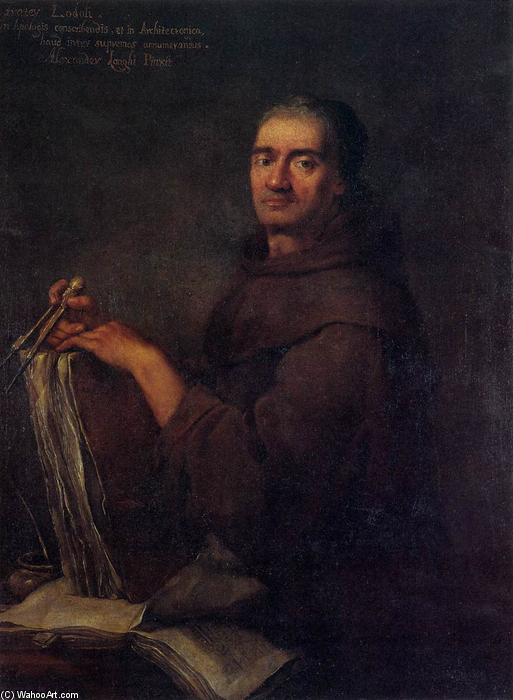
Portrait of Carlo Lodoli
 Oil On Canvas
- WallArt
- Baroque
 1760
1760 201.0 x 94.0 cm
 Галереи Академии
 Читать далее
Масляная репродукция ручной работы
Картина маслом на холсте в выбранном вами размере и раме, написанная на заказ нашими художниками. ( Перейти к печати Перейти к цифровым изображениям)




P118B $10

P118H $10

P118W $10

P438Z $10

P508JH $12

P508YH $12

P805H $10

P805Z $10

P919BZ $10

P919G $10

P919XJ $10

P959ZH $10

P968JZ $12

W106C $8

W218G $10

W218JH $8

W218Y $10

W307PJ $10

W316G $10

W316PJ $8

W316Y $10

W398PJ $8

W4111J $10

W500HY $15

W500JH $15

W692G $12

W849H $8

W940BG $15

W953PJ $8




Выберите один из наших стандартных размеров, соответствующих оригинальным пропорциям произведения искусства.

Вы можете указать собственные размеры, чтобы картина идеально вписалась в выбранную раму или пространство. Если выбранный вами размер не соответствует пропорциям оригинала, мы либо обрежем полотно, либо расширим его за счет дополнительных элементов, написанных вручную. Цифровой макет будет отправлен вам на утверждение перед началом производства.
Обратите внимание, что предварительный просмотр на экране не отражает фактическую обрезку или расширение. Только макет точно покажет окончательную композицию.
Хотя доступны индивидуальные размеры, мы рекомендуем выбирать вариант из предопределенного списка, чтобы сохранить исходные пропорции.
После оформления заказа команда ArtsDot.com свяжется с клиентом по электронной почте для уточнения деталей и предоставит предварительный макет
Доставка по всему миру () за 3–4 недели вместо стандартных 5 недель. (12 Сентябрь). Без компромиссов в качестве.

Бесплатная экспресс-доставка по всему миру

Высококачественный льняной холст

Полное страхование доставки

Гарантия возмещения таможенных пошлин

Гарантия точного соответствия цветов

100-дневная политика возврата (только при обнаружении дефектов)

Гарантия возврата 100% средств

Предложение оптовых скидок
 Вариант со стеклом доступен только для размеров менее 110 см

Portrait of Carlo Lodoli
Техника репродукции
Размер репродукции
-


Итоговая стоимость
$ 263
Alessandro Longhi’s Portrait of Carlo Lodoli: A Window Into Venetian Enlightenment
Alessandro Longhi's “Portrait of Carlo Lodoli” (1761) stands as a testament to the artistic fervor of Venice during its Golden Age – specifically, the burgeoning Enlightenment movement. More than just a depiction of a prominent Franciscan friar, Lodoli’s likeness embodies the intellectual currents shaping European thought at the time, reflecting Longhi's masterful grasp of Rococo style and his dedication to capturing nuanced psychological portraits.
- Subject Matter: The painting portrays Carlo Lodoli (1690–1761), a celebrated theorist of architectural rationalism who vehemently opposed the excesses of Baroque ornamentation. Lodoli’s influence extended beyond academia; he was a vocal critic of many contemporary architects, marking him as a figure of considerable controversy.
- Style: Longhi adheres to the Rococo aesthetic—characterized by delicate curves, pastel hues, and an emphasis on elegance and refinement—a stylistic choice that contrasts sharply with the grandeur of preceding Baroque commissions. This deliberate contrast underscores Lodoli’s intellectual stance against opulent displays of power.
- Technique: Longhi employs oil paint on canvas, layering pigments meticulously to achieve remarkable textural depth and luminosity. The artist skillfully renders skin tones and fabric folds with painstaking detail, conveying a palpable sense of realism while maintaining an idealized portrayal of Lodoli’s character.
The composition centers around Lodoli himself, positioned prominently within the vertical space of the canvas. Dark, indistinct background hues serve to heighten the figure's importance and create an atmosphere of contemplative solemnity. Directional lighting illuminates Lodoli’s face and hands, casting shadows that contribute to the painting’s dramatic effect.
Beyond its aesthetic qualities, “Portrait of Carlo Lodoli” resonates with symbolic significance. Lodoli’s inclusion of astronomical instruments—a sextant and a compass—symbolizes his unwavering commitment to scientific inquiry and rational thought. The book represents his erudition and intellectual pursuits, encapsulating the core values of Enlightenment philosophy.
Ultimately, Longhi's masterpiece transcends mere likeness; it captures the spirit of an era defined by intellectual curiosity and artistic innovation. It’s a captivating glimpse into Venetian society during its zenith—a portrait not only of Lodoli but also of the ideals that shaped his worldview and continue to inspire admiration today.
Additional Research: This painting was donated to the Gallerie dell'Accademia di Venezia in 1930. It’s a remarkable example of Venetian Baroque art, reflecting Longhi’s skill in portraying human emotion and intellect. Explore more about Lodoli’s life and work at Gallerie dell'Accademia.
You can find detailed information about Alessandro Longhi and his artistic legacy on Wikimedia Commons: Alessandro Longhi - Portrait of Carlo Lodoli - WGA13392.jpg
Похожие произведения
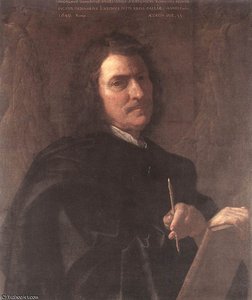
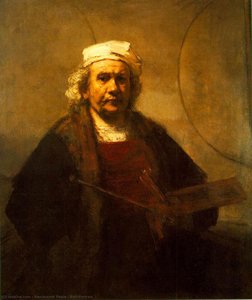
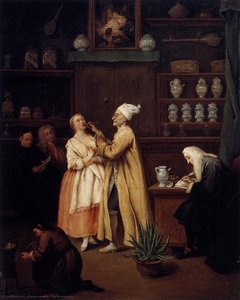

Биография художника
Alessandro Longhi: A Venetian Portraitist
Early Life and Training
Alessandro Longhi (born Venice, Italy, 1733 – died 1813) was a prominent Venetian portrait painter and printmaker. He came from an artistic family; his father was the celebrated genre painter Pietro Longhi. Alessandro received his initial training under his father’s guidance, developing a foundation in observation and detail. He further honed his skills studying with Giuseppe Nogari (1699–1763), another respected Venetian artist.
Artistic Development and Style
Longhi specialized in portraiture, particularly depictions of Venetian nobles and prominent figures. He excelled in capturing the elegance and status of his sitters through meticulous detail and a refined Rococo style. Unlike some contemporaries who focused on grand historical or mythological scenes, Longhi concentrated on portraying individuals within their social context. His portraits often feature elaborate robes and emblems of office, reflecting his subjects’ positions and power – a characteristic noted in comparison to artists like Sebastiano Bombelli.
Influences
While deeply influenced by his father's realistic approach, Alessandro Longhi also demonstrated an appreciation for other masters. His etching technique, in particular, reveals a clear understanding and admiration of Rembrandt van Rijn’s work. This is evident in the “tumultuous and unusual” quality of his etchings, as described by Olimpia Theodoli, showcasing a first-hand knowledge of Rembrandt's techniques.
Major Works and Achievements
- Painting and Merit (1761): A striking oil painting currently housed in the Gallerie dell'Accademia, Venice. It exemplifies Longhi’s skill in capturing quiet contemplation and scholarly pursuits.
- Portrait of Carlo Lodoli (1760): This Baroque-style portrait showcases Venetian realism and attention to detail, depicting a monk engaged in study.
- Playwright Carlo Goldoni: A notable portrait of the famous Venetian playwright, capturing his personality and status.
- Numerous portraits of Venetian nobility: Longhi created an extensive body of work documenting the elite members of Venetian society during the 18th century.
Historical Significance
Alessandro Longhi’s work provides valuable insight into the social and political landscape of 18th-century Venice. His portraits serve as historical records, preserving the likenesses and status symbols of a fading aristocratic class. He captured a period of transition – the elegance and refinement of the Rococo era alongside the beginnings of decline for the Venetian Republic. While not as widely celebrated as his father, Alessandro Longhi’s contributions to Venetian portraiture are significant, offering a unique perspective on the lives and times of his subjects.
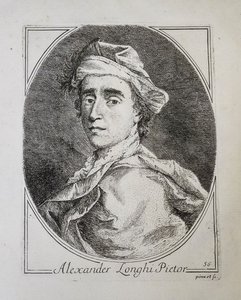
Alessandro Longhi
1733 - 1813 , Italy
Основные сведения
- Birth Date: 1733
- Birth Place: Venice, Italy
- Death Date: 1813
- Influenced By:
- Pietro Longhi
- Giuseppe Nogari
- Rembrandt
- Movement:
- Rococo
- Baroque
- Name: Alessandro Longhi
- Nationality: Italian
- Notable Works:
- Painting and Merit
- Portrait of Carlo Lodoli
- Playwright Carlo Goldoni
Похожие статьи
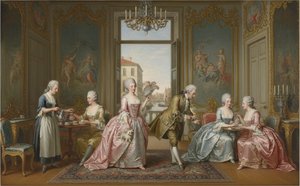
Pietro Longhi's Venetian Scenes: A Study of Rococo Society & Domestic Life
Explore the captivating world of Pietro Longhi's Venetian scenes! Discover insightful analysis of his Rococo masterpieces & social commentary on 18th-century life. Learn about this 'Venetian Hogarth' and his lasting artistic legacy.

Барочная драма: Искусство величия в современном интерьере
Погрузитесь в мир роскоши и величия барокко! Узнайте об истории стиля, ключевых элементах интерьера и архитектуре. Вдохновляйтесь с и создайте свой неповторимый дизайн.

10 Шедевров Барокко: Искусство, изменившее мир | ArtsDot.com
Погрузитесь в мир барокко! 10 шедевров Караваджо, Рембрандта и других великих художников. Узнайте историю создания культовых картин и найдите идеальную репродукцию для вашего интерьера на ArtsDot.com

The Enduring Legacy of Oil on Canvas: Technique, History & Aesthetic Impact
Explore the rich history & techniques of oil painting – from Renaissance masters to Impressionism. Discover pigments, layering methods, and why this timeless medium endures. Expert insights for artists & art enthusiasts.

The Enduring Power of Painting: A Historical & Contemporary Exploration of Form and Emotion
Explore the rich history & enduring techniques of oil painting with ArtsDot. Discover masterpieces, learn about art collecting, and find authentic handmade reproductions crafted by skilled artists.