

 Предпросмотр
 Поделиться
 Поделиться
 Детали произведения

 Скачать
 Похожие работы
 Рентгенография
 Слайд-шоу
 Статистика
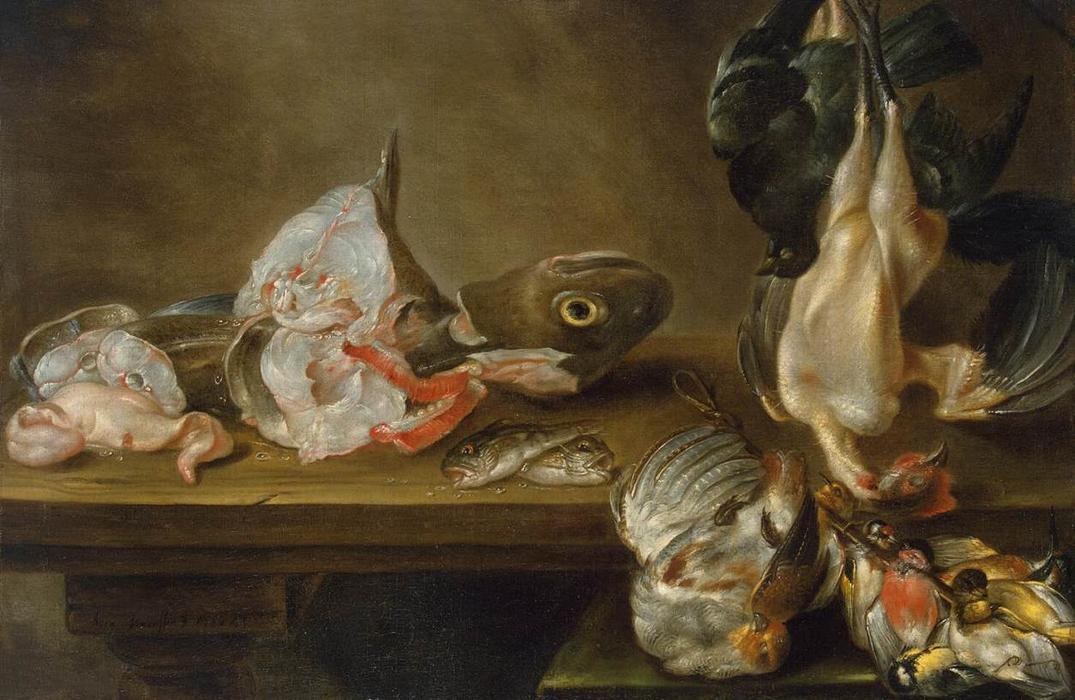
Fish and Dead Game
 Oil On Canvas
- WallArt
- Dutch Golden Age
 1643
1643 58.0 x 87.0 cm
 Эрмитаж
 Читать далее
Масляная репродукция ручной работы
Картина маслом на холсте в выбранном вами размере и раме, написанная на заказ нашими художниками. ( Перейти к печати Перейти к цифровым изображениям)




P118B $10

P118H $10

P118W $10

P438Z $10

P508JH $12

P508YH $12

P805H $10

P805Z $10

P919BZ $10

P919G $10

P919XJ $10

P959ZH $10

P968JZ $12

W106C $8

W218G $10

W218JH $8

W218Y $10

W307PJ $10

W316G $10

W316PJ $8

W316Y $10

W398PJ $8

W4111J $10

W500HY $15

W500JH $15

W692G $12

W849H $8

W940BG $15

W953PJ $8




Выберите один из наших стандартных размеров, соответствующих оригинальным пропорциям произведения искусства.

Вы можете указать собственные размеры, чтобы картина идеально вписалась в выбранную раму или пространство. Если выбранный вами размер не соответствует пропорциям оригинала, мы либо обрежем полотно, либо расширим его за счет дополнительных элементов, написанных вручную. Цифровой макет будет отправлен вам на утверждение перед началом производства.
Обратите внимание, что предварительный просмотр на экране не отражает фактическую обрезку или расширение. Только макет точно покажет окончательную композицию.
Хотя доступны индивидуальные размеры, мы рекомендуем выбирать вариант из предопределенного списка, чтобы сохранить исходные пропорции.
После оформления заказа команда ArtsDot.com свяжется с клиентом по электронной почте для уточнения деталей и предоставит предварительный макет
Доставка по всему миру () за 3–4 недели вместо стандартных 5 недель. (10 Сентябрь). Без компромиссов в качестве.

Бесплатная экспресс-доставка по всему миру

Высококачественный льняной холст

Полное страхование доставки

Гарантия возмещения таможенных пошлин

Гарантия точного соответствия цветов

100-дневная политика возврата (только при обнаружении дефектов)

Гарантия возврата 100% средств

Предложение оптовых скидок
 Вариант со стеклом доступен только для размеров менее 110 см

Fish and Dead Game
Техника репродукции
Размер репродукции
-


Итоговая стоимость
$ 263
A Still Life of Mortality and Abundance: Unveiling “Fish and Dead Game”
Alexander Adriaenssen’s “Fish and Dead Game,” painted in 1643, isn't merely a depiction of fish and fowl; it’s a profound meditation on life, death, and the fleeting beauty of nature. Housed within the venerable halls of The Hermitage in St. Petersburg, this oil-on-canvas masterpiece transcends its humble materials to become a window into the anxieties and aspirations of 17th-century Antwerp – a city brimming with artistic fervor and burgeoning wealth.
The painting immediately commands attention through its dramatic composition. A dark brown background, almost velvety in its depth, serves as an arresting counterpoint to the vibrant, meticulously rendered subjects. A table, constructed of rough-hewn wood, anchors the scene, its texture subtly suggesting both solidity and decay. Scattered across this surface are a diverse array of fish – carp, bream, and perhaps even a glimpse of trout – alongside a pheasant, its plumage a riot of earthy browns, reds, and golds, and fragments of what appears to be a hare or rabbit. The arrangement isn’t haphazard; it possesses a carefully considered balance, hinting at the artist's keen eye for visual harmony.
The Baroque Master: Adriaenssen’s Signature Style
Alexander Adriaenssen stands as a pivotal figure in the Antwerp school of still life painting, a movement deeply influenced by the Dutch masters but imbued with a distinctly Flemish sensibility. His work is characterized by an almost obsessive attention to detail – from the individual scales shimmering on the fish to the delicate feathers ruffled around the pheasant’s neck. This realism isn't simply photographic; it’s informed by a deep understanding of anatomy and texture, achieved through painstaking observation and masterful brushwork.
Adriaenssen’s technique is particularly noteworthy for its use of light and shadow. He employs a subtle chiaroscuro – the dramatic contrast between light and dark – to create a sense of volume and depth, making each object appear almost tangible. The reflections on the table's surface are rendered with remarkable precision, demonstrating his skill in capturing the nuances of material and atmosphere. The color palette is restrained yet rich, dominated by earthy tones punctuated by flashes of vibrant color that draw the eye to key elements within the composition.
Symbolism and the Weight of Mortality
“Fish and Dead Game” is far more than a simple arrangement of natural subjects. It’s laden with symbolic meaning, reflecting the prevailing concerns of its time. The abundance of fish speaks to prosperity and plenty – a reflection of Antwerp's thriving trade routes. However, the inclusion of dead game introduces a poignant element of mortality and transience. The juxtaposition of life and death serves as a reminder of the ephemeral nature of beauty and the inevitability of decay.
Some art historians interpret the painting as an allegory for the fleeting pleasures of earthly existence. The vibrant colors and luxurious subjects represent the joys of this world, while the dead game symbolizes the ultimate fate that awaits all creatures. The careful arrangement of the objects can also be seen as a meditation on balance – a striving to maintain harmony between abundance and scarcity, life and death.
A Legacy Preserved: Reproductions and Artistic Inspiration
Today, “Fish and Dead Game” stands as a testament to Alexander Adriaenssen’s artistic genius. Its intricate details and evocative symbolism continue to captivate viewers centuries after its creation. High-quality reproductions, such as those offered by ArtsDot.com, allow us to appreciate the painting's beauty and complexity in our own homes, bringing a touch of Baroque elegance and philosophical depth to any space.
For those seeking a deeper understanding of this remarkable artwork, we encourage you to explore the resources provided – including links to The Hermitage Museum’s website and detailed information about Alexander Adriaenssen's life and work. Let “Fish and Dead Game” serve as an invitation to contemplate the enduring themes of beauty, mortality, and the human condition.
Похожие произведения
Биография художника
The Master of the Flemish Banquet: The Life and Legacy of Alexander Adriaenssen
In the vibrant, bustling heart of seventeenth-century Antwerp, a period defined by the opulent textures of the Baroque, the name Alexander Adriaenssen emerged as a whisper of elegance amidst the grandeur. Born in 1587 to a family steeped in the melodic traditions of Flanders—his father being the renowned lutenist Emmanuel Adriaenssen—Alexander’s journey was one of transforming auditory harmony into visual splendor. While his brothers pursued the drama of battle scenes and portraiture, Alexander found his soul in the quiet, profound beauty of the still life. His early training under Artus van Laeck provided him with a foundational precision, yet it was his innate ability to capture the glistening scales of a fresh catch or the delicate dew on a petal that would eventually secure his place in the pantheon of Flemish masters.
Adriaenssen’s ascent within the Guild of St. Luke was not merely a professional milestone but a testament to his growing mastery over light and substance. Initially recognized for his skill in watercolor and the meticulous painting of heraldic coats of arms on parchment, he soon transitioned into the rich, emotive medium of oil. This versatility allowed him to participate in some of the most significant civic celebrations of his era. Most notably, during the triumphant entry of Cardinal Ferdinand into Antwerp in 1635, Adria and his contemporaries worked under the watchful eye of none other than Peter Paul Rubens. To contribute to the triumphal arches of such a monumental event was a profound honor, signaling that Adriaenssen was no longer just a craftsman, but a vital storyteller of the Baroque age.
A Symphony of Texture and Light
The true genius of Adriaenssen lies in his ability to elevate the mundane to the magnificent. He became a specialist in what is often termed pronkstillevens—ostentatious still lifes that celebrate abundance and wealth. His canvases are not merely depictions of food; they are sensory experiences. When one gaz于s upon his renderings of fish, game, and banquet spreads, the eye is immediately drawn to the hyper-realistic textures: the cold, wet sheen of a trout, the rugged skin of an artichoke, or the heavy, tactile weight of pewter plates and stoneware jugs. There is a certain purity of color in his work that critics have long admired, a clarity that prevents even the most crowded compositions from feeling chaotic.
His thematic repertoire was as diverse as the bounty of the Low Countries. Beyond the famous fish pieces, he explored:
- Banquet Pieces: Elaborate displays of meats, cheeses, and sausages that evoke the sensory richness of a Flemish feast.
- Floral Still Lifes: Delicate studies of blossoms in glass vases, where light refracts through crystal to create a sense of ethereal fragility.
- Game Pieces: Dramatic compositions featuring dead game, showcasing his ability to render fur, feather, and bone with anatomical precision.
This mastery of detail served a deeper purpose than mere imitation. In the context of the seventeenth century, these paintings often functioned as meditations on vanitas—the fleeting nature of life and the inevitability of decay. By capturing the peak of freshness in a piece of fruit or a shimmering fish, Adriaenssen simultaneously celebrated the bounty of the earth and whispered a poignant reminder of its transience.
Historical Significance and Enduring Influence
As the decades progressed, Adriaenssen’s reputation solidified, making him a peer to the greatest names of his generation. His connection to the artistic elite was profound; the fact that Rubens recognized his talent enough to commission related works—and that his family was intertwined with the likes of Antony van der Does and Isabella Brandt—places him at the very center of the Antwerp artistic web. Even as he traveled, perhaps honing his craft alongside his brother Nicolas in Haarlem, his stylistic roots remained firmly planted in the Flemish tradition of meticulous realism.
Though he passed away in Antwerp in 1661, leaving behind a legacy etched in oil and pigment, Adriaenssen’s influence endured. He bridged the gap between the heraldic precision of the late Renaissance and the lush, emotive abundance of the High Baroque. Today, his works serve as windows into a lost world of splendor, reminding us that there is profound art to be found in the simplest elements of life—a silver spoon, a crust of bread, or the light reflecting off a single drop of water. He remains a master who taught the world to look closer, to see the extraordinary within the ordinary.
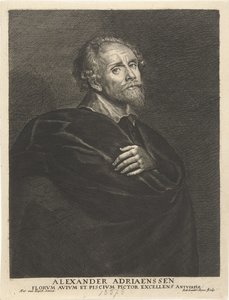
Alexander Adriaenssen
1587 - 1661 , Belgium
Основные сведения
- Artistic Movement Or Style: Baroque
- Artists Or Movements Influenced By This Artist: ['Dutch Baroque']
- Artists Who Influenced This Artist:
- Rubens
- Arthus van Laeck
- Date Of Birth: 1587 Antwerp Belgium
- Date Of Death: 1661
- Full Name: Alexander Adriaenssen
- Nationality: Flemish
- Notable Artworks:
- Fish & Dead Game
- Still life
- Flowers in a Glass Vase
- Place Of Birth: Antwerp Belgium
Похожие статьи
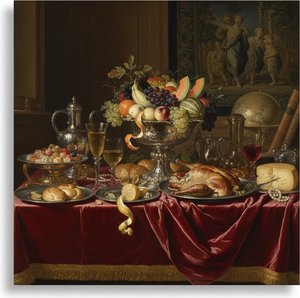
Abraham Hendricksz van Beyeren: Pioneering Dutch Still Life & the Banquet Tradition
Explore the captivating world of Dutch Golden Age still life with Abraham van Beyeren. Discover his innovative techniques, symbolic banquet scenes & lasting influence on art history. Learn about collecting these masterpieces.

Золотой век Голландии: 10 шедевров, изменивших искусство | ArtsDot.com
Погрузитесь в эпоху Золотого века Нидерландов! 10 шедевров Рембрандта, Вермеера и других мастеров. Узнайте истории создания культовых картин и вдохновитесь для интерьера. Репродукции музейного качества на ArtsDot.com.

Illuminating Innovation: Exploring the Dutch Golden Age of Painting
Explore the Dutch Golden Age of painting with ArtsDot. Discover Rembrandt, Vermeer & other Masters. Learn about key characteristics, iconic artworks, and lasting influence. Expert insights for collectors & enthusiasts.
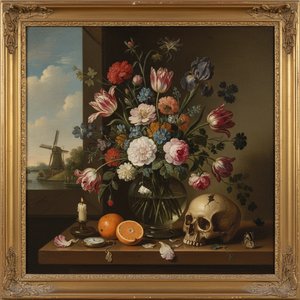
Jan Jansz Wijnants: A Study in Dutch Golden Age Still Life & Floral Transience
Explore the captivating world of Jan Wijnants and Dutch Golden Age still life painting. Discover symbolism, masterful techniques & lasting influence on floral art history. Learn more!

Golden Age Reflections: Dutch Baroque Painting & Cultural Innovation
Explore the Dutch Golden Age of painting! Discover key artists like Vermeer & ter Borch, their innovative techniques, and the rich cultural context behind these Baroque masterpieces. Learn about collecting & appreciating this iconic art period.